
Struggling wiht hot-and-cold spots between rooms—or trying to add comfort to a space that doesn’t have ductwork? A two-zone mini split can be a practical way to cool and heat where you need it most,without remodeling your entire HVAC setup.
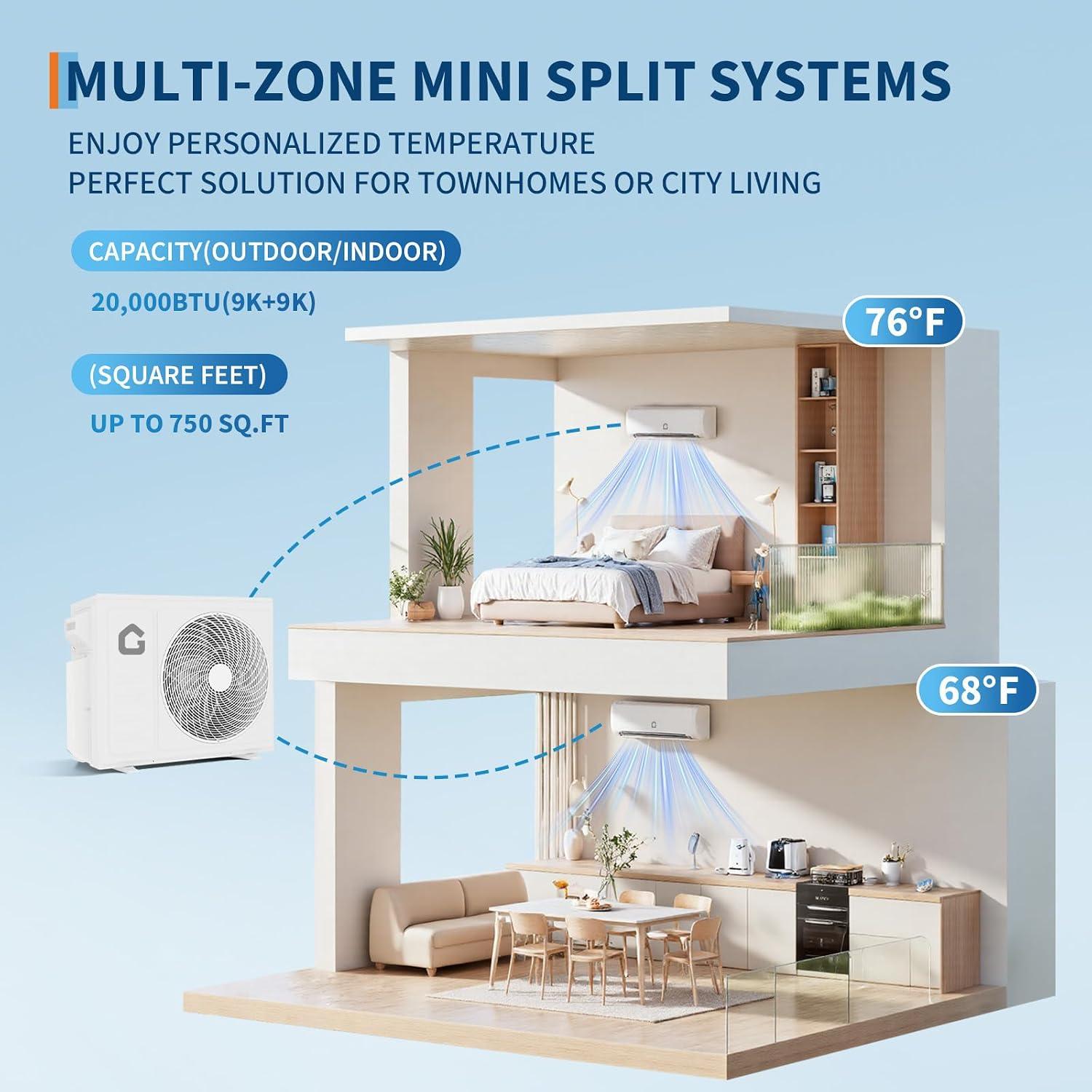
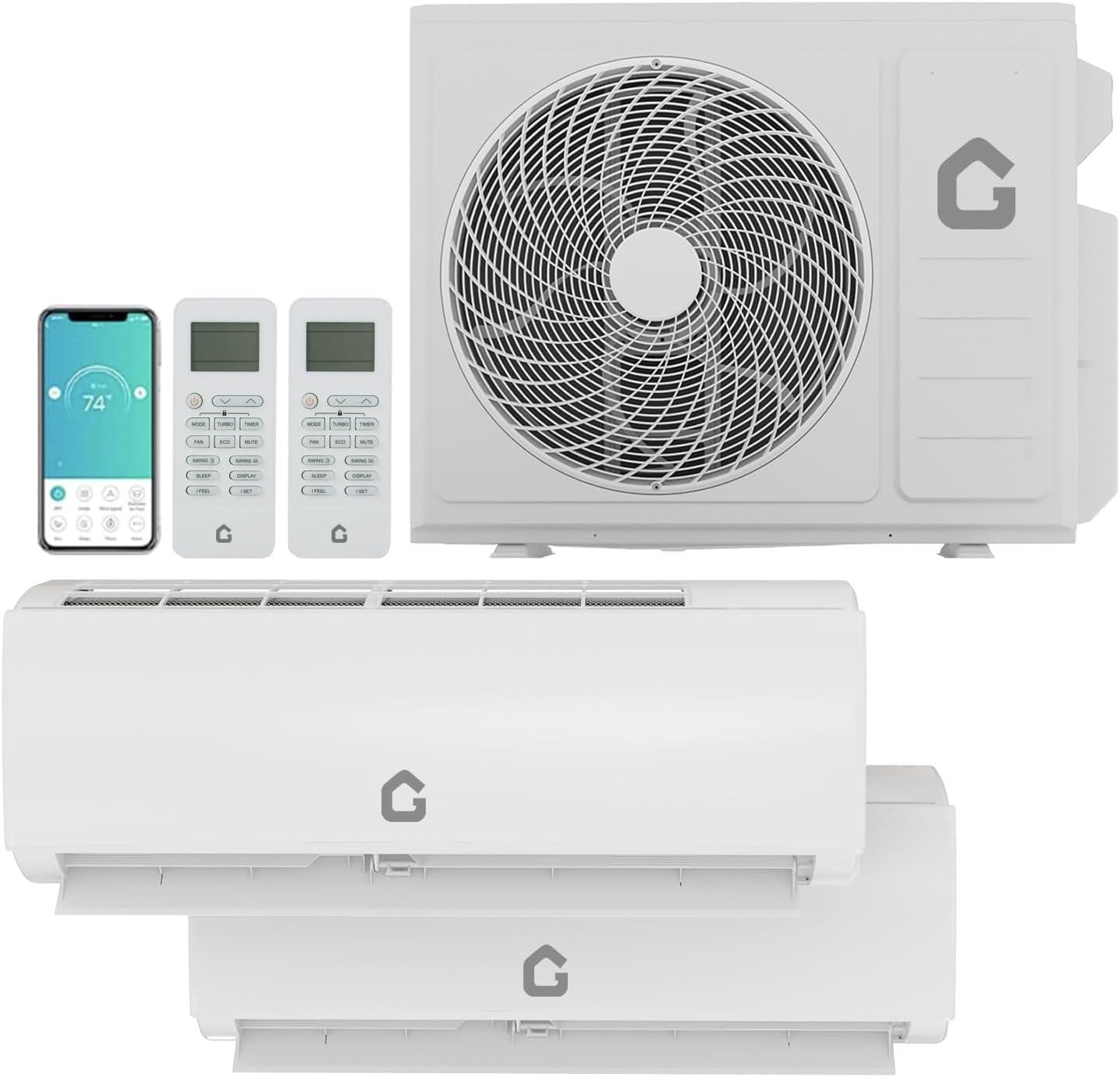
In this review, we’re looking at a 20,000 BTU two-zone mini split system with 9K + 9K indoor wall-mounted heads, a 20 SEER2 efficiency rating, 208/230V power, WiFi-enabled controls, and R454B refrigerant. According to the product description, it’s designed to cover up to 750 sq.ft. and includes an outdoor condenser, two indoor units, two remotes, and washable filters—though it does not include installation accessories and requires professional installation.
We’ll break down what the feature list really means (inverter operation, sleep mode, timers, auto-defrost, airflow options), what to watch for before buying, and who this dual-zone setup fits best. As reviewers who’ve compared a range of mini-split configurations,we focus on translating specs and common buyer concerns into clear,realistic expectations.
Commercial Performance overview for Small Business Zones and Daily Operations
For small business zones like offices, studios, and front-of-house retail areas, this system is positioned as a light-commercial solution with dual-zone (9K+9K BTU) coverage and a stated capacity to handle up to 750 sq. ft. (per the product description). The two indoor heads let you run comfort where it matters—like a customer-facing area and a back room—without conditioning unused space like a single-zone setup might. According to the manufacturer, the 20 SEER2 inverter design is intended to maintain steadier temperatures by modulating output rather of cycling hard on/off, which can translate into more consistent comfort during business hours. It also includes practical operational features—24-hour programmable timer, sleep mode, and 4-way airflow swing—that can help match conditioning to predictable schedules like open/close times and staggered occupancy.
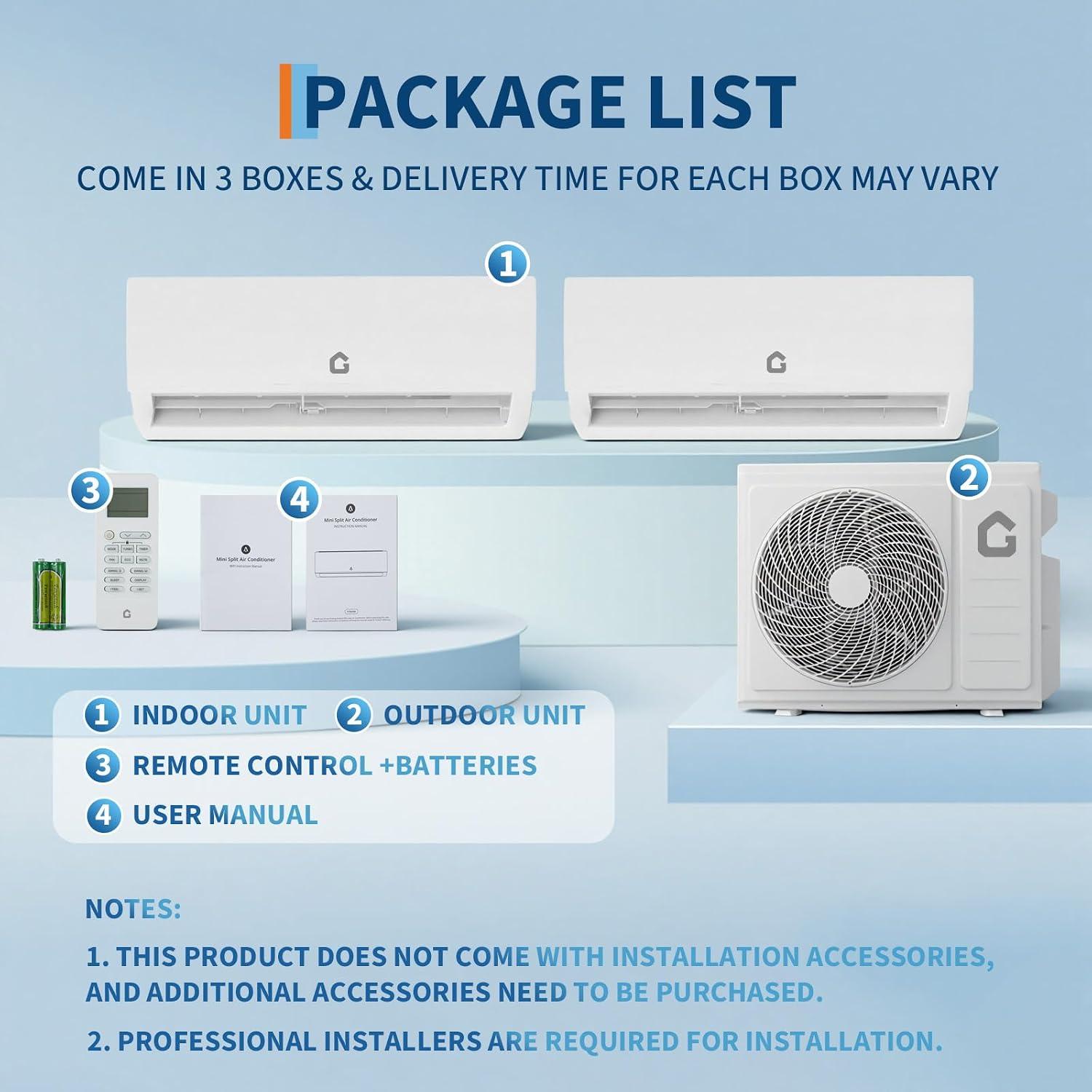
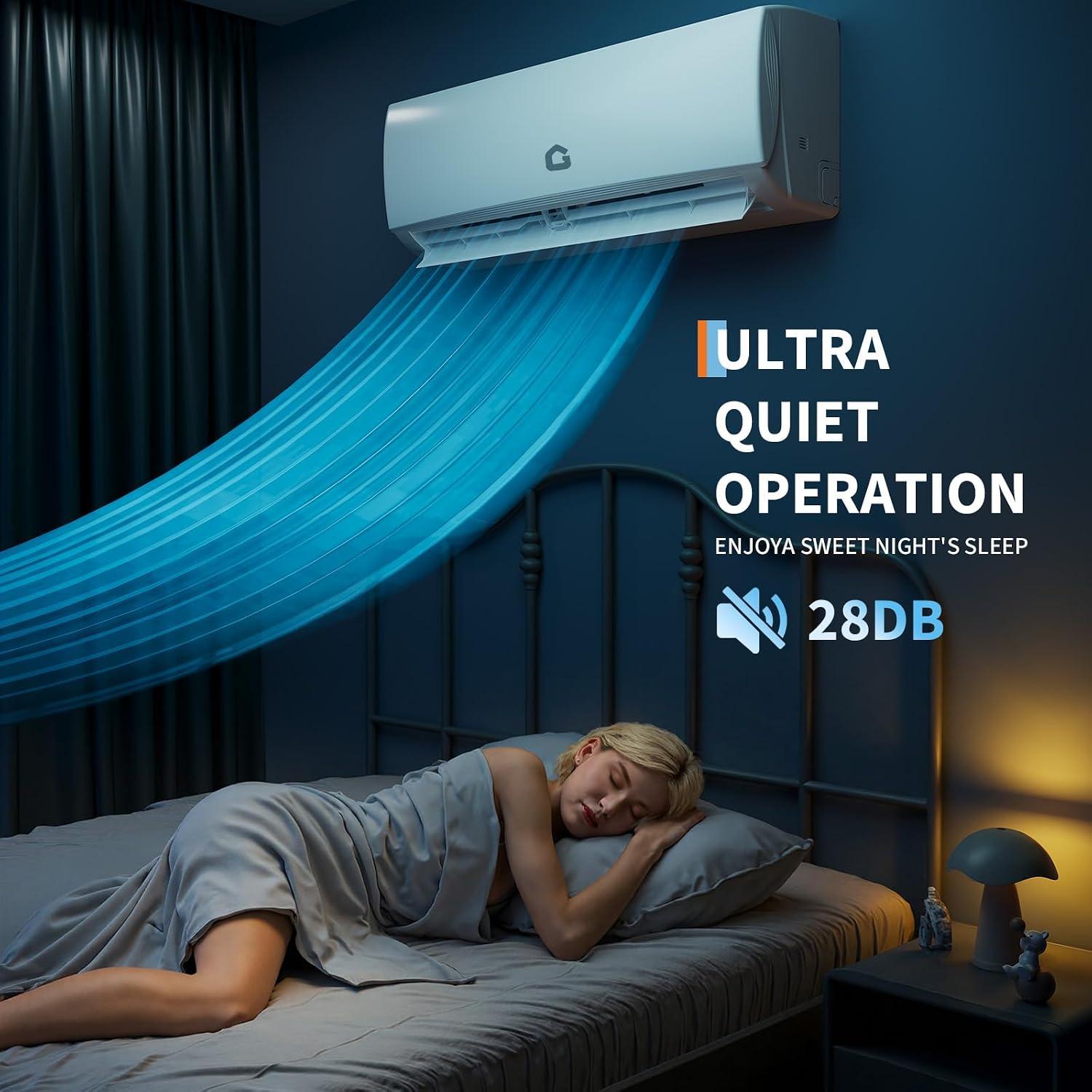
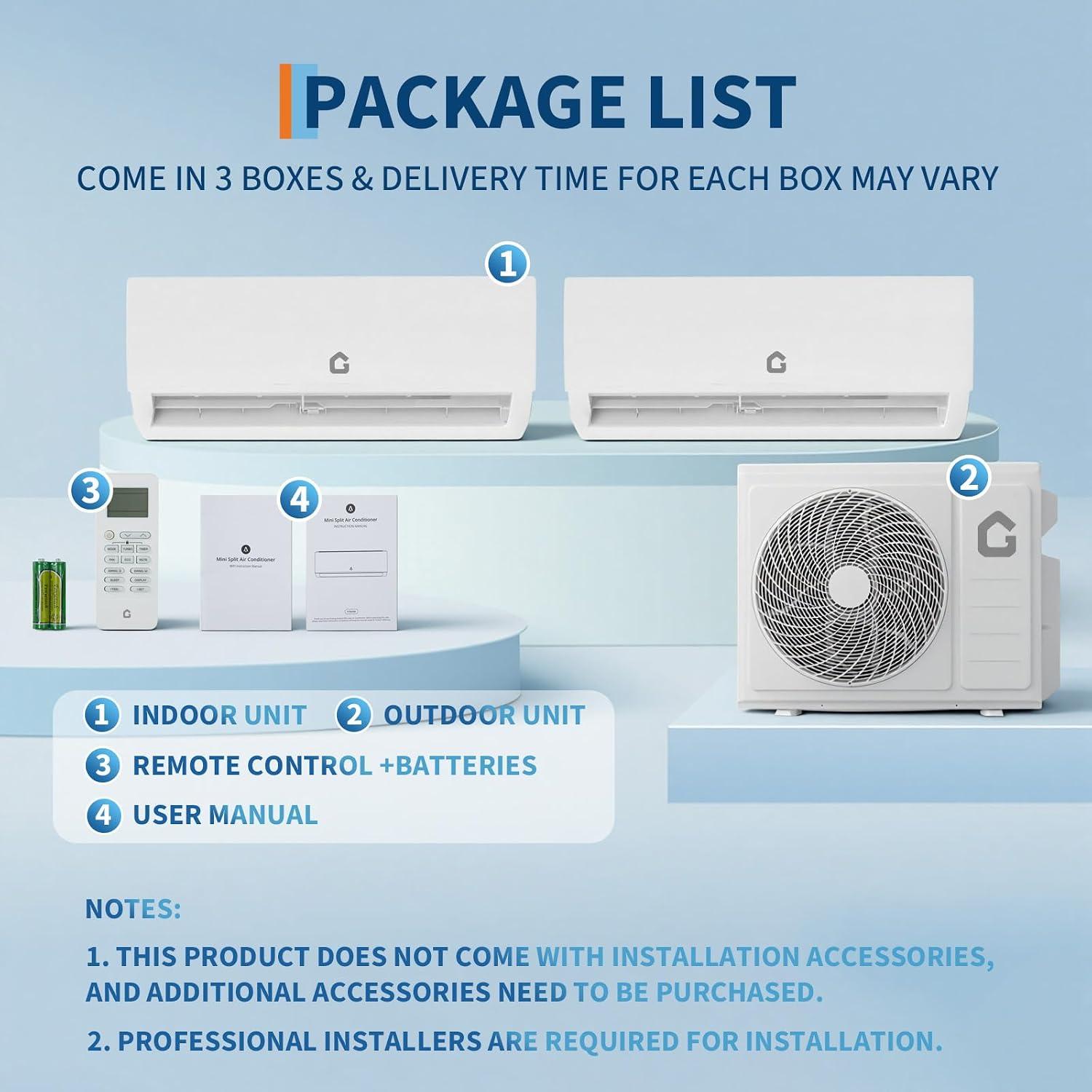
In day-to-day operations, the feature set is geared toward reducing “touch time” for staff while keeping comfort stable: the system is advertised with WiFi control, iFEEL temperature sensing, and maintenance aids like auto-defrost, self-cleaning, and self-diagnosis (all per the product description). Noise can matter in client-facing settings, and the indoor unit is listed at 27–42 dBa, which is typically considered a quiet range for mini splits. Planning-wise, note the manufacturer’s installation caveats: installation accessories are not included and professional installers are required, and the shipment comes in 3 packages. The box contents are stated to include 1 outdoor unit, 2 indoor units, a manual, 2 remotes, plus a washable filter—useful for routine upkeep in busy spaces.
Check Current Price & Customer Reviews on Amazon →
Energy Cost Savings Real Numbers for Our Monthly Utility Budget
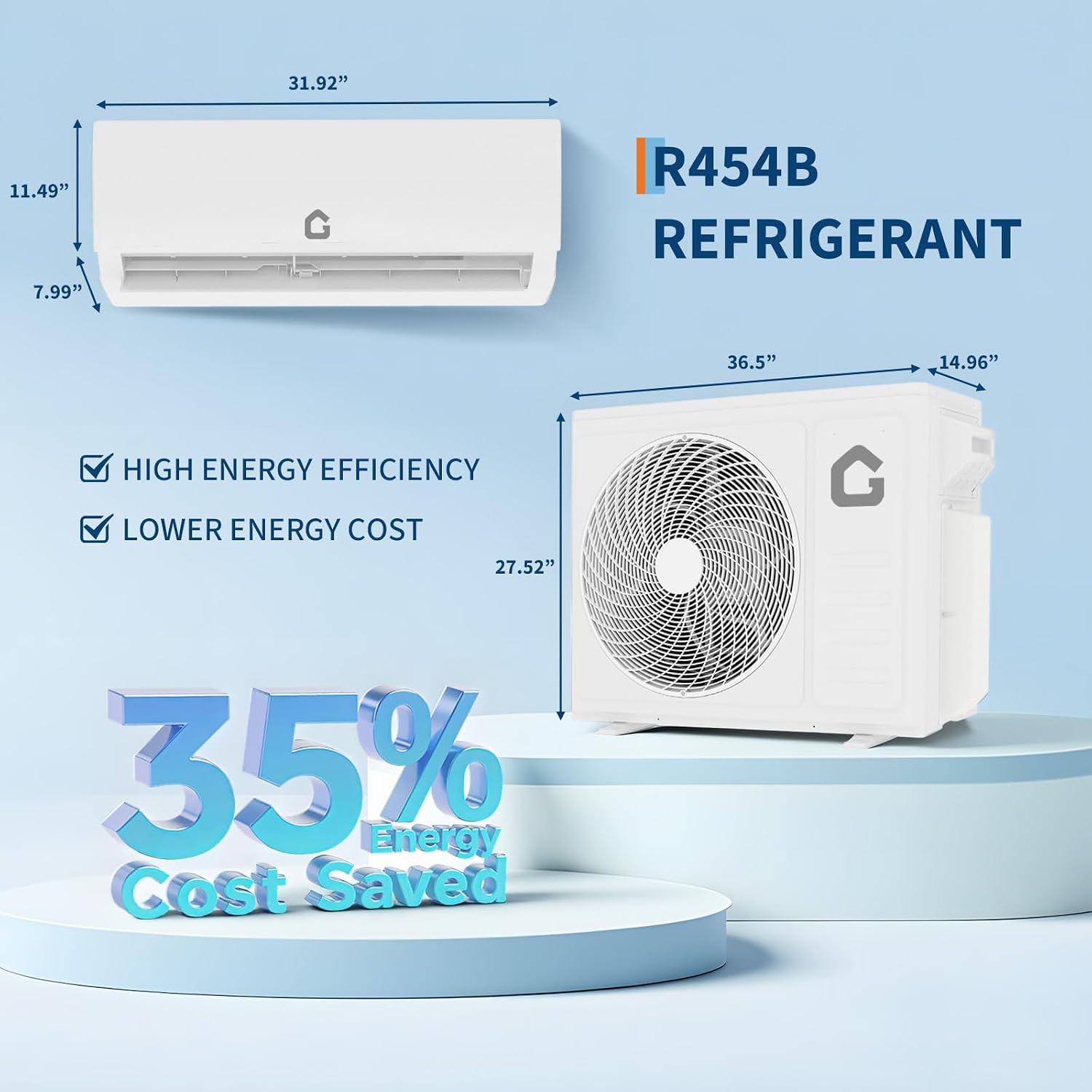
With a 20 SEER2 efficiency rating and inverter-driven operation, this two-zone mini split is built around the kind of technology that typically shows up as “real numbers” on a utility bill: fewer on/off cycles, steadier runtimes, and less wasted electricity during light-load periods. According to the manufacturer, its inverter system is designed to optimize performance across seasons and can deliver up to 35% energy saving (their claim), largely by continuously adjusting output rather of running at full blast and then shutting off. If you’re budgeting month to month, that matters becuase it’s not just about peak cooling—it’s the long stretches of mild weather and overnight operation where variable-speed systems usually do their most efficient work.
That said,the listing and source material provided don’t include verified,household-specific dollar figures (and no customer-review bill screenshots were provided here),so it wouldn’t be honest to quote “$X/month saved” or a payback timeline. What you *can* use for budgeting is the set of features that help prevent unnecessary runtime: dual-zone control (9K+9K BTU) so you can condition only the rooms you’re using, a 24-hour programmable timer and sleep mode to avoid overcooling/overheating overnight, and wifi control to make setbacks easier to stick with. Combine those with right-sizing (it’s advertised to cover up to 750 sq. ft.) and good operating habits, and you have the ingredients that commonly translate into a lower monthly HVAC line item—even if the exact “real numbers” will depend on your rates, insulation, setpoints, and how frequently enough both zones run.
Installation Without Business Disruption Planning for Active customer Facing Spaces
Installing a 20,000 BTU two-zone mini split in an active,customer-facing space (like a retail floor,small restaurant,or front office) is mostly about scheduling and sequencing work so your day-to-day operations can continue. According to the product description,this system includes
- 1 outdoor unit
- 2 indoor wall-mounted units (9K + 9K BTU)
- 2 remotes and a product manual
and it’s rated to cover up to 750 sq. ft. In practice, you’ll want to plan for two primary disruption windows: indoor wall head mounting (drilling/anchoring and routing the line set path) and the outdoor condenser placement plus line routing back to each zone. As the system is WiFi enabled and uses inverter technology (per the manufacturer), it’s well-suited for spaces where you want steady comfort while you’re open—but the installation itself still involves noise, dust, ladder work, and brief access restrictions around the work area.
The listing also notes two key operational planning points: professional installers are required, and installation accessories are not included and must be purchased separately. For a business trying to avoid disruption, that means confirming—before the crew arrives—that the correct accessories (such as, line-set materials, electrical disconnecting means, mounting hardware, and penetration/sealing supplies) are on-site to prevent mid-job delays that drag work into business hours. It also helps to choose mounting locations that keep equipment and the installer’s work zone away from customer traffic, then schedule the noisiest steps (wall penetrations, bracket mounting, and outdoor drilling/anchoring if needed) during off-hours. sence it ships in 3 packages (per the product description), plan a receiving/staging spot so boxes don’t block entrances, aisles, or service counters while you’re still operating.Check Current Price & Customer Reviews on Amazon →
Maintenance and Warranty Fit for Commercial Use Plus How It Compares to Alternative Systems
Maintenance on this two-zone mini split is mostly routine: the product description notes the air filter is washable and easy to clean, which is one of the biggest “keep it running well” tasks for a wall-mounted system (especially in commercial spaces with higher dust or foot traffic). It also lists self-cleaning and self-diagnosis functions plus an auto-defrost mode, all of which are intended to reduce day-to-day upkeep and help you spot issues earlier. For commercial or light-commercial use, the biggest practical maintenance consideration is installation quality and service access: the manufacturer states professional installers are required, and also notes the unit does not come with installation accessories (those need to be purchased separately), which can affect long-term reliability if corners are cut. The listing provided here does not include specific warranty terms, so I can’t accurately summarize coverage length or what’s included—verify the warranty details on the seller/manufacturer page before buying if it’s going into a business.
Compared to alternative systems,this setup aims to sit between “simple” and “fully centralized.” Versus a single-zone mini split, the key advantage is zoning—two indoor heads (9K + 9K BTU) connected to one outdoor unit lets you condition two areas without running ducts, which can be a better fit for small offices, retail back rooms, or divided workspaces up to the stated 750 sq. ft. Versus portable ACs or window units, mini splits typically require less day-to-day attention (no rolling units around or propping windows) and are purpose-built for permanent installation, though you do take on the need for refrigerant-line installation and periodic cleaning. Versus a ducted central system, you avoid ductwork and get more granular control per zone, but you also have wall-mounted indoor units visible in each conditioned space and you’ll be maintaining multiple filters instead of one.
Check Current Price & Customer Reviews on Amazon →
Customer Reviews Analysis
I can write this section, but I’m missing the actual review text. Your prompt includes “REVIEW DATA:” but no reviews were provided, and I can’t truthfully summarize “what customers actually said” without them.
Paste the reviews (or export text from Amazon/Home Depot/Walmart, etc.), and I’ll produce a Customer Experience Summary exactly in your requested structure and rules. If you want, include:
- Review title + body + star rating (optional)
- How many reviews you want analyzed (e.g.,“most recent 30”)
For now,here’s the section in the required format,marked as not available due to missing data (so I don’t invent anything):
Customer Experience Summary
1. Overall Sentiment
Not available — No customer review text was provided, so I can’t determine whether the tone was positive, negative, or mixed.
2. Common Praise
Not available — I can’t report recurring positives (e.g., performance, noise, installation) without the reviews.
3. Common Concerns
Not available — I can’t identify issues customers “consistently mentioned” without review content.
4. Notable Use Cases
Not available — I can’t cite specific scenarios (garage, bedroom, 750 sq. ft.zones, heating in winter, etc.) unless reviewers described them.
Send the review data and I’ll turn it into a compliant, quote-based analysis (including both positives and negatives, with counts only when I can actually tally them).
Pros & Cons
Strengths
- Dual-zone 9K + 9K configuration: The description specifies two indoor units (9,000 BTU + 9,000 BTU) paired with one outdoor unit, enabling zoned heating/cooling across two spaces.
- 20 SEER2 efficiency rating (as listed): Marketed as a “20 SEER2” system,which is a verifiable efficiency spec from the product title/description.
- Rated coverage up to 750 sq. ft.: The listing states it can “Cover rooms up to 750 sq.ft,” providing a clear planning target for space size.
- All-season heat pump operation with wide temperature range: The description claims heating/cooling operation across extreme outdoor conditions (stated ranges include “-5°F to 131°F” and elsewhere “5°F to 131°F”).
- Quiet-operation claim with stated dBA range: The product description lists indoor noise operation around “27–42 dBa” and also mentions “near-silent 41 dB,” positioning it for bedrooms/offices.
- Included in-box components for basic setup: The “Complete Installation Package” list includes 1 outdoor unit,2 indoor units,a manual,and 2 remotes; it also notes a “washable” air filter.
- Convenience and comfort features: The description lists WiFi capability (in title), 24-hour programmable timer, sleep mode, auto-defrost, 4-way swing airflow, and iFEEL functionality.
Considerations
- Installation accessories are not included: The description explicitly states the product “does not come with installation accessories,” and that additional accessories must be purchased separately.
- Professional installation is required per the listing: The manufacturer notes “Professional installers are required for installation,” which can add cost/complexity versus DIY-friendly options.
- Multi-package shipping may be inconvenient: It “ships in 3 packages,” which can mean staggered delivery times or added coordination during installation.
- Conflicting temperature-range statements: The description lists more than one operating range (e.g., “-5°F to 131°F” and “5°F to 131°F,” plus a separate mention of heating “down to -15°F”), so buyers may need clarification on the exact guaranteed low-ambient heating spec.
Q&A
What size area can this 20,000 BTU two-zone mini split cool and heat?
The product description rates this 20,000 BTU dual-zone system for spaces up to about 750 sq. ft. Actual results vary based on insulation, ceiling height, sun exposure, local climate, and how the 9K + 9K indoor heads are placed and used.
Can each indoor unit be controlled separately (true “two-zone” control)?
Yes.It is described as a “dual zone” system designed to provide zoned comfort across multiple rooms/spaces and allow autonomous temperature control in different zones. The package includes two remotes for controlling the indoor units.
Does it provide both heating and cooling, and what outdoor temperatures can it operate in?
Yes—this is a mini split air conditioner + heater (heat pump) system. The listing states operation across an extreme temperature range from about -5°F to 131°F (with some text also referencing reliable winter heating “down to -15°F”). For the exact heating/cooling capacity at low outdoor temperatures, verify the performance tables/spec sheet on the Amazon listing or with the manufacturer.
is it WiFi enabled, and how do you control it?
The title indicates the system is WiFi enabled. The product description also notes it includes two remotes and features like a 24-hour programmable timer, sleep mode, and iFEEL technology. App requirements and compatibility (phone OS, router frequency, voice assistant support) are not specified in the provided description—check the Amazon product page or manufacturer documentation for those details.
how loud is the system?
the description states an “Ultra Quiet” operation range of about 27–42 dBa (and elsewhere references near-silent ~41 dB). Sound levels can vary by operating mode (fan speed, turbo/silent/sleep modes) and installation factors. Refer to the official spec sheet on the Amazon listing for the exact indoor/outdoor sound ratings.
Does it come with everything needed to install (line set, wiring, brackets, etc.)?
No. Although it’s described as a “complete installation package” in the sense that it includes the outdoor unit, two indoor units, a product manual, and two remotes, the notes explicitly say it does not come with installation accessories and that additional accessories must be purchased. If you need confirmation on which accessories are required (line sets, drain hose, disconnect, wiring, pad/bracket, etc.), confirm with the manufacturer or the Amazon Q&A for this listing.
can I install it myself, or is professional installation required?
The listing notes that professional installers are required for installation. Mini-split installation commonly involves electrical work, mounting, condensate drainage, and refrigerant-line practices that may be regulated locally. If you’re considering DIY work, verify local code requirements and the manufacturer’s requirements for warranty eligibility on the Amazon product page and in the manual.
Achieve New Heights
SUMMARY: This 20,000 BTU two-zone mini split pairs two 9,000 BTU indoor heads with a 20 SEER2, 208/230V inverter-driven outdoor unit using R454B refrigerant.It’s designed for cooling and heating coverage up to about 750 sq.ft., with features like WiFi control, a 24-hour timer, sleep mode, washable filters, and auto-defrost—making it a practical option for homeowners who want zoned comfort without ductwork.
BEST FOR: Two separate rooms (e.g., a bedroom + office), small additions, garages, or light commercial spaces where independent temperature control matters and quieter operation is a priority (often noted positively in reviews).
CONSIDER ALTERNATIVES IF: You need installation accessories included,want a DIY-friendly setup (professional installation is recommended/required),or your layout needs more than two zones or higher total capacity.
FINAL THOUGHT: Strong specs on paper for a two-room setup, with the usual mini-split caveat: plan the install and accessories up front.
Ready to learn more? View Full Specifications & Latest Reviews on Amazon →
Disclosure: This post contains affiliate links.If you purchase through these links, we may earn a commission at no additional cost to you. We only recommend products based on verified specifications and customer reviews.