
Tired of sweating through summer afternoons—or shivering in a garage or apartment that never seems to hold a steady temperature? When adding or upgrading ductwork isn’t realistic, a ductless mini split can be a practical way to get targeted comfort where you need it most.
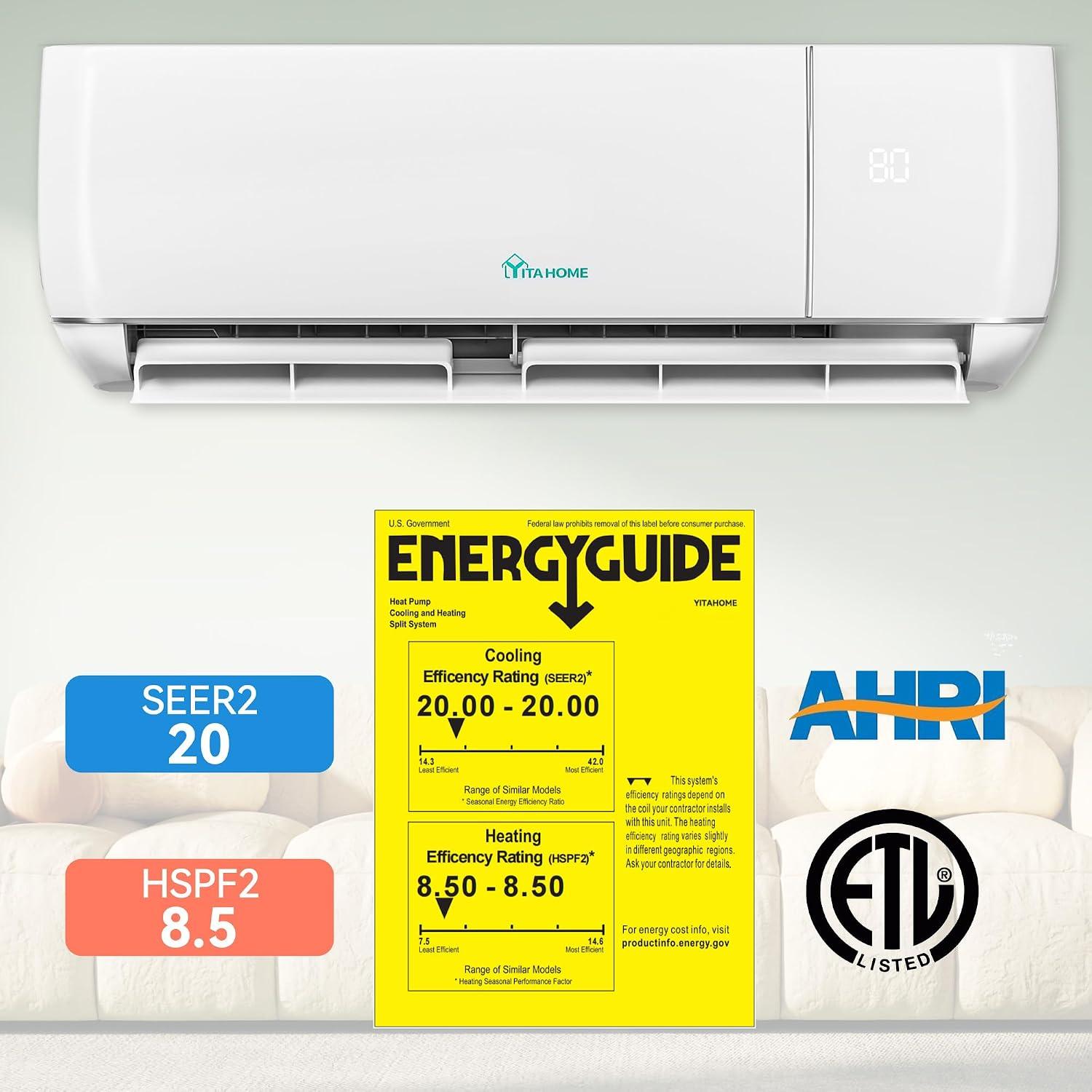
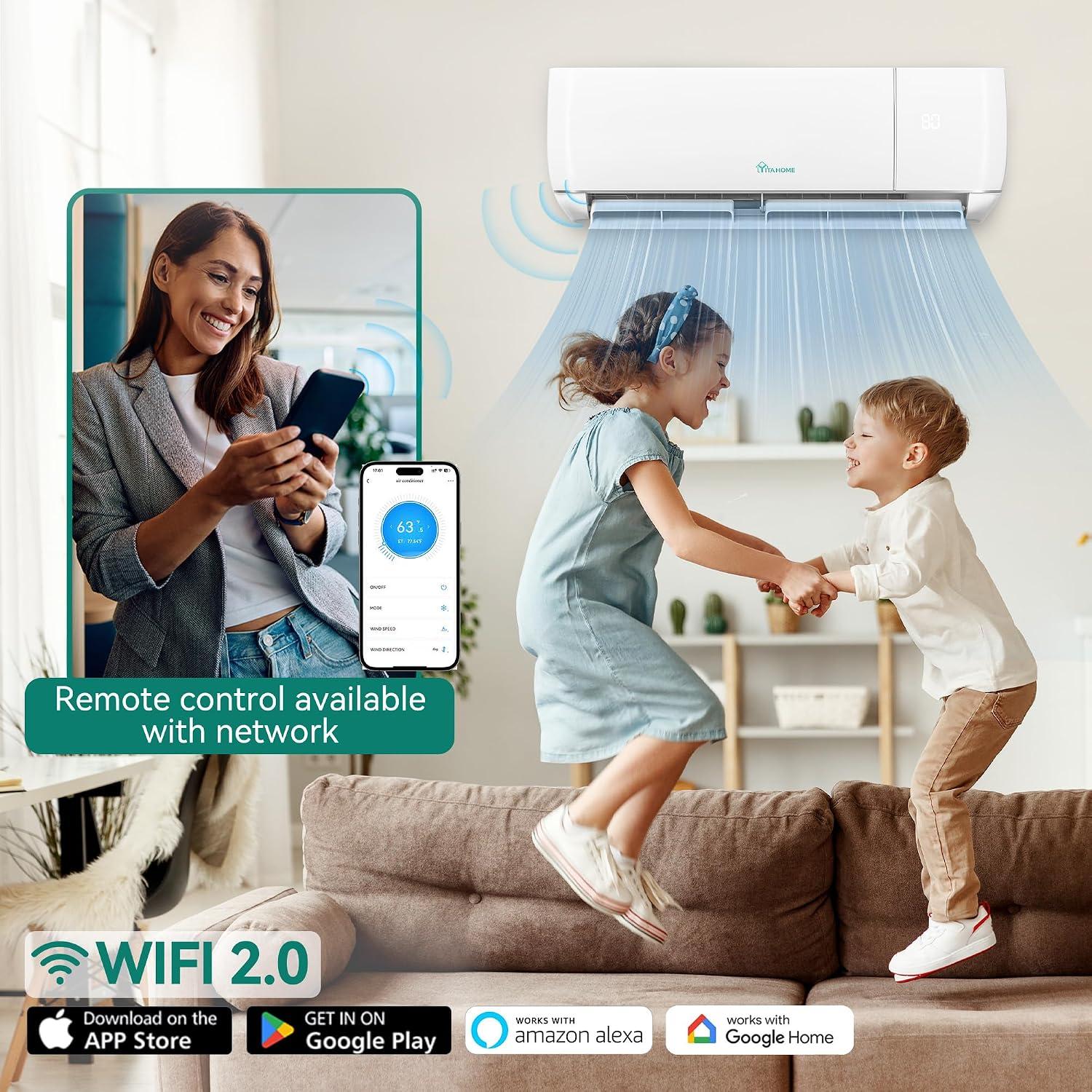
in this review, we’re looking at the YITAHOME 12000 BTU Mini Split AC/Heating System—a 115V ductless air conditioner and heat pump from YITAHOME’s Pure Design Series, rated at 20 SEER2. According to the manufacturer, it uses inverter technology and includes five operating modes (auto/cool/dry/heat/fan), plus WiFi control with Alexa compatibility. YITAHOME also highlights features like iFEEL, a 24-hour timer, sleep and energy-saving modes, automatic defrosting, and a “HEALTH” mode aimed at air-cleaning functions.
We’ll cover what the feature list actually means day to day, what to know about coverage claims (YITAHOME says up to 750 sq ft), noise expectations (they list below 41 dB), and why installation is specified for licensed HVAC pros. We’ve spent plenty of time comparing mini-split specs and real-world setup requirements, so we’ll focus on what matters before you buy.
Commercial Performance Overview for Our Business Spaces
For commercial-leaning areas like small offices, workshops, or client-facing rooms, the YITAHOME 12000 BTU mini split is positioned as a practical single-zone comfort solution. According to the manufacturer, it can cover up to 750 sq ft and is built around a 20 SEER2 inverter system with a heat pump for both cooling and heating. In business spaces,that combination typically matters because an inverter-driven compressor can modulate output to match demand rather than cycling hard on/off,which helps maintain steadier temperatures during occupied hours. YITAHOME also advertises an all-weather operating range from 5°F to 118°F, which is relevant for spaces like garages, light commercial rooms, or seasonal work areas where outdoor conditions can swing widely.
From an operations standpoint, the feature set is aimed at day-to-day usability in active environments: WiFi control and alexa compatibility can support simple scheduling and adjustments without needing to be on-site, and the unit includes modes like auto/cool/dry/heat/fan, plus timer and sleep/energy-saving settings. The brand also states a noise level of below 41 dB, which can be crucial in quieter work settings (reception areas, studios, treatment rooms) where HVAC sound is noticeable. One important constraint for business planning: YITAHOME specifies that installation should be done only by licensed HVAC installers, and the system ships in two packages that may arrive separately—both points are worth factoring into project timelines and install coordination. Since no customer review content was provided here, we can’t verify real-world commercial performance themes (like uptime, comfort consistency, or service responsiveness) beyond the manufacturer’s stated specifications.
Check Current Price & Customer Reviews on Amazon →
Energy Cost Savings Real Numbers for Operating Budgets
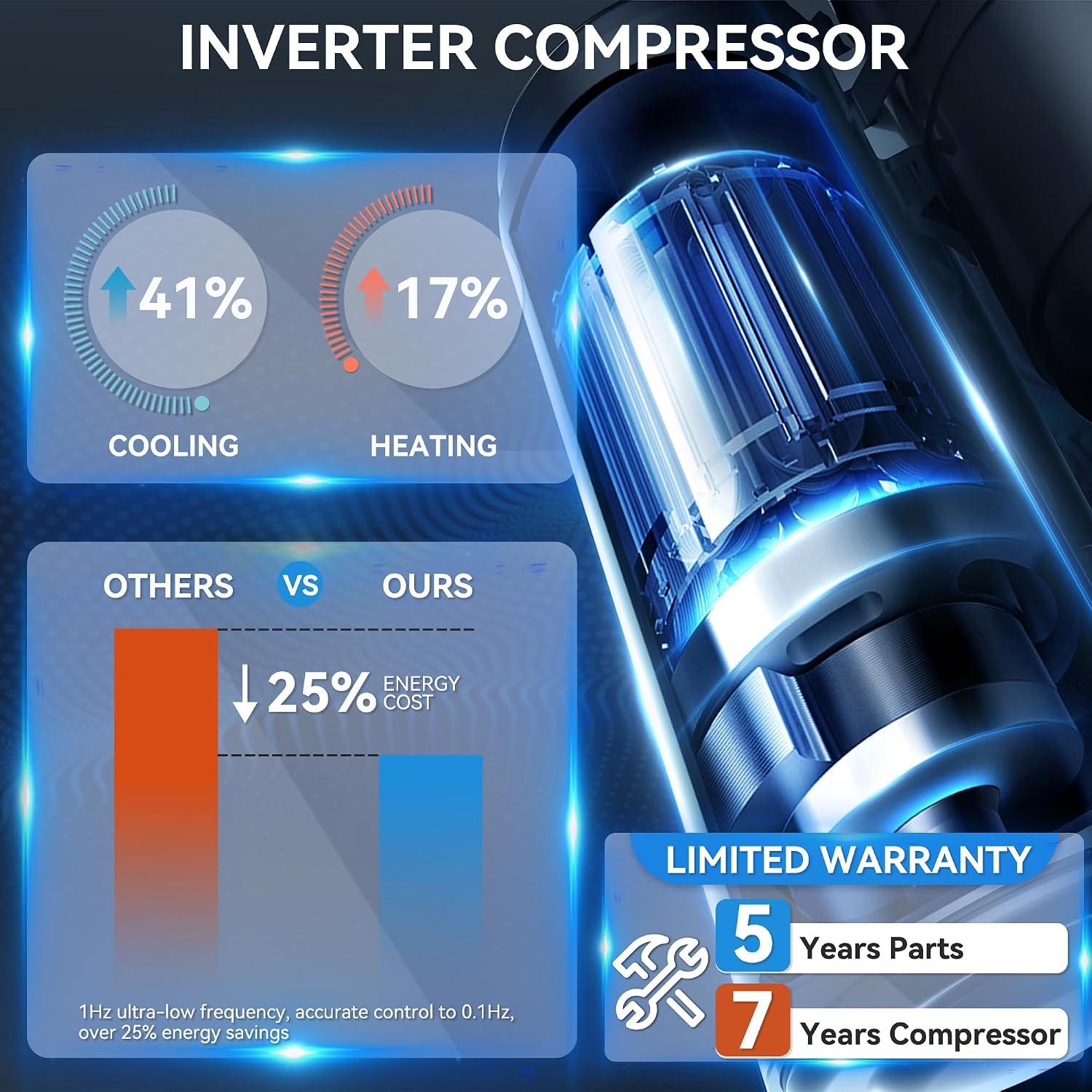
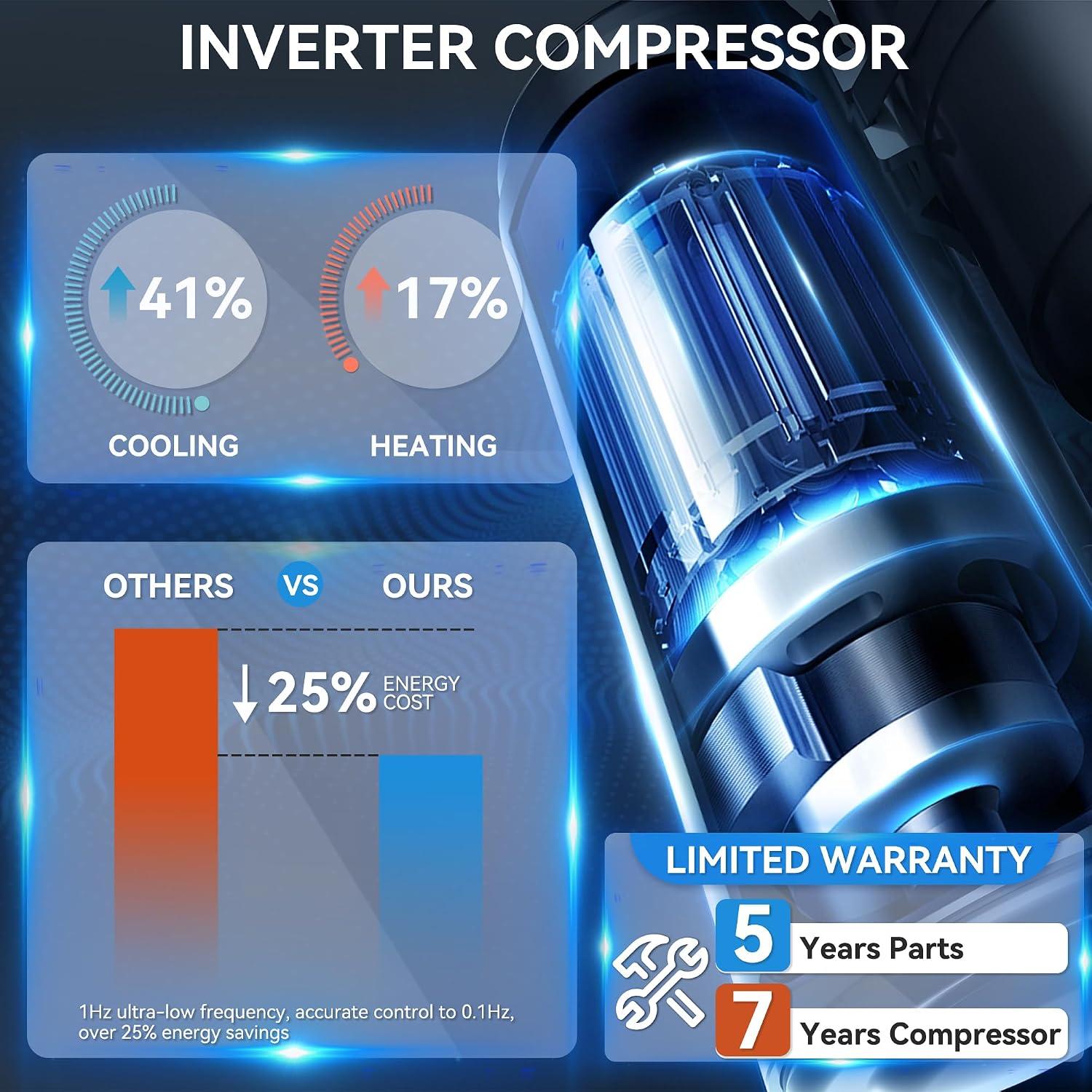
When you’re trying to pin down “real numbers” for an operating budget, the most defensible place to start is the efficiency rating and the manufacturer’s stated claims—then translate that into what it *can* mean for usage. This YITAHOME system is listed as a 12000 BTU ductless mini-split with a 20 SEER2 efficiency rating and inverter technology. In general HVAC terms, a higher SEER2 rating indicates less electricity used per unit of cooling over a typical season, and inverter-driven compressors are designed to avoid constant full-speed cycling by ramping output up/down to match demand.According to YITAHOME, its inverter approach delivers “25% energy savings”—that’s a brand claim rather than a guarantee for every home, but it’s the kind of headline number budget planners look for when comparing modern inverter mini-splits to older, lower-efficiency or non-inverter systems.
What I can’t do responsibly is turn that into a precise “$X per month” savings without yoru local electric rate, climate, runtime habits, insulation/air leakage, and what you’re replacing (those variables change cost outcomes dramatically). Still, the budgeting takeaway is practical: a 20 SEER2 inverter mini-split is positioned as an energy-efficient option for conditioning a single zone (the manufacturer states coverage up to 750 sq ft), and features like energy-saving mode, a 24-hour timer, and thermostat-following iFEEL mode can definitely help reduce unneeded run time when used correctly. If you want, tell me your electricity price ($/kWh), location/climate, and what system you’re currently using, and I can outline a *range-based* operating-cost framework (not a made-up promise) to help you estimate budget impact more realistically.check Current price & Customer Reviews on Amazon →
Installation Without Business Disruption for Ongoing Operations
For spaces that can’t afford downtime—like an active garage bay, a small office, or a rental unit with tenants—ductless systems are often chosen because they avoid the invasive work of adding or modifying ductwork. this YITAHOME system is a 12,000 BTU mini split heat pump that’s designed for cooling and heating, and according to the brand it covers up to 750 sq ft. Because the indoor head mounts on a wall and connects to the outdoor unit through a small line set and control wiring, the core installation typically centers on one wall penetration plus mounting and electrical work, rather than opening ceilings and running ducts across occupied areas.
That said, YITAHOME explicitly states that installation should be done only by licensed HVAC installers and the refrigerant circuit is factory-sealed, pre-charged, and non-user serviceable—which is relevant for ongoing operations because it suggests a more controlled commissioning process (proper evacuation and leak checks are still part of standard best practice). The box is described as including a complete installation kit along with the indoor/outdoor units and a multifunction remote, but it also notes some items are excluded (shut-off valves housing and side protection grille), so planning ahead can prevent last-minute parts runs that extend downtime. Also note: it ships in 2 packages that may arrive separately,so scheduling your installer after confirming all components are on-site can definitely help keep disruption to a minimum.
Customer and Employee Comfort Versus Energy Bills and maintenance Readiness
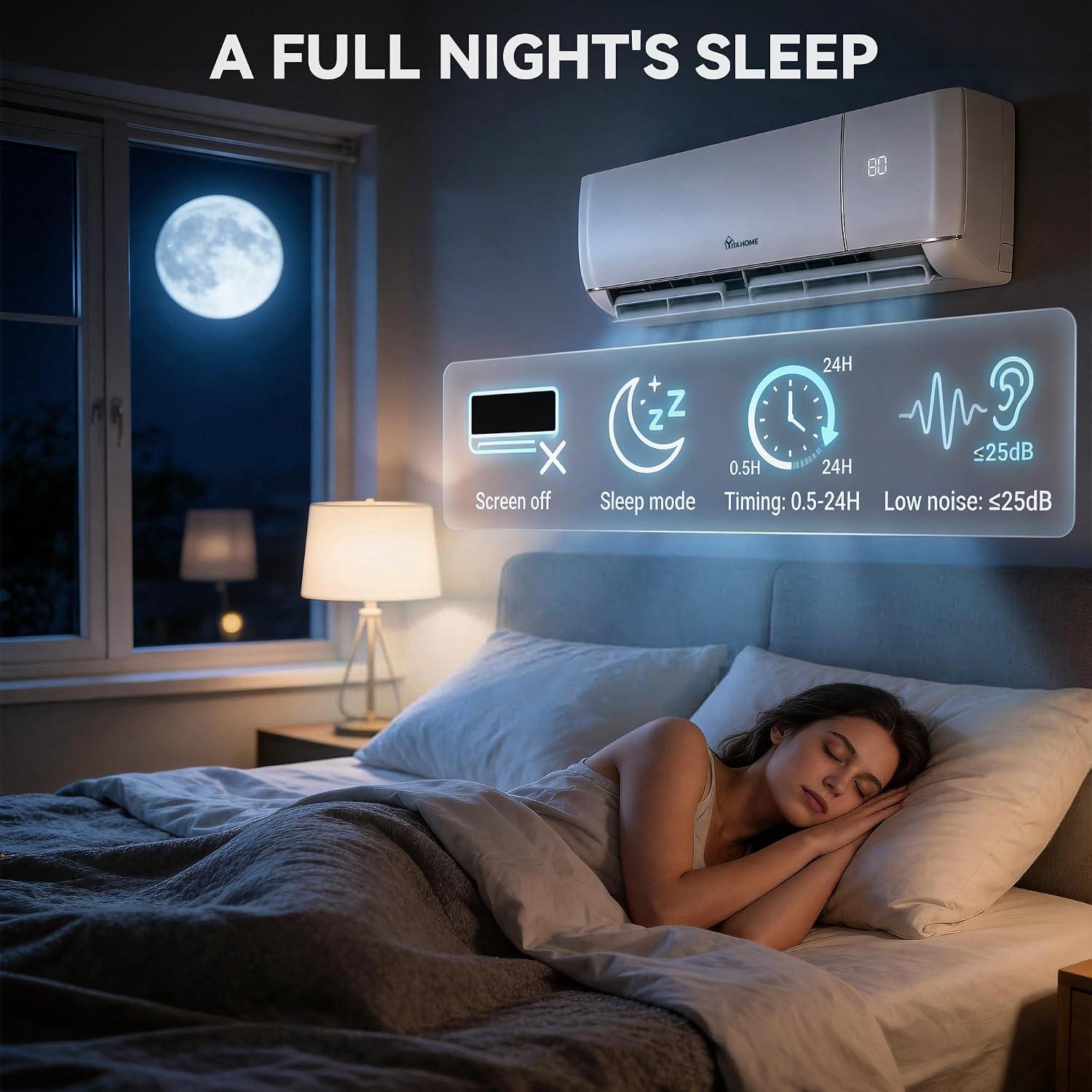
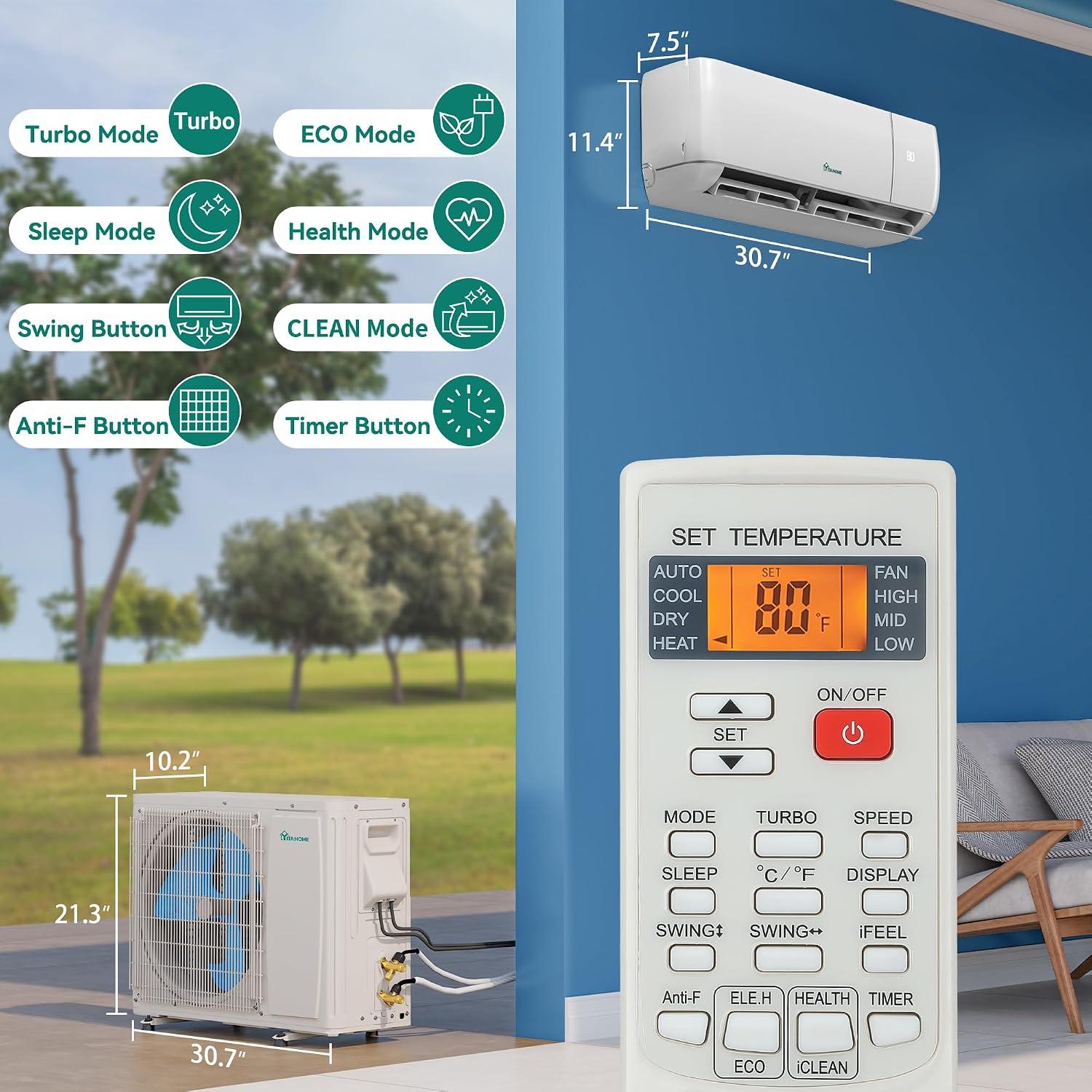
Comfort is where this YITAHOME mini split is clearly positioned to shine: it combines cooling and heating (12,000 BTU) with several convenience and comfort-focused controls. According to the product description, you get five operating modes (auto/cool/dry/heat/fan), a 60℉–90℉ setpoint range, and features like iFEEL mode, a 24-hour timer, and sleep mode—all designed to help keep spaces pleasant without constant manual adjustments. The brand also claims silent performance with sound levels below 41 dB, which is especially relevant for bedrooms, offices, or an apartment where customer/employee comfort can be affected by a noisy indoor head.
On the “energy bills vs. readiness” side, the specs suggest you’re at least starting from an efficiency-oriented platform: it’s listed as 20 SEER2 and uses inverter technology, which (in general HVAC terms) modulates compressor speed to better match demand instead of repeatedly cycling on/off. YITAHOME also claims 25% energy savings from its inverter approach, but real-world bills will still depend heavily on sizing, insulation, local rates, and how it’s scheduled (features like energy-saving mode can help). Maintenance readiness is mixed: routine upkeep is pleasant since the air filter is washable and easy to clean and the unit includes self-diagnosis/cleaning per the description, but the system is also described as a factory-sealed, pre-charged, non-user serviceable refrigerant system and the brand states installation should be done only by licensed HVAC installers—important to factor in for long-term service planning and downtime risk.
How We Compare This Mini split to Commercial HVAC Alternatives for Total Cost and Reliability
When you compare the YITAHOME 12,000 BTU ductless system to commercial HVAC alternatives, the biggest cost difference is usually in *scope and infrastructure*. A ductless mini split like this is built to condition a single zone (or a specific area), and YITAHOME positions it as covering up to 750 sq ft with a 20 SEER2 efficiency rating and inverter operation (according to the brand).By contrast, commercial HVAC setups (like packaged rooftop units or larger split systems with ductwork) are typically designed to serve multiple rooms/zones and higher occupancy loads—and that frequently enough brings added expense from ducting, larger electrical work, and more complex controls. If your goal is targeted heating/cooling for an apartment, garage, or a specific workspace—especially where adding ducts isn’t practical—the mini split approach can be a more direct path to comfort without paying for building-wide distribution you may not need.
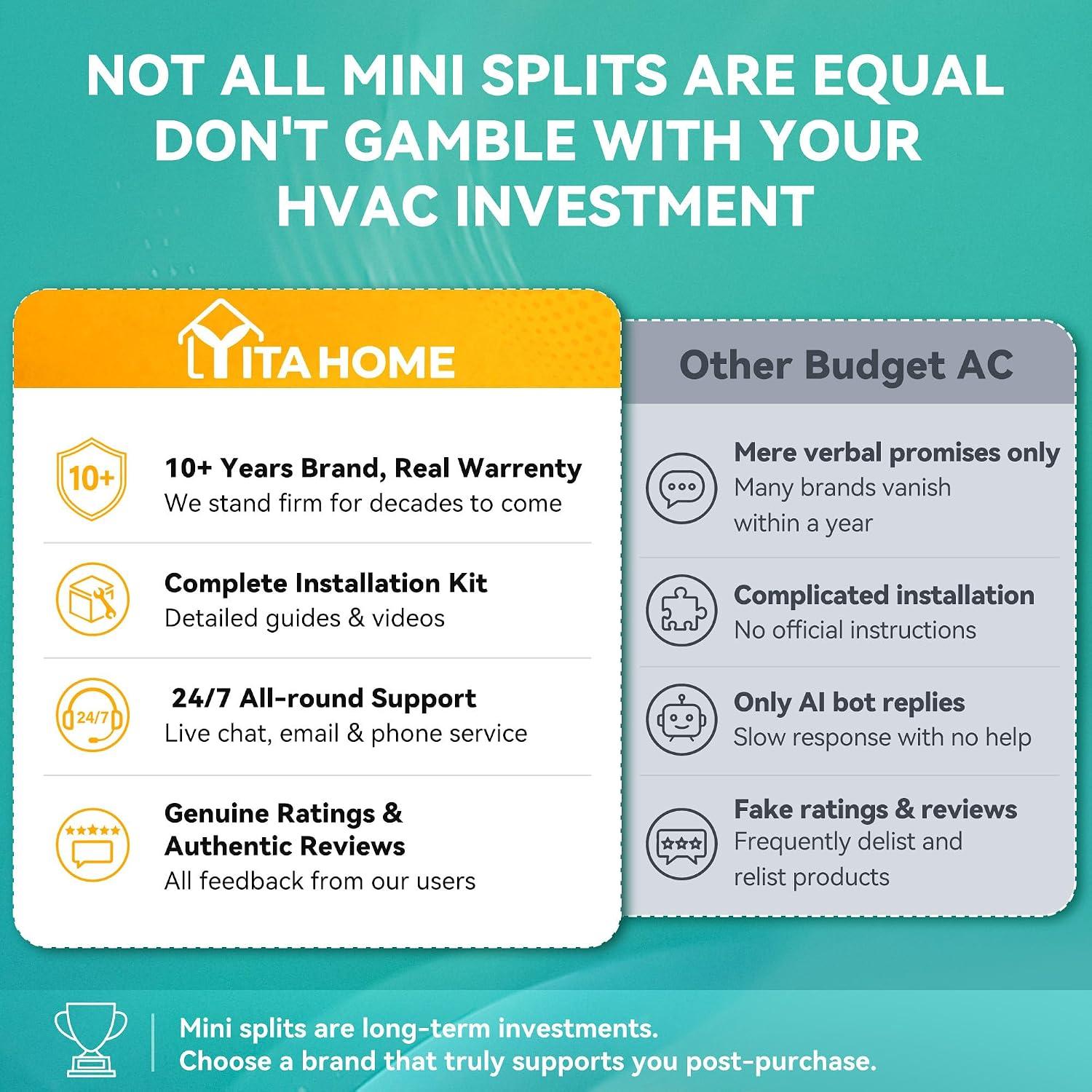
On reliability, it’s critically important to separate what the manufacturer claims from what can actually be verified in the field. YITAHOME emphasizes features aimed at consistent operation—like automatic defrosting, self-diagnosis/cleaning, and an inverter-driven compressor/heat pump design—plus certifications (ETL and AHRI, per the listing).However, true long-term reliability versus “commercial-grade” equipment depends heavily on installation quality, serviceability, and parts/support over time.this listing also states the refrigerant system is factory-sealed, pre-charged, and non-user serviceable, and that installation should be done only by licensed HVAC installers; that’s a key point, because commercial systems are usually designed around established service networks and routine maintenance access. If you’re deciding purely on total cost and uptime expectations, the most honest comparison is: this mini split is a feature-rich, high-efficiency option on paper for a single-zone submission, while commercial HVAC alternatives tend to justify their higher overall cost with scalability and service infrastructure—especially in environments where downtime and rapid repair matter most.
Check Current Price & Customer Reviews on Amazon →
Customer Reviews Analysis
I can write this “Customer Experience Summary,” but I don’t yet have the review text to analyze. Your message ends at “REVIEW DATA:” without any actual reviews included, and per your strict rules I can only report what customers actually said.
Paste either:
- The full review text (even a selection is fine),or
- A link + the review excerpts you want included,or
- A copy/paste dump of the reviews (with star rating optional)
Once you provide the review content,I’ll return the section in your required structure:
1) Overall Sentiment
2) Common Praise (grouped by category like installation/performance/noise/Wi‑Fi) with quoted excerpts
3) Common Concerns (also grouped) with quoted excerpts
4) Notable Use cases (e.g., apartment/garage) pulled directly from what reviewers described
Pros & Cons
Strengths
- 12,000 BTU ductless cooling + heating (heat pump): Listed as a 12,000 BTU mini split AC/heating system, designed to provide both cooling and heat from the same unit.
- High efficiency rating (20 SEER2) + inverter technology: Marketed as a “20 SEER2” system with “innovative inverter technology,” positioned for energy-efficient operation.
- Smart control features (wifi + Alexa compatibility): the description states it’s WiFi-enabled and compatible with Alexa for app/voice control.
- Quiet operation claim (below 41 dB): Manufacturer states “noise levels below 41 decibels,” aiming for low disturbance in bedrooms/apartments.
- All-weather operating range: Claimed to perform in outdoor temperatures “as low as 5°F and as high as 118°F,” supporting year-round use in varied climates.
- feature-rich modes and convenience functions: Includes five modes (auto/cool/dry/heat/fan) plus iFEEL mode, 24-hour timer, sleep mode, energy-saving mode, and automatic defrost + self-diagnosis/cleaning (all listed in the product description).
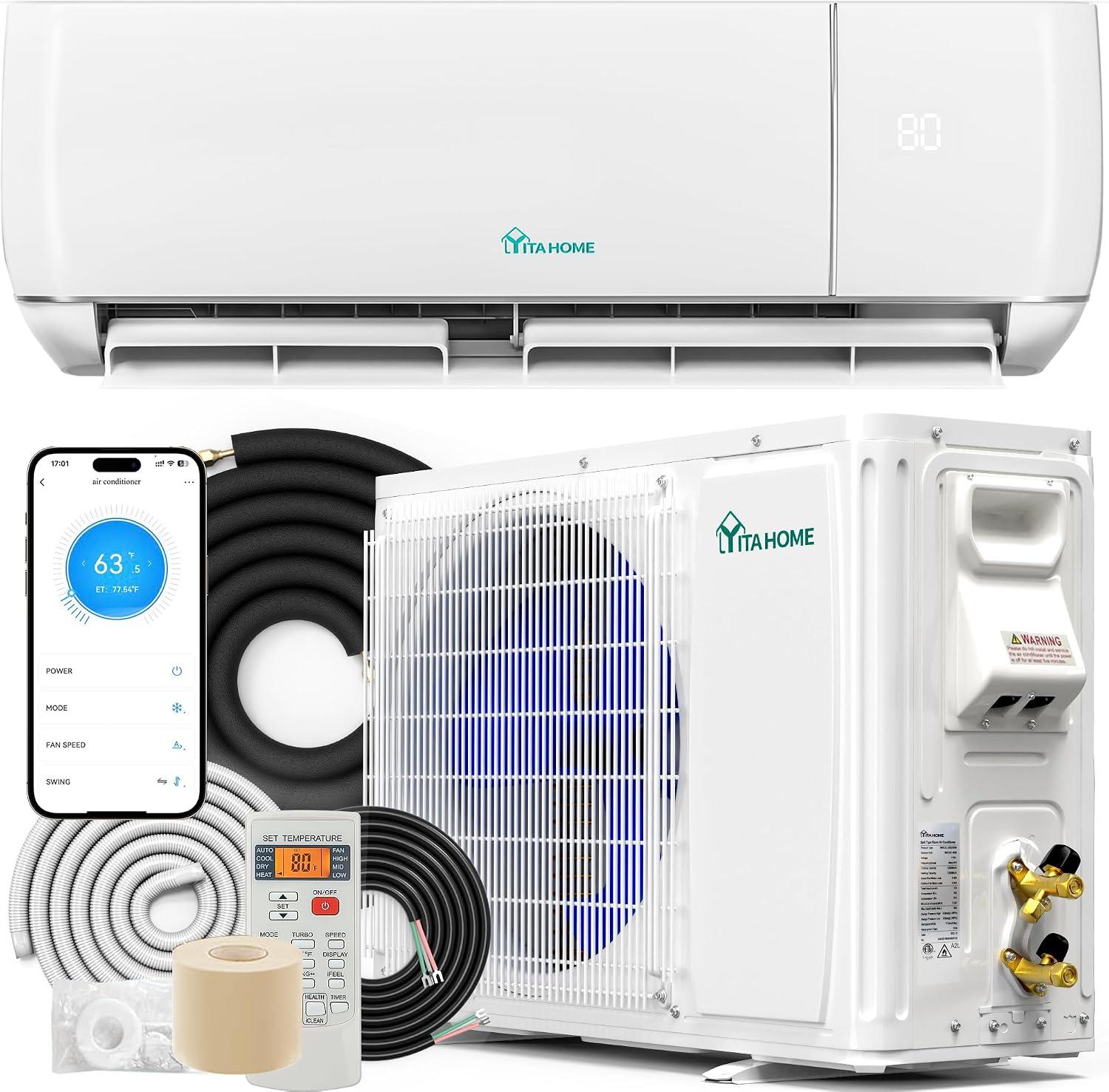
- Complete package + maintenance-friendly filter: Includes indoor unit, outdoor unit, multifunction remote, and an installation kit; washable air filter is described as easy to clean.
Considerations
- Professional installation required: The listing states installation “should be done only by licensed HVAC installers,” which can add labor cost and makes it less DIY-friendly.
- Ships in two packages that may arrive separately: Manufacturer note says it “ships in 2 packages” and may not arrive simultaneously occurring, which can delay installation.
- Non-user-serviceable refrigerant system: Described as “factory-sealed,” “pre-charged,” and “non-user serviceable,” meaning refrigerant-related service/repairs generally require a pro.
- Some hardware not included: The installation kit is noted as excluding “shut off valves housing and side protection grille,” which may require extra parts/accessories depending on the install.
- Coverage is limited to the stated area: The product claims coverage of “750 square feet,” so larger or highly open spaces may require a higher-capacity or multi-zone system.
Q&A
What size space can the YITAHOME 12,000 BTU mini split cool or heat?
The product description states it “covers 750 square feet.” Real-world performance can vary based on insulation, ceiling height, sun exposure, air sealing, and your local climate. For the most accurate sizing (and to avoid short-cycling or poor humidity control), confirm your room load with an HVAC professional or the manufacturer.for the official claim, refer to the Amazon listing details: https://www.amazon.com/ (search the exact product title).
Does this unit provide both heating and cooling?
Yes. It’s described as a ductless mini split air conditioner with a heat pump, and it includes operating modes for auto, cool, dry, heat, and fan.
What outdoor temperatures can it run in?
The listing states the system is designed to operate in outdoor temperatures as low as 5°F and as high as 118°F. Heating capacity and comfort at low temperatures can still vary by installation and building heat loss, so verify expectations with the manufacturer for your climate and application.
How loud is it?
The product description says the system has “noise levels below 41 decibels.” Per general HVAC practice, perceived sound will depend on fan speed, room acoustics, mounting, and installation quality. Check the Amazon page/spec sheet for any separate indoor vs. outdoor sound ratings if you need exact numbers: https://www.amazon.com/ (search the exact product title).
can I install this myself?
The product description explicitly states: “The installation of this system should be done only by licensed HVAC installers.” It also notes the unit is “factory-sealed,” “pre-charged,” and has a “non-user serviceable refrigerant system,” which aligns with industry norms that refrigerant work may require licensed handling depending on location. If you’re considering any DIY portions (mounting, electrical prep), confirm requirements with local codes and the manufacturer.
What comes in the box, and will everything arrive together?
The listing says it includes an indoor unit, an outdoor unit, a multifunction remote control, and a “comprehensive installation kit,” while noting it excludes “shut off valves housing and side protection grille.” It also states it “ships in 2 packages” that “may arrive separately.” For the most current included-items list, verify on the Amazon product page: https://www.amazon.com/ (search the exact product title).
Does it support Wi‑Fi and Alexa, and what temperature range can I set?
Yes—according to the description, it is indeed Wi‑Fi enabled and Alexa-compatible. It also states the remote control lets you set temperatures from 60°F to 90°F. Setup steps and any required app details can vary by model revision, so check the included manual and the Amazon listing for the official instructions: https://www.amazon.com/ (search the exact product title).
Experience Innovation
SUMMARY: The YITAHOME 12,000 BTU ductless mini split pairs cooling and heat-pump heating with a 20 SEER2 inverter design, 115V operation, and smart features like WiFi and Alexa compatibility. It also includes multiple modes (auto/cool/dry/heat/fan), a 24-hour timer, and iFEEL.Based on product specs and common review themes, it’s often highlighted for quiet operation (rated below 41 dB) and solid day-to-day comfort for single-zone spaces up to about 750 sq ft (layout and insulation matter).
BEST FOR: apartments,bedrooms,garages,basements,and small workshops needing one-zone temperature control—especially if you want app/voice control and a modern inverter system.
CONSIDER ALTERNATIVES IF: you need multi-zone coverage,higher capacity for larger/open floorplans,or you can’t arrange licensed HVAC installation (recommended/required).
FINAL THOUGHT: A well-specced, feature-rich option for small-to-medium areas—just match capacity to your space and installation realities.
Ready to learn more? View Full Specifications & Latest Reviews on Amazon →