

Struggling to cool (or heat) a big, awkward space—like an open-plan living area, a partitioned office, or a high-ceiling room—without ugly wall units or uneven airflow? That’s exactly the problem the TOSOT Cosmo Series 34,000 BTU concealed ducted mini-split aims to solve. It’s a 230V ducted mini split air conditioner designed for light commercial and residential use, built around high static pressure ducting, up to 1,324 CFM airflow, and six fan speeds (including Turbo) for faster temperature changes. It also includes a built-in water pump, a smart wired controller with app control, and safety features like a float switch and refrigerant leakage sensor that trigger alerts on the controller.
in this review, we’ll break down what these features mean in real installations—layout options, maintenance access needs, and where ducted design really shines. We’ll also highlight recurring customer themes, like “worked as intended,” alongside notes such as no temperature reading on the app mentioned by one reviewer. Our outlook comes from broad experience comparing mini-split styles and what to look for before choosing ducted.
commercial Performance Overview for Light Commercial Operations
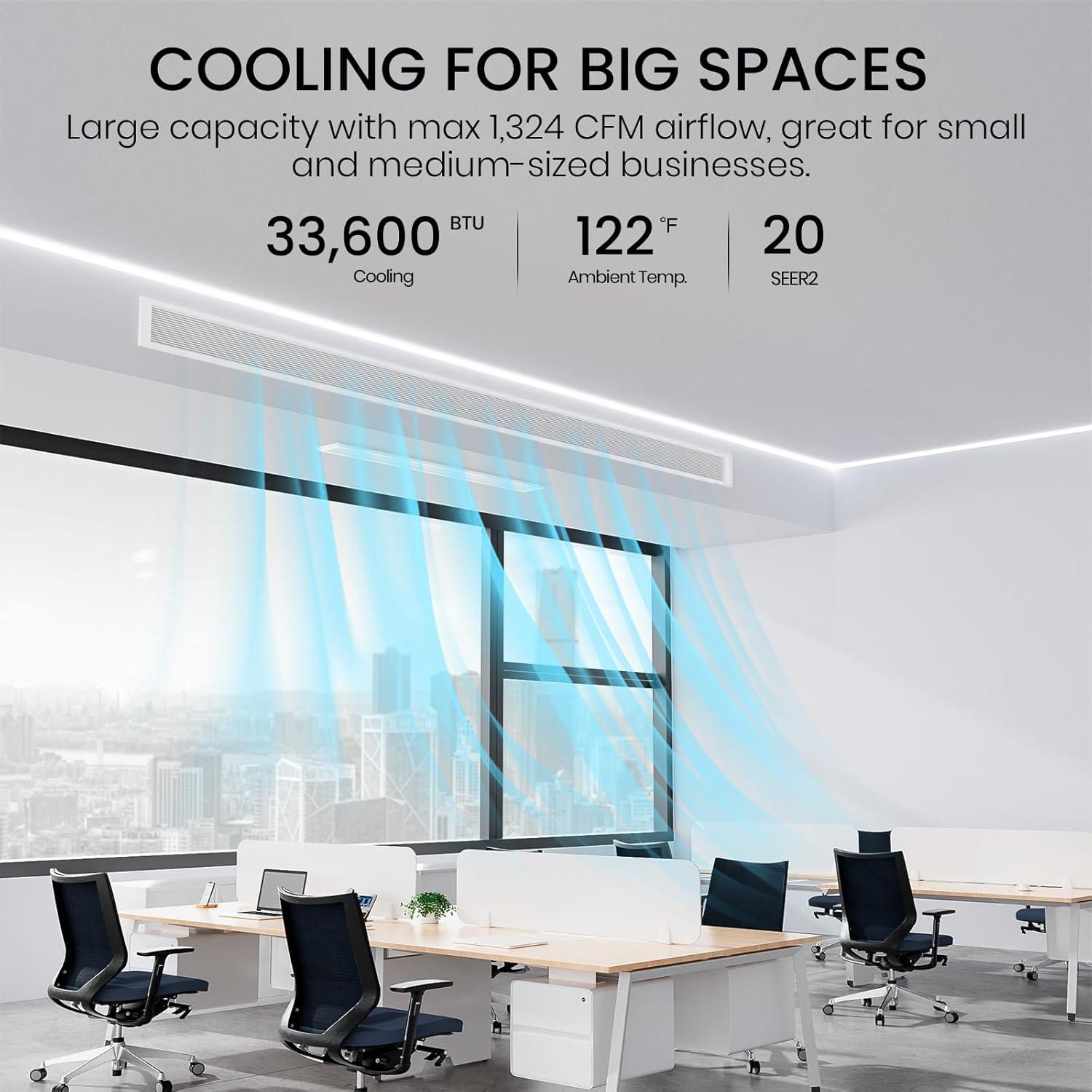
For light commercial settings where duct runs are longer and ceiling space is tight (office partitions, corridors, small retail, gyms), the TOSOT Cosmo is positioned as a high-output concealed duct option. According to TOSOT, this ducted system provides 34,000 BTU of cooling/heating and up to 1,324 CFM airflow, supported by 6 fan speeds (including Turbo) to help push conditioned air through multi-vent layouts. the manufacturer also highlights a high static pressure design with adjustable external static pressure (0–1.106 in. WC),which is a key spec for maintaining airflow in branch ducts and more complex ceiling distributions commonly seen in light commercial buildouts.
Operationally, the product description emphasizes features aimed at minimizing downtime risks and improving control in commercial day-to-day use: a built-in water pump (to reduce gravity-drain limitations and allow upward pipe routing), a float switch that can trigger an alarm on the wired controller if condensate rises too high, and a refrigerant leakage sensor that also alerts on the controller. In customer reviews,performance sentiment is generally positive—one reviewer said it is “installed and working… overall solid product worked as intended,” while noting their heat output felt cooler than expected and they wanted to check refrigerant charge; another called the unit “awesome” so far. For planning purposes, TOSOT notes the system ships in multiple packages and recommends certified technicians plus adequate access panels for future service—practical considerations that matter more in commercial environments where maintenance access and scheduling are part of the total cost of ownership.
Check Current Price & Customer Reviews on Amazon →
Energy Cost Savings Real Numbers for Our Monthly Operating Costs

TOSOT positions the Cosmo Series concealed ducted system as an energy-conscious option,and the efficiency story here is tied more to *how it runs* than to any guaranteed “$X per month” reduction. According to the product description, it uses an inverter compressor and R32 refrigerant, plus an energy-saving mode that “automatically adjusts cooling to maintain a comfortable temperature while reducing unnecessary power consumption.” In practical monthly operating-cost terms, inverter-driven systems typically help avoid the expensive on/off cycling you get with older fixed-speed equipment; rather, they modulate output to match the load, which can reduce waste during long partial-load periods (common in offices, living areas, and shoulder seasons). Having mentioned that, the listing doesn’t provide a SEER/SEER2 rating or any standardized consumption numbers, so it wouldn’t be honest to promise a specific dollar savings without your local electric rate, runtime, and installation details.
If you want “real numbers” for your own monthly budget, the most defensible approach is to measure and log: track your thermostat setpoints and hours of operation, then compare electric bills (or, better, a submeter) before and after—while keeping weather in mind. The good news is the included smart wired controller and app-based controls can make it easier to schedule runtimes, use sleep/dehumidification settings, and avoid running at full output when the space is unoccupied—habits that frequently enough show up as noticeable operating-cost improvements even when the equipment is oversized for the load. Customer feedback in the provided reviews is mostly about overall satisfaction (“worked as intended,” “awesome”), but it doesn’t include verified bill reductions, so any savings claims would be speculation. For budgeting, assume the biggest drivers will be: correct sizing/design of the duct system (static pressure and duct losses matter), proper refrigerant charge commissioning, and how consistently you use the energy-saving mode rather than Turbo.
check Current Price & Customer Reviews on Amazon →
Installation without Business Disruption for Active Worksites
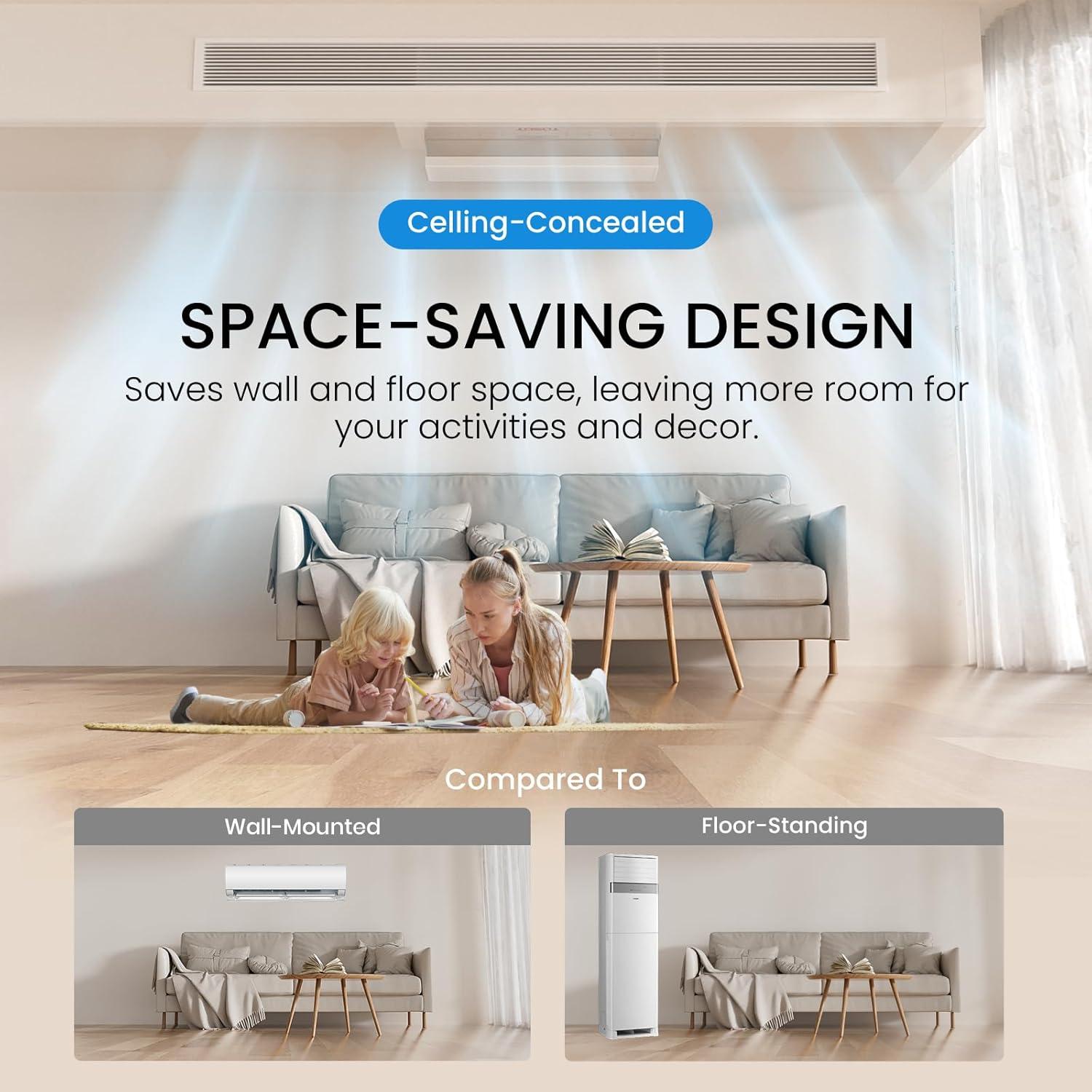
Keeping an active office, retail floor, or occupied home comfortable during an HVAC upgrade often comes down to how “invisible” the install can be.According to TOSOT, the Cosmo Series is built around flexible concealed-duct configurations—including side discharge & bottom return, side discharge & rear return, bottom discharge & bottom return, and side discharge & side return—so the indoor unit can be tucked into partial or full ceiling cavities while supply/return grilles are placed where they’re least disruptive. The product description also notes the return vents can be hidden above furniture (like TV cabinets or sofas), which is useful for staged installs where you want to limit how much of the occupied area is opened up at onc. For worksites with long duct runs or higher ceilings, TOSOT also highlights a high static pressure design (0–1.106 in. WC), intended to support more complex duct layouts without forcing major room-by-room downtime.
Drainage is another common source of disruption—especially when you can’t easily maintain gravity slope through an existing ceiling. Here, TOSOT includes a built-in water pump and describes upward pipe routing and active drainage that reduces the risk of water buildup, which can definitely help avoid opening large sections of ceiling just to chase a drain pitch. The unit also includes a float switch that can trigger an alarm on the smart wired controller if condensation rises too high, which is designed to help prevent ceiling leak damage during day-to-day operation. One practical note from the manufacturer: it ships in multiple packages, so it’s worth confirming all components have arrived before you schedule a crew—missed boxes can turn a planned “overnight” changeover into an unexpected multi-day interruption.
Check Current Price & Customer Reviews on Amazon →
Customer and Employee Comfort Without Sacrificing Efficiency
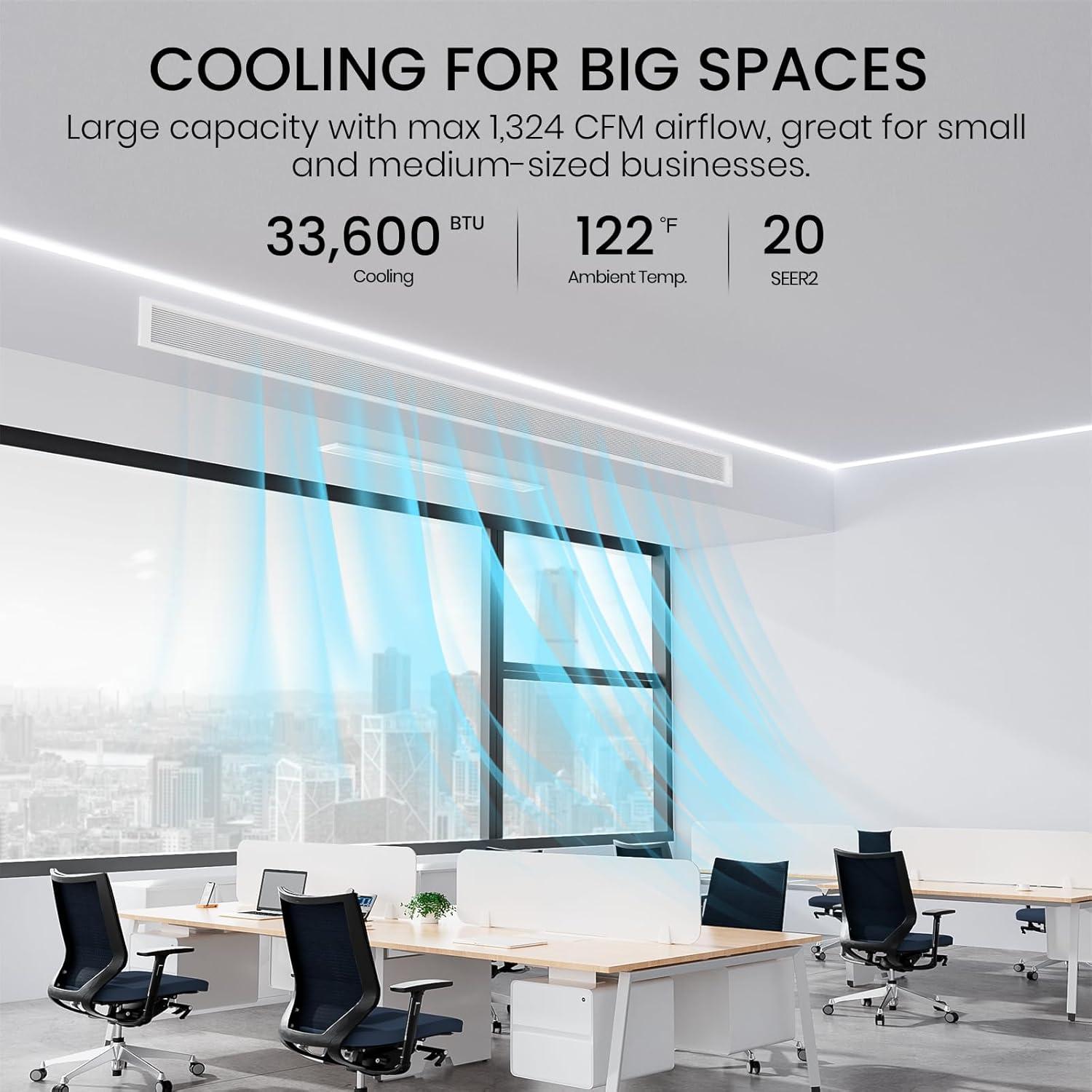
Balancing comfort for customers and employees is where a concealed ducted system like the TOSOT Cosmo can shine. According to TOSOT, this unit delivers 34,000 BTU of cooling and heating with up to 1,324 CFM airflow, plus 6 fan speeds (including Turbo) to help spaces recover quickly after doors open, sun loads shift, or occupancy spikes. For offices, stores, and larger residential layouts, that combination of high airflow and a high static pressure design (0–1.106 in. WC, adjustable) is intended to keep air moving through longer duct runs and multiple vents—supporting more even temperatures without needing an obtrusive wall-mounted head in every area.
Comfort features don’t have to come at the expense of day-to-day efficiency and operational control, either.TOSOT states the system uses an inverter compressor and includes an energy-saving mode designed to maintain comfort while reducing unnecessary power use, and you also get dehumidification, sleep mode, and a timer for more tailored operation. for commercial-like installs where reliability matters to occupants, the built-in pump with float switch is designed to actively manage condensate and trigger an alarm on the wired controller if water rises too high, helping reduce the risk of ceiling leaks. From the limited customer feedback available, reviewers generally describe it as working as intended and “awesome,” though one noted the app lacks a temperature reading, which could be a comfort-management drawback if you rely heavily on remote monitoring.
Check Current Price & Customer Reviews on Amazon →
Maintenance and Warranty Coverage for Commercial Use
For light commercial settings, maintenance planning matters as much as raw capacity, and TOSOT’s own guidance repeatedly emphasizes access. Because this is a concealed ducted system—often installed above ceilings or within soffits—TOSOT notes you should ensure adequate access panels are provided for future maintenance and servicing. That’s especially crucial here since the unit includes a built-in water pump with a float switch that can trigger an alarm on the wired controller if condensate reaches a critical height, helping reduce ceiling-leak risk—but only if the drain path and pump can be inspected and kept clear.In practical terms, commercial-style upkeep usually includes regular filter checks/cleaning (more frequent in dusty offices, gyms, and shops), keeping supply/return grilles and ducts clean, and periodically confirming condensate drainage is flowing freely—particularly valuable when the design allows upward pipe routing rather than relying on gravity.
On warranty coverage, the listing does not provide specific warranty terms or durations, so it wouldn’t be accurate to claim a particular warranty length or what “commercial use” does or doesn’t cover. What TOSOT does state is that the system needs certified technicians for safety and system optimization, which is a strong signal that professional installation and proper commissioning are expected and can matter for long-term reliability (and, with many HVAC brands, may also impact warranty eligibility—verify this in the included documentation or with the seller/manufacturer). Also note the product’s critically important notice that it ships in multiple packages—TOSOT recommends confirming everything has arrived before scheduling installation,which can definitely help avoid delays and potential disputes if something is missing. If warranty certainty is critical for a commercial space, the safest move is to request the written warranty document before purchase and confirm whether “light commercial” operation changes any terms.
Check Current Price & Customer Reviews on amazon →
Comparison to Commercial Alternatives for Our Total Cost of Ownership
When you compare the TOSOT Cosmo to commercial alternatives (like larger ducted systems or more complex VRF-style setups), the Total Cost of Ownership picture often comes down to installation complexity and the “extras” you’d otherwise have to add. According to TOSOT, this unit is a 34,000 BTU ducted mini split designed for light commercial and residential use, with up to 1,324 CFM airflow, a high static pressure design (0–1.106 in. WC) for longer or more complex duct runs, and flexible supply/return configurations for different ceiling conditions. Those capabilities are the kinds of features that can reduce the need to step up to pricier commercial equipment when you still want concealed ducting, multiple vents, and strong airflow—especially in spaces like offices, gyms, stores, and large residential layouts (all applications mentioned in the product description). It also includes an inverter compressor and R32 refrigerant, which are commonly associated with more efficient, variable-output operation (without making any promises about exact bill savings).
From a cost-control perspective, the biggest TCO-friendly differentiators here are the components meant to prevent common “hidden costs” over time—like drainage issues and service calls triggered by condensate problems. TOSOT highlights an integrated water pump that can route drainage upward (reducing gravity-drain constraints), plus a float switch that can trigger an alarm on the wired controller if water reaches a critical level, and a refrigerant leakage sensor that also alerts through the controller. In many commercial installs, those safeguards can otherwise mean additional parts, added labor, or more ceiling rework if the drain layout is challenging. That said, the product description also notes that installation may require flexible canvas duct and grilles (not included) and that it ships in multiple packages, so budgeting accurately means accounting for those job materials and coordinating delivery before scheduling a technician. Customer feedback is limited in the provided reviews, but one reviewer noted the unit was “working” and “solid,” while another mentioned a possible low charge and also pointed out there’s no temperature reading on the app—both reminders that long-term ownership costs can hinge on install quality and the specific control/monitoring features you expect.
- 34,000 BTU ducted mini split (Cosmo Series) for light commercial & residential use
- Up to 1,324 CFM airflow; 6 fan speeds including Turbo
- inverter compressor + R32 refrigerant; includes energy-saving mode (per TOSOT)
- Built-in water pump + float switch with wired-controller alarm (per TOSOT)
- High static pressure: adjustable 0–1.106 in.WC for longer duct runs (per TOSOT)
- Smart wired controller + app control (note: one reviewer reports no temp reading in app)
Check Current Price & Customer Reviews on Amazon →
Customer Reviews Analysis
Customer Experience Summary (Based on Provided Reviews)
1. Overall Sentiment
Overall tone was positive, with both reviewers describing the unit as “solid” / “awesome” and saying it “worked as intended,” though one reviewer raised a performance concern and noted an app limitation.
2. Common Praise
Performance / Functionality
- Multiple reviews praised that it was installed and working and “worked as intended.”
- One reviewer emphasized strong early satisfaction: “So far this thing is awesome.”
Value (Price)
- One reviewer explicitly praised the cost: “the price was beyond awesome.”
Seller Experience
- One reviewer highlighted the buying experience: “The seller is awesome…”
3. Common Concerns
Cooling / Charge Concern
- One reviewer suspected a refrigerant charge issue as heating performance seemed weaker than expected compared to other units: “charge might be low as heat is cooler than other mini splits” and they wanted to “check the charge.”
App / Controls
- A specific limitation mentioned was: “No temperature reading on app.”
4. Notable Use Cases
Post-install, early operational check
- One reviewer described it as already installed and running, and compared its heat output to “other mini splits,” suggesting they were evaluating it against prior HVAC experience and considering verifying refrigerant charge.
- Another reviewer framed their experience as a new purchase in early use, saying “So far” it was performing great and expressing optimism if it continues to run properly.
Pros & Cons
Strengths
- high-capacity cooling & heating (34,000 BTU) with strong airflow: The Cosmo ducted unit is rated at 34,000 BTU and delivers up to 1,324 CFM for larger residential or light-commercial spaces per the product description.
- Designed for complex duct runs and higher ceilings: High static pressure design with adjustable external static pressure (0–1.106 in. WC) supports longer duct runs and multi-branch systems (manufacturer specs/claims).
- Flexible concealed-duct installation configurations: The listing describes multiple supply/return options (e.g., side discharge with bottom return, side discharge with rear return, bottom discharge & bottom return), and notes the default side return can be converted to bottom return.
- Built-in condensate pump with safety monitoring: Integrated water pump enables upward drainage routing (reduced need for continuous downward slope), plus a float switch that triggers an alarm on the wired controller when water level is too high (product description).
- Safety alert for refrigerant leaks: Built-in refrigerant leakage sensor monitors indoor refrigerant concentration and triggers an alert on the wired controller if a leak is detected (product description).
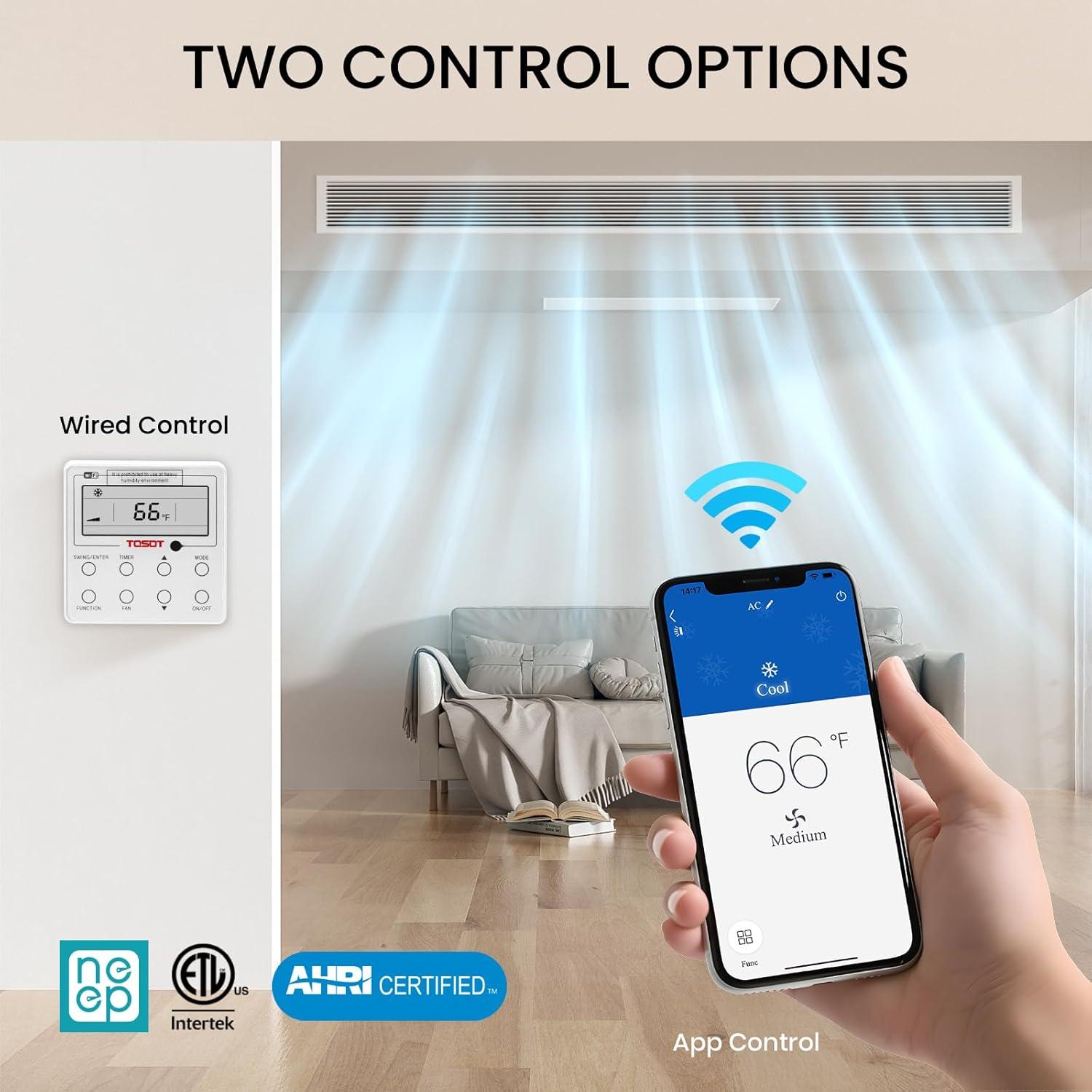
- Smart control options included: Comes with an intuitive wired controller and supports app control for remote adjustments, including settings like timer, dehumidification, and sleep mode (product description).
Considerations
- Installation is not “plug-and-play” and requires planning: The product notice says it needs certified technicians for safety/system optimization, and you must ensure the ceiling has adequate load-bearing capacity (manufacturer notice).
- Ships in multiple packages (coordination risk): The listing warns it ships in multiple packages and you should confirm all items are received before scheduling installation, which can complicate timing (manufacturer notice).
- Some installation components are not included: The description notes installation may require flexible canvas duct and grilles, which are “not included,” adding extra parts sourcing and cost.
- App limitations reported by a customer: One review specifically notes “No temperature reading on app,” which may matter if you rely on app-based monitoring.
- Performance may depend on correct refrigerant charge (per customer feedback): One reviewer said the unit was installed and working but suspected the “charge might be low” as heat felt cooler than other mini splits—suggesting commissioning/charge verification might potentially be critically important after install.
Q&A
Does this TOSOT Cosmo ducted unit provide heating as well as cooling?
Yes. The product description specifies “Powerful Cooling & Heating,” and it’s designed to operate in outdoor conditions from -13°F to 122°F (per the listing description). Actual heating performance at very low temperatures can vary by building heat loss, duct design, and installation quality.
How much airflow does it move, and is it suitable for duct runs with multiple vents?
TOSOT lists up to 1,324 CFM airflow and 6 fan speeds including Turbo mode. It’s also described as a “High Static Pressure Design” with adjustable external static pressure of 0–1.106 in. w.c., intended to support duct systems with multiple branches and bends and longer duct runs (per product description). Correct duct sizing and balancing are still critical for even airflow.
What installation configurations are supported (supply/return positions)?
The listing describes multiple concealed-duct configurations, including: side discharge & bottom return, side discharge & rear return, bottom discharge & bottom return, and side discharge & side return. It also states the default side return air can be converted to bottom return, and that supply/return vents can be placed on the side or bottom to fit partial or full ceiling structures.Grilles and flexible canvas duct are mentioned as potentially required but “not included” (per product description).
Does it have a built-in condensate pump, and what protections are included to prevent leaks?
Yes. The product description states it has a built-in water (drainage) pump, which can reduce gravity-drain limitations and allow upward pipe routing (helpful where a continuous downward slope isn’t possible). It also lists a built-in float switch that monitors condensate level and triggers an alarm on the wired controller if the water reaches a critical height, to help prevent ceiling leak damage.
Is there a refrigerant leak alert or safety sensor?
According to the listing, it includes a “Refrigerant Leakage Sensor” that monitors indoor refrigerant concentration levels and triggers an alert on the wired controller if a leak is detected. If you see an alert, follow the manual and contact a qualified HVAC technician for inspection and repair.
What control options are included (wired controller, app features)?
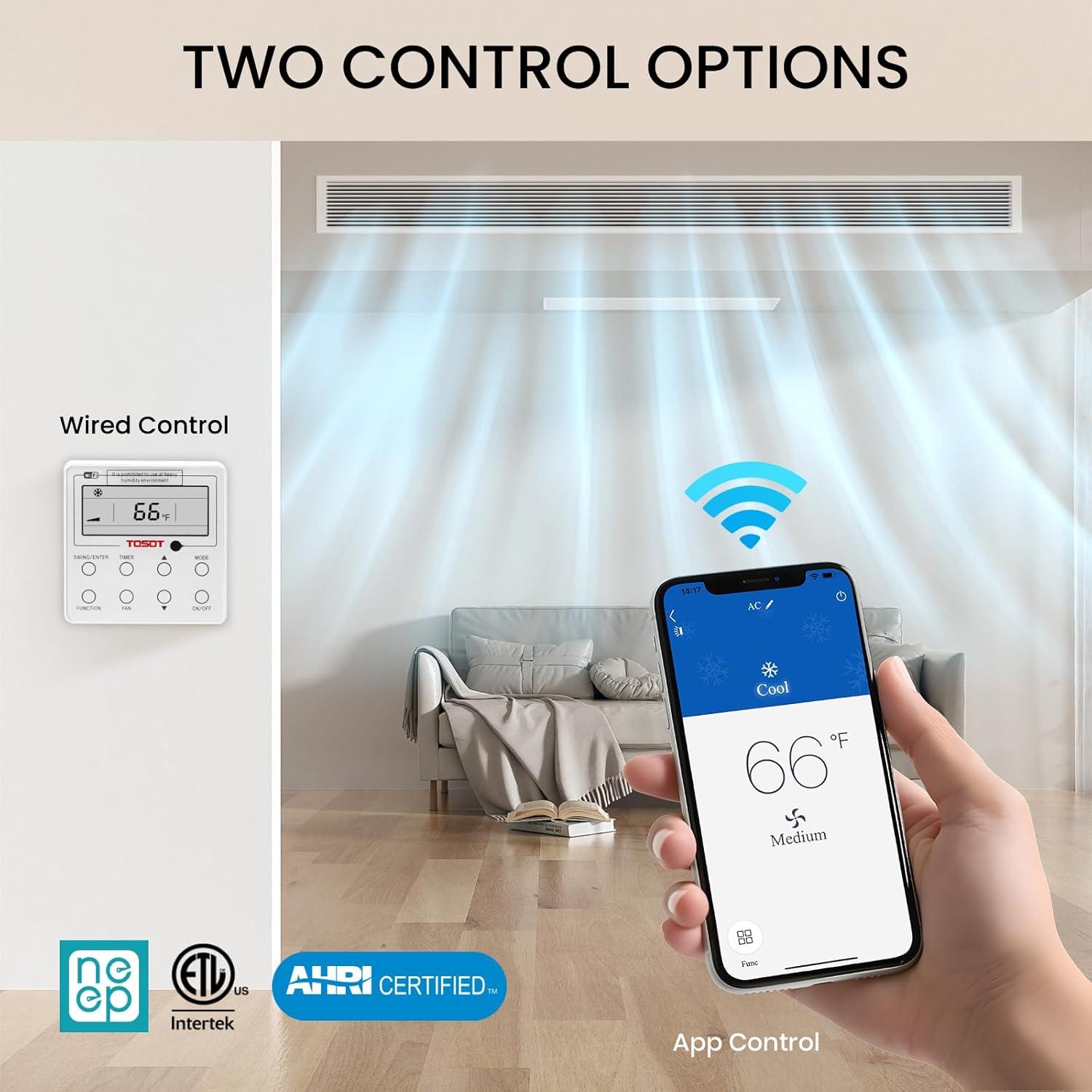
The product description says it includes a smart wired controller and supports app control for remote adjustments. It also lists configurable features such as timer, dehumidification, and sleep mode. A reviewer noted “no temperature reading on app,” so specific app display/telemetry may vary—confirm current app behaviour and supported functions on the Amazon listing and/or with TOSOT support.
Can I install it myself,and what should I know before scheduling installation?
The listing’s “Important Notice” says it “needs certified technicians for safety and system optimization,” that it ships in multiple packages (verify you’ve received all items before scheduling),and that the ceiling must have adequate load-bearing capacity. In general HVAC practice, ducted mini-split installs typically involve refrigerant handling, electrical work at 230V, condensate routing, and duct design—tasks that often require a licensed/professional installer depending on local code and warranty terms. For official requirements, check the manufacturer documentation and the Amazon product page.
Discover the Power

SUMMARY: The TOSOT Cosmo Series 34,000 BTU concealed ducted mini-split is built for larger zones that need strong airflow—up to 1,324 CFM—with a built-in condensate pump, wired smart controller, inverter compressor, and R32 refrigerant. Its ducted design and configurable return/supply layouts make it a fit for both light commercial and residential projects where you want vents instead of a wall-mounted head.
BEST FOR: Larger open-plan living areas, offices, stores, gyms, and spaces with higher ceilings or longer duct runs, thanks to its high static pressure design (0–1.106 in. WC) and multiple fan speeds (including Turbo). Review themes point to solid performance once installed,with some users noting setup and charge verification may be worth attention.
CONSIDER ALTERNATIVES IF: You need a simpler DIY-friendly install,don’t have ceiling cavity/maintenance access,or the idea of multi-package shipping and professional commissioning is a problem.App features may feel limited (e.g., no in-app temperature reading reported).
FINAL THOUGHT: Strong specs for ducted applications, but plan carefully for installation details and access.
Ready to learn more? View Full Specifications & Latest Reviews on Amazon →