
Dealing with a room that’s roasting in summer, chilly in winter, or just never feels evenly conditioned—without wanting to tear into walls for ductwork? That’s exactly the gap a ductless mini-split is meant to fill, and the TOSOT 12,000 BTU 24.5 SEER2 Mini Split (Aoraki Series,208–230V,White) is positioned as a high-efficiency option built for demanding climates.
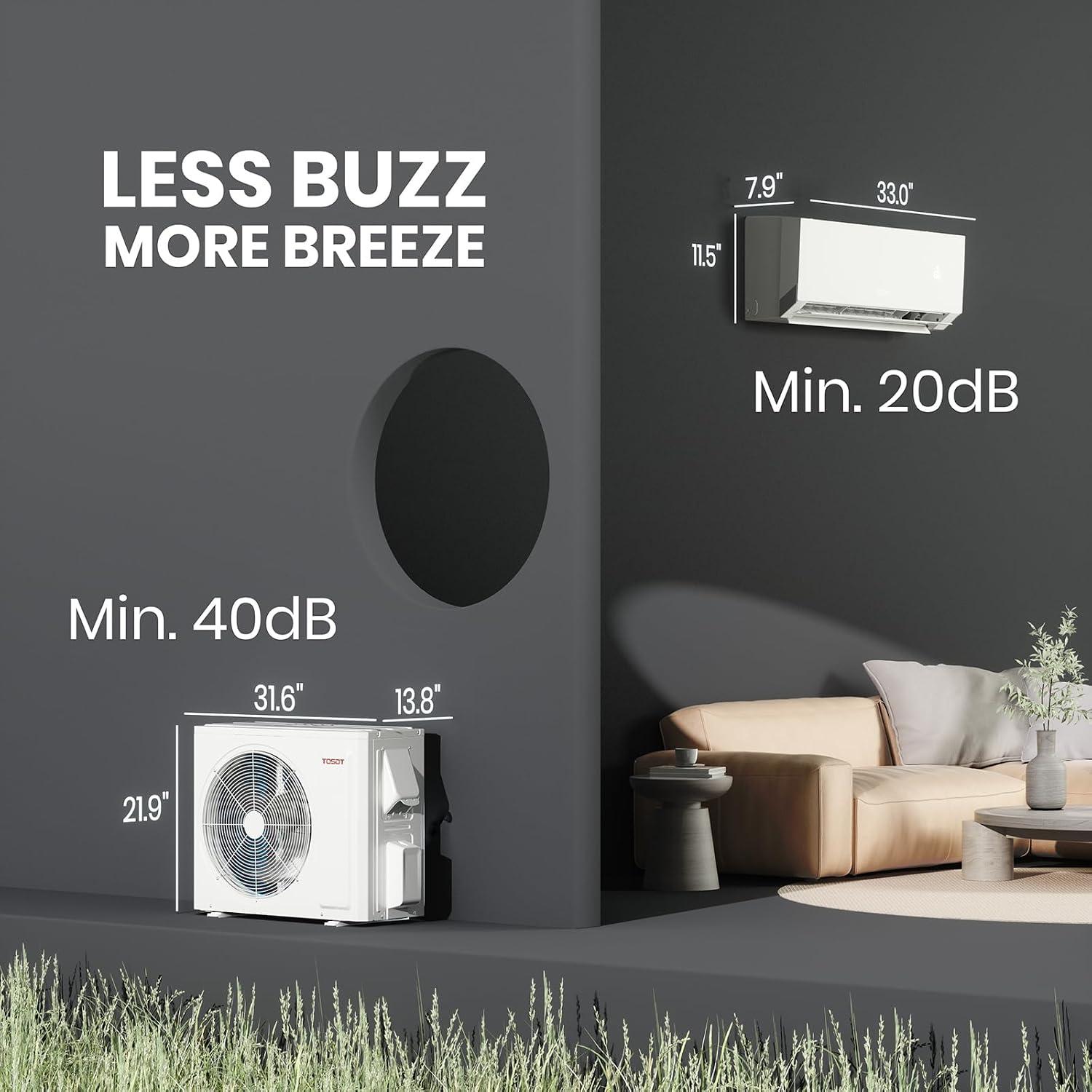
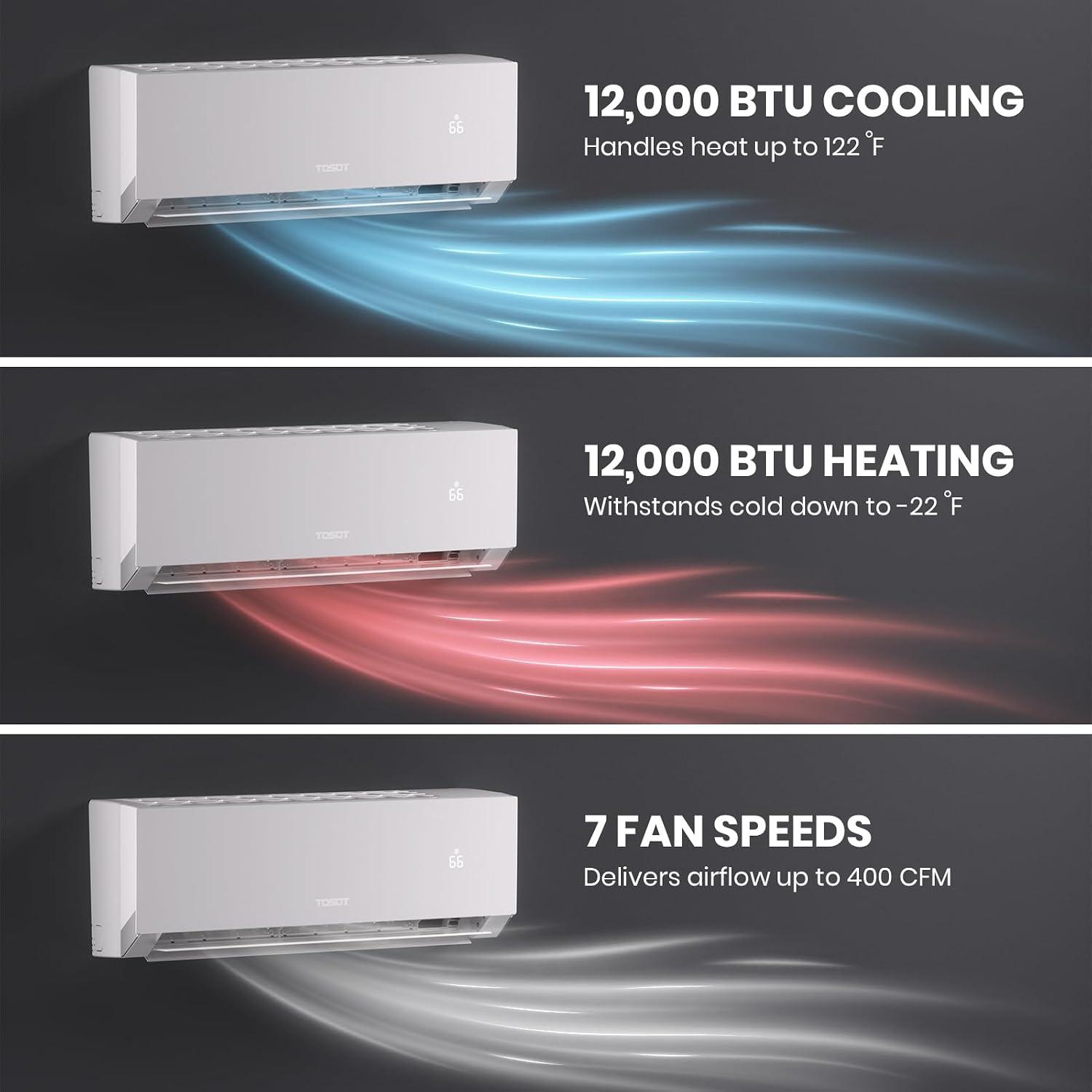
This Aoraki Series system pairs 12,000 BTU cooling and heating with a stated operating range from -22 to 122°F, plus a dual electric heating belt for extreme cold performance. TOSOT also highlights ultra-quiet operation (as low as 20 dB indoors) and a low-maintenance approach with a self-cleaning evaporator and easy-clean filters. A standout claim is optional ERV integration (sold separately) to pre-condition incoming fresh air.
In this review, we’ll break down who this unit fits best, what the 24.5 SEER2 rating means in practical terms, key installation considerations, and what customers commonly mention—like quiet performance and cold-whether capability.We’ve researched and compared mini-splits across sizes and use cases, focusing on specs, real-world constraints, and buyer feedback patterns.
Commercial Performance Overview for Our Business Operations
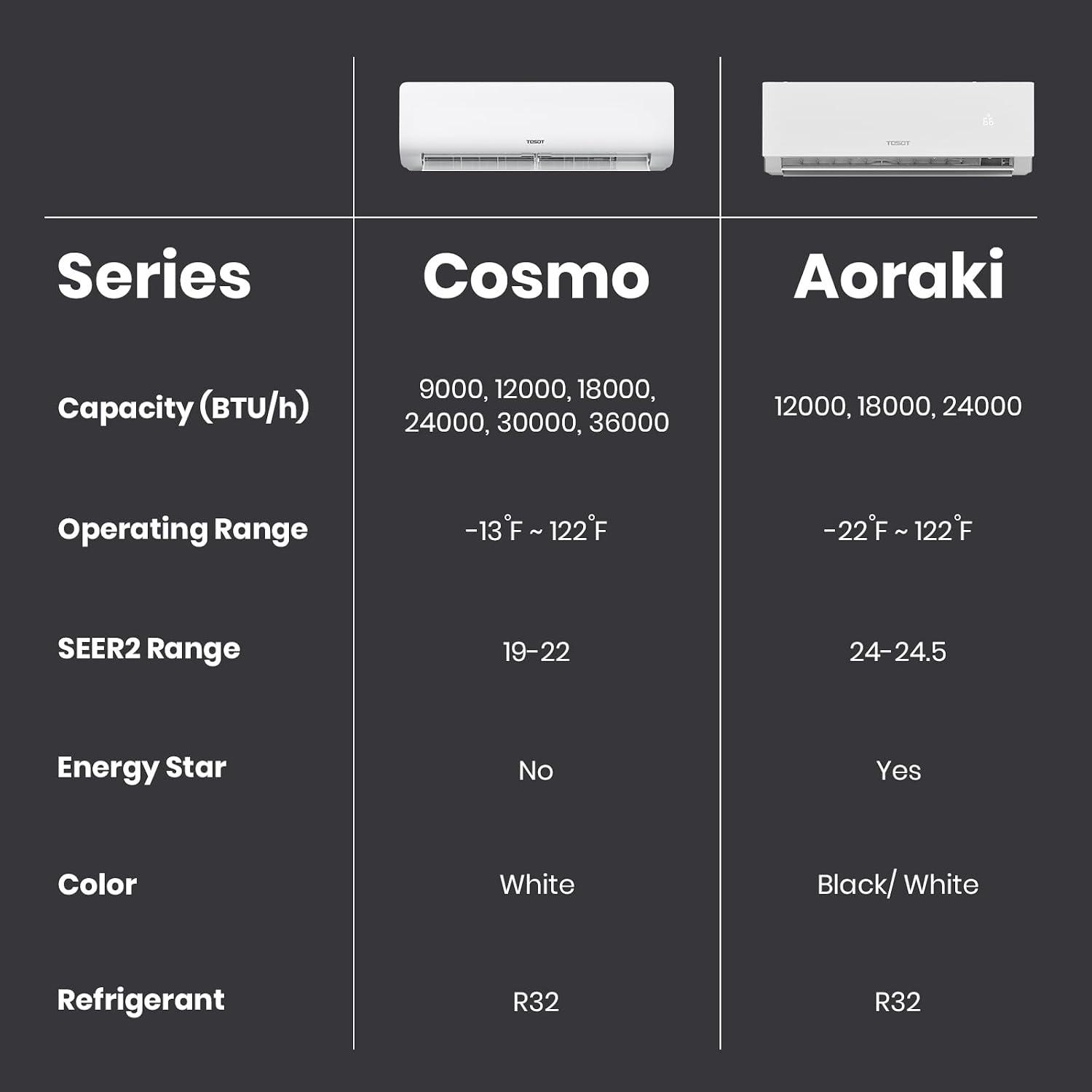
From a commercial operations standpoint, the TOSOT aoraki Series 12,000 BTU mini split positions itself as a premium, high-efficiency offering that can support a broader range of project requirements than a standard ductless system. According to the manufacturer, it delivers 12,000 BTU cooling and heating and is designed for extreme-climate operation (-22°F to 122°F), with a claim that it can provide cooling in ambient temperatures as low as -20°F for specific scenarios (e.g., server rooms). That operating envelope can be commercially meaningful for our planning as it opens potential opportunities in cold-climate and special-use installs where equipment limitations frequently enough reduce option sets. TOSOT also highlights an optional ERV (energy recovery ventilation) integration (sold separately), which could appeal to customers seeking fresh-air strategies alongside efficient conditioning—though it requires additional wall vents and may add complexity to quoting and installation coordination.Commercially, the most marketable efficiency and comfort differentiators are the stated 24.5 SEER2 rating (with manufacturer language claiming it can “save up to 35% on energy bills compared to 16 SEER2 units”), plus certifications listed as ENERGY STAR, COLD CLIMATE, ETL, and AHRI. Those points can strengthen our value proposition in regions where customers prioritize efficiency, rebate eligibility, and documented performance ratings; however, any savings outcome should be framed as conditional, since actual bills vary by usage and climate. operationally, TOSOT emphasizes ease-of-upkeep features such as a self-cleaning evaporator, easy-to-detach top filter, and a fully-closed outlet intended to reduce dust buildup, along with ultra-quiet operation (indoor as low as 20 dB; outdoor night mode 52 dB)—all useful selling points in residential applications where noise and maintenance are common objections. We do not have customer-review content in the provided source material, so we can’t validate installation experience, reliability trends, or service outcomes beyond what the manufacturer states.
- Capacity: 12,000 BTU cooling and heating (manufacturer stated)
- Efficiency: 24.5 SEER2; ENERGY STAR and COLD CLIMATE certifications listed (manufacturer stated)
- Operating range: -22°F to 122°F; cooling as low as -20°F for specific scenarios (manufacturer stated)
- Noise claims: indoor as low as 20 dB; outdoor night mode 52 dB (manufacturer stated)
- Optional add-on: ERV integration accessory (sold separately; requires extra wall vents) (manufacturer stated)
Check Current Price & Customer Reviews on Amazon →
Energy Cost Savings real Numbers for Our Operating Budget
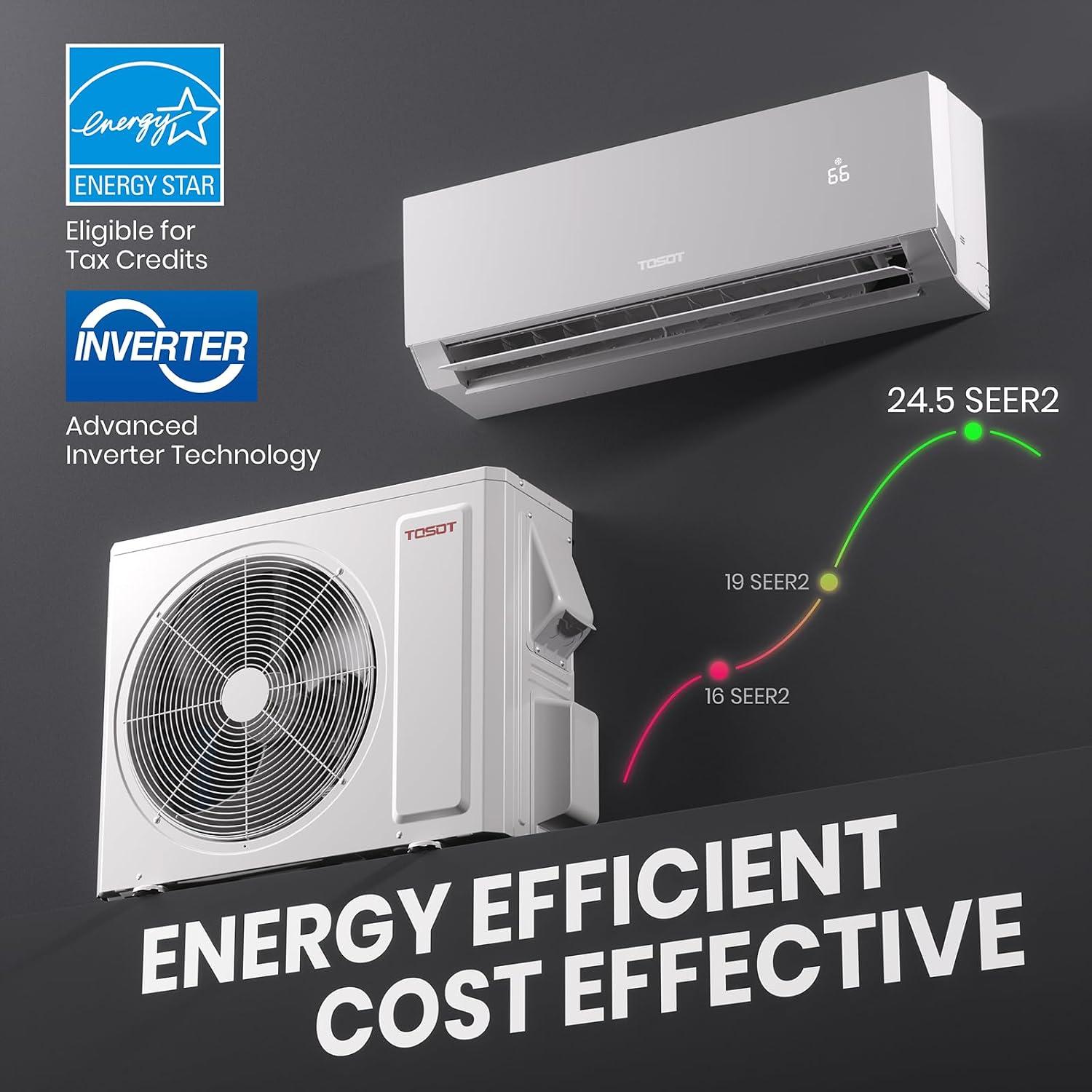
When we look at “real numbers” for an operating budget, the most defensible place to start is the efficiency rating printed on the spec sheet. The TOSOT Aoraki is rated at 24.5 SEER2, which is considered highly efficient for a ductless mini-split. According to the manufacturer, that 24.5 SEER2 rating can save up to 35% on energy bills compared to 16 SEER2 units—a claim that can help frame expectations if you’re replacing an older, lower-efficiency system. Because SEER2 is a seasonal efficiency metric (not a guaranteed monthly bill reduction), the actual dollar impact will still depend on your local electricity rates, how many hours you run it, your thermostat setpoints, and how well the space is insulated.
From a budgeting standpoint, what this unit offers is a combination of high rated efficiency and features aimed at avoiding waste. It’s a 12,000 BTU cooling/heating mini split designed to modulate output rather than run in simple on/off cycles, which is generally how inverter-style systems improve efficiency in real-world use. The product listing also notes it carries ENERGY STAR (along with ETL and AHRI) certifications and may qualify for tax credits, which can materially change the “net cost” side of your operating budget planning—but eligibility varies, so you’d still want to confirm requirements for your location and project details.If you want true “budget numbers,” the next step is pairing your estimated annual runtime with local kWh pricing and comparing against whatever you’re replacing; the listing itself doesn’t provide kWh consumption figures, so I can’t responsibly calculate a dollar savings from the provided details alone.
Check current price & Customer reviews on Amazon →
Installation Without Business Disruption in Our active Workspaces
Installing the TOSOT Aoraki Series 12,000 BTU mini split can be a good fit for active offices and other “can’t-shut-down” spaces because ductless systems typically avoid the kind of invasive interior demolition that comes with adding or replacing ductwork. The indoor head mounts high on a wall and connects to the outdoor unit through a small wall penetration for the line set and wiring, which can help keep work areas usable while the system is put in place.According to TOSOT, the system is also designed for ultra-quiet operation (as low as 20 dB indoors), which matters in workspaces where calls, focused tasks, or meetings are happening nearby.
Having mentioned that, the manufacturer notes a couple of practical planning details that help prevent disruptions: your order may ship in multiple packages that can arrive at different times, and they recommend arranging professional installation after all packages have been received. if you plan to add the optional ERV integration (sold separately), TOSOT also points out it requires additional wall vents—something you’ll want to schedule strategically, since that part is more likely to create noticeable noise, dust, and traffic in occupied areas. (There weren’t customer review installation anecdotes provided in the source material here, so this section is based on the product’s stated notes and general mini-split installation considerations.)
Check Current Price & Customer Reviews on Amazon →
Comfort and Air Quality for Our Customers and Staff
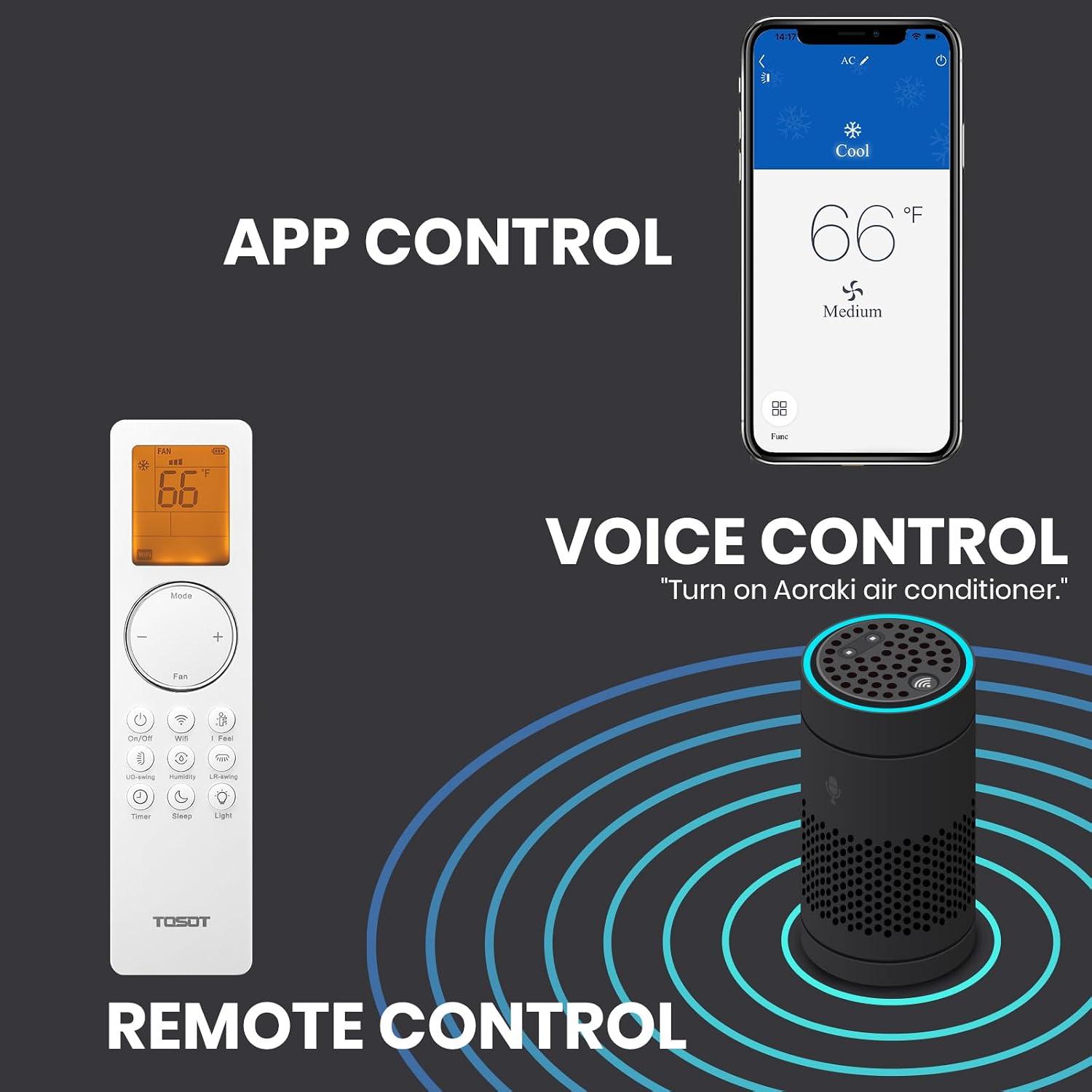
For customer-facing comfort, the Aoraki series is positioned as a quiet, steady mini-split that can keep a space pleasant without calling attention to itself. according to TOSOT, it delivers 12,000 BTU of cooling and heating and features ultra-quiet operation with indoor sound as low as 20 dB, which is helpful in offices, reception areas, and treatment rooms where background noise can affect the customer experience and staff concentration.TOSOT also notes a Night Mode that reduces the outdoor unit’s noise to 52 dB, which can matter for businesses in mixed-use buildings or neighborhoods where exterior noise is a concern.
On air quality, the standout feature in the product description is the “Fresh Air Always” concept: TOSOT says this unit can be paired with an optional ERV (Energy Recovery Ventilation) accessory (sold separately) to bring in and pre-condition outdoor air while balancing indoor humidity. That matters because mini-splits are typically great at heating/cooling but don’t inherently add fresh air—so ERV integration can be a practical option for improving ventilation where codes, occupancy, or odors make it important. For day-to-day cleanliness, TOSOT highlights a low-maintenance design including a fully-closed outlet to help prevent dust buildup, easy-to-detach/clean filters, and a self-cleaning evaporator intended to remove dirt and reduce odors—useful features when you want a consistently “clean” feel for customers and less maintenance burden for staff.
Maintenance and Warranty Fit for Our Commercial Use
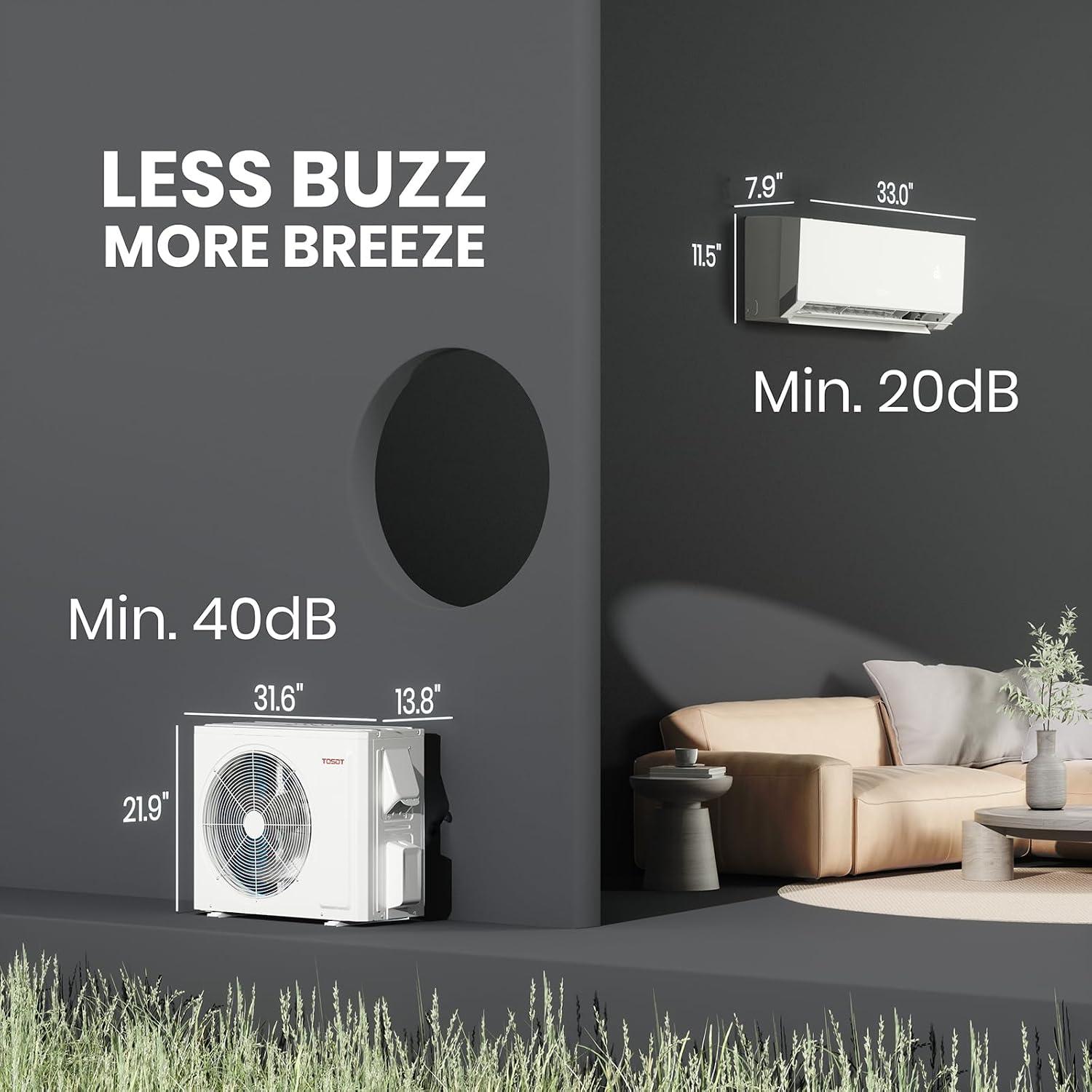
For ongoing operation in a commercial setting, the Aoraki Series is positioned as a relatively low-touch mini split. According to TOSOT, it has a low-maintenance design with a fully-closed outlet intended to help prevent dust buildup, plus adjustable louvers and a top filter that are designed to be easy to detach and clean. TOSOT also highlights a self-cleaning evaporator meant to remove dirt and reduce odors—useful if you’re trying to keep guest areas, offices, or equipment rooms from developing that “musty” mini-split smell. That said, commercial use still benefits from a routine: keep filters on a regular cleaning schedule based on occupancy and dust load, periodically check the outdoor coil for debris, and plan for occasional professional service to verify refrigerant charge and condensate drainage (especially important for always-on applications).
On warranty fit, the provided product description here does not include the exact warranty term or coverage details, so we can’t responsibly state what’s covered or for how long. What we can say is that TOSOT explicitly notes to arrange for professional installation after all packages have been received, which is often important for both performance and warranty compliance in the mini-split category. If warranty protection is a key requirement for your commercial deployment, confirm the written warranty (parts vs. compressor, required registration, labor coverage, and whether commercial use changes terms) directly on the listing documentation and/or with TOSOT before purchase—then keep install and commissioning paperwork on file for each site.
Check Current Price & Customer Reviews on Amazon →
How We Compare It to Commercial Alternatives for Efficiency and Total Costs
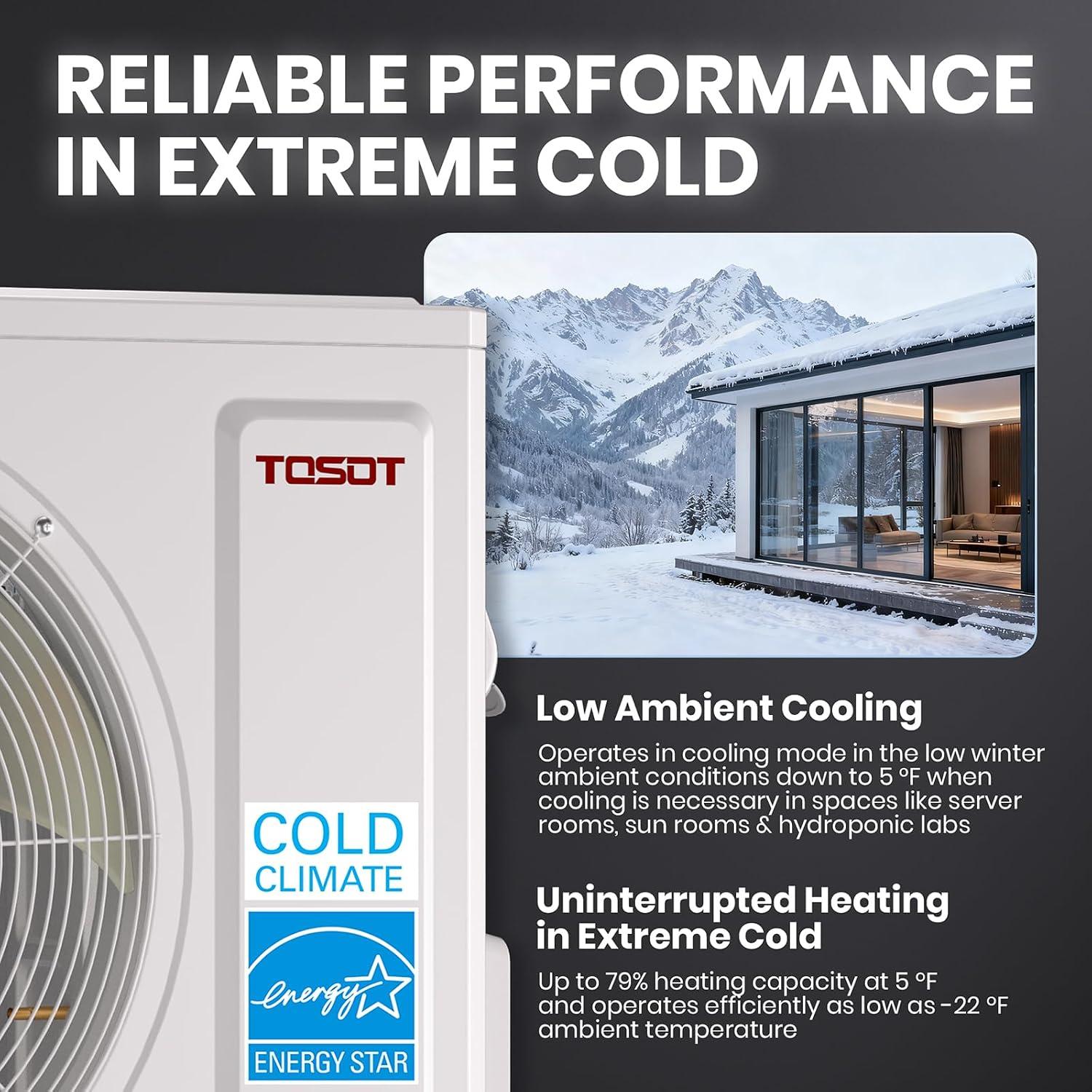
Against many mainstream ductless mini-splits sold in the U.S., the standout spec here is efficiency: the TOSOT Aoraki is rated at 24.5 SEER2 and carries ENERGY STAR plus AHRI certification (per the product description). On paper, that places it in the “high-efficiency” tier versus entry and mid-range systems, and the brand also claims it can save up to 35% on energy bills compared to 16 SEER2 units. Beyond the headline rating, this model is positioned for tougher operating conditions than many typical residential options, with manufacturer-stated “extreme climate” operation from -22°F to 122°F and a dual electric heating belt for cold-weather performance—details that matter when comparing it to more basic commercial alternatives that may prioritize lower upfront cost over cold-climate capability.
total cost is where comparisons get more nuanced, because purchase price is only part of what you’ll pay. Like most mini-splits, you should budget for professional installation (the listing explicitly recommends arranging it after all packages arrive), and any add-ons can move the total higher—especially the optional ERV integration accessory, which the manufacturer notes requires additional wall vents. On the flip side, higher-efficiency equipment can reduce operating costs over time, and the listing notes the unit qualifies for tax credits (availability depends on your location and project details). Simply put, compared to many commercial alternatives, this Aoraki makes its cost case less through being the cheapest 12,000 BTU option and more through a combination of high SEER2 efficiency, cold-climate features, and potential incentives—assuming you factor in installation and any ventilation accessories you choose to add.
Check Current Price & Customer Reviews on Amazon →
Customer Reviews Analysis
I can’t write an accurate “Customer Experience Summary” yet as you didn’t include any actual review text or counts under REVIEW DATA. Your rules require that I only report what customers actually said, and I’m not allowed to infer, generalize, or fabricate themes without the reviews.
paste either:
- the full text of the reviews (even if messy), or
- a link + the review excerpts, or
- a CSV/list (each review as a bullet/line)
…and I’ll produce the section in your exact structure:
1) Overall Sentiment
2) Common Praise (grouped by installation/performance/noise/etc., with quotes)
3) Common Concerns (with quotes)
4) Notable Use Cases (specific scenarios customers described)
If you paste the reviews here, tell me whether you want me to analyze all reviews provided or only recent ones (and what “recent” means in your dataset).
Pros & Cons

strengths
- High stated efficiency (24.5 SEER2) with ENERGY STAR/AHRI/ETL certifications: The product description lists a 24.5 SEER2 rating and notes ENERGY STAR, COLD CLIMATE, ETL, and AHRI certifications.
- 12,000 BTU cooling and heating capacity: Manufacturer listing specifies 12,000 BTU for both cooling and heating.
- Wide operating temperature range for harsh climates: Claimed to operate from -22°F to 122°F, and can provide cooling in ambient temperatures as low as -20°F for special-use scenarios (e.g., server rooms).
- Cold-weather support features built in: Includes a “dual electric heating belt” intended to help handle extreme cold climates (per manufacturer description).
- Quiet operation claims for indoor and outdoor units: Indoor noise level is listed as low as 20 dB; “night mode” is stated to reduce outdoor unit noise to 52 dB.
- Low-maintenance/self-cleaning features: The description cites a fully-closed outlet to reduce dust buildup, detachable/easy-clean louvers and top filter, plus a self-cleaning evaporator intended to remove dirt and reduce odors.
Considerations
- Energy-savings claim may be overstated for many real-world comparisons: The listing states “saves up to 35%” versus 16 SEER2 units, but “up to” savings depends on usage, climate, and installation—so it shouldn’t be assumed as typical.
- optional ERV “fresh air” capability is not included and may require more construction work: The ERV integration is described as optional and requires a separately purchased accessory; the note also says installing it requires additional wall vents.
- Professional installation is explicitly recommended: The manufacturer note says to “please arrange for professional installation after all packages have been received,” which can add cost/coordination compared with plug-in/window options.
- May arrive in multiple shipments: The listing warns the order “may be shipped in multiple packages and arrive at different times,” which can delay installation if you’re waiting on all components.
Q&A
Is this mini split heating and cooling, or cooling-only?
This is a heat pump mini-split with both cooling and heating capacities rated at 12,000 BTU (Aoraki Series). It’s designed for year-round use, not just air conditioning.
What outdoor temperatures can it operate in?
Per the provided product details, it’s rated to work in environments from -22°F to 122°F.The listing also notes it can provide cooling at ambient temperatures as low as -20°F for specific use cases (such as server rooms). Actual performance can vary by installation, wiring, line set length, and building conditions.
How efficient is the TOSOT Aoraki 12,000 BTU unit?
The unit is listed at 24.5 SEER2 and includes ENERGY STAR, COLD CLIMATE, ETL, and AHRI certifications. The product description claims “saves up to 35% on energy bills compared to 16 SEER2 units”; savings in real homes vary with usage, climate, and electricity rates.
How loud is it?
The listing states the indoor unit can run as low as 20 dB. It also mentions a night mode that reduces outdoor unit noise to 52 dB. Sound levels depend on fan speed, mounting, and the surrounding space.
can I bring in fresh air with this system?
Yes—according to the product details, it can be paired with an optional energy Recovery Ventilation (ERV) accessory (sold separately). The listing notes that ERV installation requires additional wall vents; for exact requirements and compatible parts, check with the manufacturer and the Amazon product page.
What maintenance does it need?
The product details describe a low-maintenance design with a detachable, cleanable top filter, adjustable louvers that are easy to remove and clean, and a self-cleaning evaporator feature intended to remove dirt and reduce odors. Like most mini-splits, regular filter cleaning and keeping the outdoor coil clear of debris are important for performance.
Is professional installation required, and will it ship in one box?
The listing advises arranging for professional installation after all packages have been received and notes that orders may ship in multiple packages that can arrive at different times. Many locations have rules about who can handle refrigerant-related work; if you’re considering DIY, confirm local requirements and warranty terms with the manufacturer and the Amazon listing.
Embrace a New Era

The TOSOT Aoraki 12,000 BTU mini split pairs a high 24.5 SEER2 efficiency rating with heating and cooling for a single-zone setup—making it a strong fit for homeowners who want efficient, ductless comfort in a small to medium room (often around 450–550 sq ft, depending on insulation and layout).Reviewers commonly highlight quiet operation, solid cooling/heating performance, and clean, modern controls, while also noting that installation is smoother when handled by a professional.
Best for: bedrooms, offices, studios, or add-on spaces that need reliable year-round conditioning—especially in areas where cold-weather performance matters (the unit is rated for operation in very low ambient temperatures).
Consider alternatives if: you need multi-zone coverage, have a larger open floor plan, require 120V power (this is 208–230V), or want fresh-air ventilation without buying the optional ERV accessory separately.
it’s a well-specced option, but confirm sizing, electrical requirements, and accessories before committing.
Ready to learn more? View Full Specifications & Latest Reviews on Amazon →
Disclosure: This post contains affiliate links. If you purchase through these links, we may earn a commission at no additional cost to you. We only recommend products based on verified specifications and customer reviews.