
Hot upstairs,chilly downstairs,and no ductwork (or patience) for a major renovation—sound familiar? When comfort varies from room to room,a mini-split can feel like the most practical middle ground between window units and whole-home HVAC.
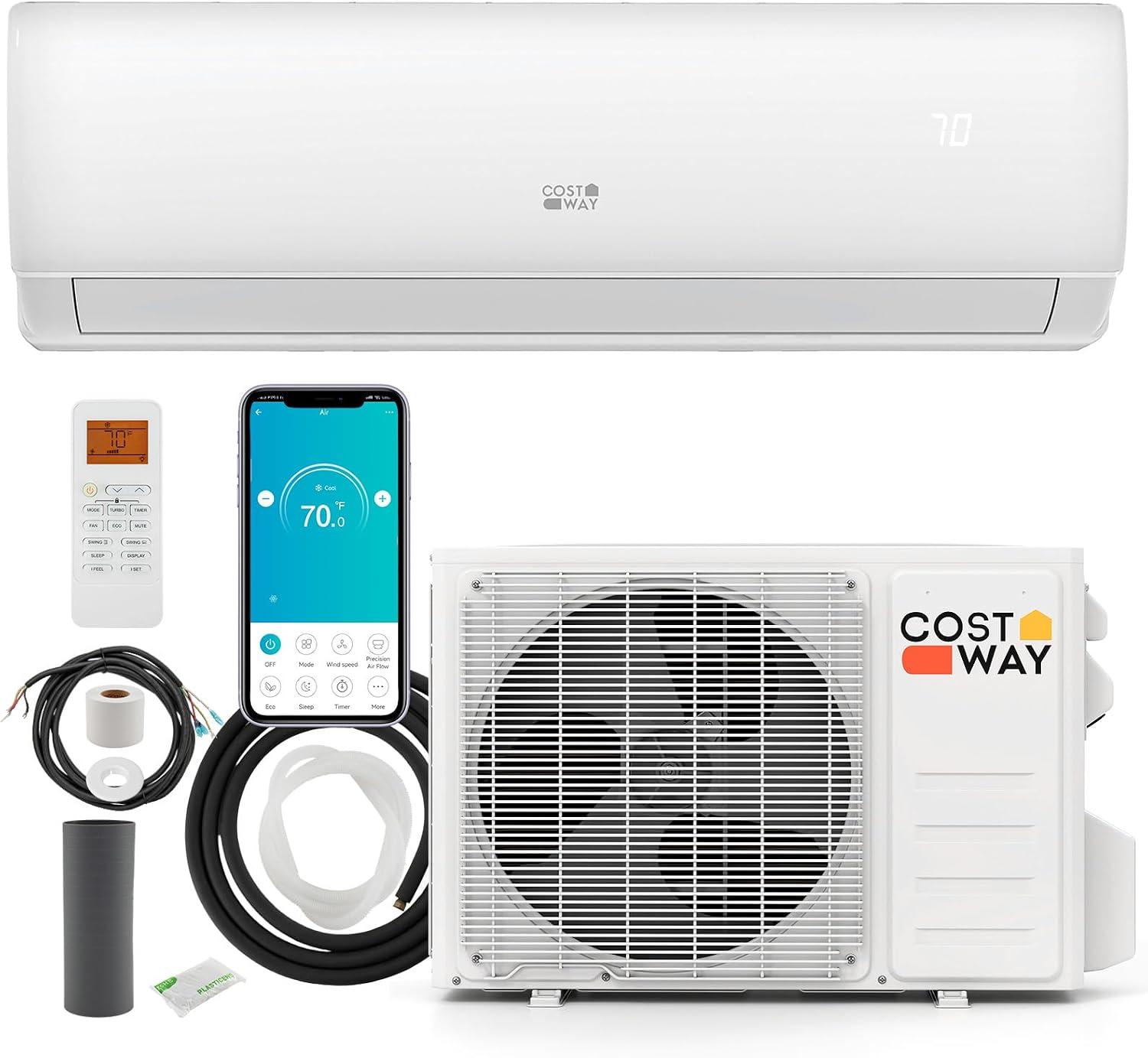
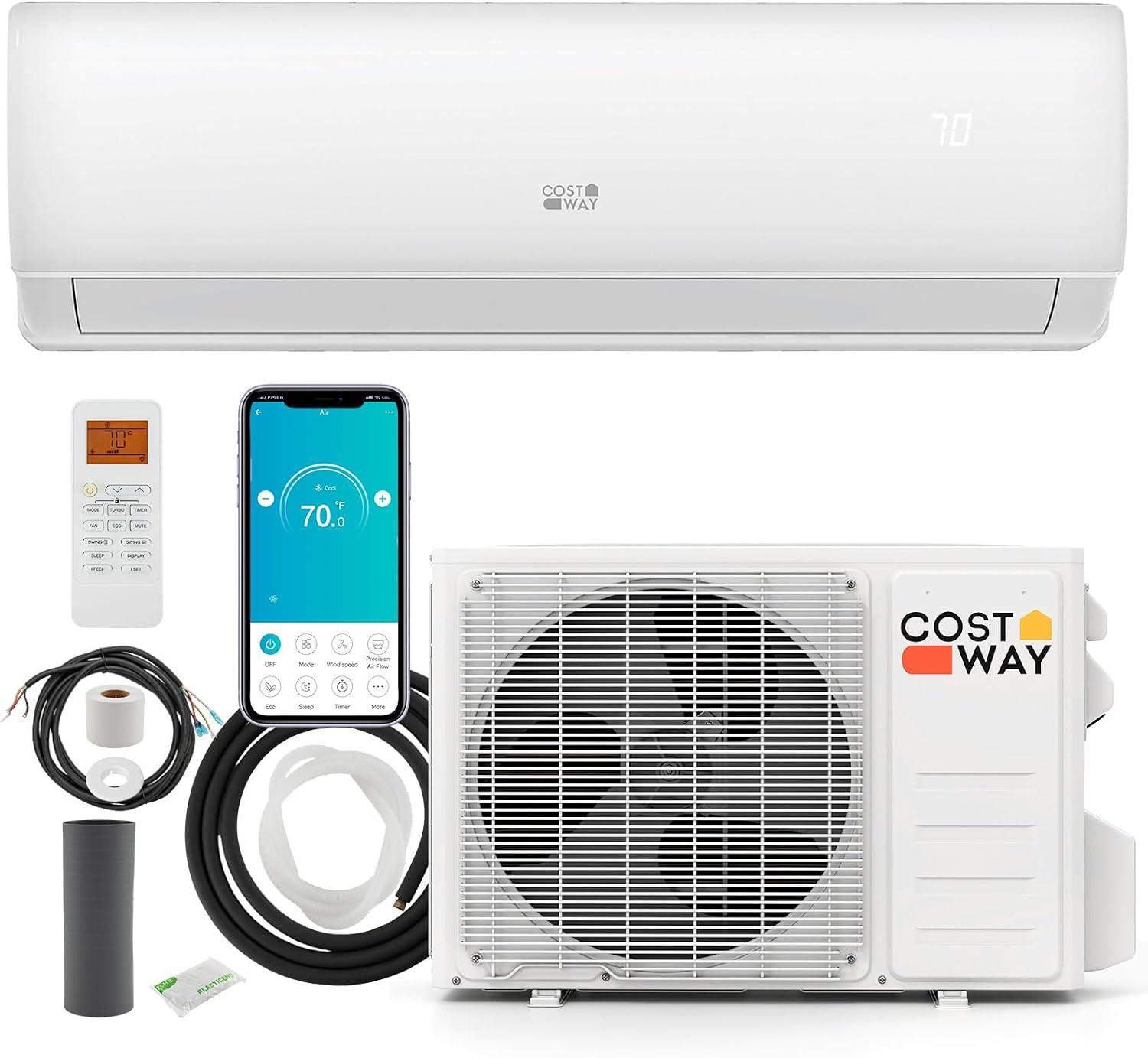
In this review, we’re looking at the COSTWAY 11500 BTU Mini Split Air Conditioner—an 115V, 17 SEER2 inverter air conditioner and heat pump system that, according to the manufacturer, is designed to cool or heat spaces up to 750 sq. ft. It’s also Wi‑fi enabled, works with Alexa or Google Assistant, and includes an installation kit (with the important note that a licensed HVAC professional is required).
We’ll break down what the specs actually mean in day-to-day use: inverter efficiency and R32 refrigerant, the promised operating range (cooling up to 122°F and heating down to 5°F), noise-related features like sleep mode, and convenience tools such as 4D auto swing, I Feel, self-cleaning, and washable filtration.
We’ve researched and compared mini-splits for real-world installs and know which features tend to matter most once the novelty wears off.
Commercial Performance Overview for Small Business Spaces and Daily Operations
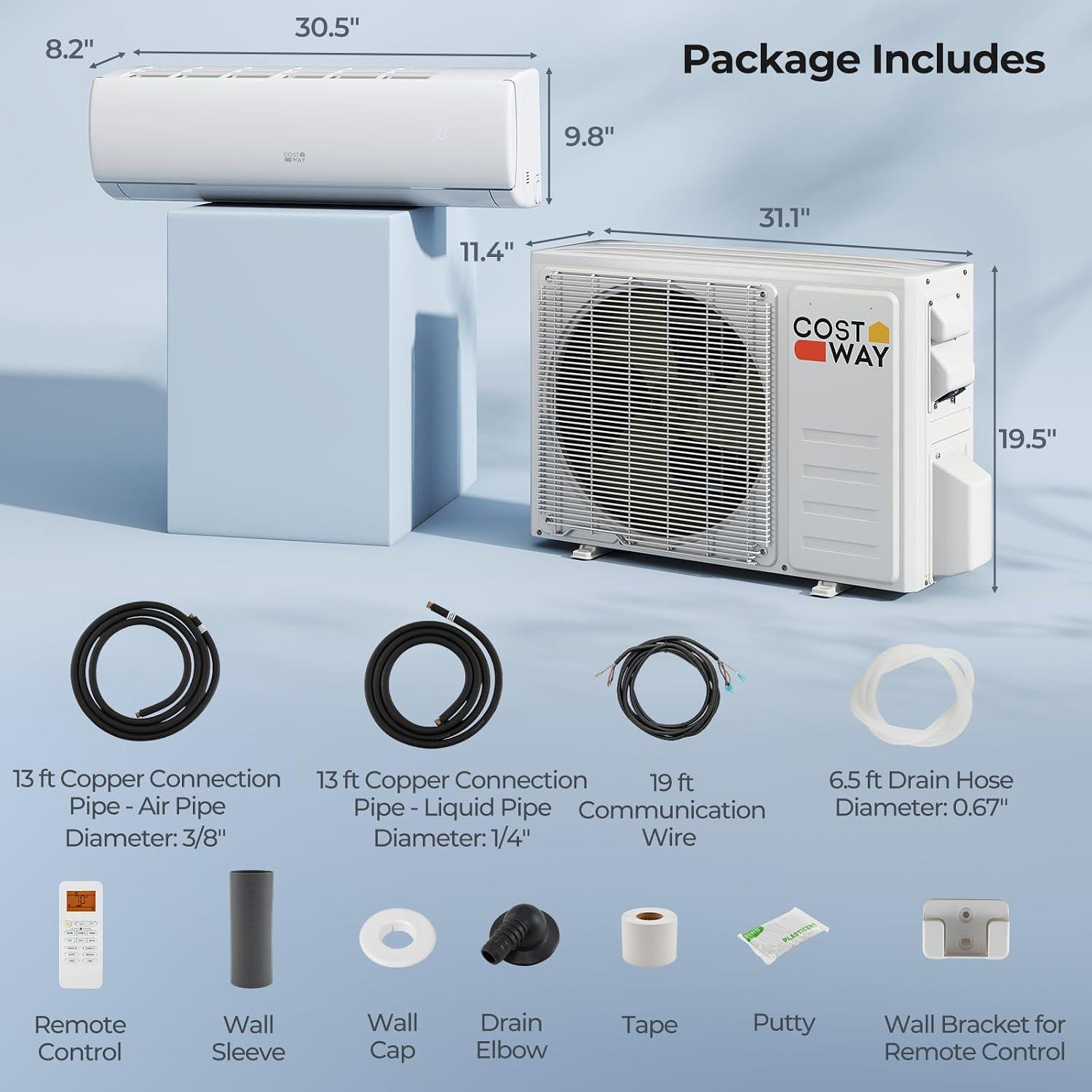
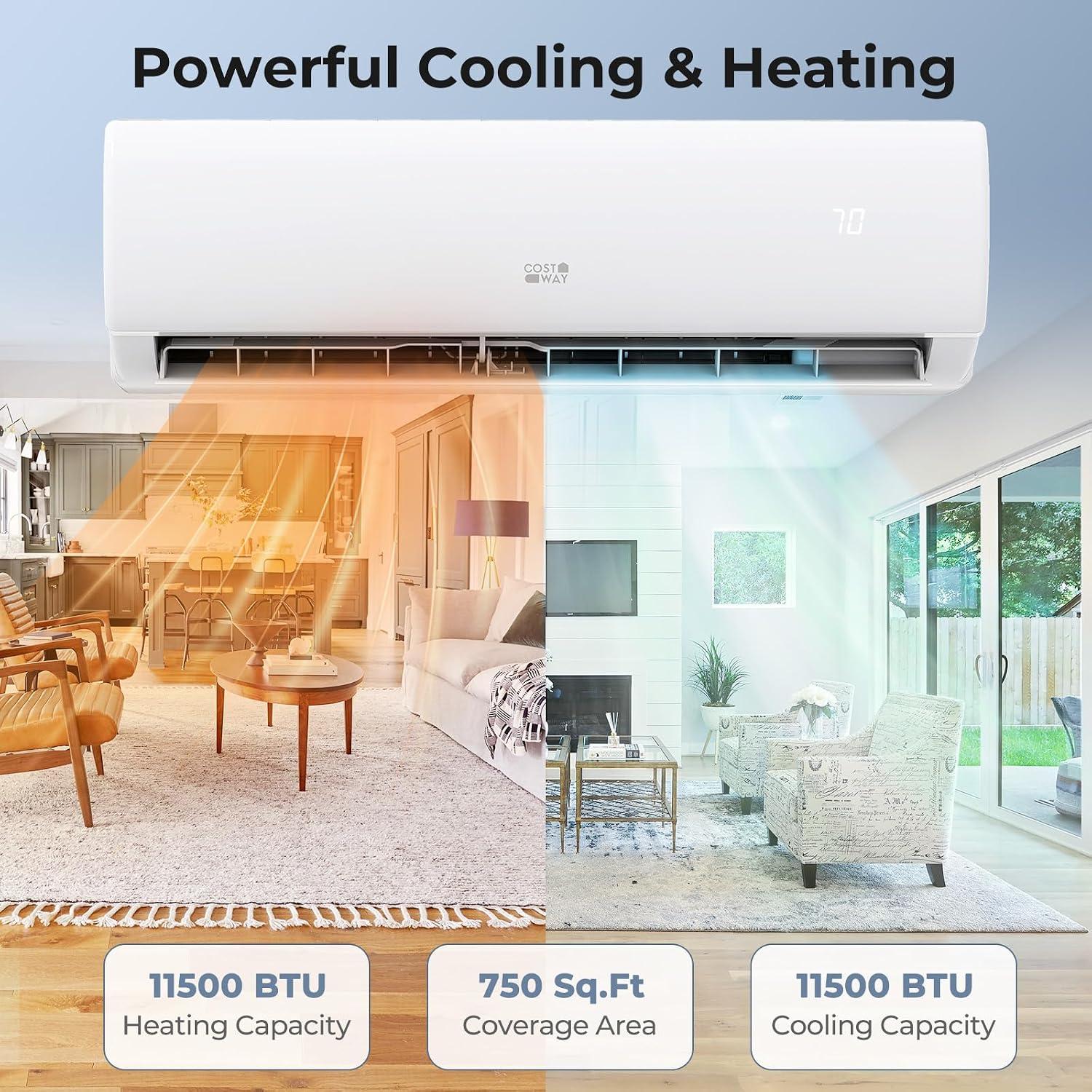
For small business spaces like offices, studios, and customer-facing rooms, the COSTWAY mini split is positioned as a practical all-in-one comfort system as it combines 11500 BTU cooling/heating capacity with a stated coverage of up to 750 sq. ft. (per the manufacturer). According to COSTWAY, it’s built to handle demanding seasonal conditions—advertised to cool even at 122°F and heat even at 5°F—which can matter in day-to-day operations where you don’t want to close off rooms or fight hot/cold spots. The included inverter technology is also intended to support steadier temperature control by adjusting compressor speed rather than cycling hard on/off, which is typically beneficial in commercial-style usage where occupancy and heat loads fluctuate throughout the day.
Operationally,the feature set is geared toward “set it and keep working” convenience rather than constant manual adjustments. From the product description, key day-to-day tools include Wi‑Fi control with Alexa/Google Assistant compatibility, a remote with digital display, and multiple comfort modes such as ECO and Sleep, along with 7 fan speeds and 4D auto swing to help distribute air. Maintenance is framed as straightforward thanks to a washable filter and a 133°F self-cleaning function, though COSTWAY also states that a licensed HVAC professional is required for installation—an important planning point for businesses scheduling downtime.Note: customer review feedback wasn’t provided here, so this section reflects only manufacturer-stated capabilities and general mini-split considerations, not real-world user-reported performance.
Check Current Price & Customer Reviews on Amazon →
Energy Cost Savings Real Numbers for Our monthly Utility Budget and Efficiency Goals
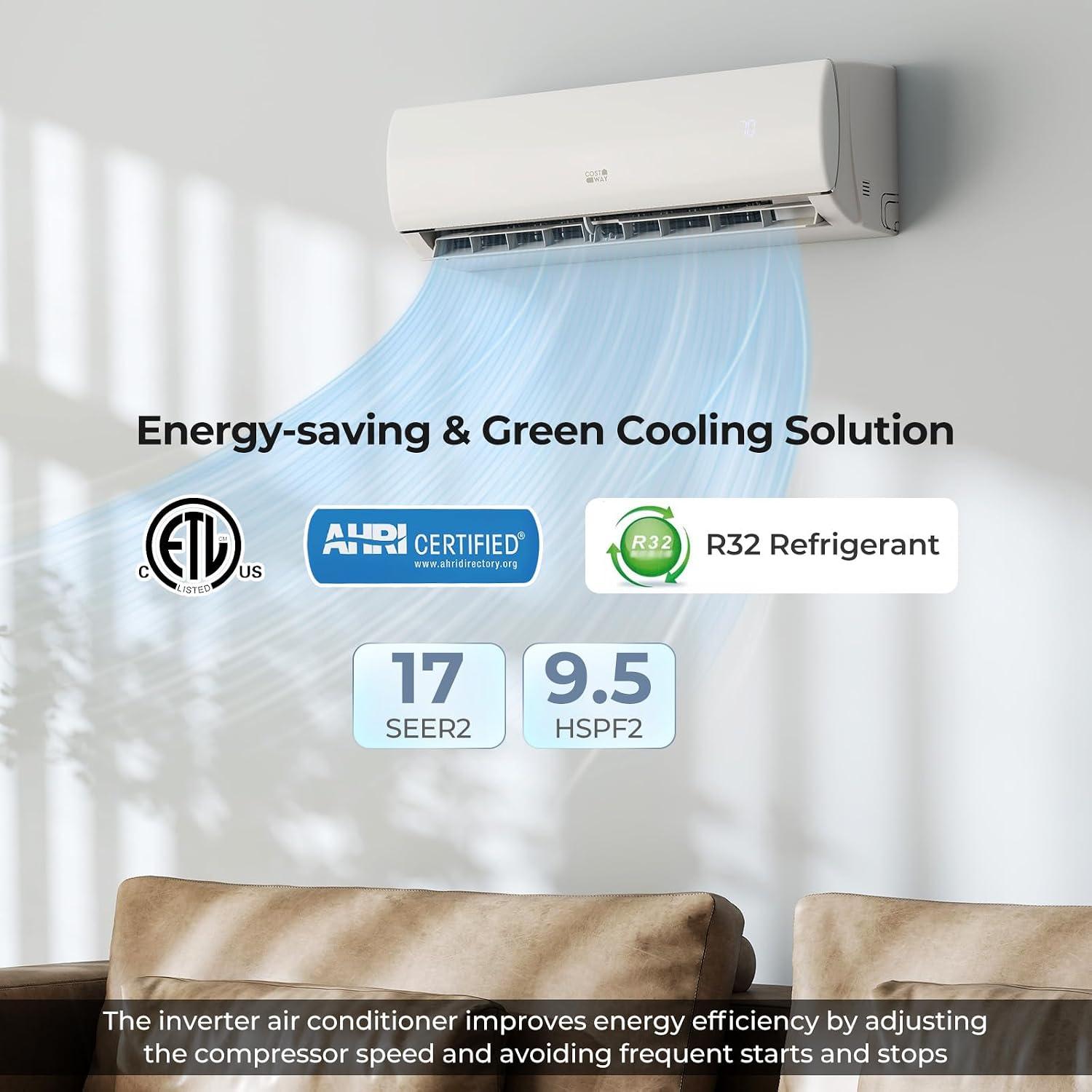
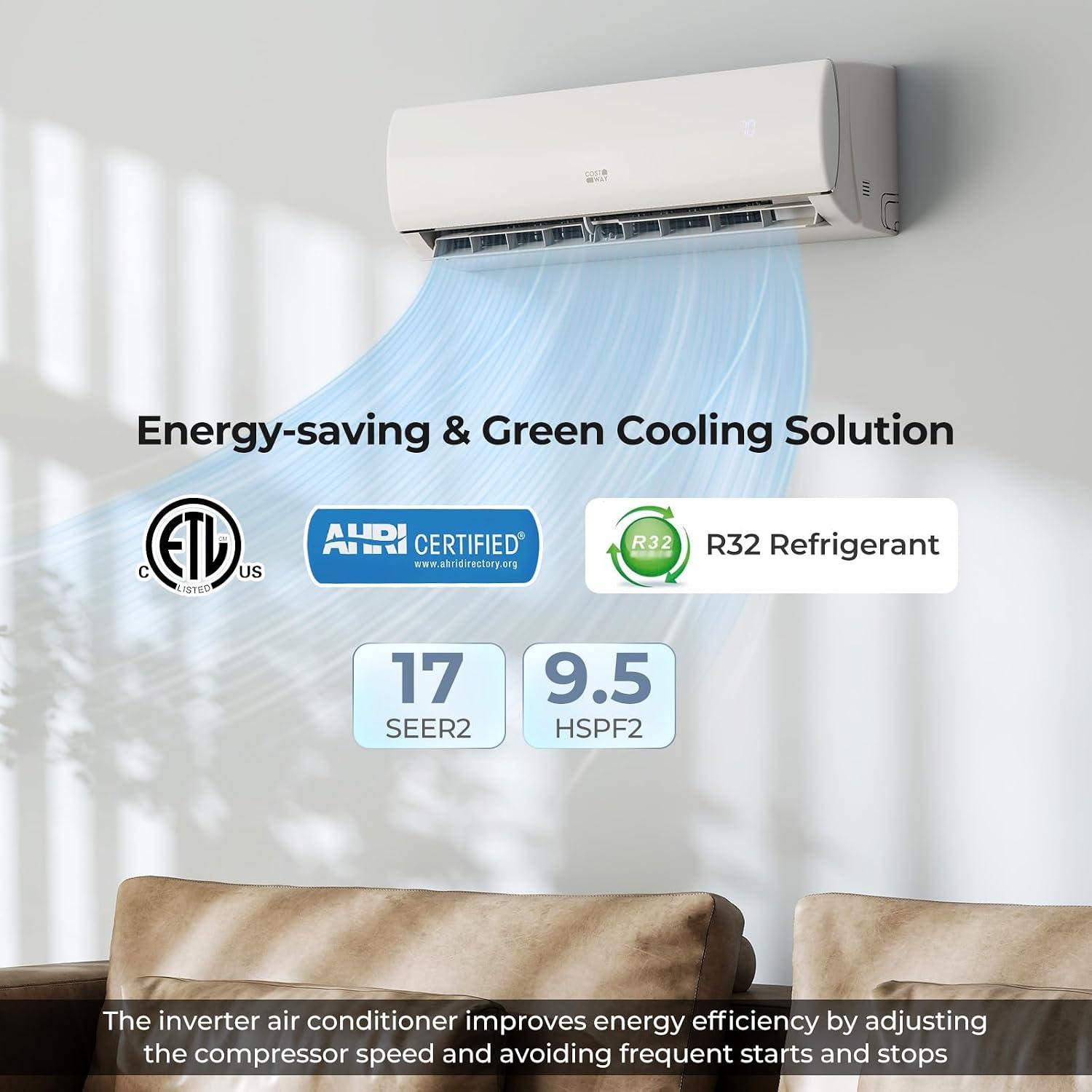
Energy-cost savings on a monthly utility budget with this COSTWAY mini split will mainly come down to the efficiency features it’s built around—rather than any guaranteed “$X per month” reduction (that depends on rates, usage hours, insulation, and what system you’re replacing). According to the product description, this is a 11500 BTU inverter mini split designed to cover up to 750 sq. ft., and the inverter design is intended to improve efficiency by adjusting compressor speed and avoiding frequent starts and stops. That’s important for real-world budgeting because constant on/off cycling is often where energy waste and comfort swings show up. COSTWAY also highlights the use of R32 refrigerant and states the unit is compliant with ETL and AHRI, which helps frame it as a modern, efficiency-minded system (without overpromising exact savings).
For hitting practical efficiency goals, the most actionable “real numbers” you can track month to month are your kWh usage and your thermostat set points—then aim to reduce runtime without sacrificing comfort. This model includes modes that can support that approach, like ECO and Sleep, plus 7 fan speeds and features like I Feel (which can help avoid overcooling/overheating by focusing control around the sensor location). The Wi‑Fi controls (with Alexa/Google compatibility) also make it easier to set schedules and avoid conditioning an empty space—one of the most reliable ways households keep bills in check. If you want a clean before/after comparison, note your last 2–3 bills from the same season, then compare them after installation while keeping similar habits; that’s the most honest way to see whether this unit is helping your budget in your specific home.
Check Current Price & Customer Reviews on Amazon →
Installation Without Business Disruption for Active Worksites and Customer Facing Areas
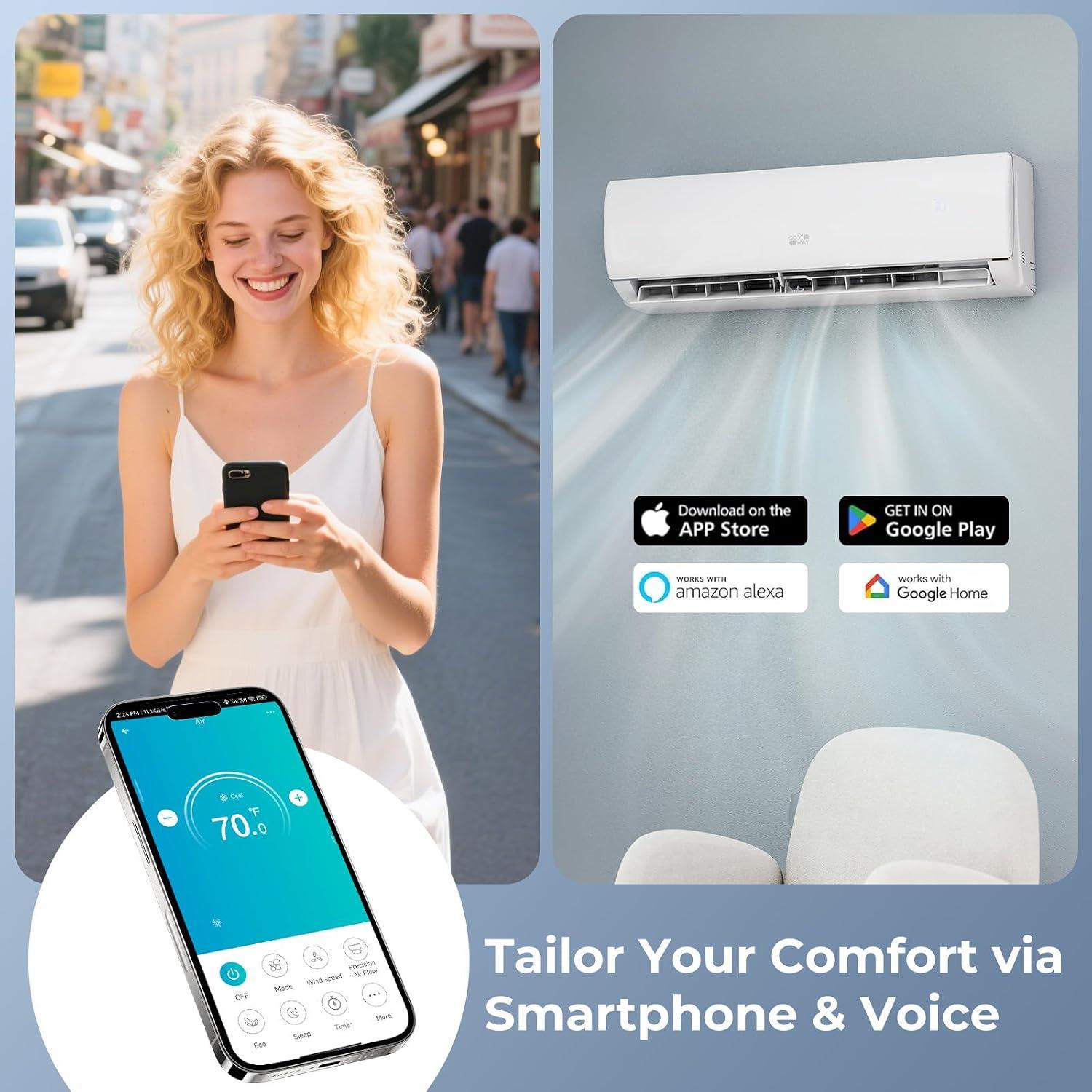
Keeping an active worksite or customer-facing area pleasant during an HVAC upgrade usually comes down to minimizing indoor downtime and limiting intrusive work. With this COSTWAY system, the design itself helps on that front: a ductless mini-split doesn’t require opening up ceilings or running bulky ductwork through occupied spaces. According to COSTWAY, it’s a 11500 BTU inverter-driven mini split rated to cover up to 750 sq. ft., so it’s positioned as a single-zone solution for a defined area rather than a whole-building overhaul. That kind of targeted install can be easier to schedule around business hours—especially because temperature and fan settings can be managed via Wi‑Fi (plus Alexa/Google Assistant compatibility) and the included remote, which is useful when staff can’t stop to fiddle with controls in the middle of service.
That said, “no disruption” isn’t realistic for any mini-split install, and COSTWAY explicitly states that a licensed HVAC professional is required. in practical terms, professional installation is also what helps keep disruption contained: a contractor can plan the line-set route, isolate the work area, and complete vacuum/charging procedures efficiently, all while keeping dust and foot traffic away from customers. For occupied spaces, it’s worth planning ahead for short windows where drilling through an exterior wall and mounting the indoor/outdoor units will be noisy, and for brief periods where doors may need to be propped or access restricted. If quiet operation matters after the install (for reception areas, treatment rooms, etc.), COSTWAY notes a sleep mode with ultra quiet operation and a screen-off function, which can definitely help maintain a calmer environment once the system is up and running.
Check Current Price & Customer Reviews on Amazon →
Maintenance and Warranty Readiness for Busy Operations and Commercial Alternatives Comparison
For busy operations, the maintenance story matters as much as the 11500 BTU output. according to COSTWAY,this mini split is designed with easy maintenance features like a washable filter and a 133℉ self-cleaning function,which can reduce day-to-day upkeep compared with systems that require more frequent coil cleaning. That said,routine mini-split care still applies in commercial-ish environments (salons,small offices,studios,retail back rooms): keep the filter cleaned on a schedule,make sure the indoor unit’s airflow isn’t blocked,and confirm the outdoor unit stays clear of debris. COSTWAY also states that a licensed HVAC professional is required for installation—critically important for warranty readiness and for avoiding common “non-covered” problems like improper refrigerant handling, incorrect line-set practices, or drainage issues that can lead to leaks or water damage.
If you’re comparing this to more “commercial choice” paths, the big decision is usually between a mini-split like this and packaged approaches such as a through-the-wall unit, a window AC, or a portable AC—options that can be simpler to deploy but typically don’t offer the same inverter-driven comfort control. In the product description, COSTWAY highlights inverter technology, Wi‑Fi control, and Alexa/Google Assistant compatibility, which can be genuinely useful for multi-room workflows (e.g., adjusting setpoints remotely or locking settings to prevent tampering). For operations where downtime risk is paramount, prioritizing a professionally installed mini-split and keeping documentation (installer invoice, model/serial info, and any stated warranty terms—note: warranty specifics weren’t provided in the source material here) is the most practical way to stay “warranty-ready” while still benefiting from a 17 SEER2-rated system designed to cover up to 750 sq. ft. per manufacturer specs.Check Current Price & Customer Reviews on Amazon →
customer Reviews Analysis
I can write this section, but I’m missing the actual review text. Your prompt says “REVIEW DATA:” but no reviews were included, so I can’t truthfully analyze what customers said without making things up (which your rules forbid).
Paste the reviews you want analyzed (raw text is fine), and I’ll produce the Customer experience Summary in exactly this structure:
- Overall Sentiment
- common Praise (grouped by: installation, performance, noise, Wi‑Fi/Alexa, value, etc.)
- Common Concerns (same grouped categories)
- Notable Use Cases (specific scenarios reviewers described)
If you share a link instead, tell me which set you want (e.g., “most recent 20 reviews”), since I can only use text you provide unless you explicitly supply the review content.
Pros & Cons
Strengths
- 11500 BTU cooling/heating capacity for larger rooms: The product description states it’s a 11500 BTU mini split designed to cool or heat spaces up to 750 sq.ft.
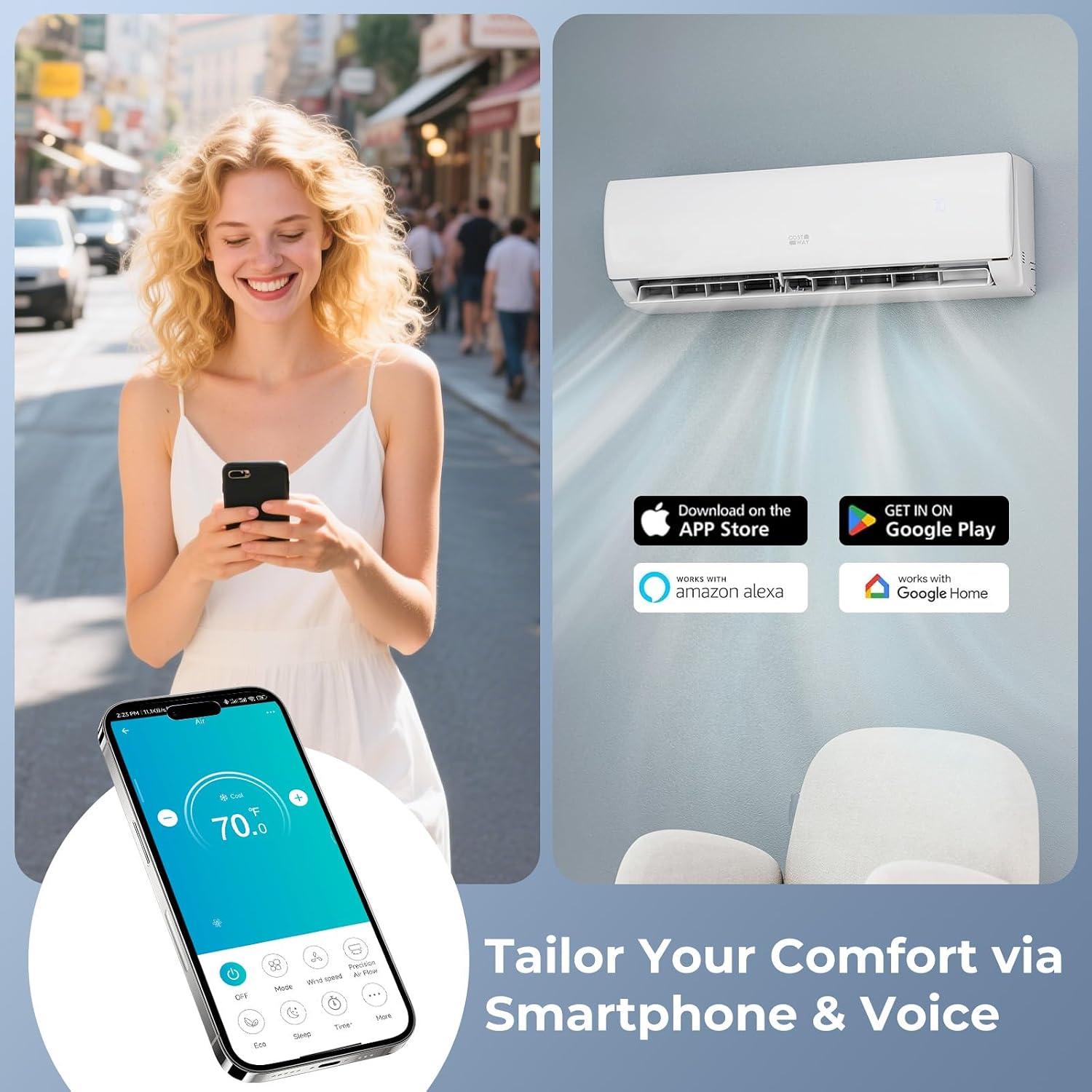
- Wi‑Fi + voice assistant support: It’s advertised as Wi‑Fi enabled with control via smartphone and compatible with Alexa or Google Assistant.
- Inverter technology for improved efficiency: The manufacturer claims the inverter adjusts compressor speed to avoid frequent starts/stops, which “improves energy efficiency.”
- Wide range of modes and fan speeds: The description lists 7 operating modes (auto/cool/heat/dry/fan/sleep/ECO) and 7 fan speeds for more precise comfort control.
- Convenience features for comfort and usability: Listed features include 4D auto swing, child lock, and “I Feel” (temperature sensing via the controller), plus a remote control with digital display.
- Maintenance-oriented design: The unit includes a washable filter and a 133°F self-cleaning function, both presented as making maintenance easier and improving air cleanliness.
Considerations
- Professional installation required: The product description explicitly says “a licensed HVAC professional is required,” which adds installation cost/coordination and reduces DIY friendliness.
- Coverage limit (up to 750 sq. ft.): If your space is larger or poorly insulated, this model may be undersized since the stated maximum coverage is 750 sq. ft.
- Single-zone system: As a single mini-split indoor/outdoor setup (one “mini split air conditioner and heater pump system”), it’s best suited to conditioning one main area rather than multiple rooms with separate zones.
- Heating performance depends on outdoor conditions: While it’s advertised to heat down to 5°F, operation outside stated temperature limits isn’t implied—so extremely cold climates may still require supplemental heat planning.
Q&A
What size space will this mini split cool and heat?
Per the product description, this COSTWAY mini split is a 11,500 BTU system rated to cool or heat spaces up to 750 sq. ft. Actual performance can vary with insulation, ceiling height, sun exposure, and local climate (common HVAC sizing factors).
Does it provide both heating and cooling, and what outdoor temperatures can it handle?
Yes. It’s described as an inverter air conditioner & heater pump (heat pump) system.the listing states it can cool even at 122°F and heat even at 5°F, and it also mentions “advanced chassis heating” to help prevent freezing and maintain outdoor-unit operation.
can I control it with Wi‑Fi and voice assistants (Alexa/Google Assistant)?
Yes. The description says it is Wi‑Fi enabled and compatible with Alexa or Google Assistant for voice control.It also includes a remote control with a digital display for operation without Wi‑Fi.
Is professional installation required?
Yes—according to the product description, “a licensed HVAC professional is required” for installation. If you need the exact installation requirements for your location (e.g., electrical and refrigerant-handling rules), verify with the manufacturer and your installer. For the official listing details, refer to the Amazon product page.
What operating modes and comfort features does it have?
The listing states 7 operating modes (auto/cool/heat/dry/fan/sleep/ECO) and 7 fan speeds. It also lists features including 4D auto swing, child lock, “I Feel,” “health,” and a sleep mode with “screen off” for nighttime use.
How do maintenance and cleaning work?
Per the description, it has a washable filter and a 133°F self-cleaning function intended to make maintenance easier and improve air cleanliness. As with most mini-splits, filter washing intervals depend on dust/pet load and runtime—check the manufacturer’s instructions for the recommended schedule and procedure.
What refrigerant does it use, and are there efficiency certifications?
The product description states it uses R32 refrigerant and notes a refrigerant GWP value of 675. It also states the unit is “compliant with ETL and AHRI,” and it’s listed as 17 SEER2 in the product title. For the most up-to-date certification/ratings documentation, confirm on the Amazon listing and/or manufacturer documentation.
Transform Your World
the COSTWAY 11500 BTU mini split is a 115V, 17 SEER2, Wi‑Fi–enabled inverter air conditioner and heat pump designed to cool and heat spaces up to about 750 sq. ft. It adds smart-home convenience with Alexa/Google Assistant support, multiple modes (including sleep and ECO), 4D auto swing, and easier upkeep via a washable filter and 133°F self-clean function—making it a good fit for homeowners who want efficient, zone-based comfort with app and voice control.
Best for: single-zone applications like a large bedroom, garage/workshop, studio, or small open living area where quiet operation and steady temperature control are priorities, and where professional installation is planned.
Consider alternatives if: you need multi-zone coverage, have a much larger or poorly insulated space, require 230V equipment, or want a truly DIY install—this unit is intended for a licensed HVAC professional.
final thought: it’s a feature-rich mini split on paper, but the best choice depends on your room size, electrical setup, and install costs.
ready to learn more? View Full Specifications & Latest Reviews on Amazon →
Disclosure: This post contains affiliate links. If you purchase through these links, we may earn a commission at no additional cost to you. We only recommend products based on verified specifications and customer reviews.