
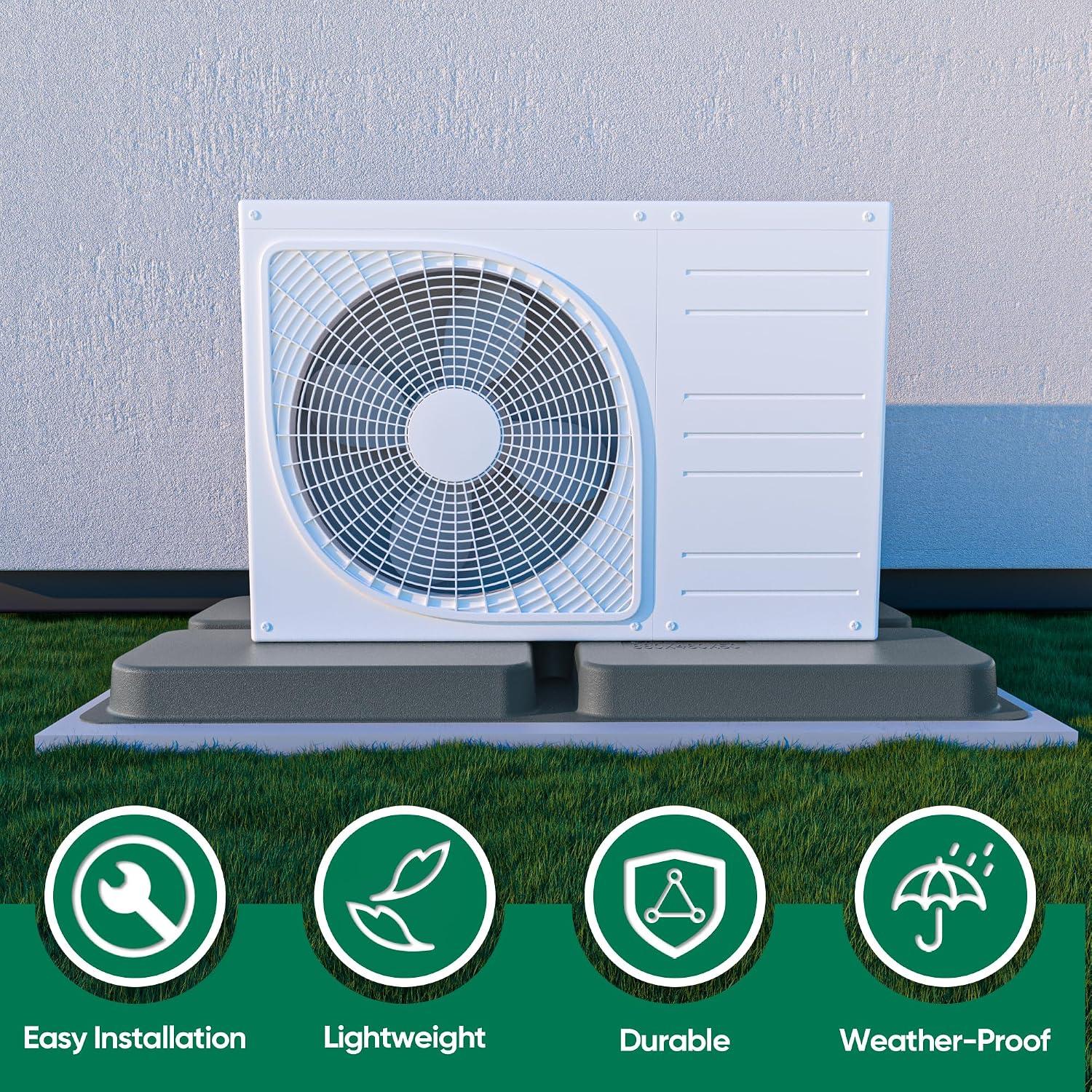
Ever notice how even a great mini-split setup can be undermined by a shaky, noisy outdoor unit—or a base that isn’t quite level after the first hard rain? If your condenser is rocking, vibrating, or sitting too close to damp ground, the right pad can make installation feel far more secure.
In this review, we’re looking at the Plusluck Mini Split Pad (34.6″ x 18.2″ x 2″), an anti-vibration floor mounting base designed for AC condensers, heat pumps, and other outdoor HVAC equipment, with a manufacturer-stated 770 lb capacity. Plusluck also claims a cross-hatch surface to help distribute weight, recessed grooves for expansion bolts, and PP material built to resist corrosion and aging—advertised for 8–10 years of lifespan.
We’ll cover sizing and compatibility,stability and mounting options,and what real buyers consistently mention—many say it “works well” and feels high quality,while one recurring concern is that it may feel too lightweight/flimsy for some installs.
We’ve worked around enough mini-split installations to know that the pad choice matters just as much as placement and leveling.
Commercial Performance Overview for Our Outdoor HVAC Equipment Stability and Noise Control
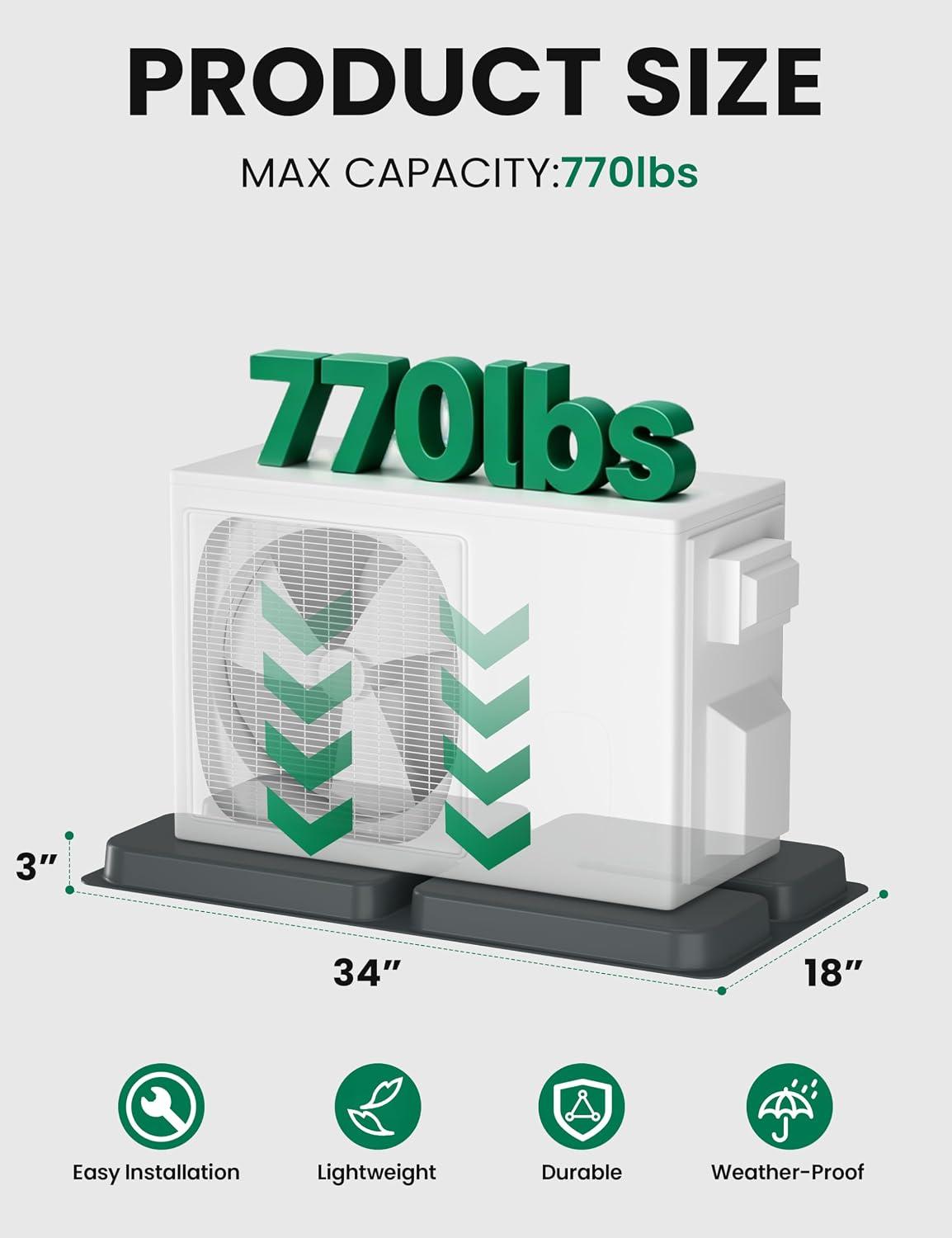
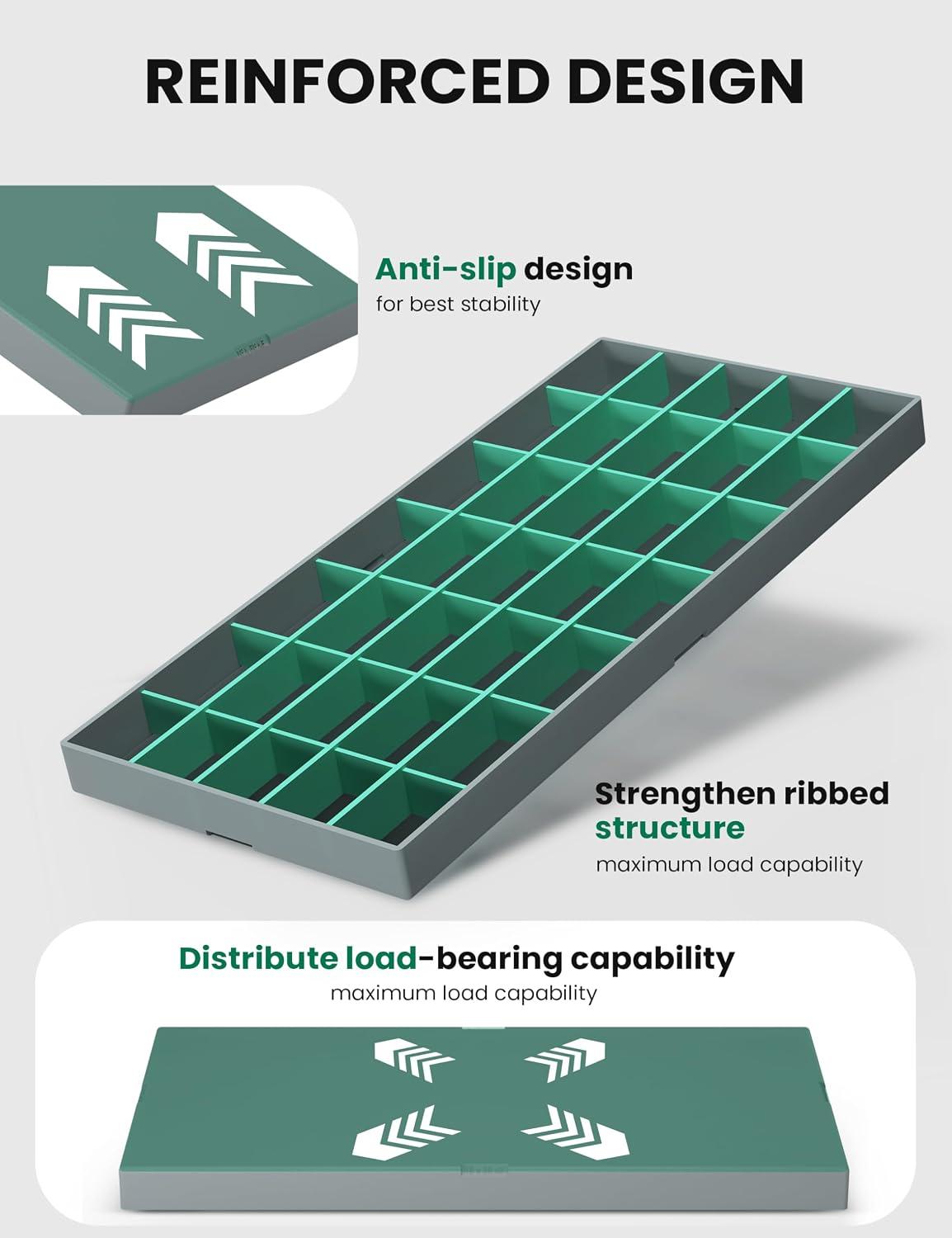
In real-world installs, this pad’s commercial value comes down to how consistently it keeps outdoor equipment level and supported. According to Plusluck, the 34.6″ x 18.1″ x 2″ platform uses a cross-hatch surface pattern to distribute weight and help prevent sagging or deformation, with recessed grooves designed to accommodate expansion bolts for more secure placement. The manufacturer also rates it for a maximum load of up to 770 lbs and says it’s suitable for units in the 7,000–100,000 BTU range, which covers a broad set of mini-split condensers and heat pump outdoor units commonly used in small commercial spaces and workshops.
For stability and noise control, customer feedback is largely favorable but not perfectly uniform. multiple reviewers report the pad “works well,” “has been stable so far,” and fits their mini-split condenser well—factors that can help reduce rocking or shifting that may contribute to vibration and rattles. At the same time, at least one customer describes it as “too lightweight” and worries it “will not hold up to the vibrations,” suggesting that perceived rigidity and long-term vibration control may depend on the specific unit, surface prep, and how it’s anchored. plusluck notes the pad is drillable and should be placed on flat soil or a hard surface, which aligns with standard practice: a level base and secure fastening are key to minimizing movement that can transmit noise into nearby structures.
energy Cost Savings Real Numbers for Our Operating Budget and Equipment Efficiency
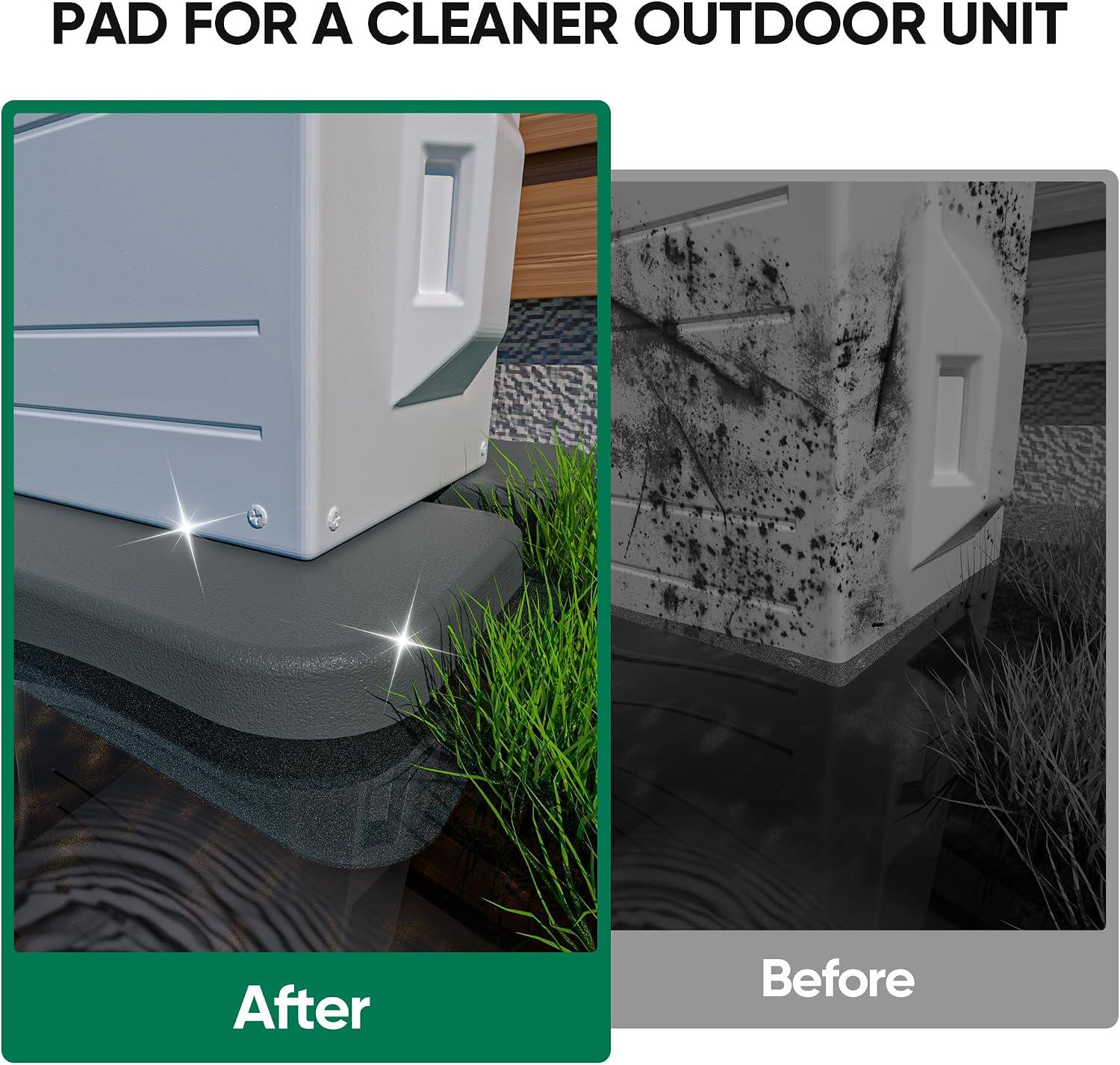
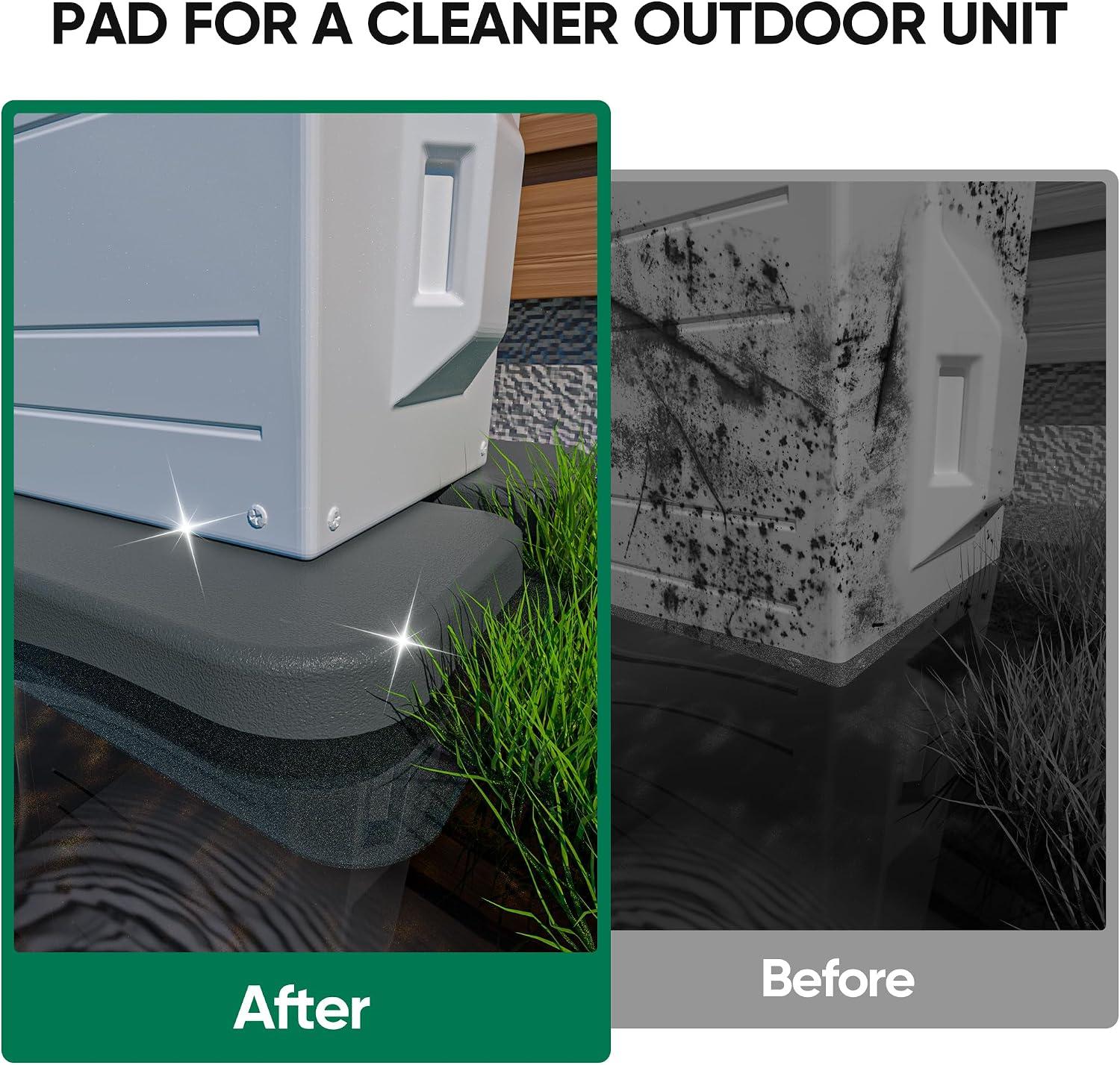
Because this is a mounting base and not the HVAC equipment itself, there aren’t direct “energy savings” numbers you can responsibly promise from the pad alone. What it can do—according to the product description—is provide a leveled surface above ground that helps reduce moisture exposure, and it’s designed with a cross-hatch pattern to distribute weight evenly and help prevent sagging or deformation. Those factors matter for equipment efficiency in an indirect way: when an outdoor condenser or heat pump sits stable and level, it’s less likely to end up in a compromised position that can contribute to extra vibration, shifting, or water-related issues over time.The pad is also rated at 770 lb capacity and is described as suitable for systems from 7,000–100,000 BTU, and it’s drillable with recessed grooves for expansion bolts, which can help you keep the outdoor unit secured where you set it.
From an operating-budget standpoint, the “real numbers” here are more about avoiding efficiency-reducing problems than guaranteeing a lower electric bill. Several customers report the pad “works well” and is “stable,” and one review mentioned it has been “stable so far” under an outside AC unit—feedback that lines up with the idea of protecting the install quality. Simultaneously occurring, there is also a negative review calling it “too lightweight,” so it’s fair to say results may depend on your site conditions and how well it’s anchored and supported (the manufacturer notes it should be placed on flat soil or a hard surface). If you’re trying to keep HVAC performance predictable, this pad’s value is in maintaining a solid, secure equipment base—which can help prevent avoidable service calls and keep the outdoor unit operating as intended, even if it doesn’t produce a measurable, guaranteed kWh reduction by itself.Check Current Price & Customer reviews on amazon →
installation Without Business Disruption in Our Active Facilities and Customer Facing Locations
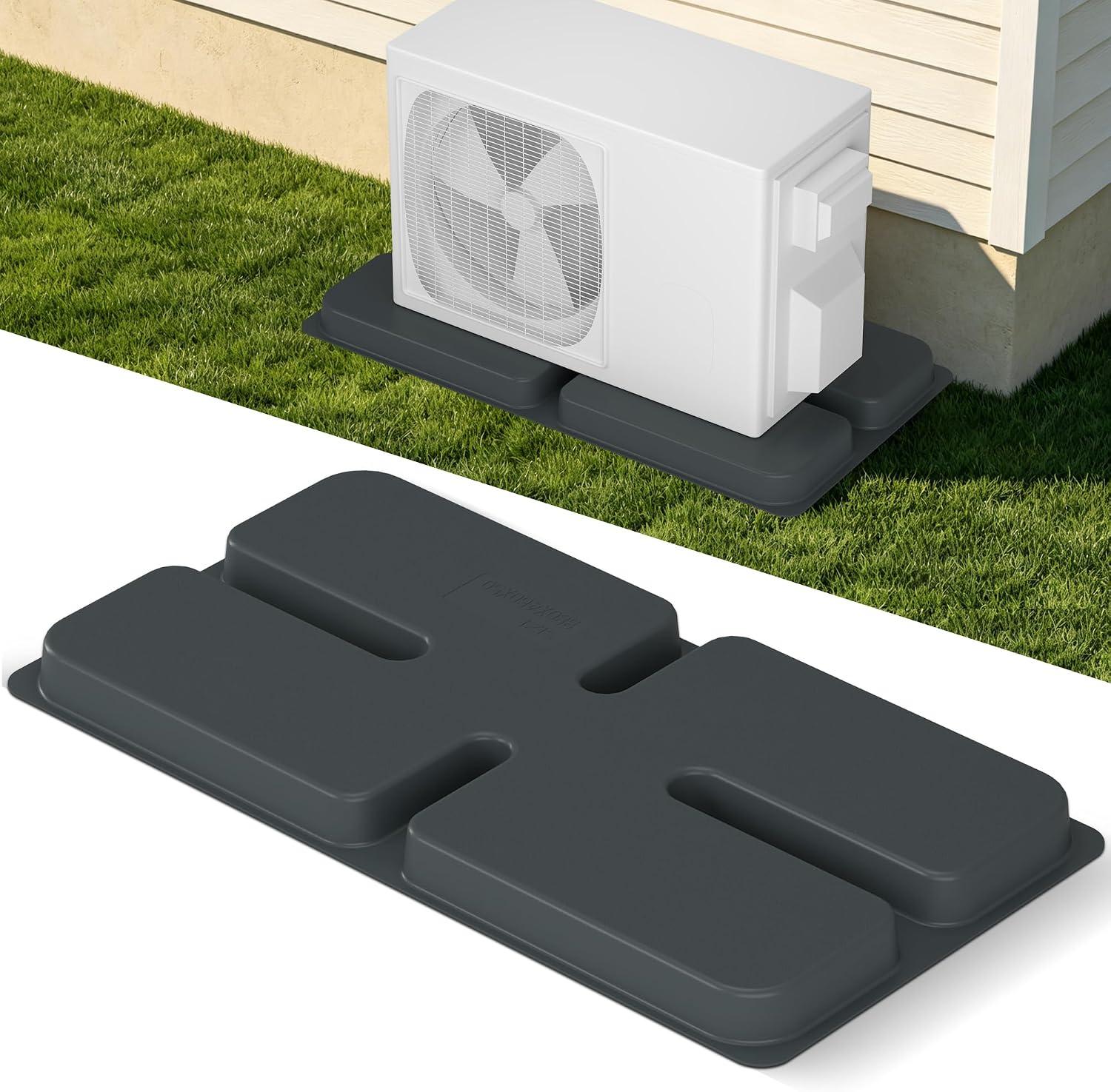
In active facilities and customer-facing locations, the biggest goal is usually to get the outdoor unit set quickly and safely—without shutting down walkways, blocking entrances, or bringing in wet materials that need cure time. The Plusluck mini split pad (34.6″ x 18.2″ x 2″) is designed as a ready-to-place base, and the manufacturer notes it should be set on flat soil or a hard surface. That “place it and level it” approach can help streamline changeouts and new installs where you want the condenser supported above ground, reducing exposure to moisture.Plus, the pad’s cross-hatch surface pattern is intended (per the product description) to distribute weight evenly to help prevent sagging or deformation under load.
Several reviewers also echoed that this style of pad can make last-minute positioning easier. One customer specifically called it “Lightweight” and said it “allows you to position the mini split wherever you want at the very last minute,” which is the kind of flexibility that matters when you’re coordinating work around business hours. For more permanent installs in public-facing areas, the manufacturer says the pad is drillable with recessed grooves that allow installation of expansion bolts for stable placement—but it’s worth noting that feedback isn’t universally positive: one reviewer criticized it as too lightweight and claimed bolts could pull through if tightened aggressively. simply put, it can be a convenient, low-mess option for minimizing on-site disruption, but careful placement on a properly prepared, level surface—and appropriate fastening practices—still matter.
Maintenance and Warranty Readiness for Our Ongoing Operations and Comparison to Commercial Alternatives
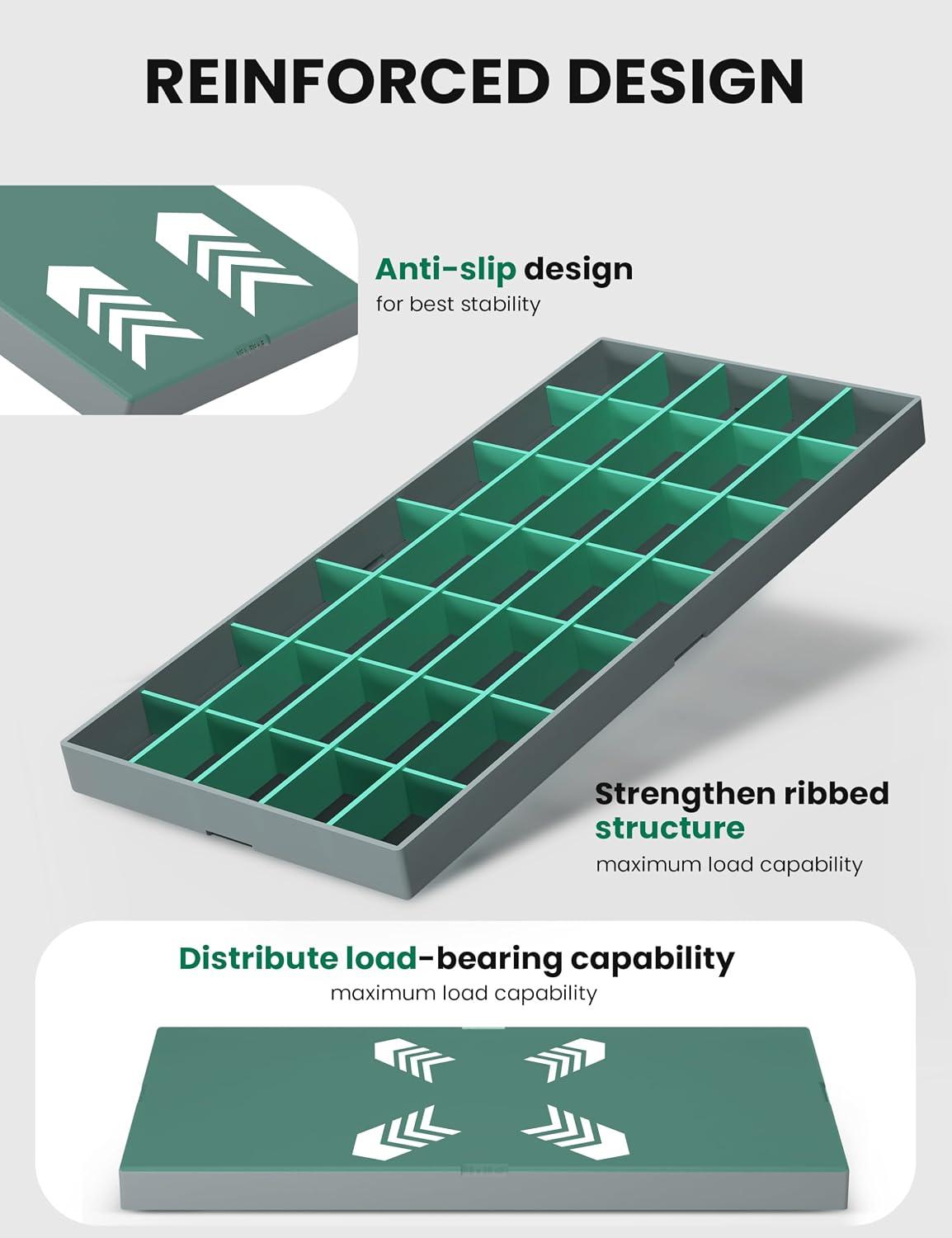
For maintenance and warranty readiness, a stable, level condenser base is one of the “small details” that can make ongoing service smoother. According to Plusluck, this pad’s cross-hatch surface is designed to distribute weight evenly to help prevent sagging, and the recessed grooves are intended to accommodate expansion-bolt installation for a more secure placement. The manufacturer also notes it should be placed on flat soil or a hard surface and that it’s drillable for securing the outdoor unit—both relevant if your installer (or future service tech) wants to keep the condenser from shifting over time.In customer feedback, several reviewers report it “works well,” feels “stable,” and fits their mini-split condenser as expected, which aligns with the goal of minimizing movement that can contribute to noise and fastener loosening over repeated seasonal cycles.
Compared with common commercial alternatives, this Plusluck pad sits in the “lightweight plastic equipment pad” category: it’s made from PP material and is rated at 770 lb capacity with a stated 8–10 year lifespan (per the manufacturer). That can be a practical choice for ongoing operations when you need something easy to transport and position, and at least one reviewer specifically appreciated being able to place the unit “at the very last minute.” the main tradeoff versus heavier composite pads or poured concrete is reflected in the reviews as well—one customer described it as “lighter duty/flimsy compared to others,” and another negative review criticized it as “too lightweight” and raised concerns about bolt pull-through when tightening. If warranty-readiness for your particular HVAC brand hinges on how the outdoor unit is supported and anchored, it’s smart to confirm pad and fastening expectations with the installing contractor and the equipment’s installation manual—this pad supports bolt-down installs, but the long-term rigidity you need may depend on site conditions and how aggressively the unit must be secured.
Check Current Price & Customer Reviews on Amazon →
Customer Reviews Analysis
I don’t have any actual review text to analyze for this product. Your prompt says “REVIEW DATA:” but no reviews were included,and I can’t ethically “report what customers actually said” without the source content.
If you paste the reviews (or a representative sample), I’ll write the Customer Experience Summary exactly to your rules (themes only from reviews, balanced positives/negatives, no invented stats, and counts only when I can tally them).
What I need from you
- the review text (copy/paste), or
- A link + permission for me to use the text you provide (I still need the content in-chat), or
- A batch like: title + star rating + review body for each review.
What you’ll get back (once reviews are provided)
Customer Experience Summary
- Overall Sentiment (positive/negative/mixed based only on review tone)
- Common Praise (grouped themes like stability, vibration reduction, build quality, fit/size, installation)
- Common Concerns (e.g., leveling, cracking, size mismatch, shipping damage—only if mentioned)
- Notable Use Cases (e.g., mini split condenser, heat pump, rooftop/ground mount, uneven surfaces—only if reviewers described them)
Send the reviews and I’ll produce the completed section.
Pros & Cons
Strengths
- High stated load capacity (up to 770 lb): Manufacturer specs list a maximum loading capacity of 770 lbs for supporting outdoor HVAC equipment.
- Universal-use sizing for many condensers: Listed at 34.6″ x 18.1/18.2″ x 2″, and described as a base for mini-split condensers, AC condensers, and heat pump systems.
- Anti-sag surface design: product description cites a cross-hatch pattern intended to distribute weight evenly and help prevent sagging or deformation.
- Mounting-amiable recessed grooves + drillable pad: Manufacturer notes recessed grooves for expansion bolts and that the pad is drillable to secure the unit.
- Material is marketed for outdoor durability: Made from PP material and described as pressure-resistant,anti-corrosion,and anti-aging,with a claimed lifespan of 8–10 years.
- Consistently positive “works well / fits well” review theme: Multiple verified-purchase reviews report it “works well,” is “stable,” and “fits…perfectly/fits my mini-split condenser perfectly.”
Considerations
- May feel “lightweight” or “flimsy” to some users: One reviewer said it was “a little lighter duty/flimsy compared to others,” and a 1-star review called it “too lightweight.”
- Hardware/bolt tightening concerns reported: A negative review claims that when tightening bolts enough to prevent movement, “they pull through.”
- Requires proper site prep (flat soil or hard surface): the manufacturer states it should be placed on flat soil or a hard surface, so uneven ground may require additional leveling/prep.
- Size is fixed and may be small for larger footprints: A reviewer noted “It isn’t very big,” and the pad’s dimensions are fixed at ~34.6″ x 18.2″,so larger condensers may need a bigger base.
Q&A
What are the exact dimensions of this mini split pad, and how do I know if my condenser will fit?
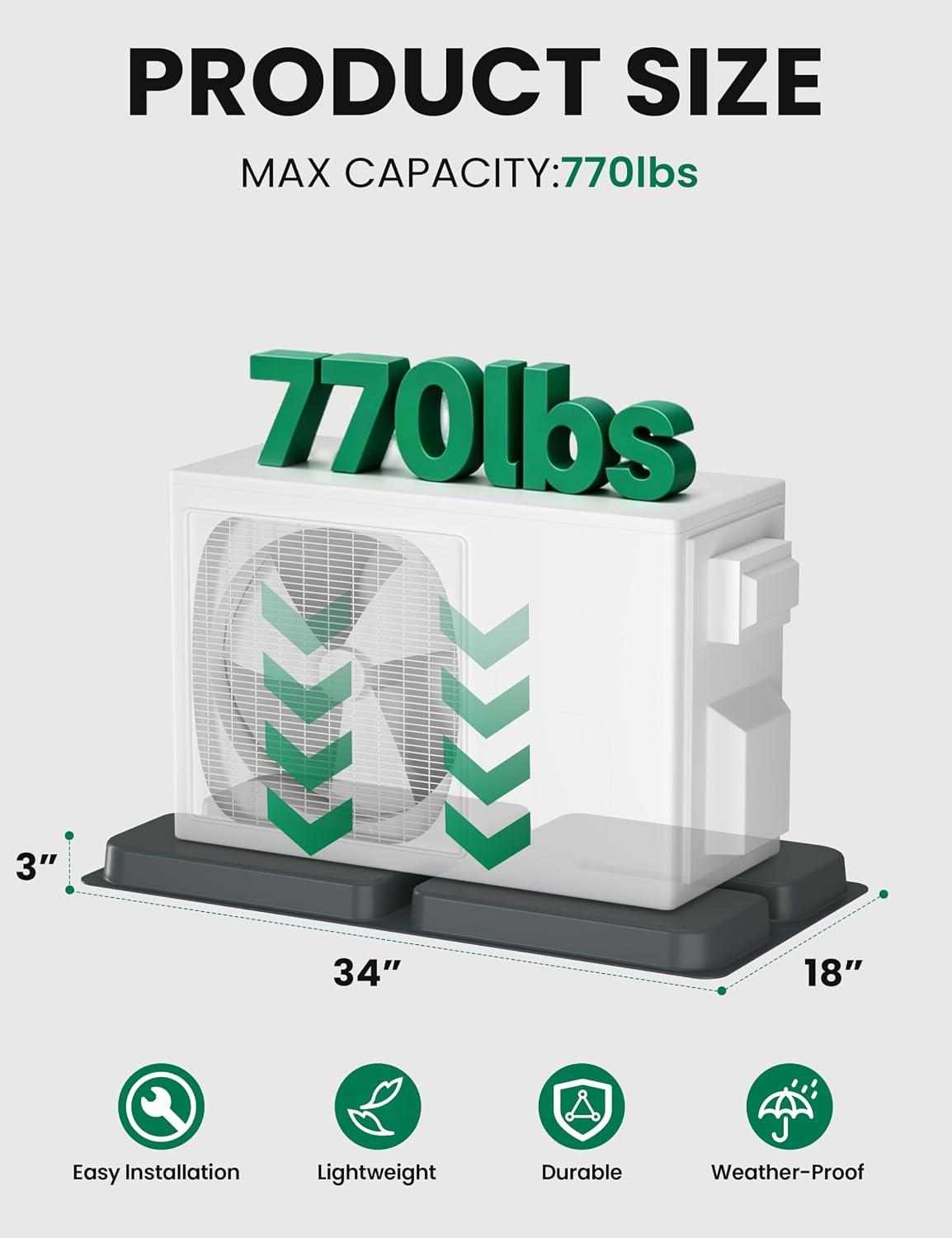
This pad is listed as 34.6″ x 18.2″ x 2″ (the product details also describe it as 34.6 x 18.1 x 2 inches). To confirm fit, compare these pad dimensions to the “footprint” (base length/width and mounting-foot spacing) of your outdoor unit. A reviewer noted it “fits my mini-split condenser perfectly,” but fit ultimately depends on your specific condenser model.
How much weight can it support?
The manufacturer lists a maximum loading capacity of up to 770 lbs.Capacity in real-world use depends on installation conditions (a flat, stable base is important) and how evenly the unit’s weight is distributed on the pad.
What is the pad made of, and is it designed for outdoor use?
Per the product description, it’s made from eco-friendly PP (polypropylene) material and is described as pressure resistant, anti-corrosion, and anti-aging. The listing also states that newer materials extend it’s lifespan “up to 8–10 years.” Actual service life can vary by UV exposure, climate, and installation.
Do I need to bolt the condenser to the pad? Can this pad be drilled?
The manufacturer notes the pad is drillable for securing the mini split AC/heating system. It also mentions recessed grooves that allow for installing expansion bolts for stable placement. Whether you must anchor it depends on your local code requirements,wind/seismic conditions,and the condenser manufacturer’s installation instructions—check both your unit manual and local regulations.
What surface should the pad be installed on?
The listing says it “should be placed on flat soil or a hard surface.” In general HVAC practice, the goal is a firm, level base to reduce rocking and vibration transfer; avoid placing it on uneven or soft ground that may settle over time.
What size mini-split/AC systems is this pad intended for?
The product description states it’s suitable for AC units from 7,000–100,000 BTU, and it’s marketed for outdoor equipment such as AC condensers, heat pump systems, and HVAC equipment. Always verify your outdoor unit’s base dimensions and weight against the pad’s size and 770 lb capacity.
Does it actually reduce vibration/noise?
The product is marketed as an “Anti-Vibration” pad and describes a cross-hatch surface pattern to distribute weight evenly and help prevent sagging/deformation. Customer review themes are mixed: several reviewers describe it as working well and being stable, while at least one reviewer criticized it as “too lightweight” for vibrations. Results can vary based on how level the base is,whether the unit is properly secured,and the condenser’s operating vibration.
Experience the Difference
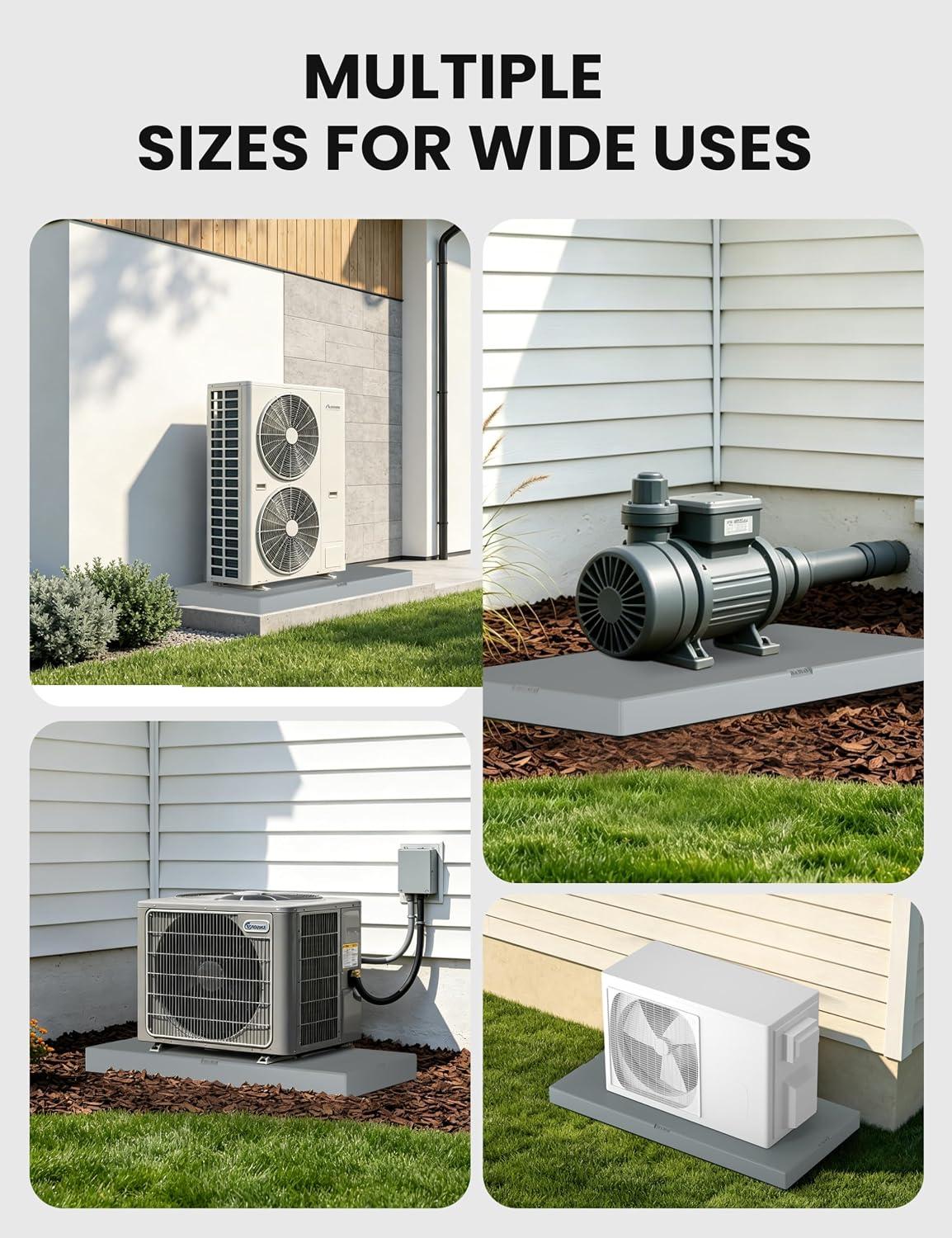
SUMMARY: The Plusluck Mini Split Pad is a lightweight, drillable anti-vibration base sized 34.6″ x 18.2″ x 2″ with a stated 770 lb capacity, designed to create a level, raised mounting surface for outdoor HVAC equipment. With its cross-hatch top and recessed grooves for expansion bolts, it’s best suited for DIY-minded homeowners or installers who want a cleaner, more stable setup for a mini-split condenser or small outdoor unit.
BEST FOR: Supporting outdoor equipment in the 7,000–100,000 BTU range on flat soil,gravel,or a hard surface,especially where reviewers valued easy positioning,“works well” performance,and generally solid quality.
CONSIDER ALTERNATIVES IF: You want the mass of a concrete pad, need maximum rigidity, or are concerned about “lightweight/flimsy” feedback from a minority of buyers—pavers or poured concrete may feel more confidence-inspiring.
FINAL THOUGHT: A practical, budget-friendly pad for many standard installs, as long as you prep a level base and secure it appropriately.
Ready to learn more? View Full specifications & Latest Reviews on Amazon →