
Struggling to keep a bedroom or home office comfortable without overworking a central system—or dealing wiht rooms that never seem to match the thermostat? A ductless mini-split can be a practical fix,and the Mitsubishi 9,000 BTU 20 SEER2 HX-Series Mini Split Heat Pump System is designed for exactly that kind of single-zone comfort upgrade,especially in spaces around 350–450 sq ft.
this system pairs a wall-mounted indoor unit with an outdoor condenser, includes a 15 ft line set and installation kit, and—according to the manufacturer—uses an inverter compressor for steadier temperature control and quiet operation. It also brings convenience features like four fan speeds, Econo Cool, a 12-hour timer, washable filter, auto restart, and optional Kumo Cloud app control.
In this review, we’ll break down key specs like the 20.0 SEER2 rating, operating temperature ranges for heating and cooling, included accessories, and what the “not a DIY” installation note really means.
We’ve helped compare and shortlist mini-splits for different room sizes and use cases, so we’ll focus on matching features to real-life needs—not hype.
Commercial Performance Overview for Small Business Operations and High Traffic Loads
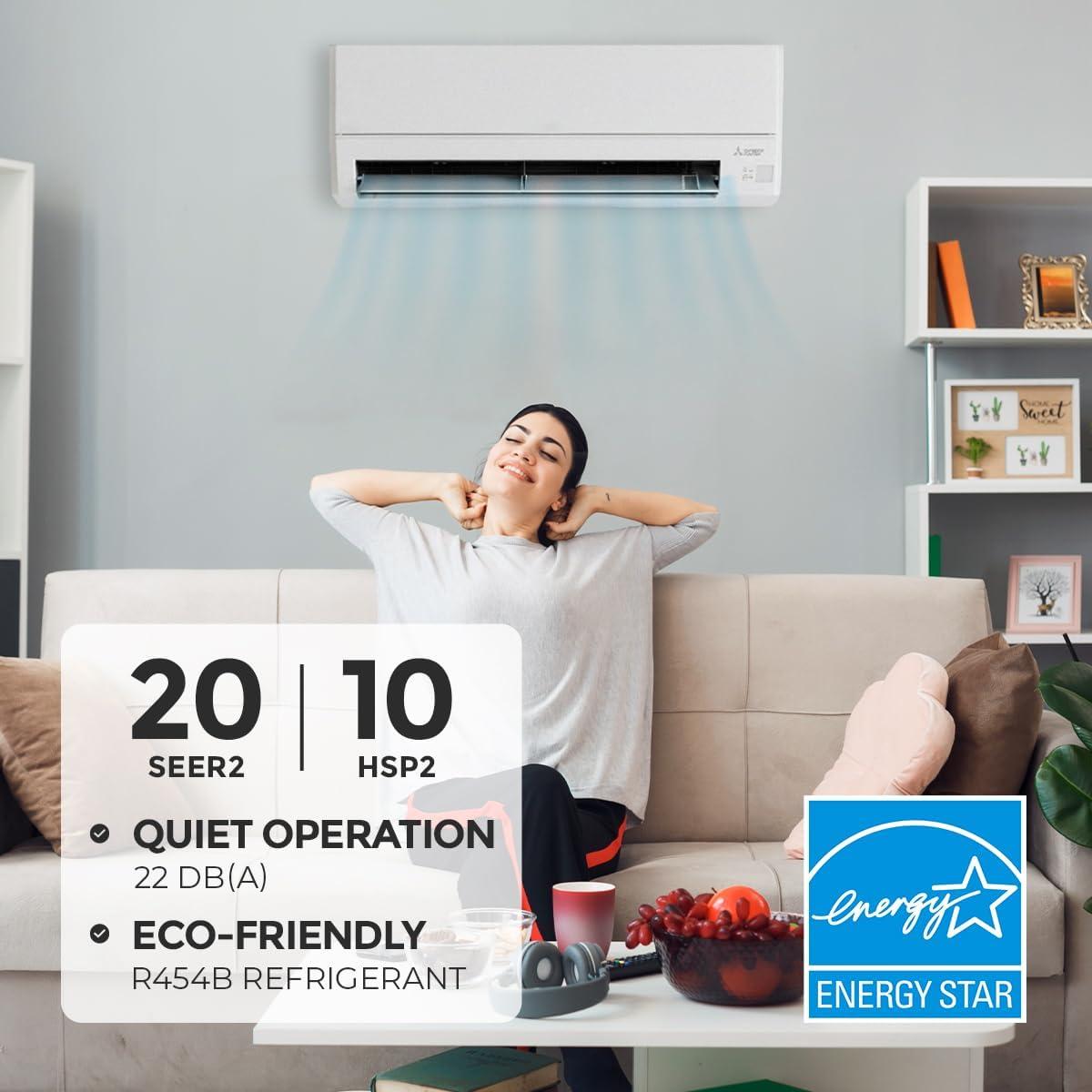
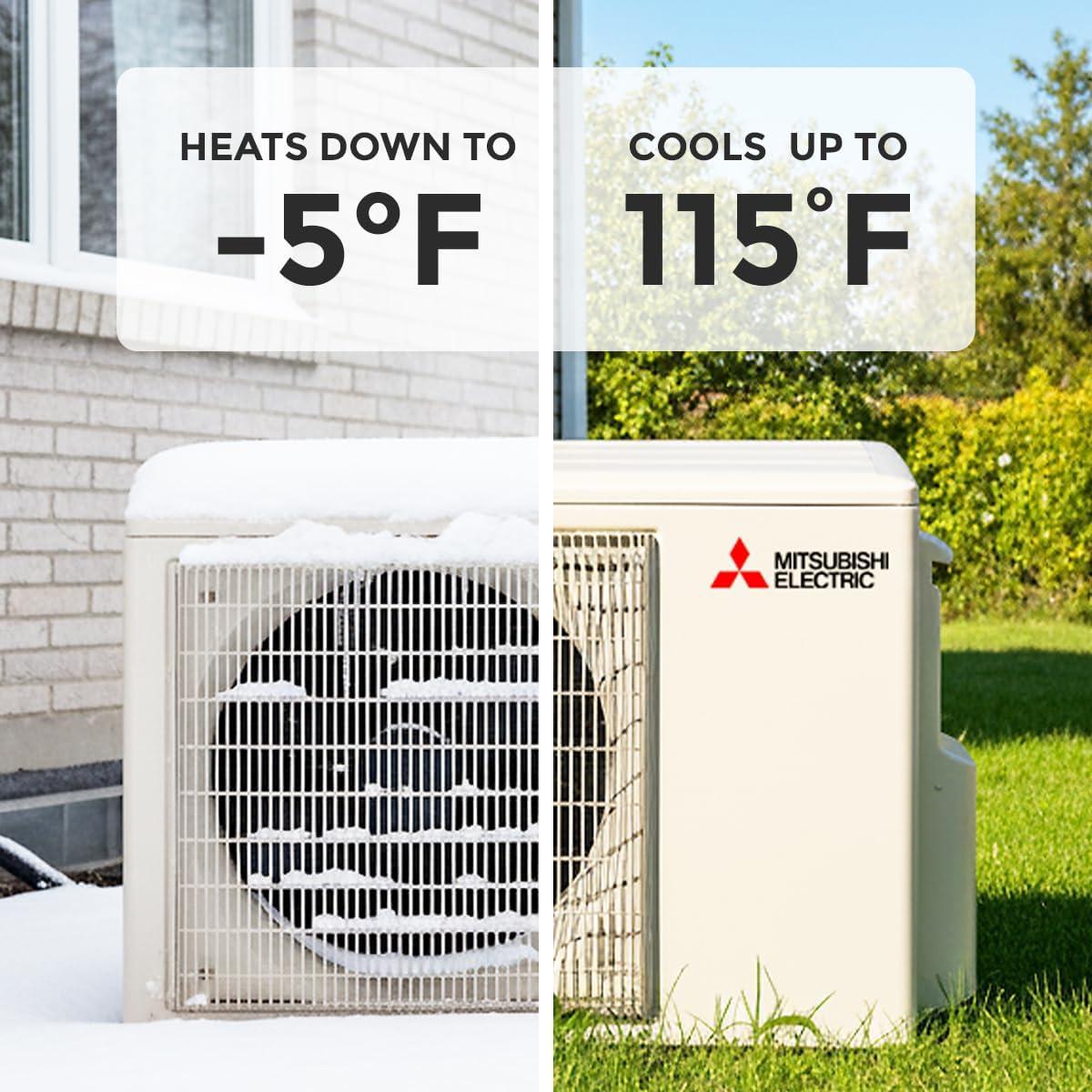
For small business operations like a private office, salon suite, back room, or small retail workspace, this Mitsubishi system is sized and equipped to handle steady day-to-day conditioning in a single zone. The manufacturer rates it at 9,000 BTU (cooling) / 10,900 BTU (heating) with 20.0 SEER2 efficiency and a stated coverage of about 350–450 sq ft, which aligns well with many compact commercial rooms. According to Mitsubishi’s included specs, the unit also supports a wide operating envelope—cooling from 14°F to 115°F outdoors and heating from about -4°F to 75°F—helpful for businesses that need reliable comfort through shoulder seasons and temperature swings. For day-to-day usability, the system includes convenience features like four fan speeds, Econo cool, a 12-hour timer, a washable filter, and remote/app control via Kumo Cloud, which can be useful when staff want to set schedules or make quick adjustments without constant thermostat changes.
under higher traffic loads (frequent door openings, varying occupant counts, heat from equipment, or sporadic spikes in demand), this single-zone mini split’s inverter compressor is designed to modulate output rather than simply cycling on/off, which generally helps maintain steadier temperatures and more consistent comfort during fluctuating conditions. Having mentioned that, the practical “commercial” limit is still tied to sizing and room layout: a 9k system is best for one appropriately sized area, and larger or more open spaces may require additional capacity or multiple zones (a normal HVAC sizing consideration). Also, the product description notes this is not a DIY mini split; it requires professional installation with proper evacuation, and it comes factory-charged for up to 25 ft of line set (the kit includes a 15 ft line set), both of which matter when reliability and uptime are significant for a business habitat. Check Current Price & Customer Reviews on Amazon →
Energy Cost Savings Real Numbers for Our Operating Budget and Efficiency Goals
For “real numbers” in an operating budget, the most defensible place to start is the unit’s published efficiency and capacity specs rather than guessing at dollar savings. This Mitsubishi single-zone system is rated at 20.0 SEER2 and 12.0 EER2 for cooling efficiency, with a 9,000 BTU/h rated cooling capacity (variable output up to 10,000 BTU/h) and 10,900 BTU/h rated heating capacity (variable output up to 11,800 BTU/h). Those are the “inputs” you can actually plug into budget models (along with your local utility rate and expected run hours) to estimate annual kWh and cost—without inventing savings claims. According to Mitsubishi, the inverter compressor and electronic LEVs (Linear Expansion valves) are designed to optimize refrigerant flow and reduce energy usage by matching output to demand, which is directly aligned with efficiency goals that prioritize minimizing cycling and avoiding overshooting setpoints.
From an efficiency-program and facilities standpoint, the features that support predictable, controllable energy use are clearly spelled out in the product description. Helpful cost-control tools include Econo Cool Mode (automatic setpoint/airflow adjustments intended to improve efficiency), a 12-hour timer for scheduling, and app-based control via the Kumo Cloud platform for centralized adjustments when occupancy changes. Also relevant to operating budgets: this is a heat pump with a stated heating operating range down to -4°F (cooling down to 14°F), which can matter if you’re evaluating shoulder-season performance and reducing reliance on less efficient backup heat. Key spec and kit items that affect install scope and therefore total project cost (but not ongoing kWh directly) include a 15 ft line set,and the note that it’s factory-charged for up to 25 ft but requires professional installation with proper evacuation—important for avoiding efficiency losses from improper charge or moisture in the lines.
- Efficiency ratings (cooling/heating): SEER2 20.0, EER2 12.0, HSPF2 10.0, COP @ 47°F 3.55
- Controls that support efficiency goals: Econo Cool Mode, 12-hour timer, Kumo Cloud app control
- Core efficiency technology (per Mitsubishi): inverter compressor + electronic LEVs for optimized operation
Check Current Price & Customer Reviews on Amazon →
Installation Without Business Disruption for Our Schedule Staffing and Daily Operations

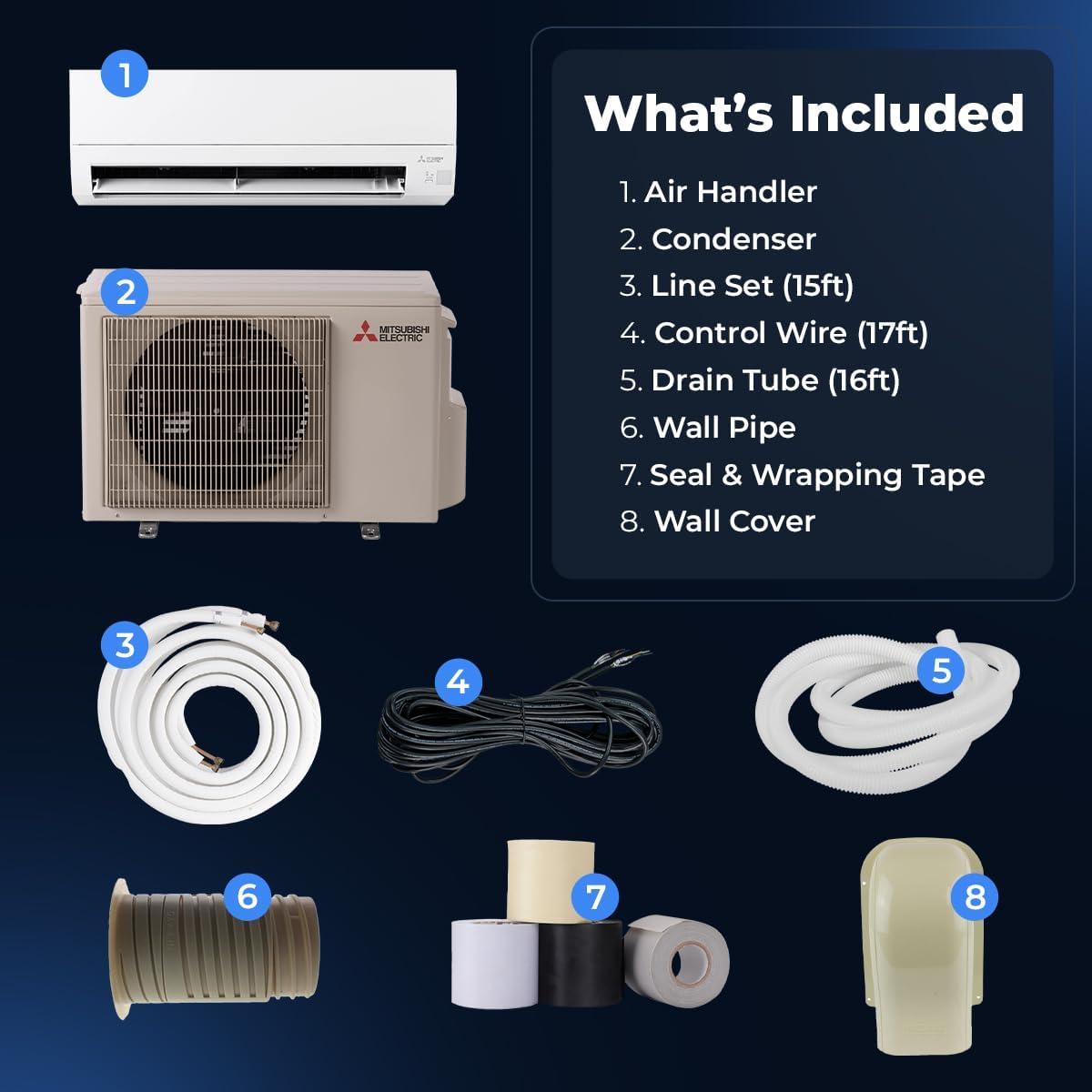
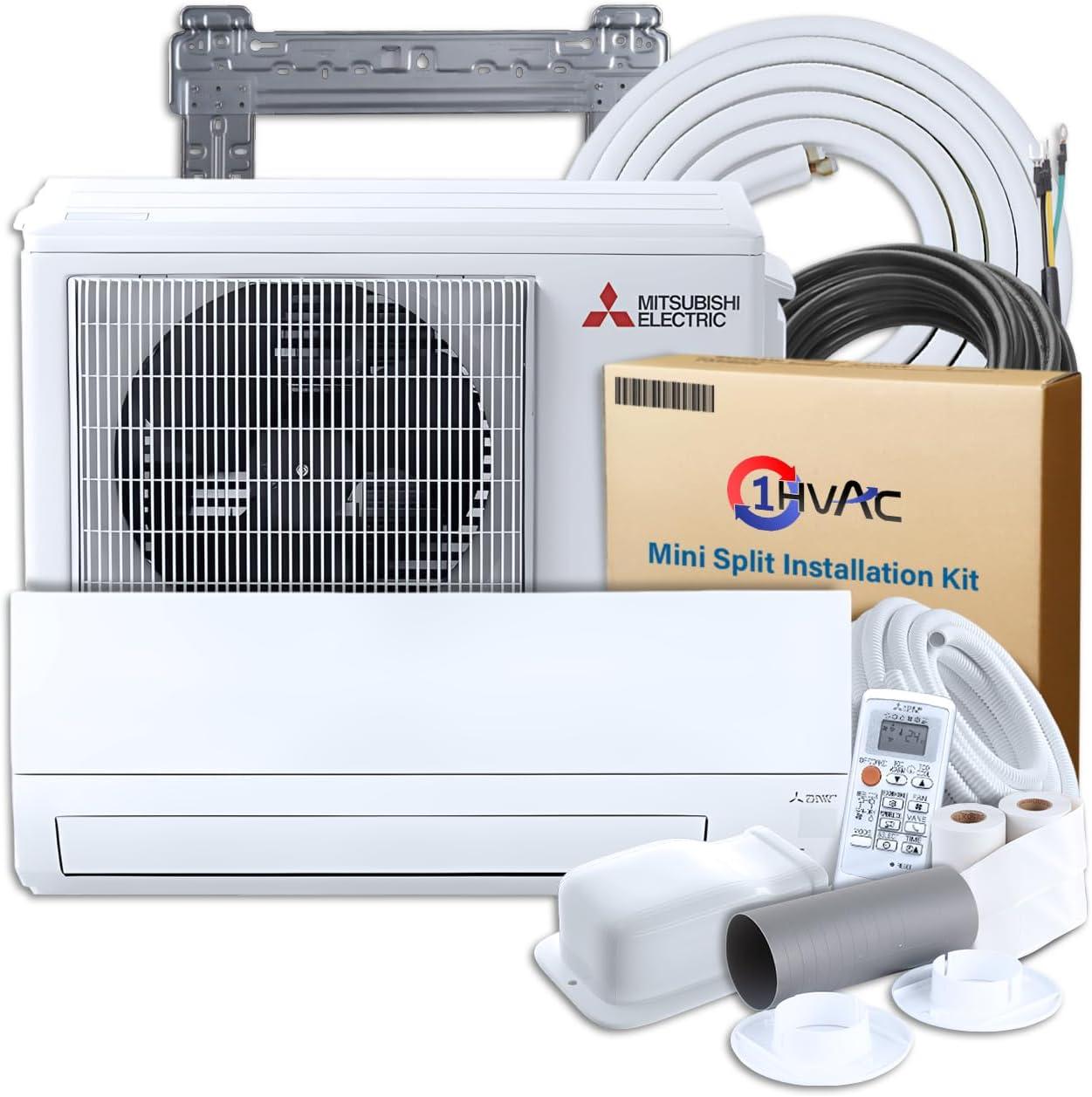
Installing the Mitsubishi HX-Series 9,000 BTU single-zone mini split can be planned in a way that minimizes interruptions to schedule staffing and daily operations—mainly as it’s a ductless system, so there’s no need for invasive ductwork changes. According to the product details,the kit includes the core items needed to complete a standard setup,such as the 15 ft line set,control wire (17 ft),drain tube (16 ft),plus wall protection/sealing accessories and a handheld remote. that said, Mitsubishi is explicit that this is not a DIY mini split; it requires professional installation with proper evacuation of the refrigerant lines. For a business environment, that professional requirement can actually reduce operational risk—as the work is typically more predictable, can be scheduled during off-hours, and helps avoid failed startups or callbacks that could extend downtime.
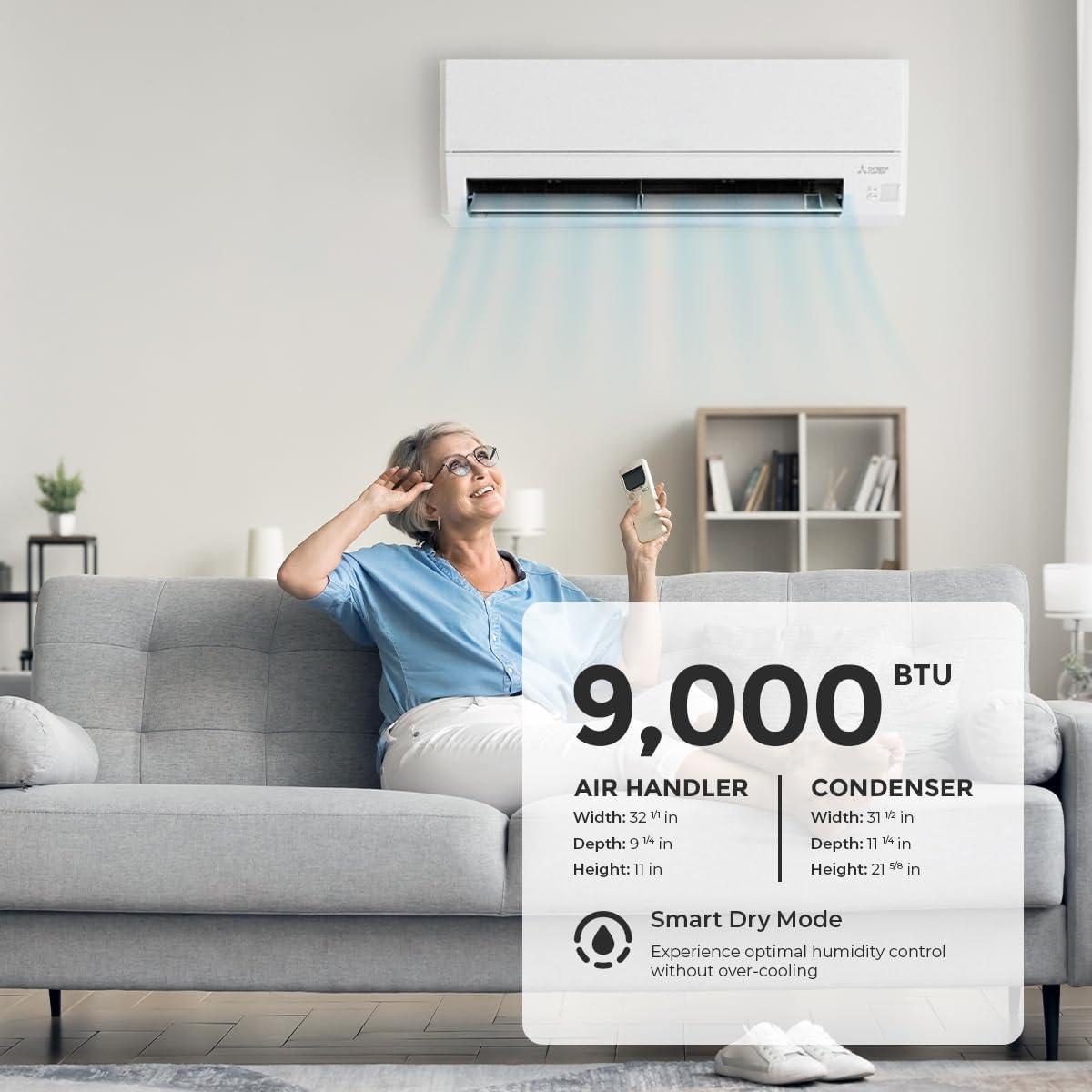
From a practical operations standpoint, the indoor head and outdoor condenser are relatively compact (indoor unit: 31.43″ W x 9.12″ D x 11.62″ H; outdoor unit: 31.50″ W x 11.25″ D x 21.62″ H), which can make placement easier in tighter commercial or office settings and reduce the amount of space that needs to be cordoned off during installation. Mitsubishi also notes the system is factory-charged for up to 25 ft of line set, while the included line set is 15 ft—so in many straightforward installs, the installer may be able to stay within that pre-charge limit (line length, routing, and any added line length still depend on your site conditions). Once installed, day-to-day disruption can be reduced through operational controls like the 12-hour timer and the kumo Cloud app, which let you schedule or adjust comfort settings without pulling staff away from their primary responsibilities.
Check Current Price & Customer Reviews on Amazon →
Comfort and Reliability for Our customers and Employees with Maintenance and Warranty Fit Compared to Commercial Alternatives
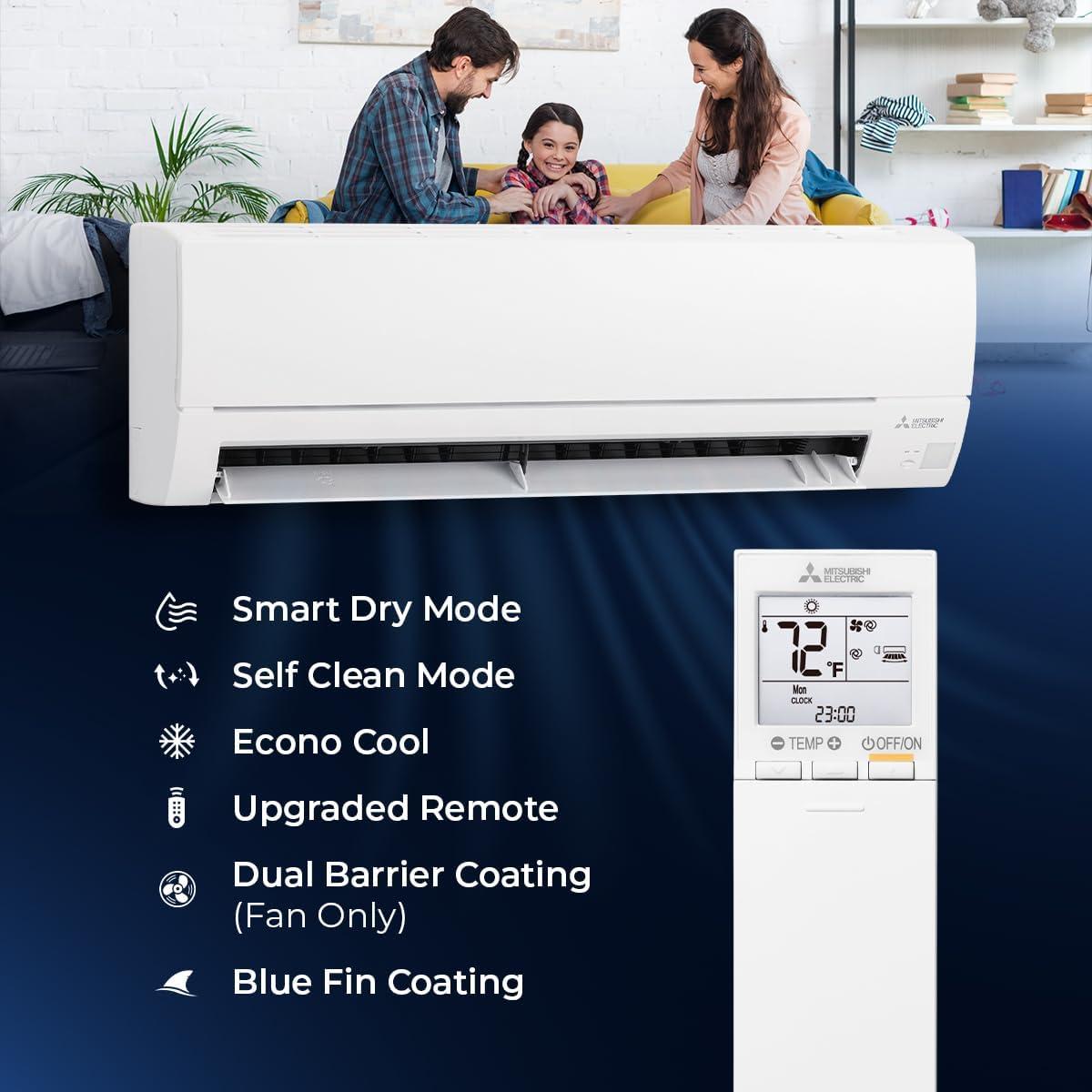
For comfort you can count on day after day,this Mitsubishi single-zone system pairs high efficiency with controls that help both homeowners and facility teams keep conditions steady without constant tweaking. According to Mitsubishi,the inverter compressor is designed to maintain more consistent temperatures while reducing energy usage,and the unit adds practical usability features like four fan speeds,Econo Cool mode,a 12-hour timer,and Auto restart to recover previous settings after a power outage. In practical terms, those features can reduce hot/cold swings and simplify routine operation—especially useful in customer-facing spaces or employee work areas where comfort complaints can become a recurring distraction. The included wireless remote and Kumo Cloud App also add adaptability for adjusting settings without needing to be physically at the unit, which is convenient when you’re managing comfort across a small office, studio, or similar space (the manufacturer lists ~350–450 sq ft coverage).on the reliability and “maintenance fit” side, the product description includes several details that matter when you’re comparing this to many commercial alternatives that may require more regular service access or more complex upkeep. The system includes a washable filter (a straightforward, recurring maintenance task) and a Blue Fin coating on the outdoor coil that Mitsubishi describes as anti-corrosion protection for increased durability—helpful for long-term performance in harsher environments. Mitsubishi also notes the system is factory pre-charged for up to 25 ft of line set, but explicitly states it is not a DIY mini split and requires professional installation with proper evacuation; that requirement can be a plus for reliability because correct evacuation and charging are key factors in avoiding leaks and premature compressor issues. Warranty is another area where this unit can better match “commercial-grade expectations”: Mitsubishi states an industry-leading 10-year warranty when the system is registered online at no extra charge, which can provide peace of mind for both customers and employees who depend on the space staying comfortable year-round.
Check Current Price & Customer reviews on Amazon →
Customer reviews Analysis
I can’t write an accurate “Customer Experience Summary” yet as you didn’t include any actual review text or review counts in your message (the “REVIEW DATA:” section is blank). Your rules require me to only report what customers said, and I can’t invent or assume reviews.
If you paste the reviews here (or provide a link + the review text you want analyzed), I’ll produce the summary in the exact structure you requested.
What I need from you
Please provide one of the following:
- Copy/paste the full reviews (even if messy), or
- A list of review excerpts you have, or
- The review page text exported (CSV/plain text), or screenshots (I can read images too)
Once you share the review data, I’ll return:
Customer Experience Summary (template I will fill in from your reviews)
1) Overall Sentiment
- (Positive/negative/mixed based on what reviewers actually said)
2) Common Praise
Grouped by theme (only if reviewers mentioned it), e.g.:
- Performance (cooling/heating): Quotes like “…”
- Noise: Quotes like “…”
- Installation/kit completeness: Quotes like “…”
- Efficiency/operating cost: Quotes like “…”
3) Common Concerns
Again grouped by theme, e.g.:
- Installation difficulties / need for pro help: “…”
- Missing/damaged parts / shipping: “…”
- Controls/app/remote issues: “…”
- Reliability/defects/customer support: “…”
4) Notable Use Cases
Specific scenarios reviewers described, e.g.:
- “Used it for a garage/workshop…”
- “Installed in a bedroom…”
- “Heating performance in winter…”
Send the review text and I’ll generate the finished, rule-compliant analysis.
Pros & Cons
Strengths
- High efficiency ratings (20.0 SEER2 / 12.0 EER2 / 10.0 HSPF2): Listed efficiency specs indicate a high-efficiency single-zone heat pump system.
- Wide operating temperature ranges for year-round use: Cooling is rated to operate from 14°F to 115°F outdoors, and heating from about -4°F (also stated as -5°F) to 75°F.
- Inverter compressor + electronic LEVs: The product description calls out inverter technology for consistent temperature control and improved efficiency, with Linear Expansion Valves optimizing refrigerant flow.
- Wireless remote included (with holder and batteries): Kit includes a handheld remote control and specifically notes batteries and a holder mount.
- WiFi/app control via Kumo cloud: the Kumo Cloud App is listed for controlling the system from a smartphone or tablet.
- Installation kit and line set included: Package includes a 15 ft line set, control wire (17 ft), drain tube (16 ft), plus wall pipe, wall covering seal, and wrapping tape.
- Added durability feature (Blue Fin coating): The outdoor coil is noted to have anti-corrosion “Blue Fin” coating for increased durability.
Considerations
- Not a DIY system; professional installation required: The description states “this is not a DIY mini split” and requires proper evacuation of refrigerant lines.
- Pre-charge limitation vs. included line set length: The unit is factory-charged for up to 25 ft of line set; installations longer than that (system max length is 65 ft) may require additional refrigerant and added installation complexity.
- Single-zone and capacity/coverage limits: It’s a single-zone system designed for rooms around 350–450 sq ft,so it may not be sufficient for larger or multi-room areas without additional zones/units.
- Electrical requirement may limit compatibility: Requires 208/230V, 1-phase power (15A outdoor breaker), which may not be available in all install locations without electrical work.
- Sound ratings are not ultra-low on paper: Indoor unit is listed at 43 dB(A) and outdoor at 46–50 dB(A), so while marketed as “quiet operation,” the published dB numbers might potentially be a consideration for noise-sensitive placements.
Q&A
What size room is this 9,000 BTU Mitsubishi mini split designed for?
This is a 9,000 BTU (rated) single-zone mini split system. The listing describes it as suitable for “rooms around 350–450 sq ft.” Actual performance depends on insulation quality, ceiling height, sun exposure, and local climate. For exact sizing, follow Mitsubishi’s sizing guidance or confirm with your HVAC contractor.
Does this system provide both heating and air conditioning, and what are its temperature operating limits?
Yes—this is a heat pump system that provides both cooling and heating. Per the provided specs, it can cool with outdoor temperatures from 14°F up to 115°F, and it can heat with outdoor temperatures from about -4°F up to 75°F (the listing also references -5°F to 75°F for heating). For the official rating/operating limits, verify on the Amazon product page and Mitsubishi documentation for the exact model number.
How efficient is it (SEER2 / EER2 / HSPF2)?
The included specifications list: SEER2 20.0, EER2 12.0, and HSPF2 10.0, with a COP of 3.55 at 47°F.These values are used to compare efficiency across systems; your real-world energy use will vary with climate, thermostat settings, and installation quality.
Can I install this myself (DIY), as it comes with a line set and installation kit?
The listing states this is “not a DIY mini split” and requires professional installation, including proper evacuation of the refrigerant lines.While the unit is described as factory pre-charged for up to 25 ft of line set, correct installation still typically requires HVAC tools/procedures (vacuum, leak checking, and proper electrical work). Local codes and refrigerant-handling rules may also require a licensed professional.
What comes in the box with this system?
Per the kit inclusions provided: outdoor condenser and indoor wall-mounted air handler, wireless remote control with AAA batteries, wall pipe and wall covering seal, wrapping tape, a 15 ft line set, 17 ft control wire, and a 16 ft drain tube.
What line-set sizes does it use,and how long can the line set be?
The specs list refrigerant line sizes as 1/4″ liquid and 3/8″ gas,with a maximum line length of 65 ft. The included line set is 15 ft,and the unit is described as factory-charged for up to 25 ft of line set. If your installation needs longer than the included 15 ft, confirm requirements (and any additional refrigerant procedures) with the installer and Mitsubishi documentation.
What are the electrical requirements, and what breaker size is specified?
The provided electrical data lists 208/230V, 1-phase, 60Hz, with an outdoor breaker specified at 15A. Electrical work should be performed to local code and manufacturer instructions; confirm final circuit sizing and disconnect requirements with your electrician/installer and the product documentation.
Experience Innovation

The Mitsubishi 9,000 BTU HX‑Series single‑zone mini split pairs a high 20.0 SEER2 rating with inverter-driven heating and cooling in a compact, wall-mounted design. With features like four fan speeds, Econo Cool, a 12‑hour timer, washable filter, and optional Kumo Cloud control, it’s geared toward steady comfort in smaller spaces—typically around 350–450 sq ft—where quiet, consistent operation matters.
Best for: bedrooms, home offices, studios, and other single rooms that need efficient temperature control, plus users who value remote/app convenience and a broad operating range (cooling 14°F–115°F; heating down to about -4°F/-5°F).
Consider alternatives if: you need to condition larger areas, want a multi‑zone setup, require a longer line run than the included 15 ft (max 65 ft), or prefer a true DIY system—this one is intended for professional installation and proper line evacuation.
it’s a strong spec-driven option for a single room, provided you plan for install requirements and confirm compatibility details.
Ready to learn more? View Full Specifications & latest Reviews on Amazon →