
Dealing with a home where one room is freezing, another is stifling, and ductwork isn’t an option? A dual-zone mini-split can be a practical way to bring comfort back—without turning the whole house into a renovation project.
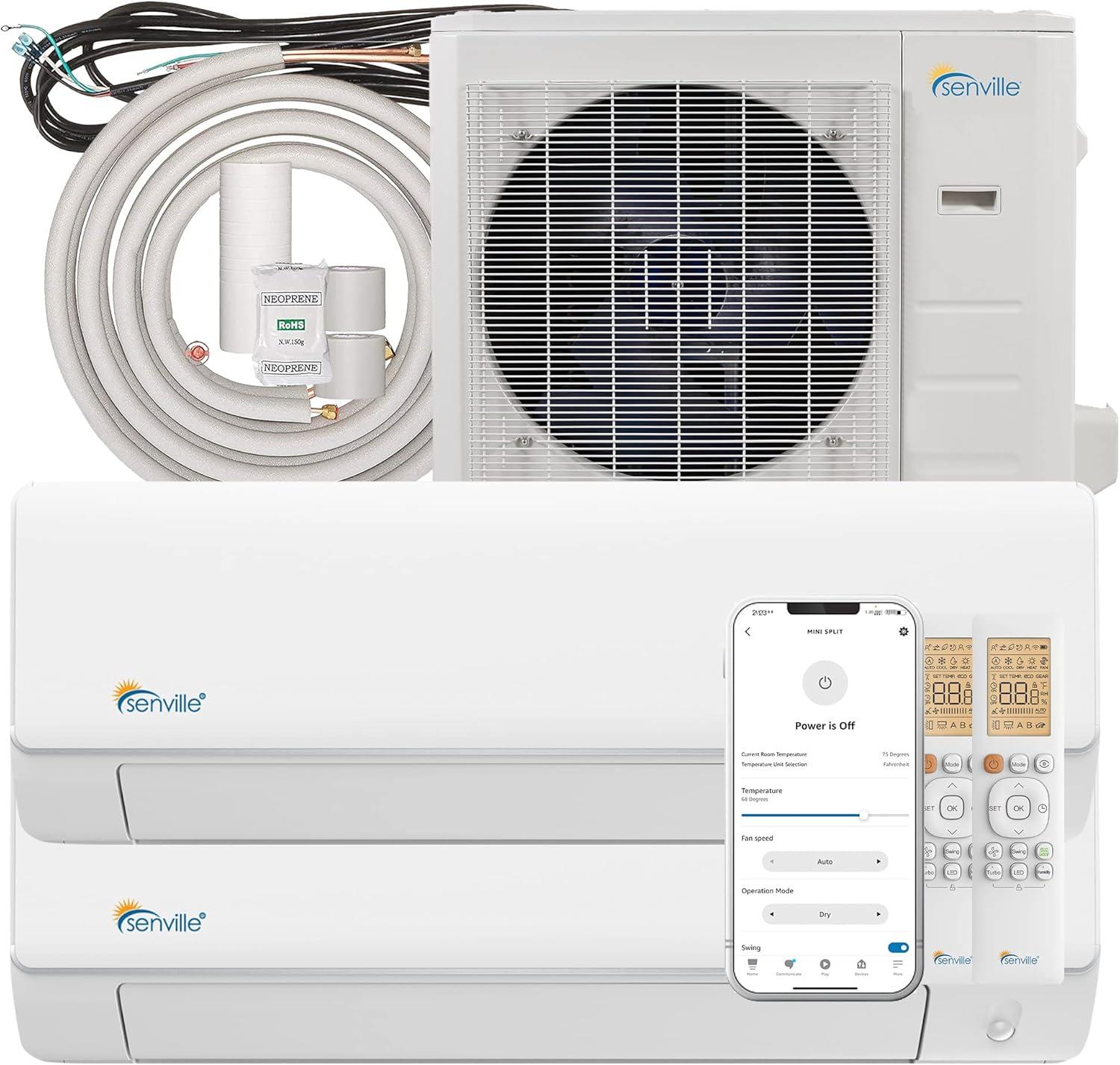
In this review, we’re looking at the Senville 18000 BTU Dual Zone Mini Split Air Conditioner Heat Pump (1.5 ton, 2 zone, white)—a system built around a single outdoor condenser paired with two indoor air handlers, plus smart features that work with Alexa. According to the manufacturer, it’s designed for both residential and light commercial spaces, includes a 24-hour timer, and comes backed by a 10-year warranty (5 years parts, 10 years compressor), with a note that professional installation is required.
We’ll break down what the setup includes, what customers consistently praise (like quiet operation, strong cooling/heating performance, and easy installation), and what gets more mixed feedback—especially WiFi reliability and smart-home compatibility.
We’ve worked around mini-split buying decisions before, so we’ll focus on real-world considerations buyers typically overlook.
Commercial Performance Overview for Dual Zone Business Operations

For small commercial spaces or mixed-use setups, the Senville 18000 BTU dual zone (2-zone) mini split heat pump is positioned as a practical way to condition two separate areas from a single outdoor unit. According to Senville, it’s designed for home & business and is suitable for applications like stores, restaurants, and warehouses, with the key operational advantage being individual temperature control in each room via multiple indoor air handlers. In real-world feedback,customers frequently report strong day-to-day heating and cooling performance—some specifically noting it “works well” and performs especially well in winter—along with a consistently mentioned benefit for customer-facing or noise-sensitive environments: many reviewers describe the system as very quiet when running.
From a commercial performance standpoint, reviewers also emphasize efficiency and comfort consistency, which matter when you’re conditioning working areas for long hours. Several customers describe the system as efficient, and a number mention lower electricity use after installation (individual results vary by building, climate, and usage).That saeid, commercial reliability is also about the “small stuff” that affects uptime: customers mention installation details like line-set length constraints (some found included lines too short for certain layouts) and occasional vibration concerns if the condenser is wall-mounted—one reviewer specifically recommends not mounting it on the wall due to vibration. WiFi/app control and Alexa compatibility can be a convenience feature for managing two zones, but reviews are mixed on WiFi behavior (including reported smart-home compatibility issues), so it’s best viewed as a bonus rather than the only control method.
Check Current Price & Customer Reviews on Amazon →
Energy Cost Savings real Numbers for Our Operating Budget

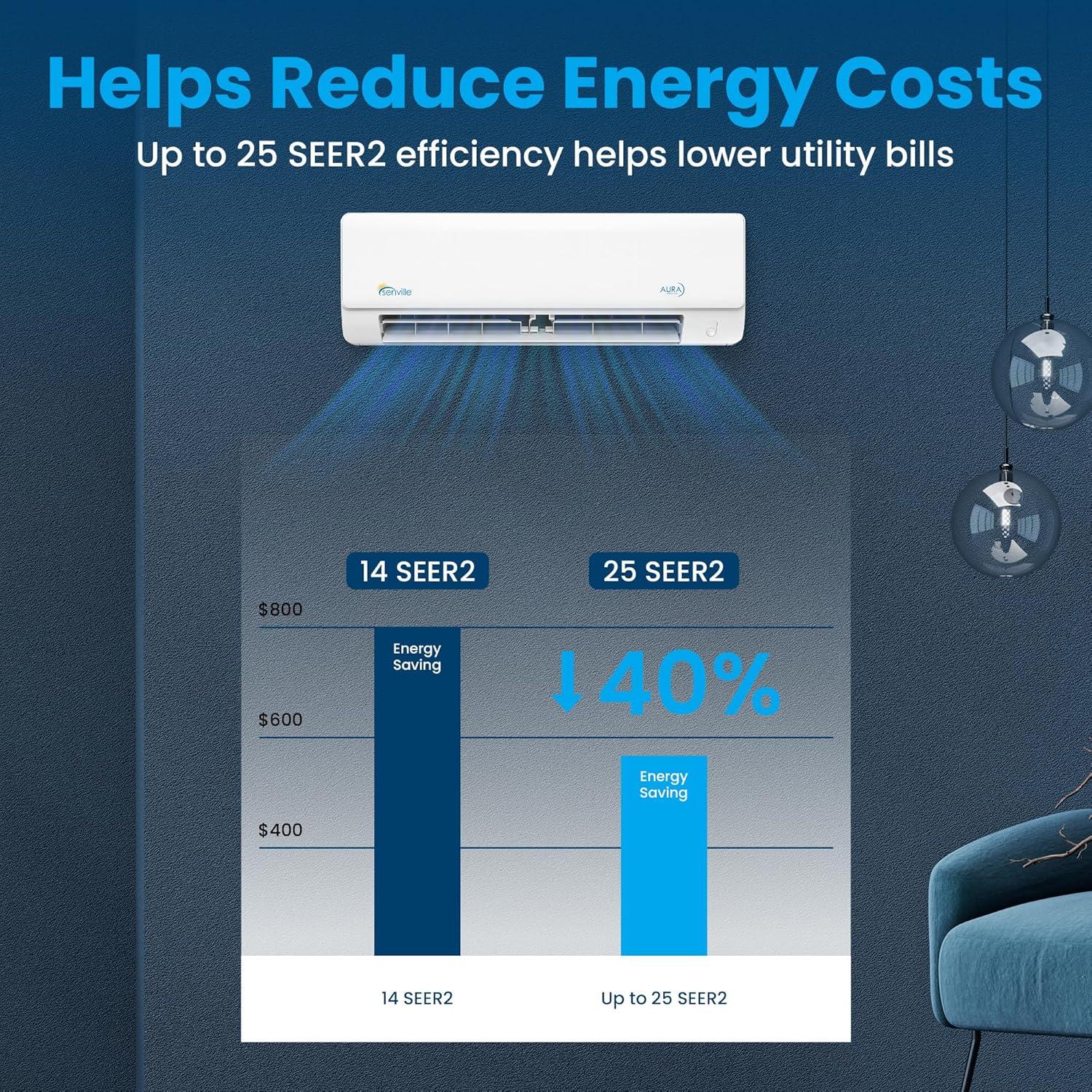
When we look at energy costs in an operating budget,the most useful “real numbers” are the ones you can tie back to either manufacturer-stated efficiency features or what customers are actually reporting after install. according to Senville, this dual zone system (a 18000 BTU / 1.5 ton mini split heat pump) supports energy savings with app/voice control routines—Senville specifically claims “enjoy energy savings of up to 40%” when using these scheduling features—plus a built-in 24-hour timer. The practical budget angle is that mini-splits can reduce waste by conditioning only the rooms that need it (two indoor heads with individual temperature control), instead of paying to cool or heat an entire building uniformly. That doesn’t guarantee a specific dollar figure for every facility, but it does give you multiple levers (zoned setpoints, occupancy-based routines, timers) that are straightforward to reflect in usage policies and standard operating procedures.
On the customer side, there are a few concrete cost takeaways worth noting—without overpromising.Multiple reviewers describe the system as “very efficient” and “uses little electricity,” and at least one customer explicitly reports their electric bill was lowered by more than $73.00. Another reviewer (Canada) reports their electric bill fell by “almost 35% overnight,” which is a single anecdote but still a useful data point when collecting internal benchmarks. A recurring theme is that maintainance habits can influence efficiency: one long-term owner says staying consistent with filter cleaning (they do it every 40 days) keeps the unit running “very efficiently.” For budgeting, the honest conclusion is that savings appear plausible and commonly reported, but the exact monthly impact will depend on your current system, rates, setpoints, and how tightly your team uses the zoning and timer controls.
Check Current Price & Customer Reviews on Amazon →
Installation Without Business Disruption Planning for Active Worksites
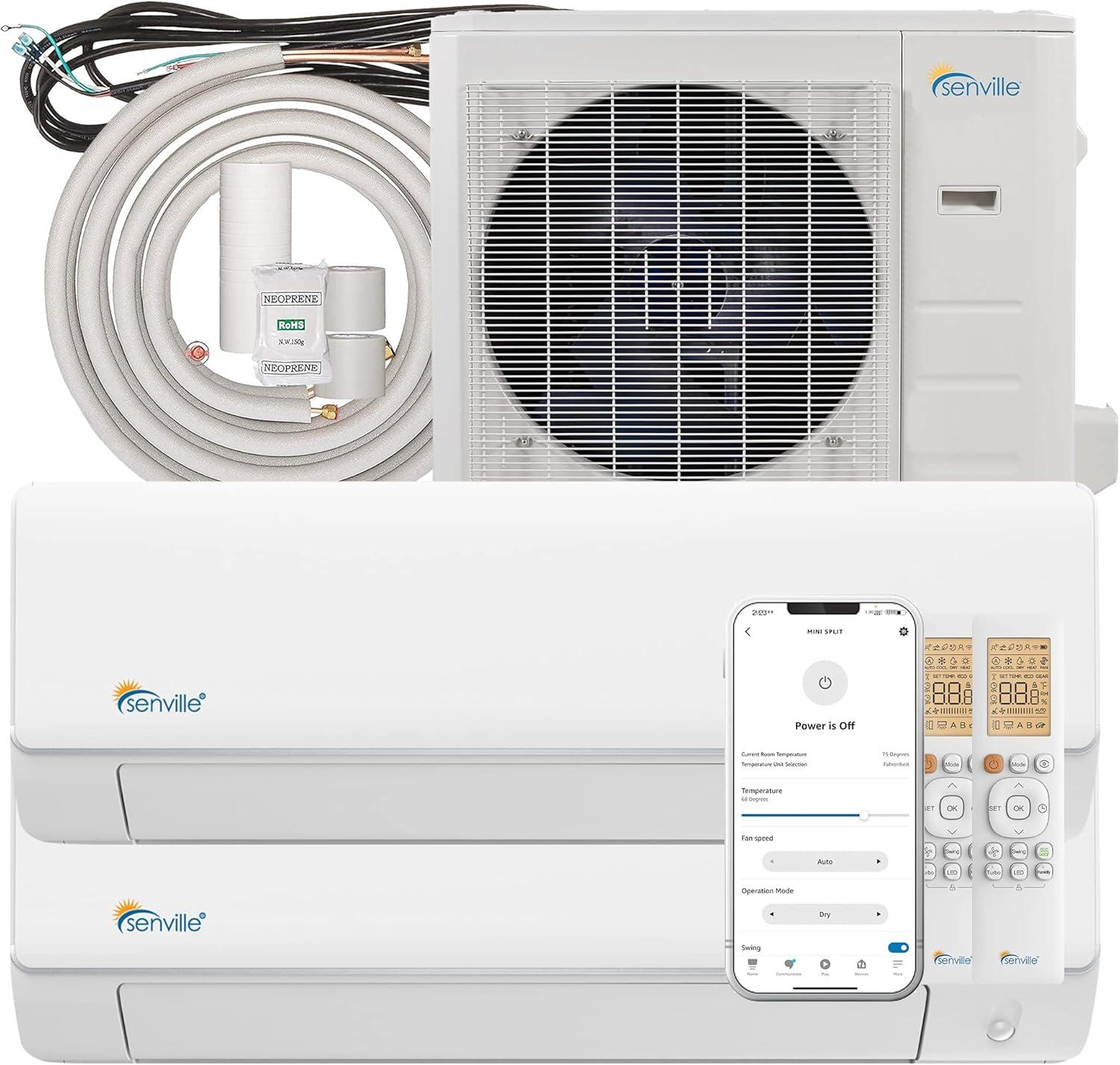
Planning an install in an active workspace is mostly about keeping downtime predictable, and the Senville 18000 BTU dual zone setup lends itself to that because you can stage the work: mount indoor heads, set the outdoor condenser, then run the line sets and control wiring. According to Senville, the kit includes an installation kit with a 16 ft. line set and communication wire, and they also note the system requires professional installation—a key point for business environments where scheduling a licensed HVAC pro can reduce surprises and keep the project moving on a fixed timeline.Customer reviews back up the idea that the physical installation steps can be straightforward, with multiple people saying the wall unit portion was the easiest; one reviewer described mounting and running lines as quick once the correct parts were on hand, then having an HVAC tech handle vacuuming/leak checks as the “final hookup.”
To avoid disrupting staff or customers, plan around the messiest/noisiest steps (core drilling, line-hide routing, mounting the condenser) and do them off-hours, then reserve a shorter daytime window for the final commissioning. Reviews highlight a couple of “worksite” gotchas worth building into your plan: a few customers mention the included line sets/communication cable can be too short for certain layouts, and one noted needing to buy condensate drain lines separately. It’s also smart to choose the condenser location carefully—one owner specifically warns against wall-mounting due to vibration—since noise and vibration complaints are harder to fix once a storefront or office is back in full operation. Once installed, customers frequently describe the system as quiet and effective for heating/cooling, which helps support business continuity after the work is complete.
check Current price & Customer Reviews on Amazon →
Maintenance and Warranty Readiness for Commercial Reliability and Uptime

For commercial-style reliability, the biggest “uptime lever” with a dual-zone mini-split is routine maintenance that prevents small airflow or drainage issues from turning into comfort complaints. In general mini-split ownership, that starts with keeping the indoor head filters clean (a straightforward, user-level task that helps maintain airflow and performance).Several customers specifically echoed this: one reviewer recommended being consistent with filter cleaning (they mentioned doing it about every 40 days) and said it’s easy and helps the system run efficiently. On the installation side (which directly impacts serviceability later), reviews also highlight practical readiness items—like planning for proper line-set length and routing—since one customer noted the included cables/line sets can be too short for certain layouts, and another mentioned needing extra accessories (like condensate drain lines) that weren’t in their package.
Warranty readiness is the other part of “commercial reliability,” as documentation and install quality frequently enough decide whether a repair is simple or contentious. According to Senville, this system is backed by a 10-year manufacturer warranty with 5 years on parts replacement and 10 years on the compressor, and it includes free technical & installation support; the product listing also notes an important point: it requires professional installation. In customer reviews, one owner also reminded buyers to have their AC company complete the warranty paperwork after final hookup—good advice for anyone treating this as a business-critical system. Bottom line: if you want predictable uptime, plan for a pro install (including proper evacuation/leak checks), keep records, and stay on top of basic filter maintenance.
How It Compares to Commercial Alternatives for Efficiency Comfort and Total Costs
Compared with typical “big-box” cooling options like window units and portable ACs, the Senville system’s advantage is that it’s a dual-zone mini-split heat pump, so you get individual temperature control in two rooms from a single outdoor unit (per Senville). Reviewers frequently highlight comfort-related benefits—customers report it’s very quiet and delivers effective cooling and heating, including during winter. That zone-by-zone control can also help efficiency in the real world because you’re not forced to condition the whole house to make one room comfortable (general mini-split principle). On the flip side, it’s still an equipment-and-installation project: Senville notes it requires professional installation, and several reviewers mention the importance of proper vacuuming/charging and planning for line-set length to avoid headaches.
On total cost, this Senville can look compelling versus commissioning a brand-new central system—one reviewer specifically mentioned receiving a very high quote for central air and choosing this mini-split route rather—while other customers describe it as good value for money and some report lower electric bills. Just be sure to account for the “hidden” costs that commercial alternatives sometimes roll into the sticker price: reviewers mention paying for electrical work, buying extra items like line covers or drain lines, and perhaps hiring an HVAC technician for startup tasks. Comfort-wise, many users say they can’t tell it’s running because it’s so quiet, but there are also isolated reports of outdoor-unit vibration at startup, which can matter if you’re comparing it to premium-name systems or deciding whether to wall-mount the condenser. Smart-home control is another differentiator—Senville advertises it works with Alexa—though customers report mixed results with WiFi (including compatibility issues with Google Home).
Check Current price & Customer Reviews on Amazon →
Customer Reviews Analysis
Customer Experience Summary — Senville 18000 BTU dual Zone Mini Split (2 Zone)
1. Overall Sentiment
Overall tone in the provided reviews was positive,with many customers describing the system as quiet,powerful for both heating and cooling,and a good value compared to central HVAC quotes. Simultaneously occurring, several reviewers pointed out installation/documentation gaps and included-parts limitations (line lengths, missing drain lines, bracket mounting, wiring/terminals).
2. Common Praise (grouped by theme)
Performance (cooling/heating)
- Many customers mentioned strong cooling performance, including statements like it “literally cools the entire house,” and “cool down the house real fast.”
- Several reviewers noted strong heating performance in very cold weather, including “temps as low as 3° F” and “-18 degrees Celsius.”
- One reviewer emphasized the dual capability: “This machine…cools and heats your home and that is a huge deal.”
Noise level
- Multiple reviews praised how quiet it is indeed, with comments such as “way quieter than window AC,” “so quiet we didn’t even know it was on,” and “whisper quiet flow of cool or warm air.”
Ease of use / features
- Several reviewers said it was “easy to use” and appreciated control features like “a lot of customizable modes.”
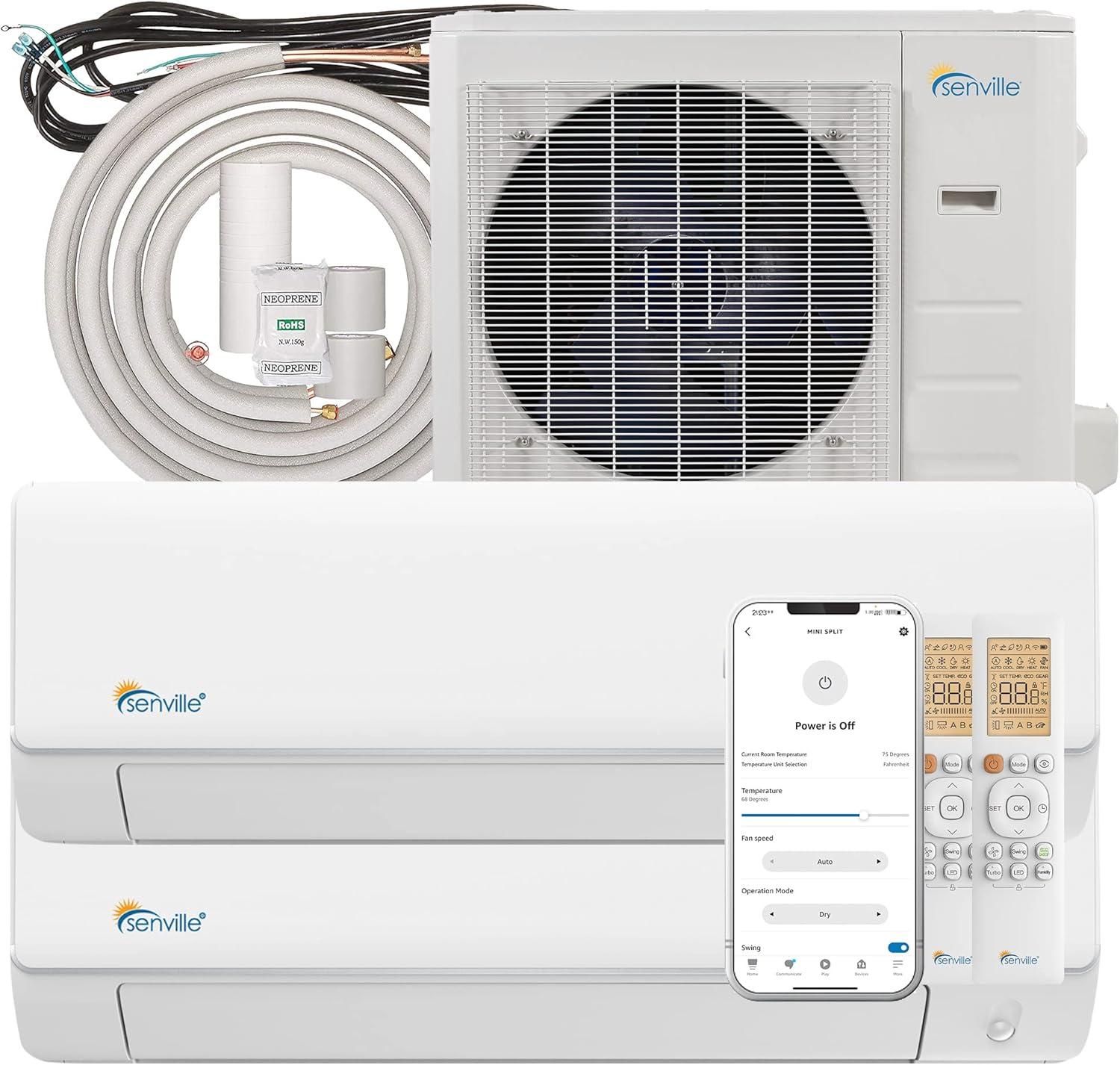
- Alexa/Wi‑Fi control was mentioned positively by some: “able to connect my units to Alexa,” and another noted Wi‑Fi works well after a setup tip: “when setting up wifi disable the cellular network on your phone. Works flawlessly then.”
- One reviewer liked being able to reduce nighttime distractions: “you can turn off LEDs on head units.”
Value / savings compared to alternatives
- A common theme was cost justification versus central air quotes. Reviewers explicitly compared it to large estimates (e.g., “$15,000 estimates” and “quoted 40k for a central unit”) and framed the mini split as “worth the investment.”
- Some also described savings from DIY/pro-assisted installs,including paying “$750 for electrical… and initial vacuuming,” and another saying “I saved over $2200 going this route.”
- One customer reported operating cost impact: “My Electric bill fell by almost 35% overnight.”
Customer support (Senville)
- Several reviewers noted responsive support for parts/line set swaps: “A quick call to Senville and they happily exchanged a line set and a communication cable for 25′ ones.”
- One reviewer called out an individual: “A big shout out to Sam at Senville for all his help.”
- Another mentioned an accessory info issue that was resolved: “Resolved quickly!”
3. common Concerns (grouped by theme)
Installation complexity & tools
- Some customers experienced DIY challenges: one said it “took me longer… due to not having all the tools… and also didn’t measure my lines correctly.”
- Another summarized that install wasn’t easy: “My install wasn’t notably easy… drill through concrete… patch lines together (cutting and flaring ends).”
- Several reviewers recommended professional involvement for parts of the job (vacuuming/charging, electrical), including hiring an HVAC tech for “initial vacuuming of the lines” and having a pro add refrigerant.
Line set / cable length & included components
- A recurring practical issue was line/cable length:
- “two 15 foot line sets… too short for the 2nd floor unit”
- “control line cables seem a tad short relative to copper line sets”
- “Only issue was the wire set was a bit short”
- Missing or extra-cost items were also noted:
- Condensate/drain lines not included: “package didn’t include the condensation lines,” and “Water drain lines are not supplied.”
- Standard line length note: “All the units bought in Amazon come with standard 15 ft lines,” and one reviewer recommended calling Senville to specify needed line sizes because “Senville will charge you additionally for the extra lines.”
Documentation clarity / multi-model manuals
- A few customers found the instructions confusing: “books are for multiple models so a little confusing.”
- One reviewer wanted clearer guidance on refrigerant/precharge and vacuuming: “Would be nice to state clearly… what unit is precharged with,” and questioned the guidance that suggested vacuuming only one line: “I have two line sets…both line sets should be vacuumed.”
Refrigerant charging / freezing risk after line modification
- One reviewer warned that after cutting lines, the system may require adjustment: “If you are going to cut the line, make sure you add or subtract Freon accordingly.”
- They described a specific symptom: “My pipes started freezing… due to not having enough Freon,” and advised: “If your unit freezes… shut it off and have the system charged properly.”
Mounting/vibration issues
- One reviewer strongly advised against wall-mounting the condenser: “do not place the condenser on the wall. The vibrations will drive you crazy.”
- Another described difficulty securing the indoor bracket: “The only problem we had was putting the bracket securely in the drywall… needed better wall anchors… than the ones provided.”
hardware/fit-and-finish annoyances
- A few customers reported specific build/fit issues:
- Outdoor unit drain clearance: “not enough clearance… I had to shim unit so drain elbow could be installed.”
- Electrical terminals: “Power terminals… are undersized… Had a bear of a time getting power line securely hooked up.”
- One reviewer reported a defective drain line: “drain line had a puncture in it so it leaked.”
- Indoor head size: “head units are a tad bulky.”
Warranty limitations for DIY
- One reviewer was disappointed about warranty coverage when self-installing: “Disappointed I cannot get a warranty for a DIY install.”
- Another reminded readers to handle warranty paperwork: “Remember to have your AC company fill out your warranty cards…”
Maintenance reminder
- One reviewer said performance depends on filter maintenance: “Be consistent with cleaning the filters… We do it every 40 days… makes the unit work very efficiently.”
4.notable Use Cases (specific scenarios customers described)
- Whole-home comfort in extreme heat: reviewers described it making the house “livable again” and improving sleep comfort (“specially at night when we were trying to sleep”).
- Cold-climate heating: reviewers reported successful heating at “3° F” and “-18 degrees Celsius.”
- Multi-story installs / longer runs: several reviews discussed needing longer line sets/cables for second-floor or longer distances (15 ft being too short).
- DIY + professional hybrid setups: multiple customers described doing mounting/routing themselves but hiring an HVAC tech for vacuuming/leak check/refrigerant or electrical panel work.
- Pet/home air quality context: one reviewer said “air quality has improved a ton… even with 3 indoor cats,” and mentioned adding “a UV light” to a head unit.
- Non-central-AC homes seeking alternatives: one reviewer chose this after being quoted “40k” for central AC “from scratch without a furnace.”
- Zoned/ducted variation: one reviewer swapped one unit to ducted and used it “to split between small bathroom and a hall way,” noting “The ducted one seems to work even better.”
Pros & Cons
Strengths
- Dual-zone setup for room-by-room control: Designed to run two indoor air handlers from a single outdoor condenser, allowing individual temperature control in separate rooms (manufacturer description: “Perfect for multiple rooms”).
- Alexa-enabled smart control: Listed as “Works with Alexa” and described as Alexa enabled for voice/app control and routines (manufacturer description).
- Strong cooling/heating performance (common review theme): customers frequently report it cools and heats effectively, including positive comments about winter performance (review themes: “works well… particularly during winter,” “efficient cooling and heating”).
- Quiet operation (manufacturer claim + review theme): Senville markets the unit for quiet operation, and many reviewers echo that it’s very quiet (review themes: “quiet operation,” “can’t tell that it’s on”).
- Installation kit included with line set & communication wire: The package is stated to include installation kit with ~16 ft line set and communication wire (manufacturer “What’s included”).
- Long warranty coverage: Manufacturer lists a 10-year warranty with 5 years parts and 10 years compressor (manufacturer description).
- Support experiences often positive: Multiple reviews mention helpful technical/customer support (e.g., support exchanging line sets/communication cable; “great customer service”).
Considerations
- WiFi/smart connectivity can be inconsistent: WiFi functionality gets mixed feedback, including reports of google Home/Assistant compatibility issues and setup quirks (review theme: “compatibility issues with Google Home,” “does not work with Google home… as advertised”).
- Professional installation is required (per manufacturer note): The product description includes an “Important note: requires professional installation,” which can add cost and complexity.
- Included line sets/cables may be too short for some installs: Several reviewers note the provided line sets/communication cables can be insufficient length for longer runs (e.g., second-floor installs), requiring purchasing longer sets (review feedback).
- Some installation items may not be included: At least one reviewer reports condensation/drain lines were not included and had to be purchased separately (review feedback).
- Outdoor unit vibration/noise on certain mounts: A few customers mention vibration/growling on startup and warn that wall-mounting the condenser can transmit vibrations (review feedback; one user reports rubber feet didn’t solve it).
Q&A
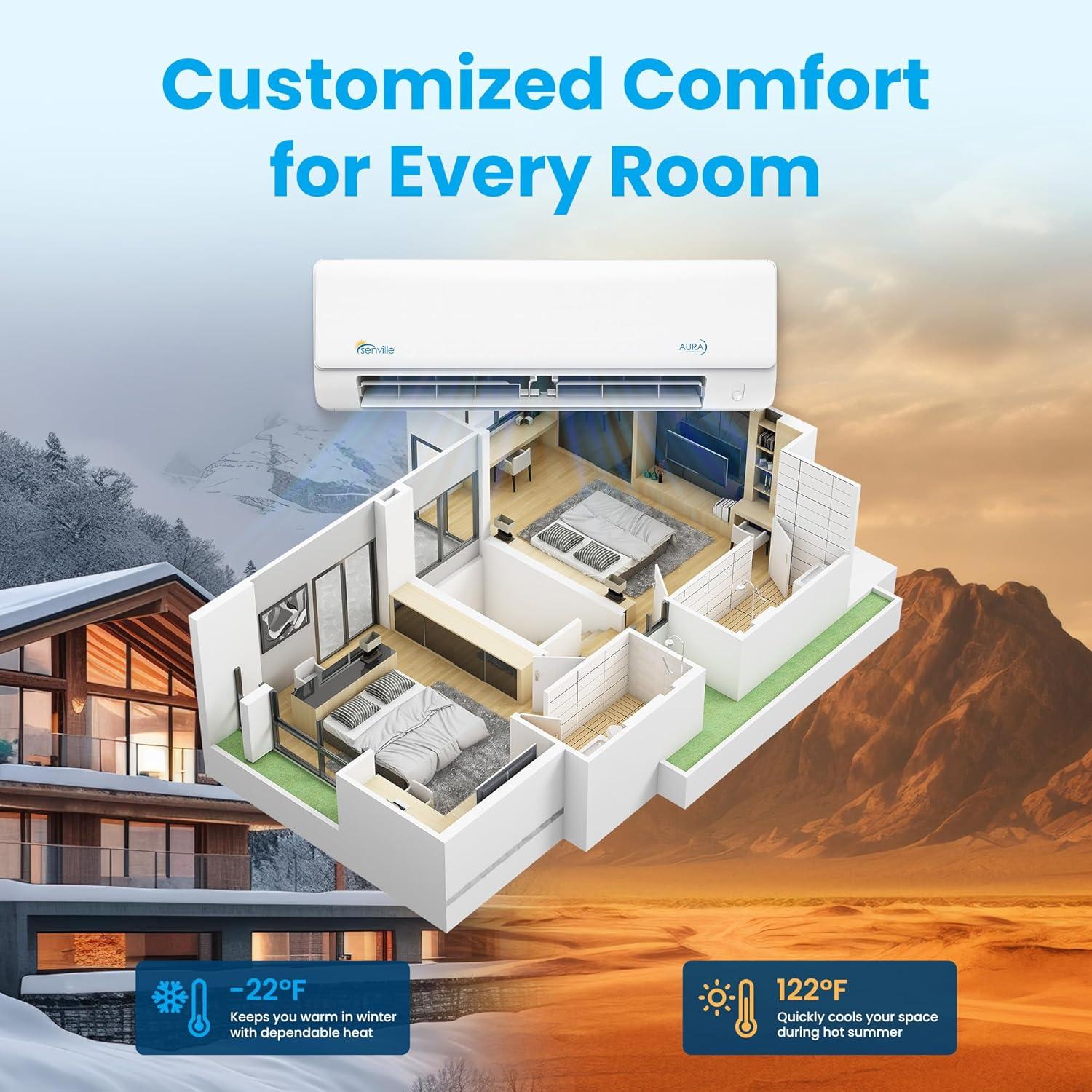
What does “18000 BTU dual zone” mean, and can each room be controlled separately?
This is a 2-zone mini-split system rated at 18,000 BTU total capacity (listed as 1.5 ton) with two indoor air handlers connected to one outdoor condenser. The product description states it’s “perfect for multiple rooms” and provides “individual temperature controls in each room.” Actual comfort will still depend on room size, layout, and insulation.
Does this unit provide both heating and cooling?
Yes. It’s listed as a “Mini Split Air Conditioner Heat Pump,” meaning it can cool in summer and heat in cooler weather. Reviewers commonly report strong heating and cooling performance; one customer mentioned it kept their house “cozy during winter” and worked in very cold outdoor conditions.Exact heating performance at low outdoor temperatures varies by model specifications and installation details—verify the low-ambient heating rating on the Amazon listing or in Senville documentation.
Does it really work with Alexa and Wi‑Fi?
The product title and description state it is “Works with Alexa” / “ALEXA ENABLED” and supports voice/app control (including a 24-hour timer and routines). Customer feedback on Wi‑Fi is mixed: several reviewers reported successful Alexa control, while others reported smart-home compatibility issues (especially with Google Home). For the most up-to-date compatibility details, confirm on the Amazon product page and/or the Senville manual for the included Wi‑fi solution.
Can I install it myself,or is professional installation required?
The product description includes an critically important note: “requires professional installation.” Some customers still report DIY installation success, frequently enough hiring an HVAC technician for key steps like vacuuming/evacuation, leak checking, and system commissioning. In general HVAC practice, proper evacuation and refrigerant-charge handling require specialized tools and may be restricted by local regulations. If you’re considering DIY, check local code requirements and confirm how installation affects warranty coverage with Senville.
what’s included in the box (line sets, wiring, drain lines)?
The product description states it includes the indoor air handlers, outdoor condenser, and an installation kit with a 16 ft line set and communication wire. Multiple customers mention their kits included two line sets and two communication cables, but some found the included lengths too short for their layout and requested longer sets. Several reviewers also noted condensate drain tubing was not included and had to be purchased separately. Always confirm the current “What’s included” list on the Amazon page for your specific listing/package.
How quiet is it?
Amazon review themes frequently describe it as very quiet—some owners say they “can’t tell that it’s on,” especially compared with window or portable AC units. Sound levels vary with fan speed, mounting method, and whether the outdoor unit transmits vibration into the building structure. One reviewer specifically warned that wall-mounting the outdoor condenser can make vibrations noticeable.
What maintenance does it need (filters and general upkeep)?
Like most ductless mini-splits, routine filter cleaning is a key maintenance step. Reviewers commonly recommend being consistent; one customer said cleaning the filters about every 40 days was easy and helped the unit run efficiently. Beyond filters, standard HVAC best practices include keeping indoor coils/air paths clean and ensuring the outdoor unit remains clear of debris. For the exact cleaning procedure and intervals, follow the Senville owner’s manual for this model.
Unleash Your True Potential

SUMMARY: The Senville 18000 BTU Dual Zone mini split is a 1.5-ton, two-zone heat pump system designed to condition multiple rooms with individual indoor heads and a single outdoor condenser.It also supports Alexa control (via WiFi), and review themes commonly highlight strong heating/cooling performance, notably quiet operation, and generally straightforward installation—especially when planned well.
BEST FOR: This setup makes sense for homes, additions, garages, or small multi-room layouts where you want separate temperature control per zone and prefer a quieter alternative to window units. It also fits buyers comfortable coordinating (or paying for) HVAC/electrical work to finish the job correctly.
CONSIDER ALTERNATIVES IF: You need more than two zones, require longer line runs than the included line set, or want “set-and-forget” smart-home reliability—WiFi experiences are mixed, and some users report vibration or accessory/installation hiccups.
FINAL THOUGHT: it’s a solid dual-zone option with strong owner feedback, as long as you plan the install carefully and keep expectations realistic on smart features.
ready to learn more? View Full Specifications & Latest Reviews on Amazon →