

Ever tried pulling a deep vacuum on an AC system, only to second-guess the readings, chase tiny leaks, or wonder if your pump is even keeping up? When you’re working on a mini-split, automotive A/C, or general HVAC service, the vacuum pump is the tool that quietly decides whether the job goes smoothly—or turns into a long afternoon.
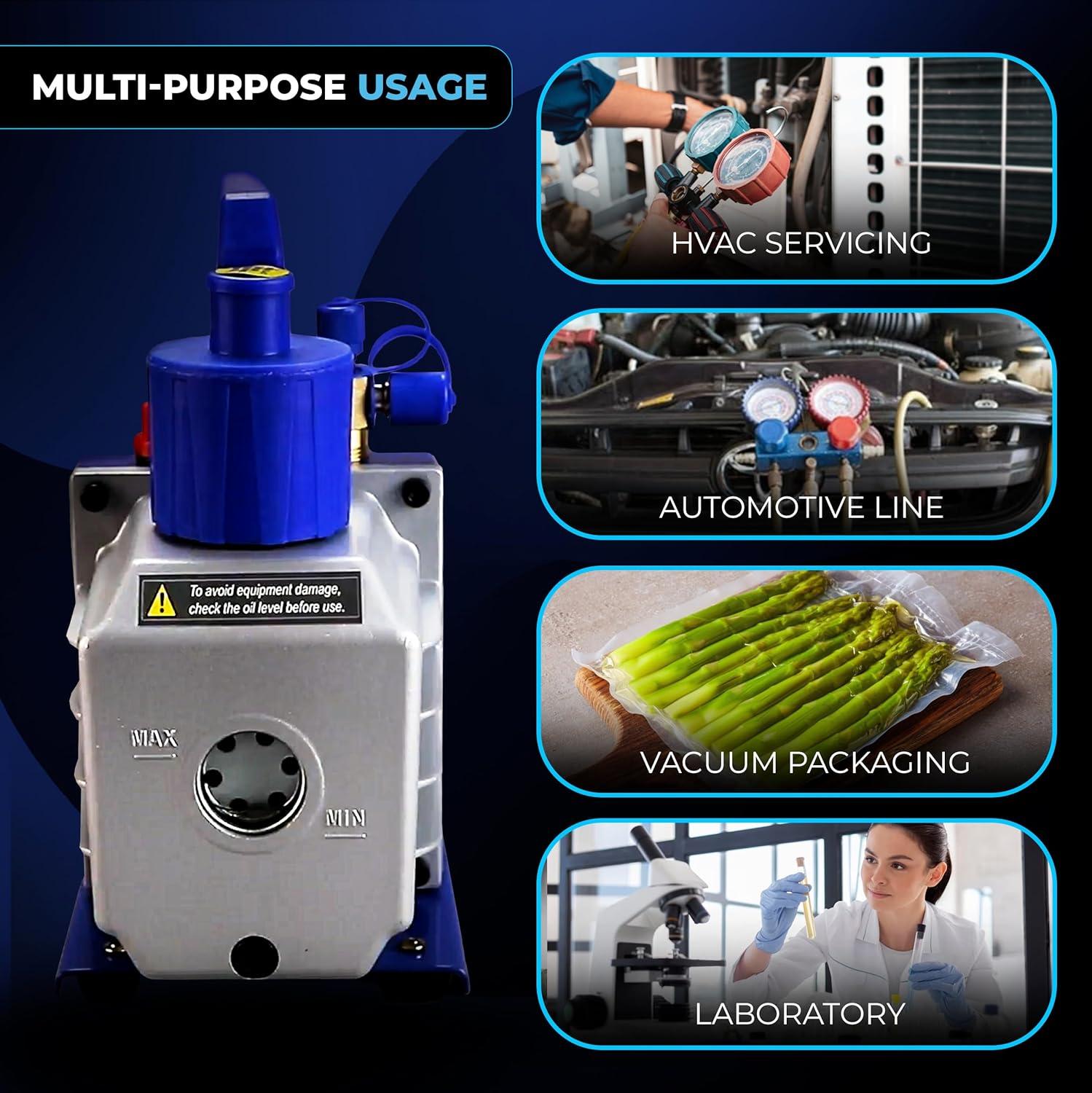
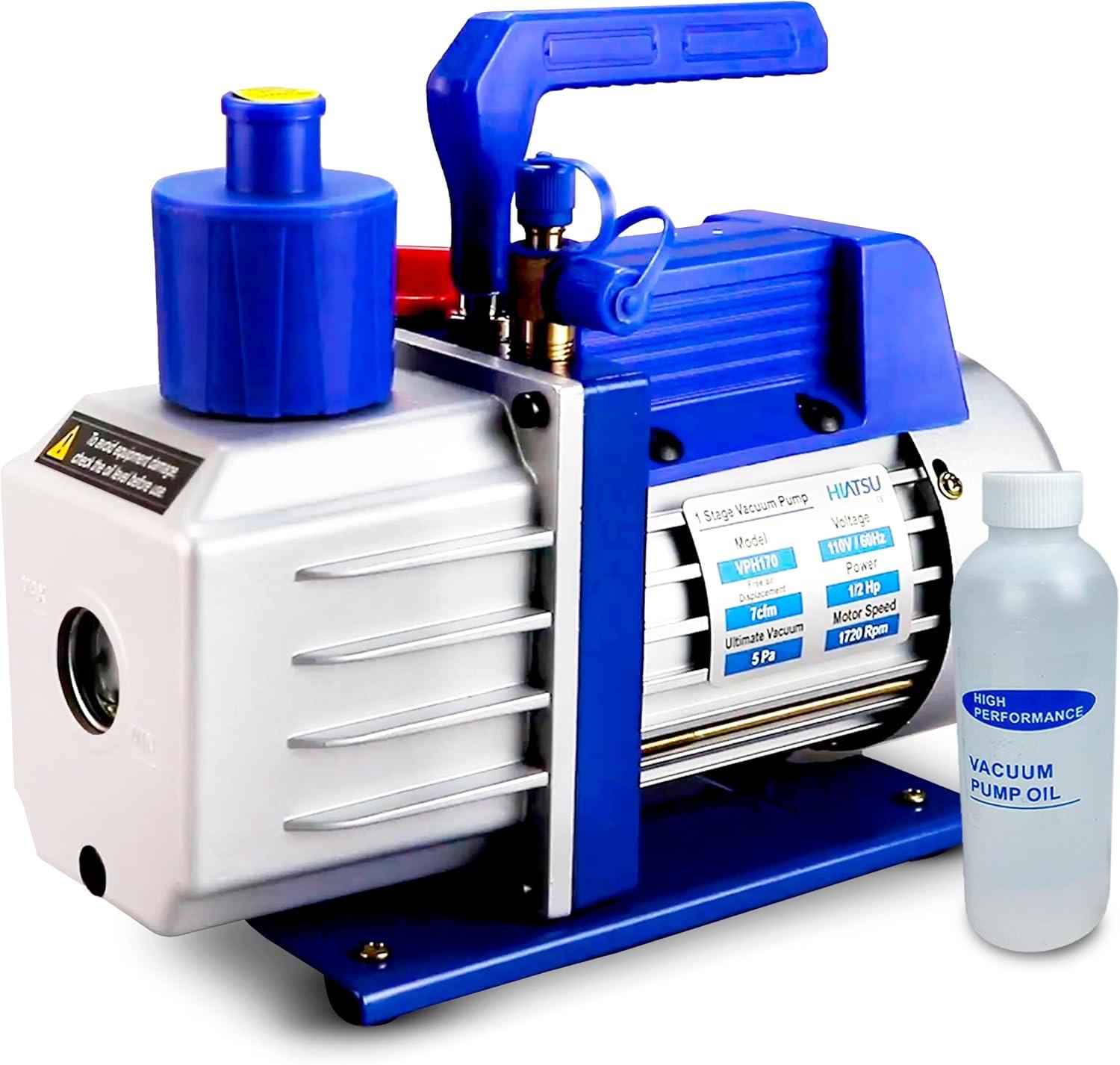
The Hiatsu 7 CFM Vacuum Pump for AC System is a 110V/60Hz HVAC/automotive vacuum pump built around a 1/2 HP-class setup in the listing, with practical touches like an oil level window, an oil drain valve, an oil mist filter, and thermal-protection-focused cooling (including a high-speed fan and vented housing). Hiatsu also markets it as portable and versatile for HVAC servicing, automotive maintenance, vacuum packaging, and lab-style applications.
In this review, we’ll break down the key features, usability, and what customer feedback suggests—especially themes like “works great,” “good value,” mixed gauge/vacuum accuracy reports (from sub-100 microns to not going below ~1300 microns), and a few concerns about overheating or smoking under full vacuum.
We’ve worked around mini-split installations and A/C maintenance enough to know that reliability, fittings, and trustworthy vacuum performance matter as much as raw CFM numbers.
Commercial Performance Overview for Our HVAC and Automotive AC Operations
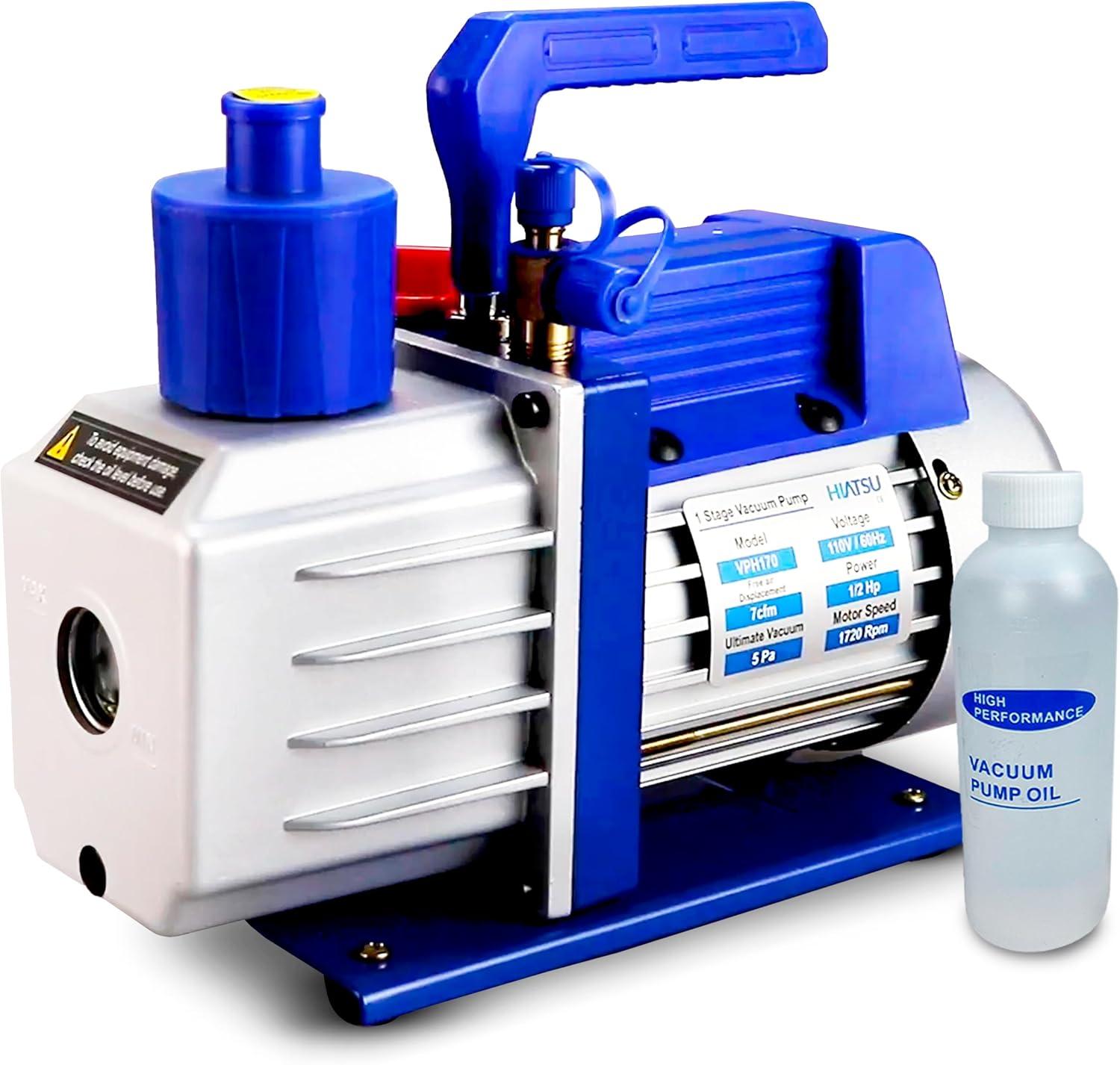
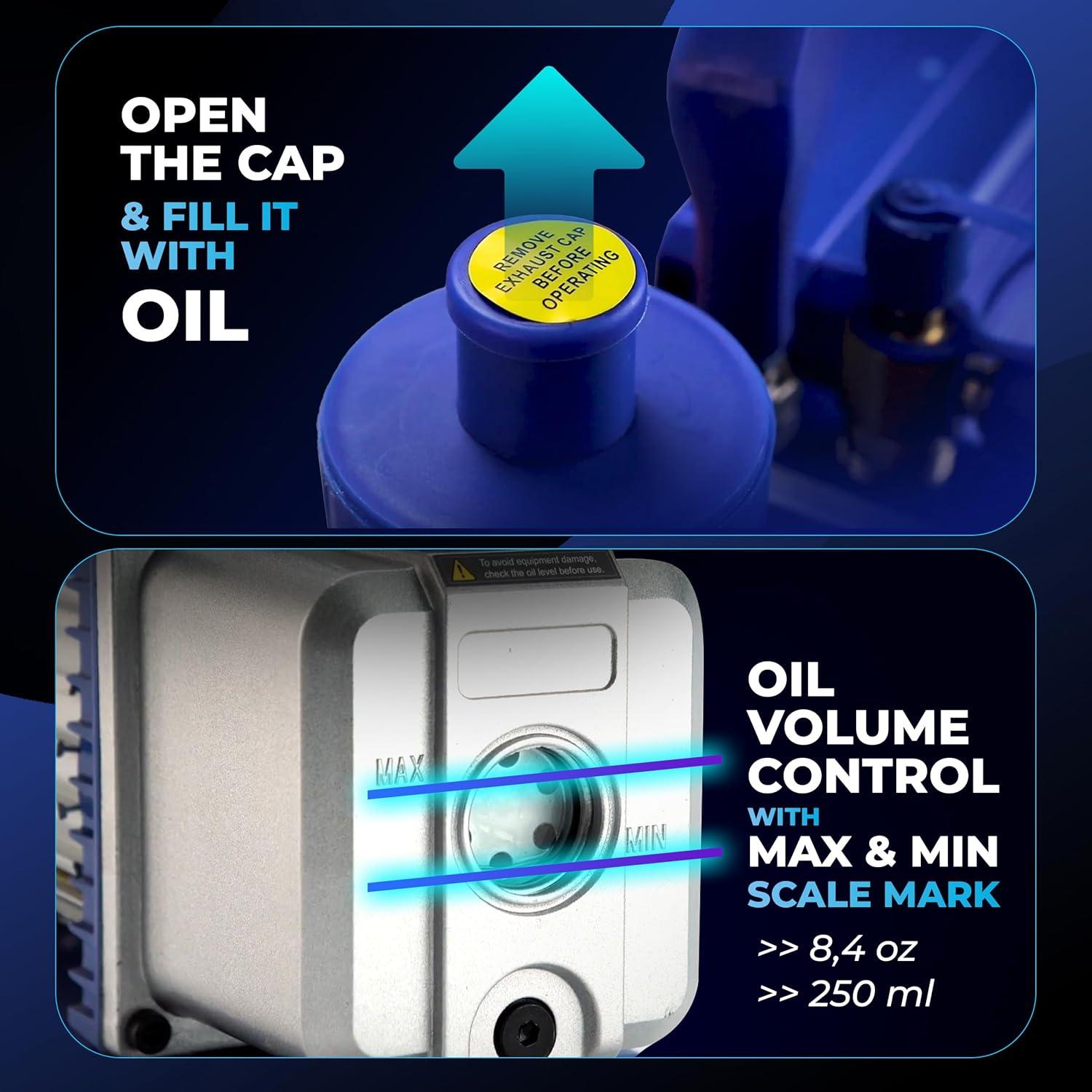
In day-to-day HVAC and automotive A/C service, commercial performance comes down to how quickly you can evacuate systems and how consistently the pump holds deep vacuum. According to Hiatsu, this unit is designed as a 7 CFM vacuum pump with a 1/2 HP motor for 110V/60Hz operation, and it includes practical durability features like an aluminum alloy housing, a non-slip rubber base, and a high-power cooling fan intended to help with extended operation. The product description also calls out an oil level indicator window, a 220 ml oil tank, an oil drain valve, and an oil mist filter—all useful “shop workflow” touches when the pump is used repeatedly for refrigerant line evacuation and general vacuum tasks.
customer feedback suggests mixed but useful real-world takeaways for both HVAC and automotive A/C workloads. Multiple reviewers report strong performance and value—comments include that it “works great,” “does the job,” “pulls the vacuum really fast,” and (in some cases) can reach deep vacuum targets (with mentions of getting below 500 microns and even below 100 microns). At the same time, other customers report limitations and reliability concerns that matter commercially: one reviewer says it “won’t go below 1300 microns on a small mini split,” and several flag burn/smoke issues under full vacuum (including a report of “burn up in about 15 min”). Gauge accuracy and fitment are also inconsistent in reviews, with some users reporting inaccurate gauges or needing an extra part because it “doesn’t fit” their manifold—so for professional HVAC/auto A/C operations, it may be wise to verify readings with a dedicated micron gauge and confirm adapter compatibility before relying on it for critical jobs.
Check Current Price & Customer Reviews on Amazon →
Energy Cost Savings Real Numbers for Our Budget and Efficiency Targets
Energy cost savings with a vacuum pump like the Hiatsu are less about “lowering the electric bill” and more about helping you hit time-and-rework efficiency targets on each evacuation job. According to Hiatsu, this unit runs on 110V/60Hz and is designed for “maximum efficiency,” with an integrated cooling fan and thermal protection meant to support longer operating periods without overheating. In practical budget terms,the most defensible “real number” angle is labor time: multiple customers report it “pulls the vacuum really fast” and can reach deep vacuum (some mentioning below 500 microns or even below 100 microns),which can translate into fewer minutes per service call when everything is working as intended. Having mentioned that, reviews are split—one user reports it won’t go below 1300 microns on a mini split—so time savings (and any associated operating-cost reduction) won’t be consistent for every setup.
Where the budget impact becomes more concrete is in avoiding inefficiency caused by downtime, repeat evacuations, or premature failure. Several customers describe strong value (“fair price,” “great cost-benefit”), but there are also notable negatives—one reviewer says it burns up in about 15 minutes under full vacuum and another mentions the unit popped and smoked. Those experiences matter for “real numbers” because a pump that can’t sustain a full evacuation cycle can turn into added trips, extra refrigerant handling, or even replacement costs—none of which support efficiency targets. If your goal is predictable job timing, it’s worth pairing any pump with a trustworthy micron gauge (since gauge accuracy is also mixed in reviews), because verifying vacuum level reliably is what prevents the hidden cost of rework.
Installation Without Business Disruption in Our Active Workspaces and Service Bays
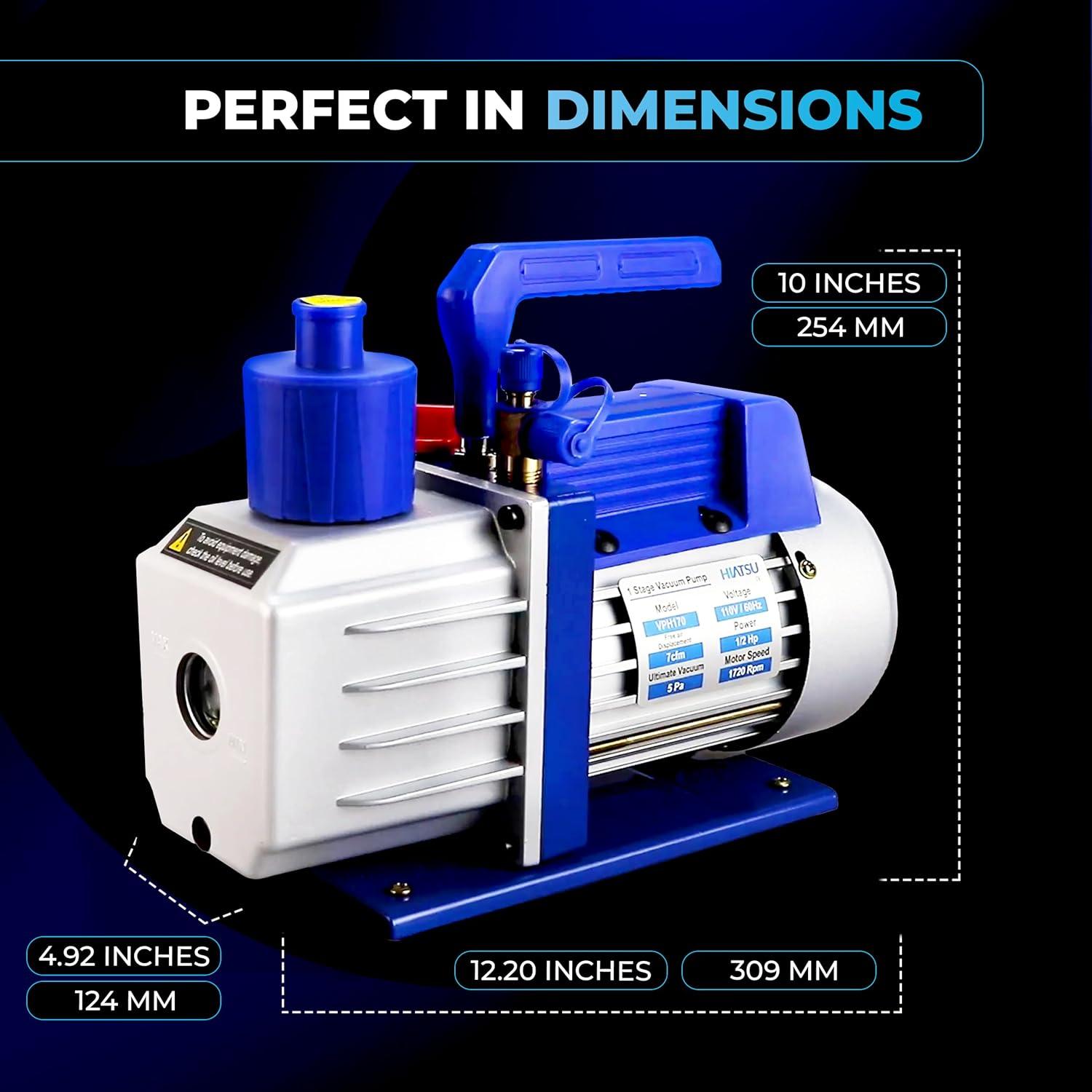
In active workspaces and service bays, the biggest win with the Hiatsu pump is that it’s built to be simple to drop into an existing evacuation workflow without turning the area into a long-term “project.” According to Hiatsu, it runs on 110V/60Hz and uses a dual-inlet setup (1/4″ and 1/2″ male), which can reduce the amount of time techs spend hunting for adapters when moving between automotive and HVAC-related tasks.The manufacturer also lists a compact footprint—260 × 240 × 110 mm (10.23 × 9.44 × 4.33 in)—and customers repeatedly describe it as portable/compact, including one reviewer who said they could carry it around easily in a basket for a farm setup—an encouraging sign for shops that need tools that don’t monopolize bench space.
That said, “without disruption” also means avoiding avoidable hiccups, and the reviews flag a couple of real-world friction points to plan around. Some customers report mixed results on gauge accuracy and ultimate vacuum levels (one reviewer said it wouldn’t go below 1300 microns on a small mini-split, while others reported it pulled down quickly and reached below 500 or even 100 microns).Another reviewer also noted a fitment issue—“it doesn’t fit manifold gauge you have to buy extra part”—so it’s smart to verify your hose/manifold connections ahead of time if you’re trying to keep bays moving. a small number of reviews mention overheating/burn-related failures under full vacuum, even though Hiatsu advertises a cooling fan and thermal protection—so in a production environment, it’s worth monitoring heat and following normal vacuum-pump best practices (proper oil level/changes, ventilation, and not pushing questionable accessories) to reduce the chance of downtime.
Check Current Price & Customer Reviews on Amazon →
Maintenance and Warranty Readiness Plus How We Compare Against Commercial Alternatives
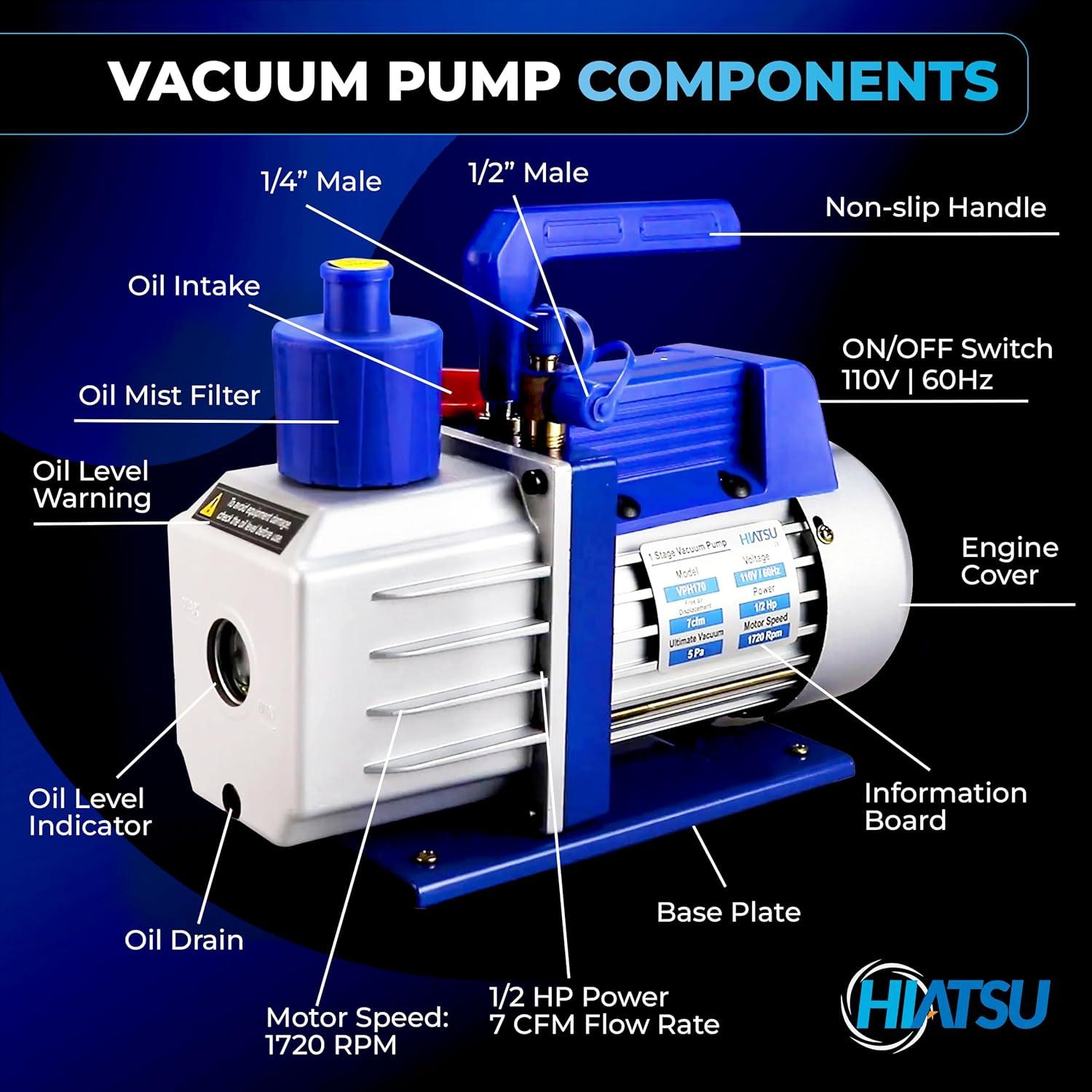
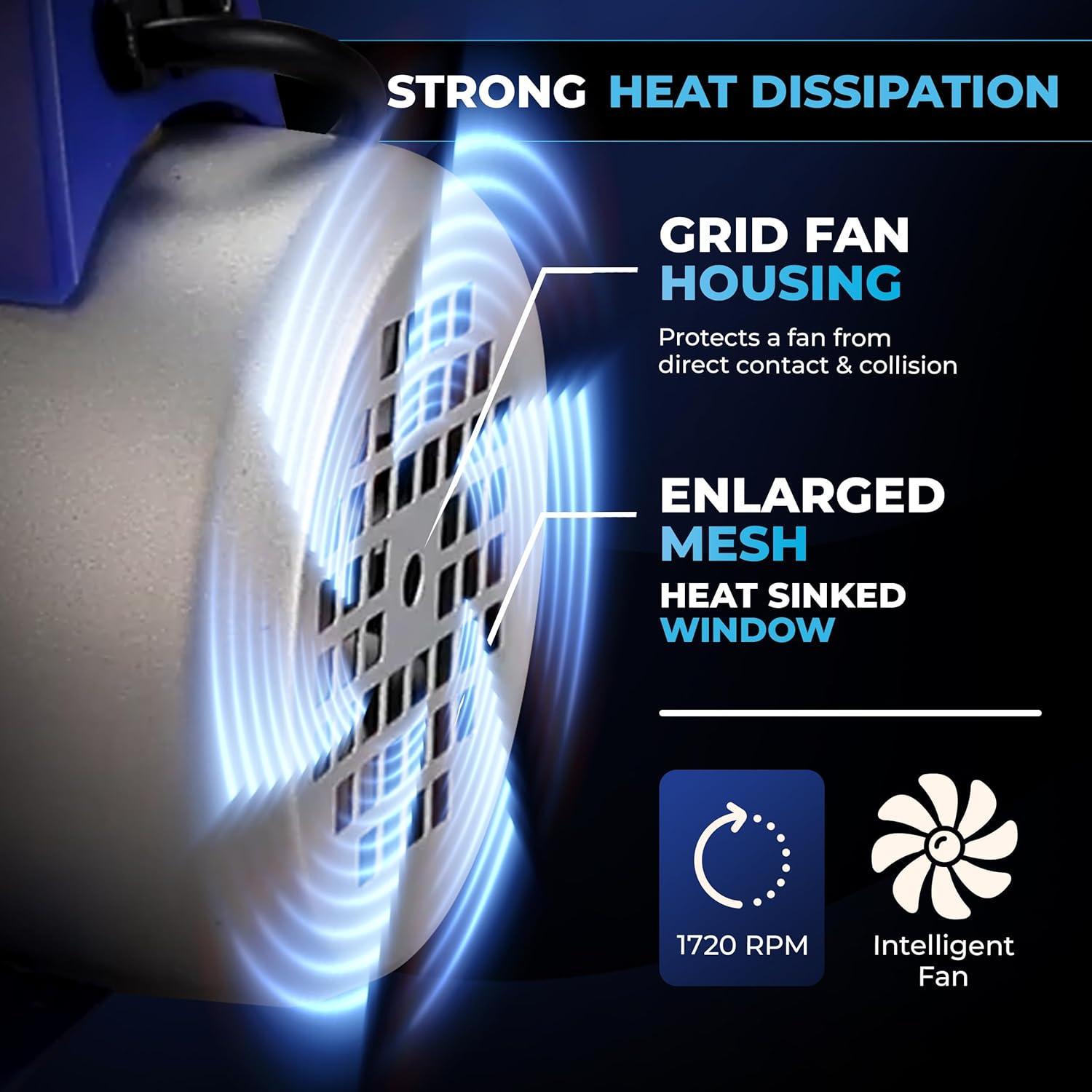
Maintenance on the hiatsu is pretty straightforward based on the features listed in the product description: it has an oil level indicator window,a 220 ml oil tank,and an oil drain valve meant to make oil changes less messy,plus an oil mist filter designed to keep operation cleaner. Hiatsu also highlights an integrated cooling fan and thermal protection/heat dissipation design (including a 1720 RPM intelligent fan and enlarged ventilation/mesh), which is relevant for warranty readiness as running any vacuum pump hot and low on oil is a common way to shorten its life. From reviews, reliability feedback is mixed: some customers report it “works great,” pulls vacuum quickly, and one reviewer said they’ve used it for 6 months, while a few others reported overheating-style failures (including “popped and smoked” or “burn up in about 15 min under full vacuum”). As warranty terms aren’t provided in the source material, the safest “warranty-ready” approach is documenting proper use: start with clean vacuum pump oil, keep the oil at the correct level, don’t run it unattended for long periods, ensure good airflow around the vents, and verify deep-vacuum performance with a micron gauge (several reviewers mention gauge accuracy being mixed, and more than one noted adding digital gauges).
Compared with many commercial alternatives (like higher-priced, established HVAC shop pumps), the Hiatsu’s value proposition is largely its compact size (260 x 240 x 110 mm), 110V/60Hz plug-and-go power, and convenience features like dual inlet ports (1/4″ and 1/2″ male) plus easier oil service access. having mentioned that, customer feedback suggests quality control and measurement confidence may not be as consistent as what pros expect from dedicated commercial-grade setups—especially when pulling deep vacuum for mini-splits or refrigeration work (one reviewer reported it “won’t go below 1300 microns,” while others reported getting below 500 or even 100 microns). Practically, that puts Hiatsu in a “good budget/occasional-use option if your unit performs normally” category, while commercial alternatives tend to win when you prioritize repeatable deep vacuum results, heavier-duty continuous use, and consistent accessories/fitment (one reviewer also noted a manifold gauge fit issue requiring an extra part).
Check Current Price & Customer Reviews on Amazon →
Customer Reviews Analysis
Customer Experience Summary — Hiatsu 7 CFM Vacuum Pump (1/2 HP)
1. Overall Sentiment
Reviews were mixed. Several customers described strong performance and value (e.g., “quiet,” “quite fast,” “excellent deal”), while at least one reviewer reported serious durability problems under full vacuum (“burns up in about 15 min… Its junk.”). There were also a few fit/compatibility and setup/calibration comments.
2. Common Praise (What customers liked)
Performance / Vacuum speed & depth
- Multiple reviews praised fast pull-down and deep vacuum capability:
- “It pulls the vacuum really fast.”
- “It gets below 500 microns easy.”
- One reviewer said it was “quite fast, achieving a vacuum below 100 microns.”
Noise
- Several reviewers noted it was quiet:
- “is quiet.”
Value
- A common theme in reviews was good value for the money:
- “great cost-benefit”
- “Excellent deal. Highly recommend.”
General satisfaction
- Some reviewers offered brief positive feedback:
- “Great product”
- “Product was as advertised. Does the job.”
- “Very pleased with its performance”
Portability / compactness (non-HVAC use noted)
- One reviewer praised the size for carrying between locations:
- “It’s compact… can carry it from barn to barn.”
3. Common Concerns (What customers mentioned as issues)
Durability / overheating or failure under full vacuum
- One customer reported repeated failures:
- “Under full vacuum it burns up in about 15 min.”
- they added they bought a second unit and had the same outcome: “same thing. Its junk.”
Calibration / setup confusion
- A reviewer liked the performance but found setup confusing:
- “just a bit confusing calibrating for deep vacuum.”
Compatibility with manifold gauges
- A few customers reported a fitting/connection issue:
- “it doesn’t fit manifold gauge you have to buy extra part.”
4. Notable Use Cases (Specific scenarios customers described)
Automotive / HVAC vacuum work
- Several reviewers discussed vacuum depth in microns and pulling vacuum quickly, suggesting HVAC/AC evacuation use:
- “below 100 microns”
- “below 500 microns easy”
- “pulls the vacuum really fast”
Farm / milking equipment (non-standard use)
- One reviewer used it for a homemade milking setup:
- “Perfect for our homemade milk machine… We can milk 2 goats or 1 cow with it.”
- they also highlighted portability between barns.
Pros & Cons
Strengths
- High vacuum capability (manufacturer spec): Listed to achieve an “ultra-low vacuum” of 5 Pa (37.5 microns) for evacuation work.
- Dual inlet ports for compatibility (manufacturer spec): Includes 1/4″ and 1/2″ male inlet ports, which can help match common AC/service hose setups.
- Cooling/thermal design for longer runs (manufacturer claim): Described with an integrated cooling fan system, enlarged mesh ventilation/heat-sink window, and “1720 RPM intelligent fan” to reduce overheating during extended operation.
- Convenient oil management features (manufacturer spec): Includes an oil level indicator window,220 ml oil tank,oil drain valve,and an oil mist filter for cleaner operation/maintenance.
- portable, compact form factor (manufacturer spec + review theme): Listed size is 260 x 240 x 110 mm; one reviewer also highlighted it’s “compact” and easy to carry around.
- Positive performance/value feedback in reviews: Multiple customers say it “works great/does the job,” and reviewers also mention good value/cost-benefit.
Considerations
- Mixed deep-vacuum results in real use (review theme): While some reviewers report reaching below 500 microns (and even below 100 microns), at least one reviewer said it “will not pull down below 1300 microns” on a small mini-split system.
- Gauge/measurement accuracy complaints (review theme): Reviews are mixed on gauges—some call them accurate while others report the gauges “do not read correctly,” which can affect confidence when pulling a deep vacuum.
- Overheating/burn-up reports under full vacuum (review theme): A reviewer reported the pump “burns up in about 15 min” under full vacuum, and another described it “popped and smoked” around ~500 microns.
- Fit/adapter issues may require extra parts (review theme): One customer said it “doesn’t fit manifold gauge you have to buy extra part,” and another review mentioned the included can adapter was problematic.
Q&A
What power and electrical supply does this Hiatsu vacuum pump use?
The listing states it runs on 110V/60Hz. The title calls it a 1/2 HP pump, but the product details shown also describe a 1/4 HP copper motor. Because those specs conflict, verify the exact horsepower for your specific listing variation on the Amazon product page or with the manufacturer.
What is the rated pumping speed (CFM) and what vacuum level can it reach?
The product title references 7 CFM, while the product details shown also mention 4 CFM flow rate (another mismatch that may depend on the selected size/variant). The description also claims an ultimate vacuum of 5 Pa (about 37.5 microns). Real-world results vary by setup (hose length/diameter, leaks, moisture, and whether you use a micron gauge). Reviews were mixed: some customers reported getting below 500 microns or even below 100 microns, while another reported it would not go below ~1300 microns on a small mini-split.
What port sizes does it have, and will it connect to my manifold gauge set?
The product description lists dual inlet ports: 1/4″ male and 1/2″ Male. However, at least one reviewer said their manifold gauge didn’t fit and they needed an extra part/adapter. Before buying, confirm your manifold/hoses connection type and plan on using the correct adapter if needed (check the Amazon listing/Q&A for what’s included).
Does it include a vacuum gauge, and how accurate is it?
Some reviews mention it “comes equipped with an accurate vacuum gauge,” but other reviews report the gauges do not read correctly or are only “okay.” For HVAC evacuation—especially mini-splits—industry practice is to verify with a dedicated micron gauge, since many manifold gauges are not reliable indicators of deep vacuum.
How do I maintain the oil, and what oil capacity does it have?
The product description notes an oil level indicator window, a 220 ml oil tank, and an oil drain valve for easier changes, plus an oil mist filter. In general HVAC use, vacuum pump oil should be kept clean and typically changed if it looks cloudy/contaminated after pulling down a system (moisture and contaminants reduce achievable vacuum). Follow the manufacturer’s instructions for oil type and change intervals.
Is it suitable for mini-split evacuation?
The listing markets it for “mini Split” and HVAC use. Proper results depend heavily on leak-free connections,correct valve operation,dry/clean hoses,and confirming the vacuum level with a micron gauge. Review feedback is mixed: some customers reported reaching below 500 microns easily, while another customer said it did not work well for HVAC and wouldn’t pull below ~1300 microns on a small mini-split setup.
Does it have overheating protection or a cooling fan for longer run times?
Yes. The description states it has an integrated high-power cooling fan / heat dissipation system, including an intelligent fan (1720 RPM) and enlarged ventilation/mesh openings to help prevent overheating during extended operation. That said, one reviewer reported a failure (“popped and smoked”) and another claimed it “burns up” under full vacuum, so monitor the pump during use and follow the operating guidance from the manufacturer and the Amazon listing.
Seize the Possibility
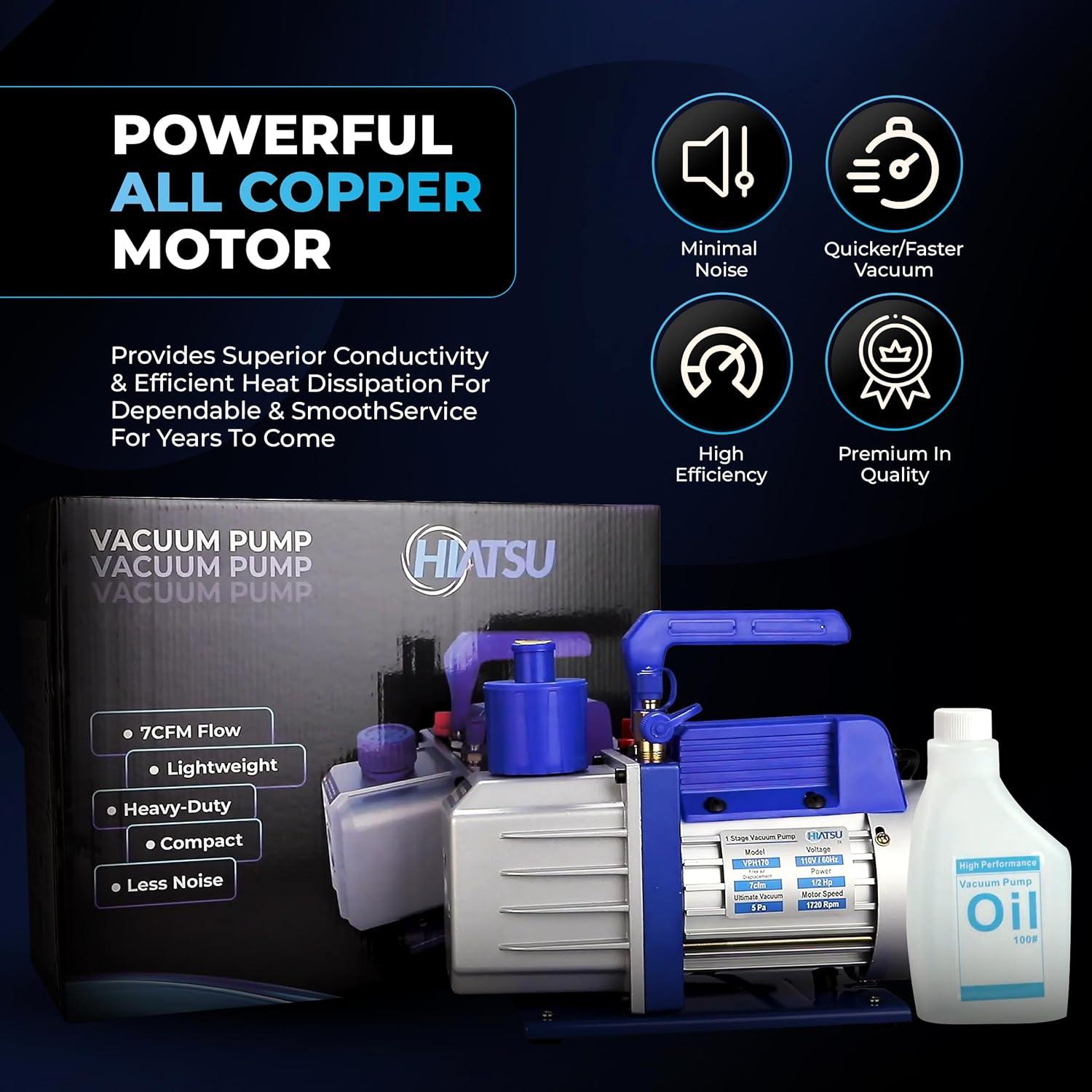
SUMMARY: The Hiatsu 7 CFM vacuum pump is a compact, 110V/60Hz unit marketed for HVAC and automotive AC work, with a portable aluminum-alloy housing, non-slip base, dual inlet ports (1/4″ and 1/2″ male), and practical oil management (oil sight glass, drain valve, and mist filter).Reviews commonly describe it as easy to use and a good value, making it most appealing to DIYers and budget-minded buyers who want a small pump for occasional service tasks.
BEST FOR: Pulling vacuum on automotive AC lines, light-duty HVAC/mini-split service, and other vacuum applications where portability matters—especially if you already plan to verify vacuum with a separate micron gauge.
CONSIDER ALTERNATIVES IF: You need consistently deep vacuum performance for professional HVAC work, require accurate included gauges/adapters, or want proven durability under long full-vac runs (some users reported overheating/smoking and mixed vacuum/gauge results).
FINAL THOUGHT: A perhaps useful budget pump, but quality consistency appears mixed—double-check expectations and accessories.
Ready to learn more? View Full Specifications & Latest reviews on amazon →