
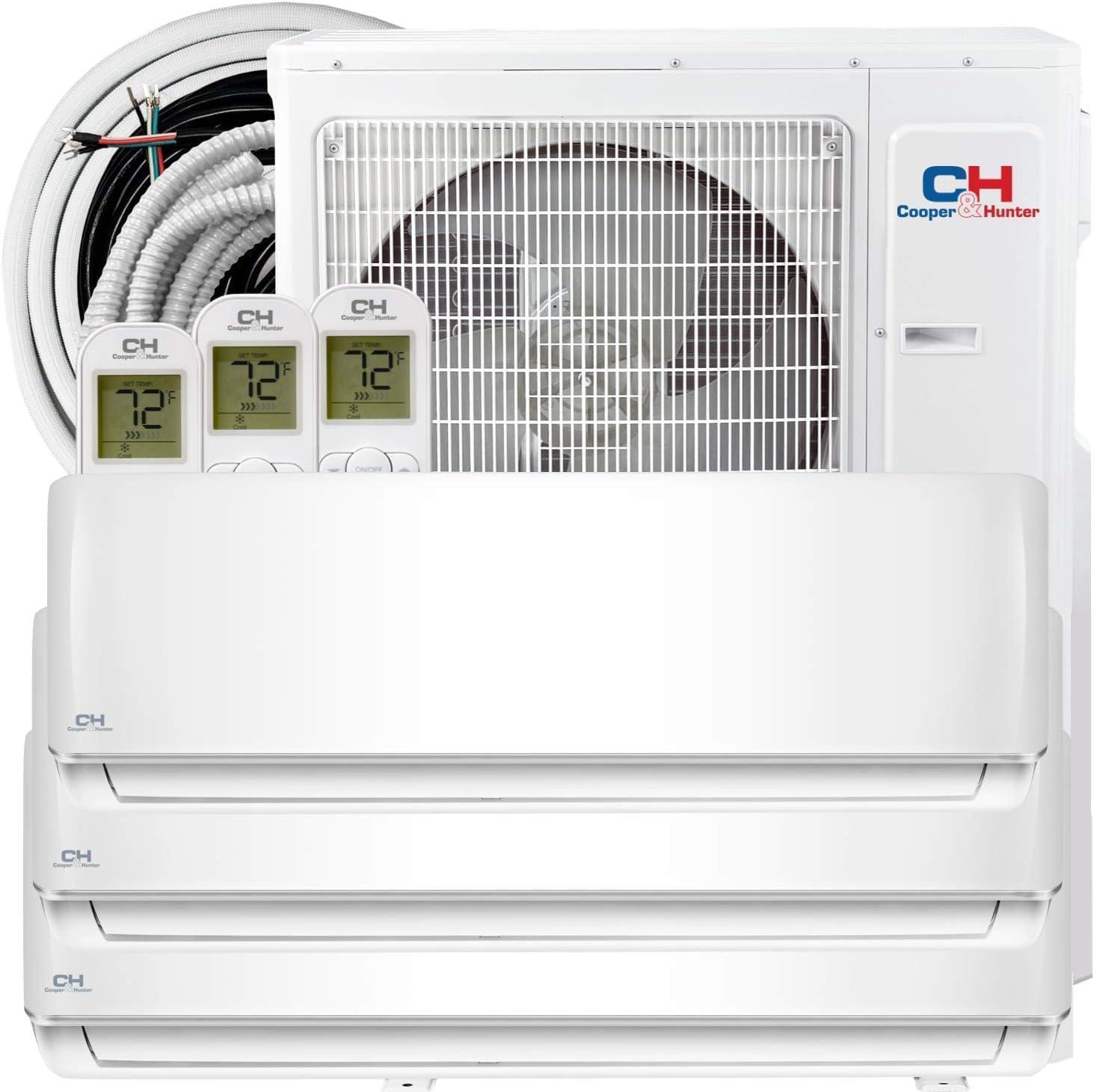
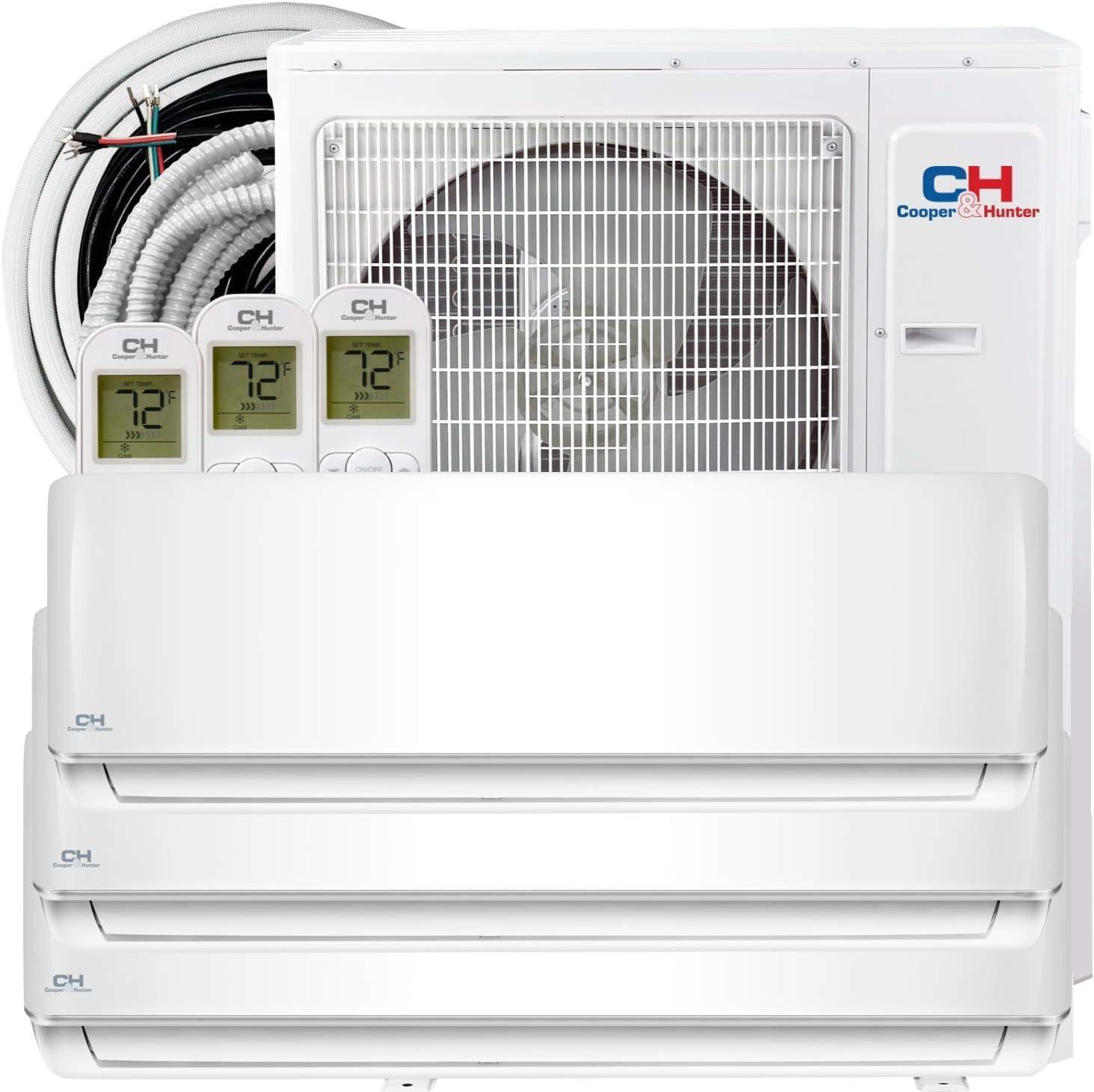
Struggling to keep three separate areas agreeable without tearing into walls for ductwork—or fighting over one thermostat setting? The Cooper & Hunter 28,000 BTU Tri 3‑Zone system pairs a multi‑zone inverter condenser with three 12,000 BTU wall‑mount air handlers, giving you dedicated heating and cooling where you need it most. It’s rated at 24.6 SEER2 (23.80 SEER) and,according to the manufacturer,uses Inverter Technology plus “Whisper Technology for Quiet Operation,” with heat performance down to -13°F. Each zone includes a 25 ft pre‑flared, insulated line set, dialogue wire, and drain extension, and it ships by freight—plus it’s explicitly not a DIY setup, so professional installation is required.
In this review, we’ll break down what’s included, what installation realistically involves, app/remote features like “Follow me” (and the optional USB adapter for smartphone control), and what customers commonly mention—quiet indoor operation, strong comfort, and mixed experiences with instructions and occasional parts issues. we’ve worked around mini‑splits enough to know what matters on paper versus what matters once it’s on your wall.
Commercial Performance Overview for Multi Area Business Cooling and Heating
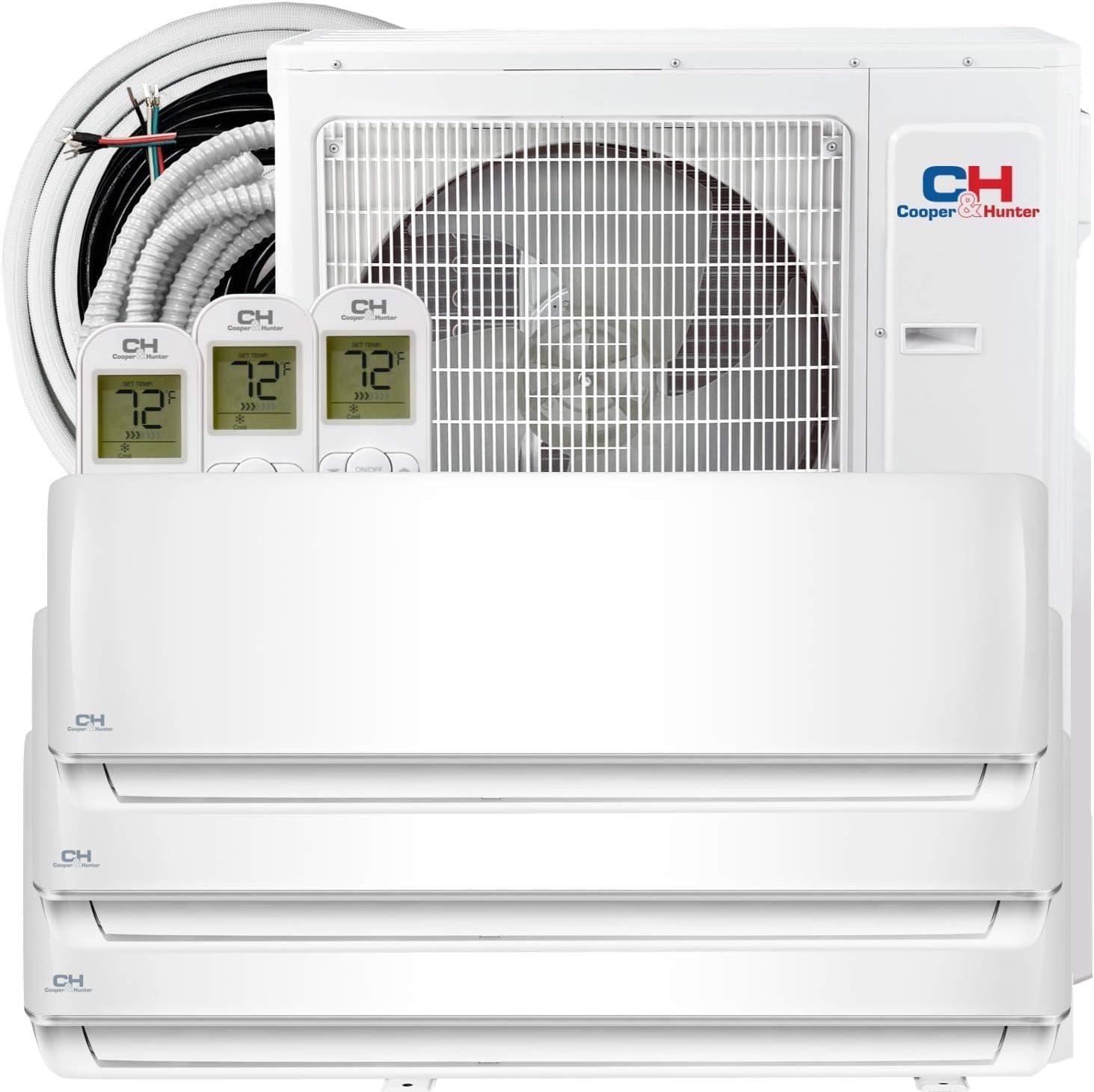
For businesses that need to condition multiple rooms without extending ductwork, this Cooper & Hunter system is built around a 28,000 BTU multi-zone inverter condenser paired with three 12,000 BTU wall-mounted air handlers. According to Cooper & Hunter, the outdoor unit is rated at 24.6 SEER2 (with 208–230V power), and it’s designed for both cooling and heat pump operation, including heating in low outdoor temperatures down to -13°F. In real-world use, reviewers describe strong, steady comfort once the system is dialed in—one noted it “works flawlessly,” while another said a 12K head “cools my whole upstairs 600+ square ft with ease” (note that actual coverage depends on layout, insulation, and load). Several customers also emphasize the zoning advantage for mixed-use areas (e.g., bedroom + living room + kitchen), but one review points out an vital multi-zone reality: if the temperature demands are very different across zones, you may not get “instant” changes in every room at the same time.
Noise control is a common priority in commercial and client-facing spaces, and this system leans into that with the brand’s stated “Whisper Technology for Quiet Operation”, plus multiple reviewers backing it up with comments like “fully silent” indoors and an outdoor sound comparable to “a standard box fan on low.” Operationally, the unit’s inverter technology is meant to modulate output rather than cycle hard on/off, which can help maintain a more consistent temperature in occupied areas. For day-to-day usability, Cooper & Hunter notes smartphone control is possible with the C&H App, but the required USB smart adapter is not included, and the remote’s “follow me” mode is positioned as a way to target comfort based on the remote’s location. Installation remains the biggest commercial-planning factor: the listing states this is not DIY equipment and professional installation is required, and reviews echo that while mounting heads and running lines can be approachable, proper evacuation/leak checks and final commissioning frequently enough still call for HVAC tools and/or a pro.
check current Price & Customer Reviews on Amazon →
Energy Cost Savings Real Numbers for Operating Budgets and Efficiency Goals
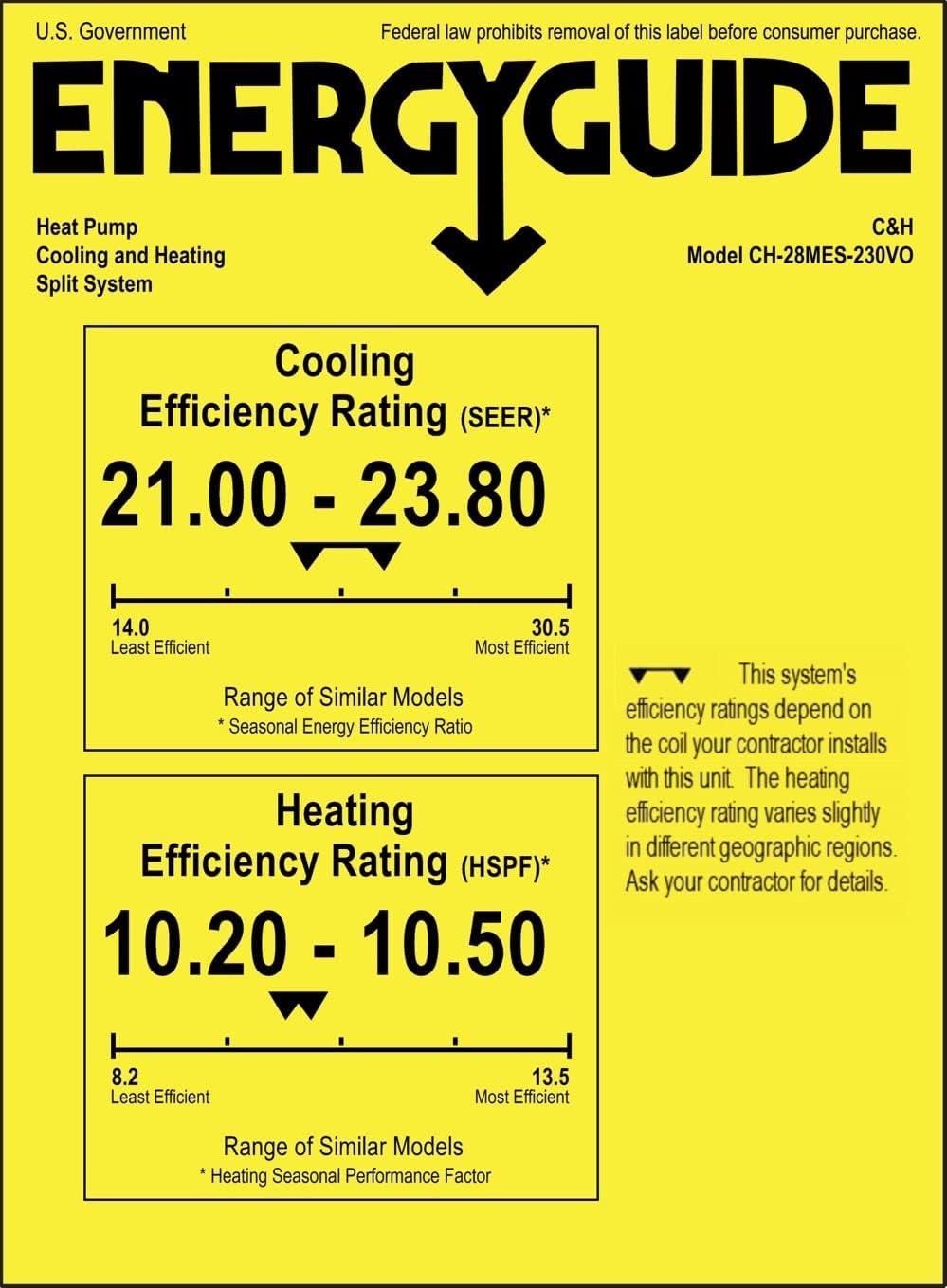
starts with what Cooper & Hunter claims and what the specs support. According to the manufacturer, the outdoor condenser uses Inverter Technology designed to save energy compared to traditional (fixed-speed) compressors, and the system is rated at up to 24.6 SEER2 (with an additional listing of 23.80 SEER in the description).In practical budgeting terms, higher SEER2 ratings generally indicate less electricity used per unit of cooling over a typical season—especially when paired with inverter modulation that can “sip” power while maintaining temperature rather than cycling hard on/off. Because this is a 3-zone setup with three 12,000 BTU wall mounts, you also get the efficiency advantage of zoning: you can condition occupied areas and let unused rooms drift, which is one of the most straightforward ways mini-splits help align day-to-day operation with efficiency goals.
For “real numbers,” the most defensible figures here come from customer feedback rather than invented projections.One reviewer explicitly reports that their electric bills have been under $150 in the hottest and coldest months (they note an electric dryer is also on that meter), which is useful as a real-world data point—but it’s still just one household with its own insulation levels, setpoints, weather, and usage patterns. Other reviewers reinforce the underlying mechanism behind savings by describing how the units “just barely run and keep the temp right where you set it,” which is consistent with inverter-driven operation reducing cycling losses. If your operating budget needs firmer estimates, the most reliable next step is to use your local utility rate (¢/kWh), expected run hours, and the unit’s efficiency ratings—then treat customer bill anecdotes as directional, not guaranteed outcomes.
Check Current Price & Customer Reviews on Amazon →
Installation Without Business Disruption for Active Workplaces and Customer Facing Spaces
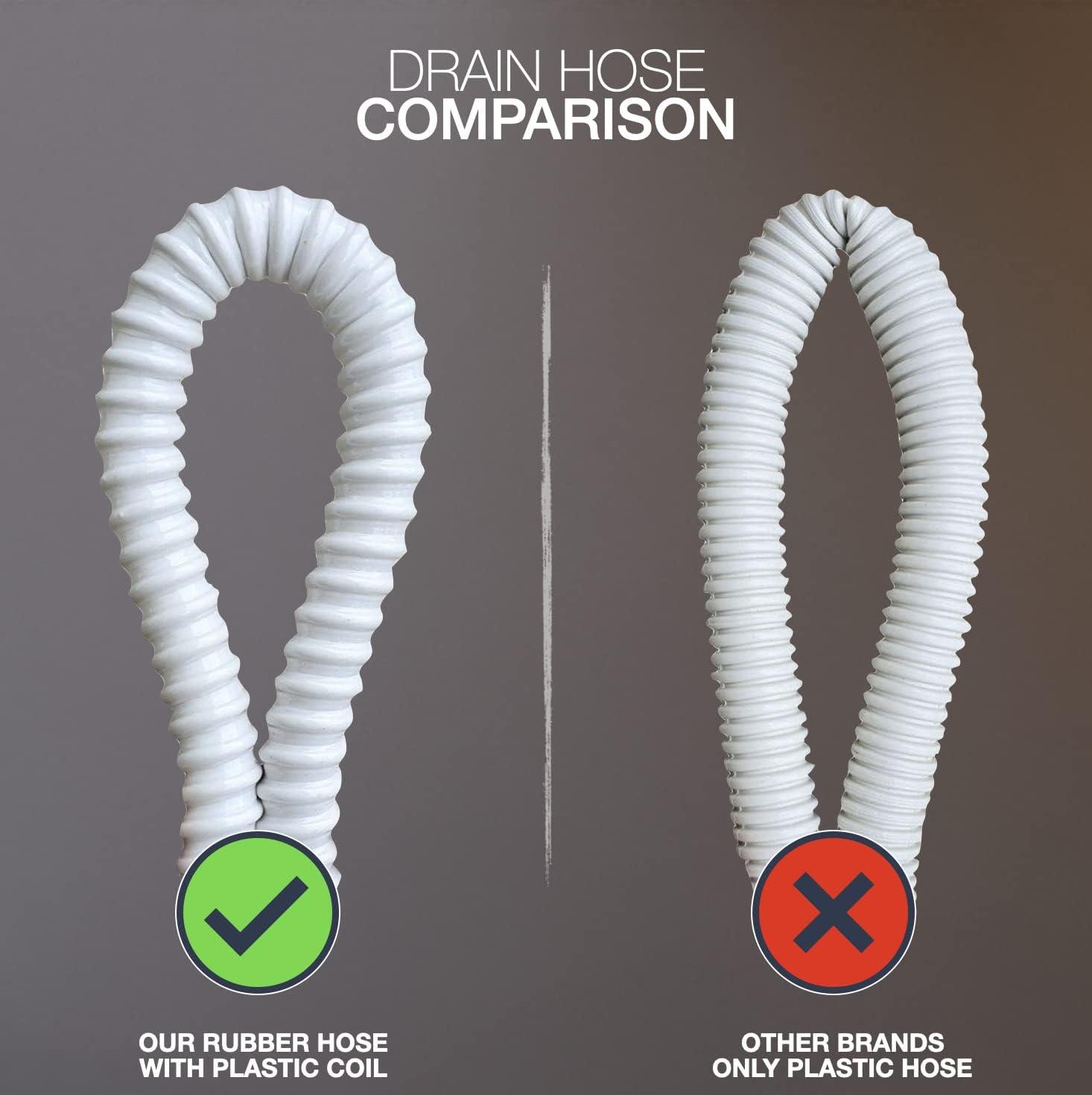
For active workplaces and customer-facing areas, the biggest advantage of a ductless multi-zone system like this Cooper & Hunter setup is that you can typically add heating/cooling without tearing open large sections of ceilings or shutting down major ductwork. According to the product description, it’s a tri-zone system built around a 28,000 BTU multi-zone outdoor condenser paired with three 12,000 BTU wall-mount air handlers, and each zone comes with its own 25 ft pre-flared, insulated copper line set, 25 ft communication wire, and a 16 ft drainage extension. In practical terms, that bundled approach can reduce jobsite delays (fewer “missing parts” runs) and helps installers keep work contained to the specific rooms being served—useful when you’re trying to keep offices, waiting rooms, or retail areas operational.
Having mentioned that, it’s not accurate to frame this particular system as a “no disruption” install across the board. The manufacturer is explicit: “This is not a DIY equipment, professional installation is required.” Reviews also reinforce that even when mounting the indoor heads is straightforward, the overall process often involves specialized HVAC steps and tools (vacuum pump, leak testing, correct wiring/line work), and one reviewer recommended hiring an HVAC pro to finish the install and verify the lines. In an active business, planning matters: expect some downtime or at least cordoned-off work zones during drilling/line routing and while setting the outdoor unit—especially as this item ships via freight and is delivered curbside/nearest accessible point, which can complicate staging and access in busy locations.
Check Current Price & Customer Reviews on Amazon →
Maintenance and Warranty Fit for Commercial Use Plus Comparison to Light Commercial alternatives
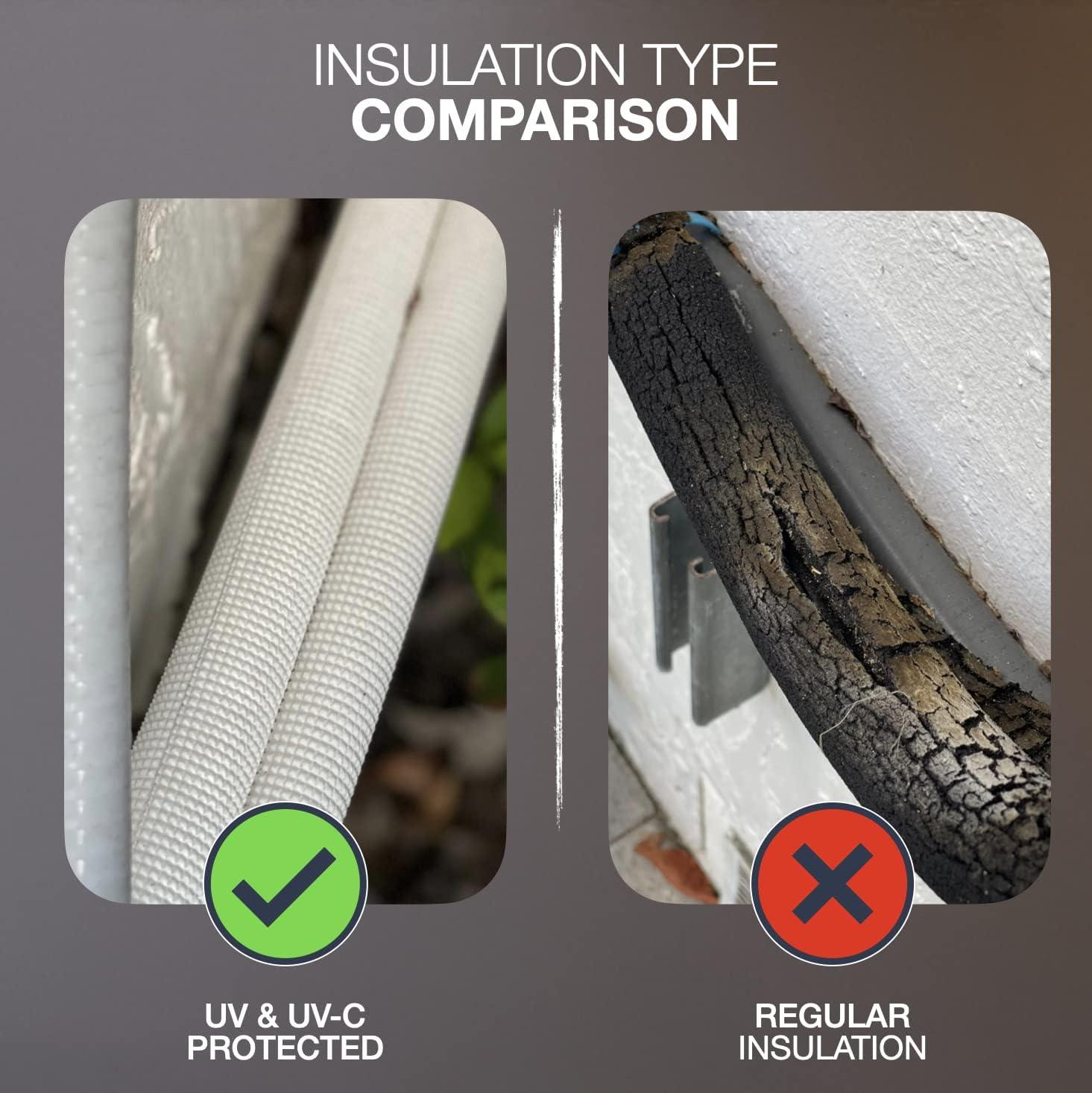
Maintenance on this Cooper & Hunter multi-zone system is largely the same “set-and-forget” routine you’d expect from wall-mounted mini-splits: keep the indoor unit filters clean, keep the outdoor condenser coil free of debris, and make sure each zone’s condensate drain stays clear (especially important if a head needs a condensate pump, which one reviewer mentioned adding for a living-room location). In dusty environments, reviewers specifically noted needing to clean filters more often. Because this system uses R-410A refrigerant (pre-charged) and ships with three 25ft installation kits (line sets, communication wire, accessories, and drain extension), the ongoing maintenance burden is more about airflow cleanliness and drainage than day-to-day tinkering—but installation quality matters for long-term reliability. Cooper & Hunter states this is not a DIY system and that professional installation is required, and reviews reinforce why: multiple buyers mention needing HVAC-specific tools (vacuum pump, gauges, flaring tools) and careful leak checking/evacuation; one review also mentions a head leak and another mentions wiring errors triggering an E1 code that was resolved after re-wiring.
On warranty and “commercial fit,” the manufacturer explicitly positions it as suitable for commercial applications alongside bedrooms,additions,and living rooms,with credentials like ETL Intertek approval and AHRI certification listed in the product description. What’s harder to generalize is how “commercial-grade” the warranty and service experience will feel in practice, because real-world feedback is mixed: one reviewer praised “excellent” tech support and speedy parts help, while another reported being asked to pay shipping for a replacement head due to a leak. Versus many light commercial alternatives (often single-zone or more basic multi-zone setups), the practical trade-off here is that you’re getting a higher-end feature set on paper—like a multi-zone inverter condenser, 24.6 SEER2 efficiency, and smartphone compatibility (with an additional adapter)—but you may also be leaning more on installer competence and parts/support processes when something goes wrong. If you’re choosing between this and a simpler “light commercial” option, the simplest comparison is: fewer zones and less wiring/lineset complexity can mean fewer installation failure points, while this 3-zone setup can be a better fit when you truly need separate areas conditioned—just plan for professional install and keep expectations grounded about what the warranty/service experience may look like based on the mixed reports.
Check Current Price & Customer Reviews on Amazon →
Customer Reviews Analysis
Customer Experience Summary (Based on Provided Reviews)
1. Overall Sentiment
Overall sentiment was mixed leaning positive. Many customers described the system as “awesome,” “works flawlessly,” “very efficient,” and “super quiet.” Simultaneously occurring, several reviewers emphasized installation complexity, generic/unclear instructions, and a few reported missing/wrong parts or leaks that created extra cost and delays.
2. Common Praise (What customers consistently liked)
Performance (Cooling/Heating)
- Multiple reviews praised strong cooling and heating performance across rooms/zones.
- One reviewer said it “works flawlessly.”
- Another wrote “12000 btu cools my whole upstairs 600+ square ft with ease.”
- A reviewer in a cold climate said, “I live in North East Ohio where it is very cold and this keeps up no problem at all” and “works awesome in heat and cool.”
- One customer said it “cool room well” including a “large Dinning room.”
Noise level (Indoor and outdoor)
- A common theme in reviews was very quiet operation.
- “You can barely hear it even on high.”
- “Completely silent.”
- “Indoor fan very silent.”
- One reviewer compared the outdoor unit: “sounds about like a standard box fan on low.”
Efficiency / bills
- some customers highlighted efficiency and lower electric bills.
- One reviewer said, “my electric bills have been under $150 for hottest and coldest months.”
- Another called it “very efficient” and noted the unit is “rated for 22.3 seer.”
Features and controls
- Several reviewers liked features such as modes and remote-based sensing.
- One mentioned “sleep mode… and turbo mode.”
- Another praised the “follow me feature” as it “pulls the temp off the remote.”
- One reviewer noted you can “download the app… and controls it anywhere.”
Value
- Some reviews framed the price/value positively (especially vs. other options).
- One reviewer said their total installed three-zone system cost “less than $4000.”
- Another said it’s a “great priced system,” even while warning to budget for installation.
Shipping speed
- One reviewer reported: “Shipping is fast, it came within a week.”
Tech support (in some cases)
- One reviewer described support as “excellent,” saying they shipped missing parts “ASAP” and helped troubleshoot an error code.
3. Common Concerns (Issues customers raised)
Installation difficulty / requires tools and experience
- Many customers mentioned the install wasn’t truly “plug-and-play” and required HVAC tools/skills or professional help.
- one person did some work but “hired a HVAC to finish out the installation, properly flush the lines and check for leaks.”
- Another said install was “easy with all of the how to videos on YouTube,” but still “helped to have a buddy that does hvac for the line brazing and adding freon.”
- A reviewer replacing central A/C said you’ll need “a flaring tools and a vacuum pump” and also had to order a “manifold gage adaptor.”
- One strongly negative review said they spent “hours” with contractor friends and concluded “you will need to hire an HVAC to run the lines for sure,” adding “expect to pay 1000-2000 for install.”
Instructions/documentation issues
- Several reviewers noted the documentation wasn’t clear or detailed.
- “Directions… are generic and only help as a starting point.”
- “Instructions are loosely translated from Chinese.”
- One reviewer complained there was “no mention of the screws that need to be removed” to remove head unit covers.
- Another said “wiring instructions… was not straight forward and cable colour code did not match.”
Parts/packaging problems (missing/wrong items, mismatched components)
- A few customers reported missing or incorrect parts.
- One reviewer said an “adapter to the compression tube was missing.”
- One negative review said they received incorrect cables: “they sent 2 3/8 and 1 1/2 inch cables…all 3 heads use 3/8S,” which they said would require extra visits.
- One reviewer noted the line lengths from the indoor unit were different: “different length by about 4”,” requiring re-flaring or bending to fit.
Defects/leaks and dissatisfaction with resolution cost
- A few customers reported equipment issues.
- One wrote, “one of the heads had a small leak.”
- That same reviewer was unhappy that replacement involved a fee: “I don’t feel that I should be charged anything for shipping.”
- Another reviewer encountered an error code (“error code E1”), though they later found it was due to wiring being hooked up incorrectly by a contractor.
Multi-zone temperature behavior
- One reviewer noted it can take getting used to when zones want very different temperatures: “Each room will get a turn at temperature management,” so “don’t expect instant temperature changes like with a single unit.”
Drain/condensate routing complexity
- One reviewer said they needed to “add a condensate pump” for one room, while others drained outside.
- Another described the drain connection as difficult: “took some unusual work to connect.”
Warranty skepticism
- One reviewer criticized the professional-install warranty value: “It’s laughable how little they will cover,” and said “don’t be afraid to do this yourself” (based on their interpretation of warranty coverage).
4. Notable Use Cases (Specific scenarios customers described)
- Replacing an old central A/C: One reviewer explicitly said, “This is to replace my old central A/C.”
- Multi-room setups: Reviewers described installations serving a master bedroom, living room, kitchen, and other rooms; one described cooling a “house of 2700sq ft” using multiple heads (though that reviewer referenced mixed head sizes).
- Upstairs cooling: one reviewer said a 12K head “cools my whole upstairs 600+ square ft.”
- cold-weather performance: A reviewer in “North East Ohio” said it “keeps up no problem at all” in very cold conditions.
- Attic access for line routing: one reviewer mentioned using “access in my attic for the lines.”
- DIY + pro hybrid installs: Several reviews described doing much of the work themselves (mounting/routing) but bringing in HVAC help for evacuation, leak checks, brazing/flaring, and/or refrigerant-related steps.
Pros & Cons
Strengths
- Multi-zone system with three 12,000 BTU wall-mounted heads: The package includes a 28,000 BTU multi-zone inverter condenser paired with (3) 12K indoor air handlers (12K + 12K + 12K), supporting three separate zones.
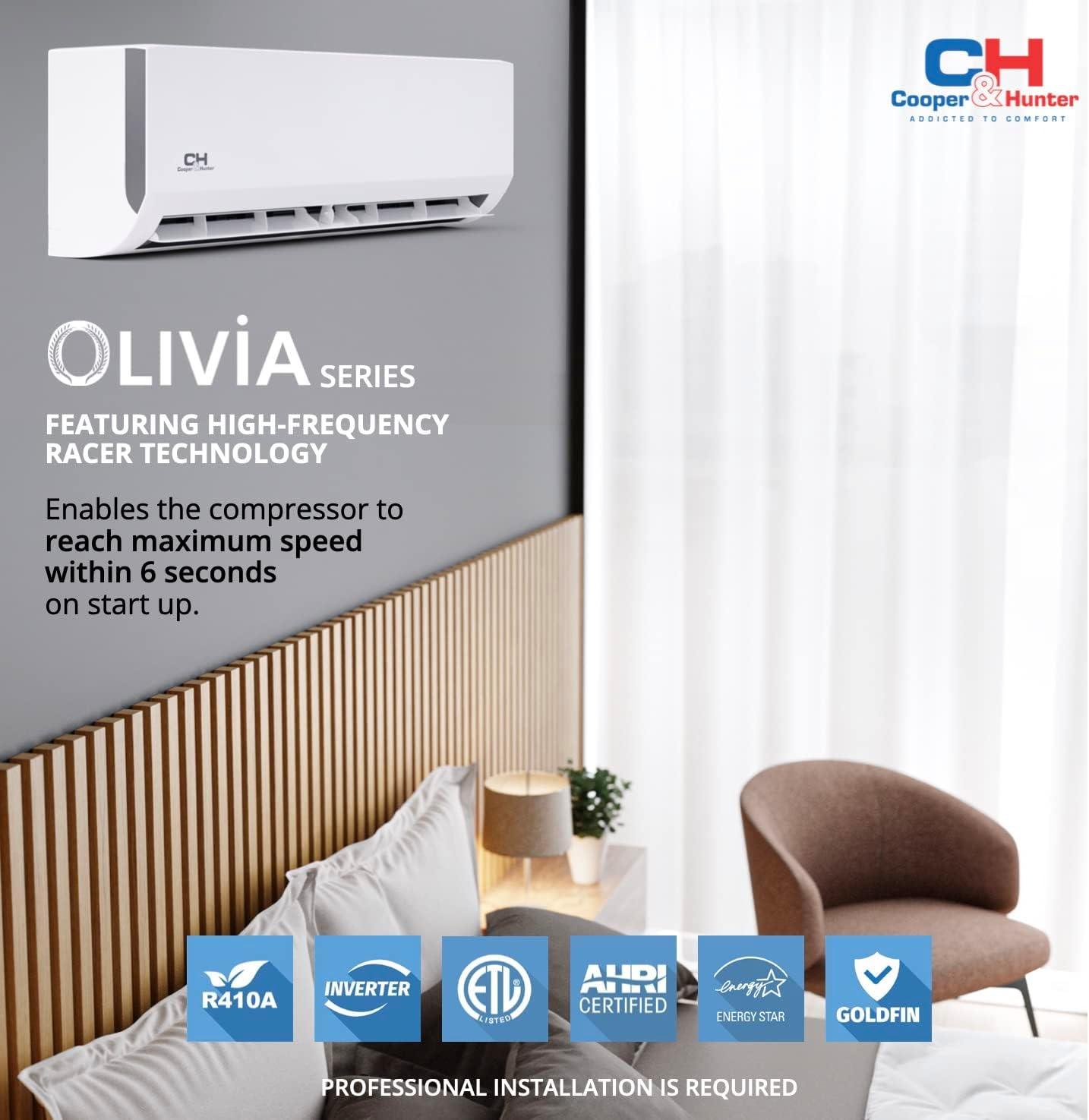
- High published efficiency rating (24.6 SEER2): The condenser is listed at 24.6 SEER2 (also shown as 23.80 SEER), and the product description highlights inverter technology intended to save energy vs.traditional compressors.
- Heating capability in low outdoor temperatures: Manufacturer specs state it works for heating with outdoor ambient temperatures down to -13°F.
- Quiet-operation positioning supported by recurring review feedback: The listing claims “Whisper Technology for Quiet Operation,” and multiple reviewers report the indoor units are “very silent”/“barely hear it,” with comparatively quiet outdoor operation.
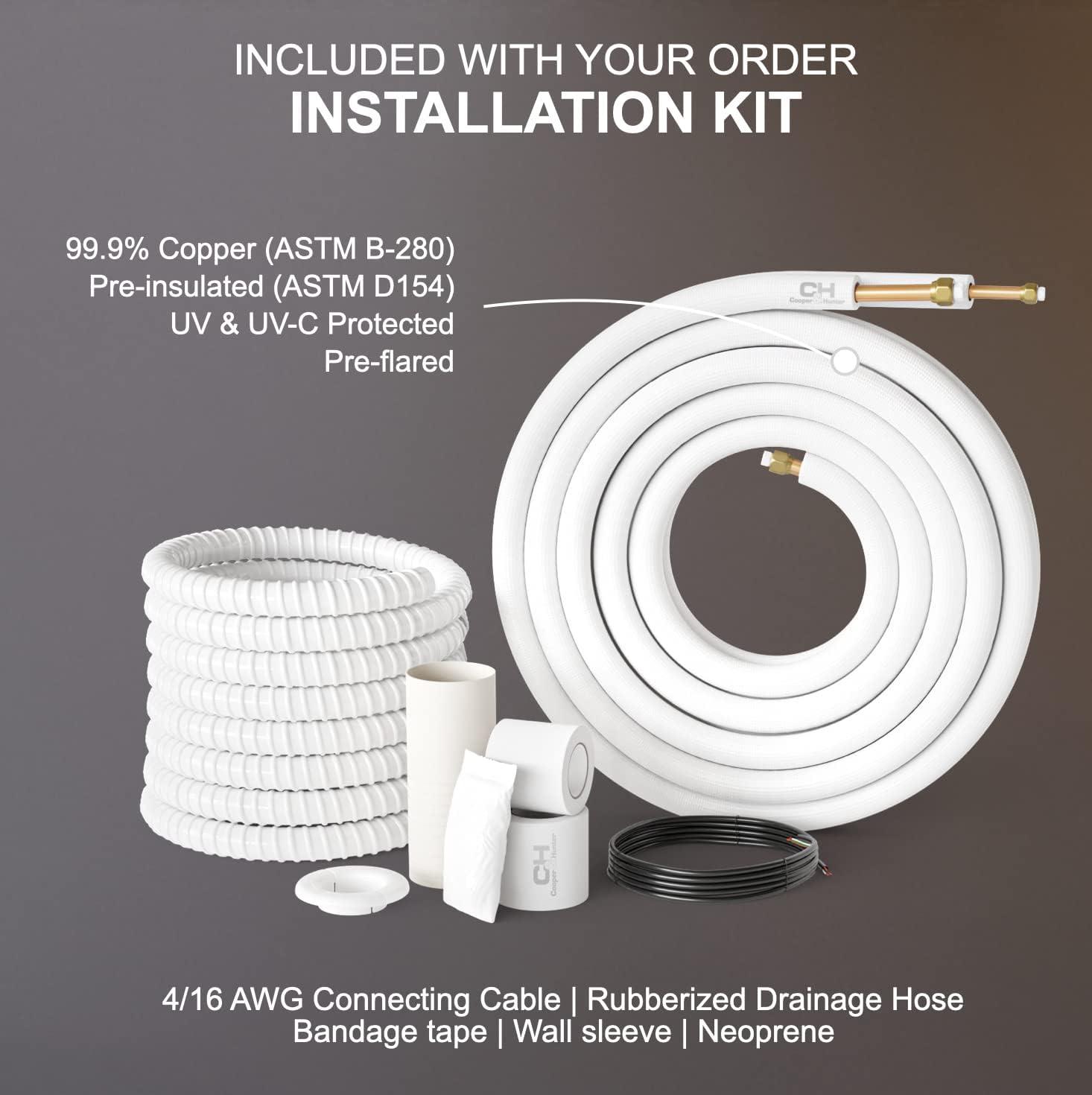
- Installation kits included for each air handler: Includes (per head) a 25 ft pre-flared/insulated copper line set,25 ft communication wire,small accessories,and a 16 ft drainage extension—reviewers note the system “came with all components” and that “everything fit as it should” (in at least one install).
- Smartphone control is available (with an added adapter): Described as “Smartphone Compatible” and controllable via the C&H app, but the listing specifies an additional USB smart adapter is required and is not included.
Considerations
- Not DIY per manufacturer; HVAC tools/skill often required: The product description states “This is not a DIY equipment, professional installation is required,” and reviewers mention needing specialty tools (vacuum pump/manifold) and/or hiring an HVAC tech for flushing/leak checks/brazing.
- Included line sets are 25 ft—longer runs require extra parts: Reviews note that if the indoor unit is more than 25 ft from the outdoor unit, you’ll need additional line set/couplings; this can add cost and complexity.
- Documentation and wiring guidance can be confusing: Multiple reviews describe the instructions as generic/loosely translated and call out wiring instructions/color codes not being straightforward or not matching expectations.
- Potential for missing/damaged parts and service friction: Customer feedback mentions a missing adapter (resolved via support) and another report of a head leaking; that reviewer said a replacement was offered but they were still charged shipping.
- Freight/curbside delivery only due to size/weight: The listing states it ships via freight to the nearest accessible point outside the home; reviewers call out curbside-only delivery and needing to move heavy components themselves.
Q&A
What does “Tri 3-Zone 12K + 12K + 12K” mean, and how much total capacity is this system?
This is a multi-zone ductless mini split system with three separate wall-mounted indoor air handlers, each rated at 12,000 BTU. The outdoor condenser is listed as a Cooper & Hunter 28,000 BTU Multi Zone Inverter Condenser (model CH-28MES-230VO) paired with three 12,000 BTU indoor units (model CH-12MOLVWM-230VI). In practice, each zone can be controlled independently, but overall performance depends on how many zones are calling at once (multi-zone systems share available capacity).
Does this unit provide heating as well as air conditioning, and how cold can it operate in heat mode?
Yes. This is an air conditioner and heat pump system. The product description states it “Works for heating with ambient temperature up to -13°F,” meaning it is designed to operate in heating mode down to -13°F outdoor temperature per the listing.
What voltage does it require?
The system is specified as 208–230V (also described as 230V in the listing). If you’re unsure whether your electrical service supports this, verify with a licensed electrician or HVAC installer before purchase/installation.
Does it come with installation kits and line sets? How long are they?
Yes. The listing states the system includes an installation kit for each air handler, including: a 25 ft pre-flared and insulated copper line set, 25 ft communication wire between indoor and outdoor, small accessories, and a 16 ft drainage extension. If your run is longer than 25 ft for any zone, you may need additional line set and installation materials (confirm required sizes and limits with the manufacturer/installer).
Is this a DIY installation?
The product description explicitly says: “This is not a DIY equipment,professional installation is required.” Some reviewers mention doing parts of the work themselves (mounting heads/running lines) and then hiring an HVAC technician for vacuum/leak checking and commissioning, but installation requirements and code compliance vary by location. For official requirements and warranty implications, check the manufacturer documentation and the Amazon listing details.
Is it Wi‑Fi / smartphone compatible? What do I need to use the app?
Smartphone control is supported,but the listing states an “Additional USB Smart Adapter is required to enable this feature but NOT included,” and also notes the C&H App can be used (with the adapter purchased separately). If app control is important to you, confirm the correct adapter part and compatibility for this exact model with Cooper & Hunter before ordering.
How efficient and certified is this system?
The outdoor unit is listed at 24.6 SEER2 (and also shows 23.80 SEER in the description). It also states the unit is AHRI Certified and ETL Intertek Approved, and that it uses inverter technology (which the listing notes can save energy compared with traditional compressors). For the official,most up-to-date ratings and matched-system details,refer to the Amazon product page and manufacturer/AHRI documentation.
Discover the Power
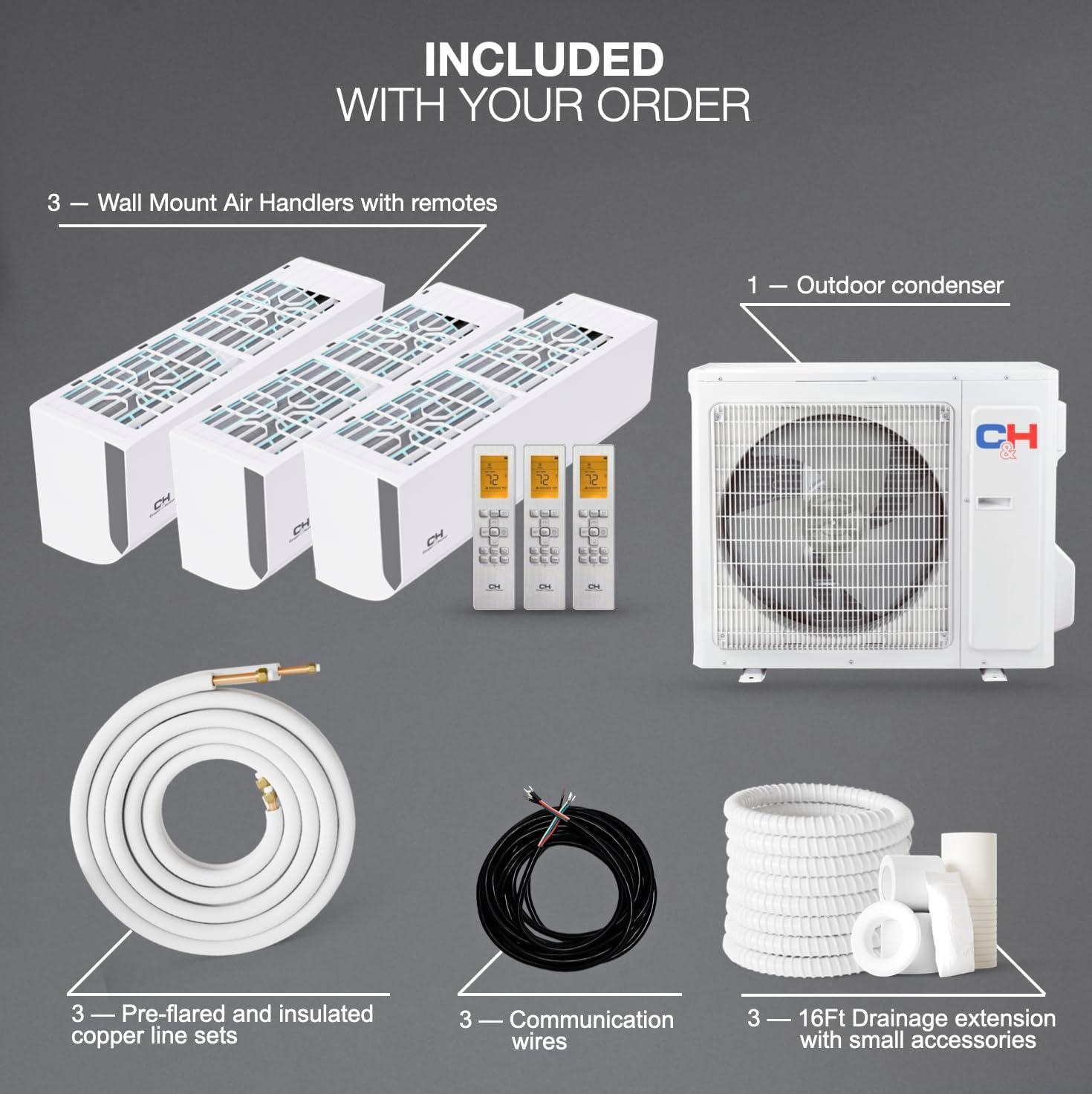
The Cooper & Hunter 28,000 BTU Tri 3‑Zone system pairs a multi‑zone inverter condenser with three 12,000 BTU wall-mounted heads, includes three 25‑ft installation kits, and comes pre‑charged with R‑410A. With a listed 24.6 SEER2 rating,ETL/AHRI credentials,and heat operation down to about ‑13°F,it’s built for homeowners who want independent temperature control across multiple rooms.
Best for: bedrooms, additions, living rooms, or small commercial spaces where quiet indoor operation matters. reviews commonly mention strong cooling/heating performance and low noise, plus decent fitment of included line sets—when installed correctly.
Consider alternatives if: you need truly DIY-friendly setup, want clearer instructions, need longer than 25‑ft runs, or prefer avoiding freight delivery logistics. Multiple reviewers recommend budgeting for professional HVAC tools/labor, and a few note parts/QA issues (missing items, leaks, error codes).
Final thought: A capable multi-zone option on paper and in many real installs, but not “plug-and-play.” Verify sizing, install requirements, and current feedback before buying.
Ready to learn more? View Full Specifications & Latest Reviews on Amazon →