
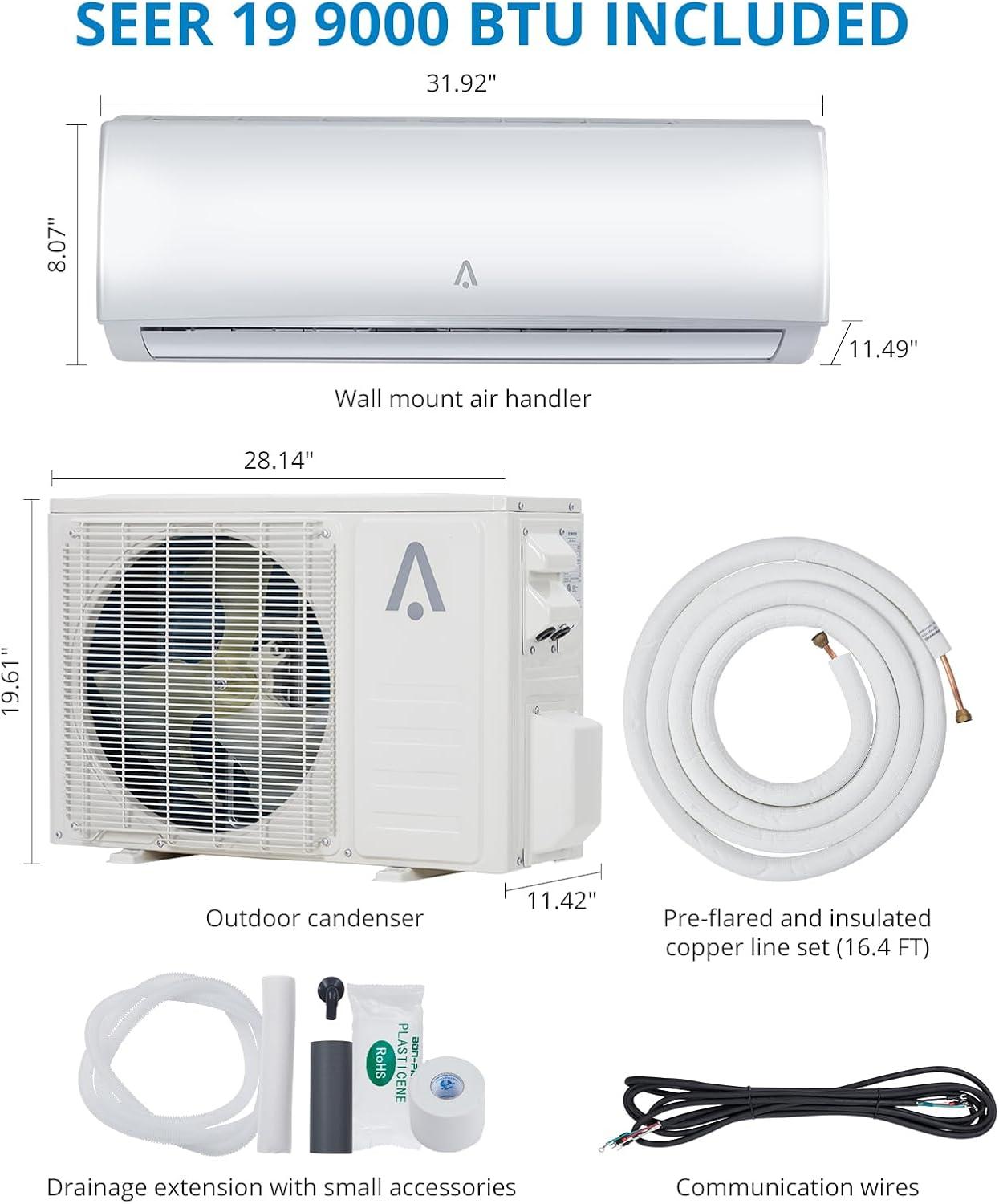
Struggling with a room that’s always too hot in summer, too chilly in winter, and unachievable to balance with a central thermostat—especially if you don’t even have ductwork to begin with? That’s the exact gap a ductless mini-split is meant to fill, and the Zstar 9,000 BTUs Mini Split aims to do it in a compact, modern package.
This is a wall-mounted, inverter-driven split-system air conditioner with a heat pump, a 19 SEER2 rating, Wi‑Fi app control plus a remote, and an included installation kit. Zstar positions it as a solution for spaces up to about 450 sq. ft., with added features like self-cleaning and auto defrost.
In this review, we’ll walk through what the specs suggest for real-world comfort, what installation and daily control look like, and how the key features compare to what buyers typically care about. We’ll also reference customer feedback themes—many reviewers say it “works well,” while quality impressions are mixed, with some praising quiet operation and others reporting issues.
We’ve researched and compared mini-splits across multiple brands and installations, so we focus on practical considerations and honest tradeoffs.
Commercial Performance Overview for Small Business Cooling and Heating Operations
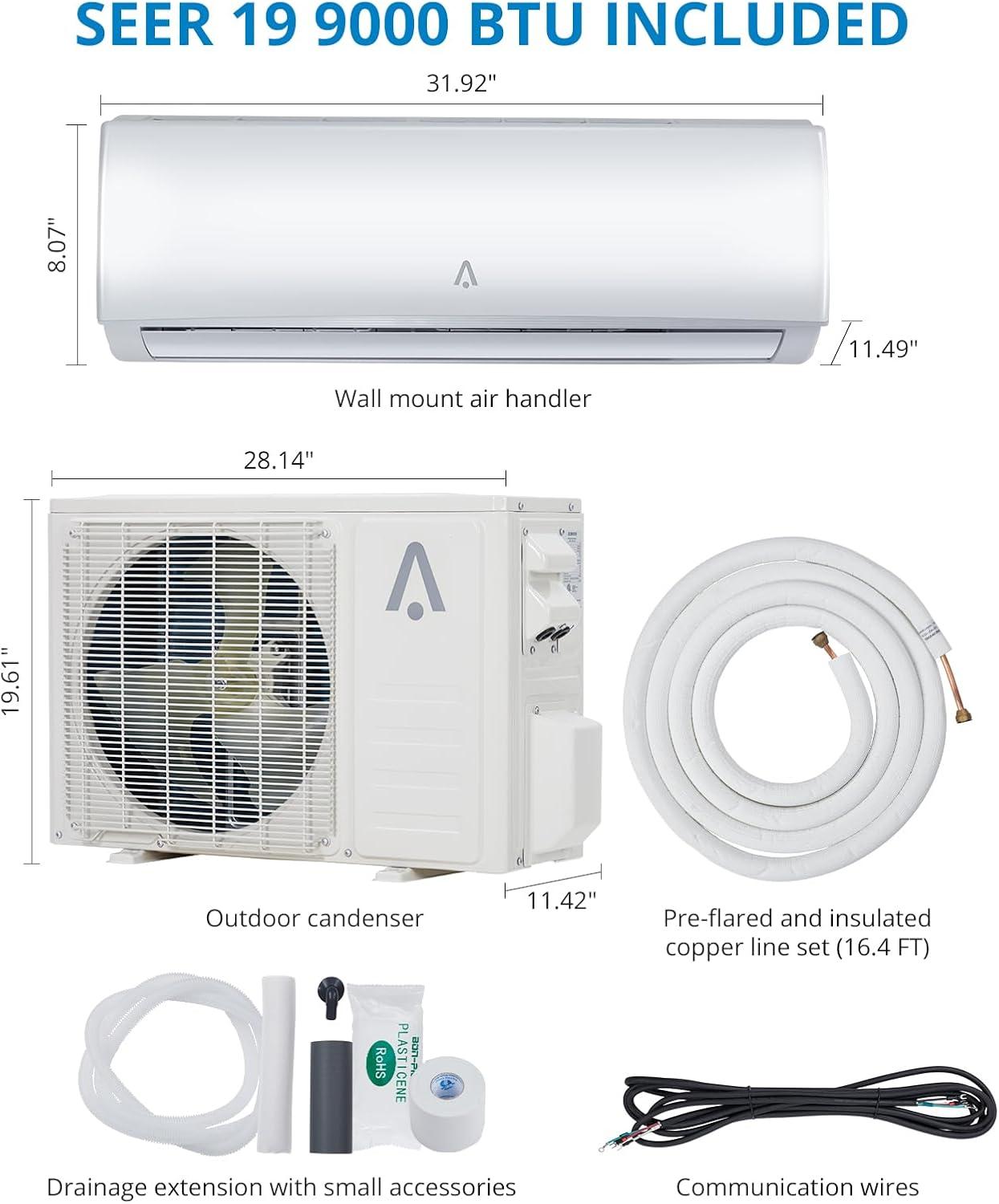
For small business settings like a boutique back office, small salon room, or a single-zone retail area, the Zstar unit is positioned as a compact, efficient option with 9,000 BTU of capacity and a 19 SEER2 efficiency rating, and it’s rated to cool up to 450 sq. ft. (per the manufacturer). This type of ductless inverter mini-split is typically used to provide targeted comfort to one defined area without running (or retrofitting) ductwork, which can be especially practical in older storefronts or tenant improvements.Customers report that the air conditioner “works well,” and at least one reviewer specifically noted that both heating and cooling functions are operational, which matters for businesses that want a single system to handle shoulder-season heating and summer cooling. Zstar also markets it as suitable for “commercial space like a store, restaurant, or warehouse,” but in practical terms the 9,000 BTU size is best thought of as a single-zone solution for smaller rooms rather than a whole commercial floor.
Operationally, the commercial appeal is largely about controllability and consistent comfort: the product description highlights Wi‑Fi app control plus remote control, and states compatibility with Alexa and Google Assistant, which can help staff adjust settings without hunting for a wall controller. Zstar also lists self-cleaning (activating at 134.6°F) and auto defrost on the outdoor unit—features aimed at reducing indoor coil buildup and keeping the heat pump running in colder conditions. Having mentioned that, commercial performance is closely tied to installation quality: the manufacturer notes professional installation is required (not DIY), and reviewers echo that proper steps like evacuating/vacuuming refrigerant lines matter; one customer said the unit “worked well” but only after studying how to install it correctly. A few reviews also mention mixed build/fit-and-finish experiences—one reported creaks/pops from the indoor unit during temperature adjustment—so for customer-facing spaces where perceived noise matters, it may be worth factoring into placement and expectations.Check current Price & Customer Reviews on Amazon →
Energy Cost Savings Real Numbers for Monthly Utility Spend and Efficiency Gains
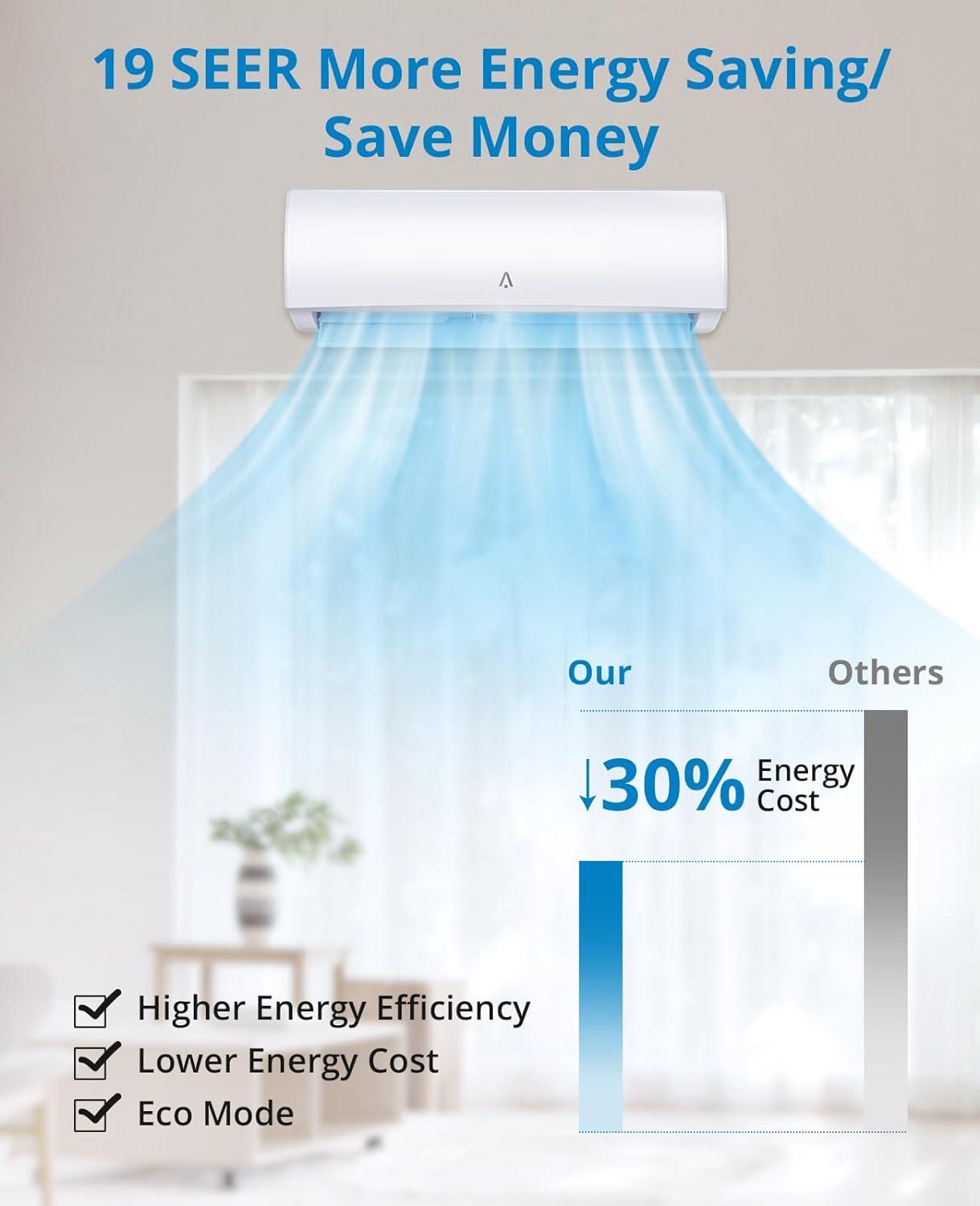
With a 19 SEER2 efficiency rating and inverter technology, the Zstar 9,000 BTU mini split is positioned as a higher-efficiency option for conditioning a smaller zone (rated to cool up to 450 sq. ft.). Because SEER2 is an efficiency metric—not a direct bill estimate—there isn’t a universal “you’ll spend $X per month” number that can be stated honestly without your local electric rate,the hours you run it,insulation/air leaks,and how hot/cold your climate gets. What Zstar does claim, though, is that its inverter-driven “smart Energy Savings” design can reduce electricity usage by up to 43% (manufacturer claim), which reflects the general advantage of inverter mini-splits: instead of cycling hard on/off, they modulate output to better match the load and avoid wasteful start-up spikes.
On the “real numbers” side, the most responsible way to frame monthly utility impact is as an efficiency gain and control strategy rather than a guaranteed bill drop. Since this is a ductless system, you can often treat it like a dedicated comfort zone—conditioning the room you’re actually in rather than the whole home—which is where many households see practical savings versus running central air for the same comfort (that’s a general mini-split advantage, not a promise specific to this model). Customer feedback in the listing highlights that the unit “works well” for heating and cooling, but the provided review excerpts don’t offer consistent, verifiable dollar amounts or bill screenshots—so it wouldn’t be accurate to quote monthly savings figures here. If you want a realistic estimate, the best method is to pair your local $/kWh rate with your expected run time and compare equipment using their published efficiency (this unit’s 19 SEER2)—and then treat any “up to” savings figure as an upper-bound marketing claim rather than a typical outcome.
Check Current Price & Customer Reviews on Amazon →
Installation Without Business Disruption in Active Workspaces and Customer Facing Areas
In active workspaces and customer-facing areas, a ductless mini-split like the Zstar can be a practical upgrade because it doesn’t require running large ductwork through ceilings or shutting down big sections of a building. according to Zstar, this 9,000 BTU system is rated to cool up to 450 sq. ft. and it’s positioned as suitable for commercial settings such as a store or restaurant. That said, the brand also explicitly notes that this system requires professional installation (not DIY), which matters for planning: you’ll want to schedule work during slower hours since mounting an indoor head, setting the outdoor condenser, and routing the line set typically creates some drilling noise and brief access restrictions.
Real-world feedback suggests the install process can be manageable when done correctly, but it isn’t “plug-and-play.” Some reviewers report that the unit “works great and install was easy,” while others mention needing to study proper procedures like vacuuming the lines and even paying an HVAC tech to handle tasks such as flaring.For businesses trying to avoid disruptions, the best approach is to treat installation as a short, planned project: pre-select the indoor wall location and outdoor pad/bracket location to minimize blocked walkways, and confirm the crew will pressure-test, evacuate, and commission the system the same day so you’re not left with an out-of-service area during operating hours. Check Current Price & Customer Reviews on Amazon →
comfort Reliability and Maintenance Planning for Staff Productivity and Customer Experience
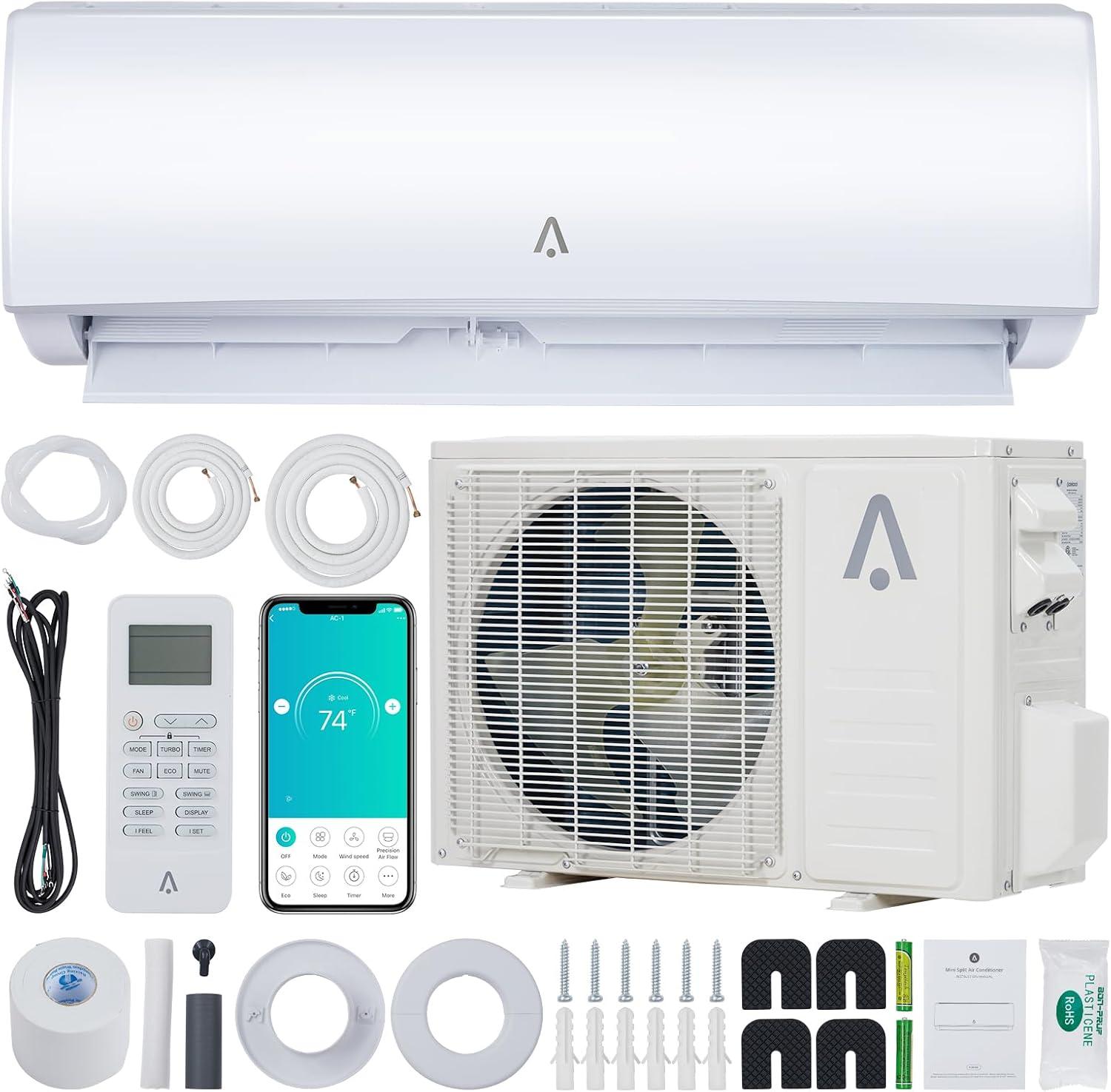
Comfort reliability matters in customer-facing spaces because temperature swings, uneven airflow, or distracting operation can affect both staff focus and how long customers want to stay. According to Zstar,this is a 9,000 BTU ductless mini-split rated at 19 SEER2 and designed to cool spaces up to 450 sq. ft., and it uses inverter technology to modulate output rather than cycling hard on/off—generally the kind of control that helps maintain a steadier setpoint in offices, breakrooms, salons, or small retail areas.In customer feedback, several users report the unit “works well,” and at least one reviewer specifically noted that both heating and cooling were operational after extended ownership; however, one customer also reported creaks/pops/loud cracking noises as the unit adjusts temperature, which is worth considering if you’re placing the indoor head near a reception desk or quiet workspace.
For maintenance planning, zstar highlights features aimed at lowering routine workload: a self-cleaning cycle (the listing states it activates at 134.6°F), a washable filter, and auto defrost on the outdoor unit—all of which can help sustain airflow and heating performance with less day-to-day intervention. Still, mini-splits aren’t “set and forget”: filters typically need periodic rinsing (more often in dusty or high-traffic commercial areas), and keeping the outdoor coil clear of debris helps preserve performance over time. Installation quality also ties directly to uptime—Zstar notes professional installation is required (not a DIY mini split), and one reviewer said the system worked well “only as” they carefully learned proper procedures like vacuuming the lines, which is a reminder that planning for a qualified install and commissioning can reduce callbacks and avoid comfort complaints during business hours.
Check Current Price & Customer Reviews on Amazon →
Commercial Alternatives Comparison for Total Cost of Ownership and Operational Fit
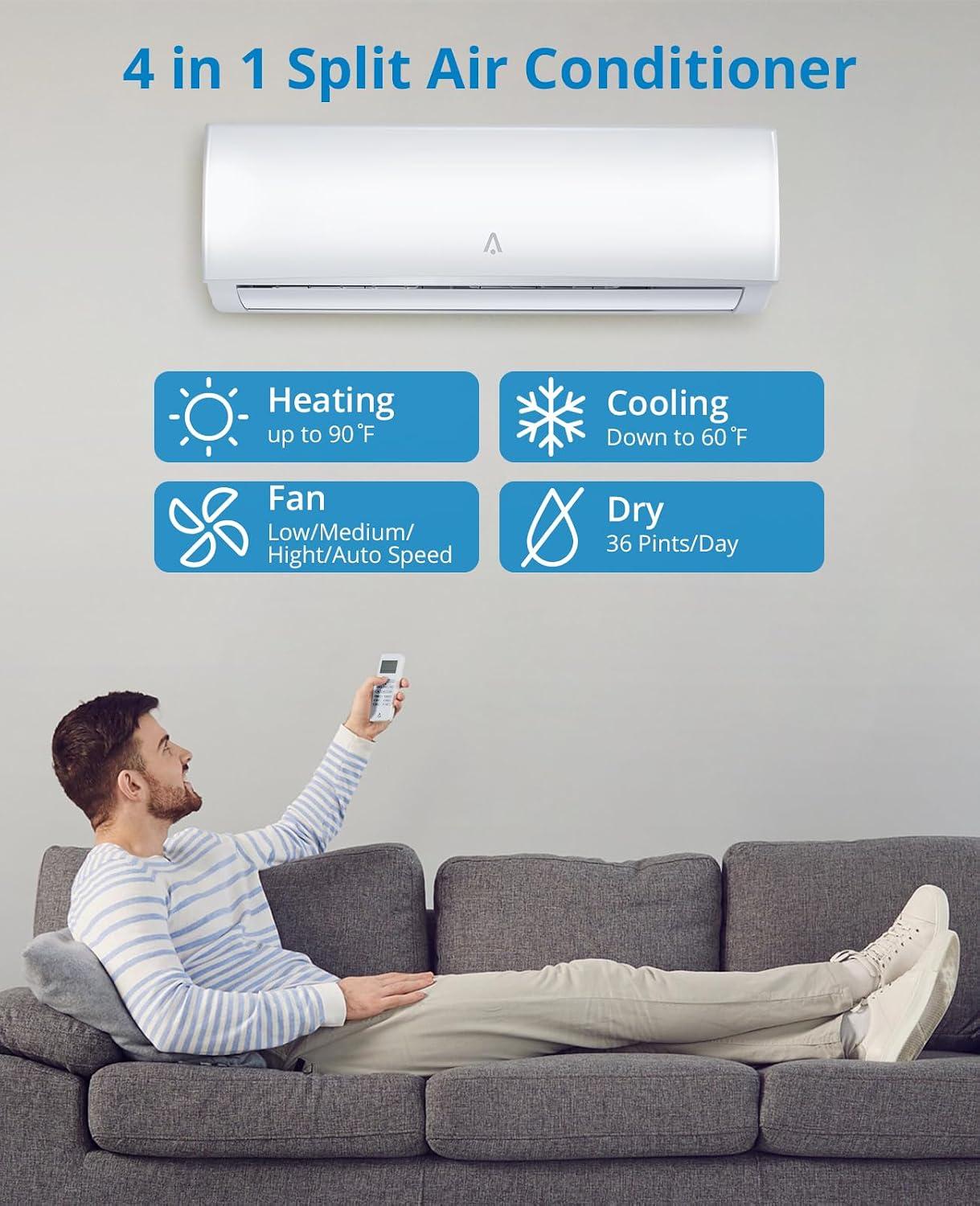
When comparing commercial alternatives for total cost of ownership, the zstar unit positions itself as an efficiency-forward option on paper, with 9,000 BTU capacity, a 19 SEER2 rating, and inverter technology (all per the manufacturer). Higher SEER2 and variable-speed operation are generally associated with lower operating costs over time versus basic fixed-speed systems—though your real-world outcome still depends heavily on sizing, climate, usage habits, and install quality. For feature value relative to many mainstream mini-splits, Zstar also includes convenience items that can reduce “add-on” spending later, such as Wi‑Fi app control plus remote control, and maintenance-oriented functions like self-cleaning, a washable filter, and auto defrost (per Zstar). One vital caveat for TCO: Zstar states this system requires professional installation, and customer feedback also suggests performance is closely tied to correct procedures like evacuating/vacuuming the lines—so budget for a qualified installer and proper commissioning rather than assuming a low-cost DIY path.
For operational fit versus commercial alternatives, the Zstar’s stated envelope is compelling for small zones: it’s rated to cool up to 450 sq. ft., uses 115V power, includes heat pump heating, and is marketed for residences and light commercial spaces (store/restaurant/warehouse) per the brand. It also claims capability in extreme conditions (down to -13°F heating and up to 131°F cooling),which may matter if you’re comparing to entry-level units with narrower operating ranges—though those limits are still subject to proper installation and local conditions. In reviews, customers commonly report that heating and cooling work well, but quality feedback is mixed, and at least one reviewer reported the indoor unit making creaks/pops as it adjusts temperature—an operational consideration if you’re comparing against models known for quieter plastics/build. Bottom line: against “commercial alternatives,” this Zstar looks best for modest-sized rooms where you want efficient inverter operation + Wi‑Fi control in a standard-voltage package, but the long-term ownership experience will hinge on pro installation, noise tolerance, and how you weigh mixed quality reports.
Check Current Price & Customer Reviews on Amazon →
Customer Reviews Analysis
I can’t write an accurate Customer Experience Summary yet because you didn’t include any actual review text (your prompt ends at “REVIEW DATA:” with no reviews provided). Under your rules (“ONLY report what customers actually said”), I’m not allowed to infer or generalize without the review content.
Paste either:
- the full review text you want analyzed (copy/paste from the listing), or
- a batch of excerpts (even 10–30 reviews is enough), or
- screenshots of reviews (I can read images).
Once you share the reviews, I’ll produce the requested section in this structure:
1) Overall Sentiment (positive/negative/mixed, based only on the provided reviews)
2) Common Praise (grouped by categories like performance, noise, installation, Wi‑Fi/controls, heating, value) with quoted excerpts
3) Common Concerns (same categories, with quoted excerpts)
4) Notable Use Cases (specific rooms/climates/installs customers described)
Send the review data and I’ll generate the summary promptly.
Pros & Cons
Strengths
- 19 SEER2 efficiency rating (spec): Listed as a 19 SEER2 ductless mini-split, which is positioned as an energy-efficient option in the product description.
- 9,000 BTU capacity + up to 450 sq. ft. coverage (spec): Rated at 9,000 BTUs and advertised to cool spaces up to about 450 sq. ft., suitable for a bedroom/office-sized room per the listing.
- Heating & cooling via built-in heat pump (spec + reviews): The product is sold as an AC with heat pump, and reviewers report both heating and cooling are operational.
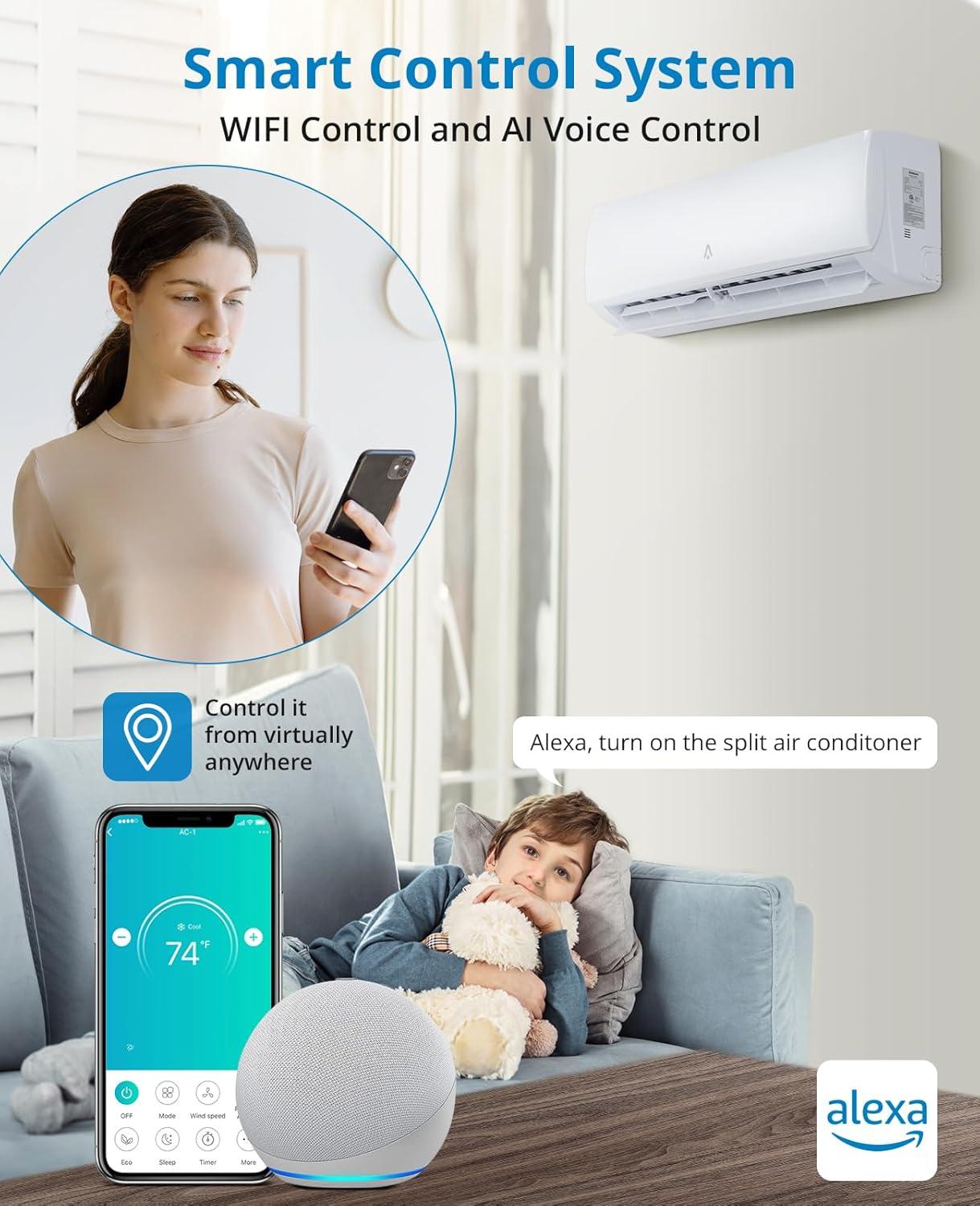
- WiFi app control + remote control included (spec): The listing states you can control it with a remote and a dedicated app (requires Wi‑fi).
- Works with Alexa/Google Assistant (manufacturer claim): The product description says it can integrate with Alexa and Google Assistant for voice control.
- Self-cleaning, washable filter, and auto defrost (spec): The listing calls out a self-cleaning mode (activates at 134.6°F), a washable filter, and an outdoor-unit auto-defrost feature.
- Positive performance feedback in reviews (review theme): Review summaries include multiple customers saying it “works well/works great,” with some also noting easy installation and quiet running.
Considerations
- Professional installation is required (manufacturer note): The listing explicitly states it “requires professional installation” and is “not a DIY mini split AC,” which can increase total cost and planning complexity.
- Some buyers report loud creaks/pops from the indoor unit (review theme): At least one reviewer notes “creaks, pops, and sudden loud cracking noises” as the unit adjusts temperature.
- Quality is mixed in customer feedback (review theme): Reviews are described as mixed on quality, including a “Junk and didn’t work” comment alongside positive experiences.
- Installation may be challenging without HVAC tools/knowledge (review theme): Reviewers mention needing to study proper installation and vacuum the lines; one notes buying a vacuum pump/manifold and paying an A/C professional for flaring.
- Potential fulfillment/packaging issue reported (review): One customer complained they received only the outside unit and were missing the line set and indoor head, indicating a possible shipment completeness risk.
Q&A
What size room will the Zstar 9,000 BTU mini split cool?
The product listing rates this 9,000 BTU ductless mini split to cool spaces up to 450 sq. ft. actual results can vary based on insulation, ceiling height, sun exposure, and local climate. For the official coverage guidance, confirm on the Amazon product page.
Does this unit provide heat as well as air conditioning?
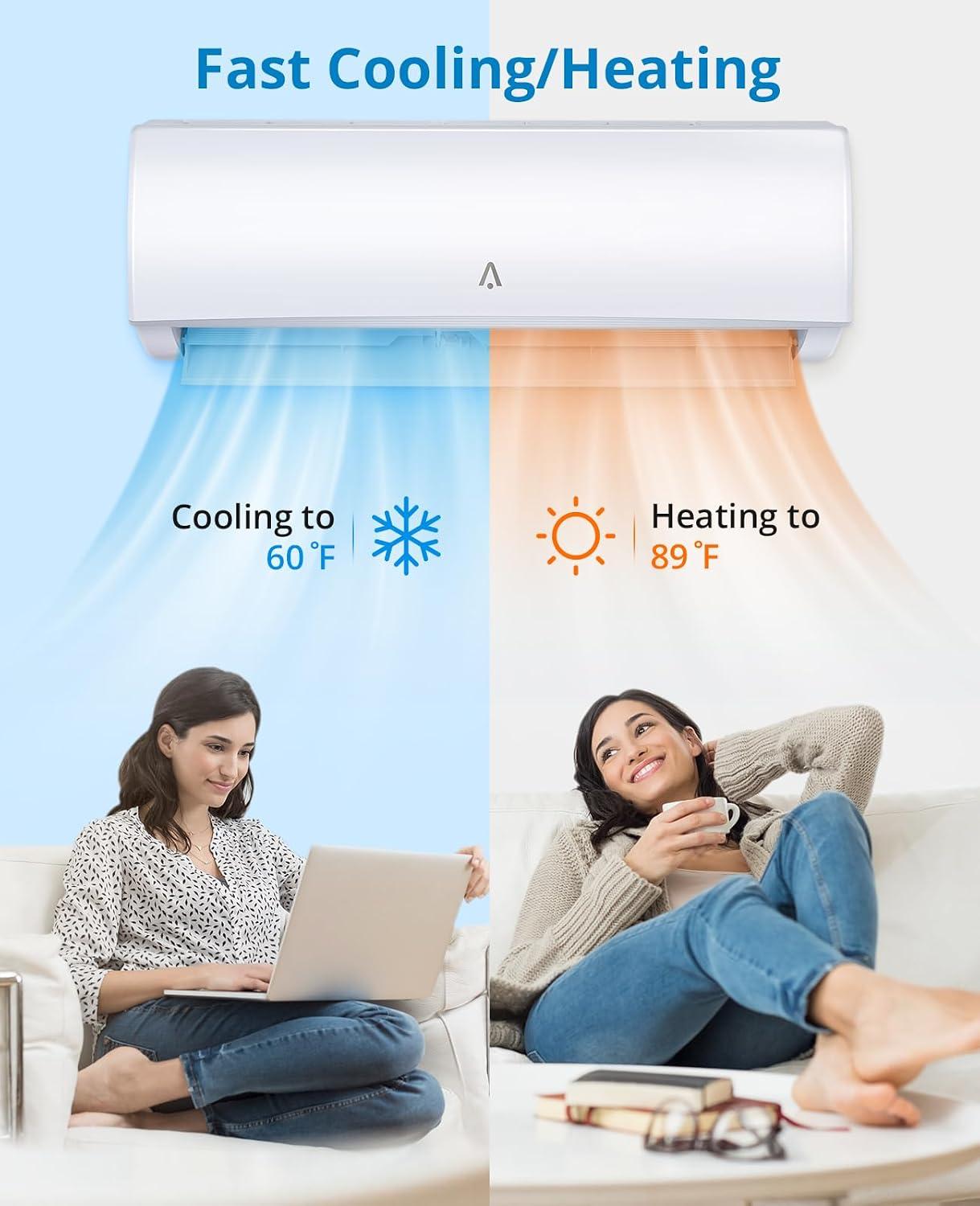
Yes. The listing describes it as a heat pump model that provides both cooling and heating. The product description states it can operate in high outdoor temperatures up to 131°F and in low outdoor temperatures down to -13°F. Performance in very cold weather can vary by installation and building heat loss,so verify requirements with the manufacturer.
What voltage does it use, and do I need a special electrical circuit?
This model is listed as 115V. electrical requirements (such as breaker size, wire gauge, and disconnect needs) depend on the unit’s nameplate ratings and local electrical code. Check the unit data plate and installation manual, or confirm details on the Amazon listing/manufacturer documentation.
can I install this mini split myself?
The product description includes a clear note: “This ac system requires professional installation – it’s not a DIY mini split AC.” Mini-split installation often involves refrigerant piping practices (proper flaring, evacuation/vacuum, and leak checking) and may be subject to licensing requirements in some locations. If you’re considering DIY portions, confirm what’s allowed with the manufacturer and your local regulations.
Does it include Wi‑Fi control and a remote, and will it work with Alexa/Google Assistant?
Yes. The listing states it includes Wi‑Fi app control (requires Wi‑Fi connectivity) and a remote control. It also states it can integrate with Alexa and Google Assistant for voice control.App features and setup steps can vary, so follow the instructions provided by the manufacturer and verify the current compatibility notes on the amazon page.
What maintenance does it need (filters, self-cleaning, defrost)?
The listing notes a self-cleaning feature (activates at 134.6°F), a washable filter, and an outdoor-unit auto defrost function.Even with these features, mini-splits typically still require routine filter cleaning and keeping the outdoor unit clear of debris; follow the manufacturer’s maintenance schedule in the manual.
Is it quiet,and what do customer reviews mention?
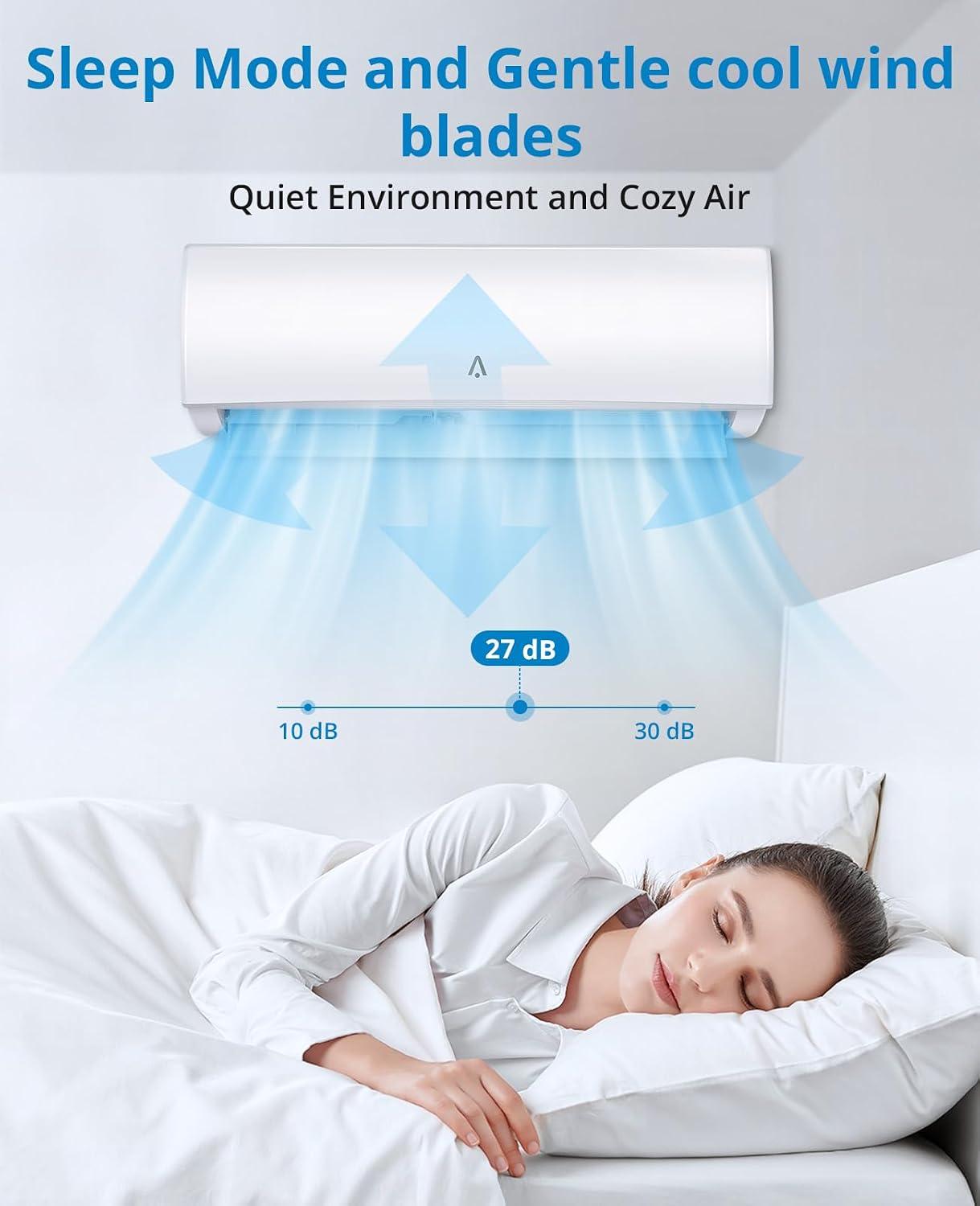
The provided review summary indicates customers commonly report that the unit works well,but quality feedback is mixed. At least one reviewer mentioned the indoor unit making creaks/pops/cracking noises during temperature adjustment, while others described it as running with little noticeable noise. For the most reliable expectations, check the latest Amazon customer reviews and Q&A for this exact model.
Experience the Difference
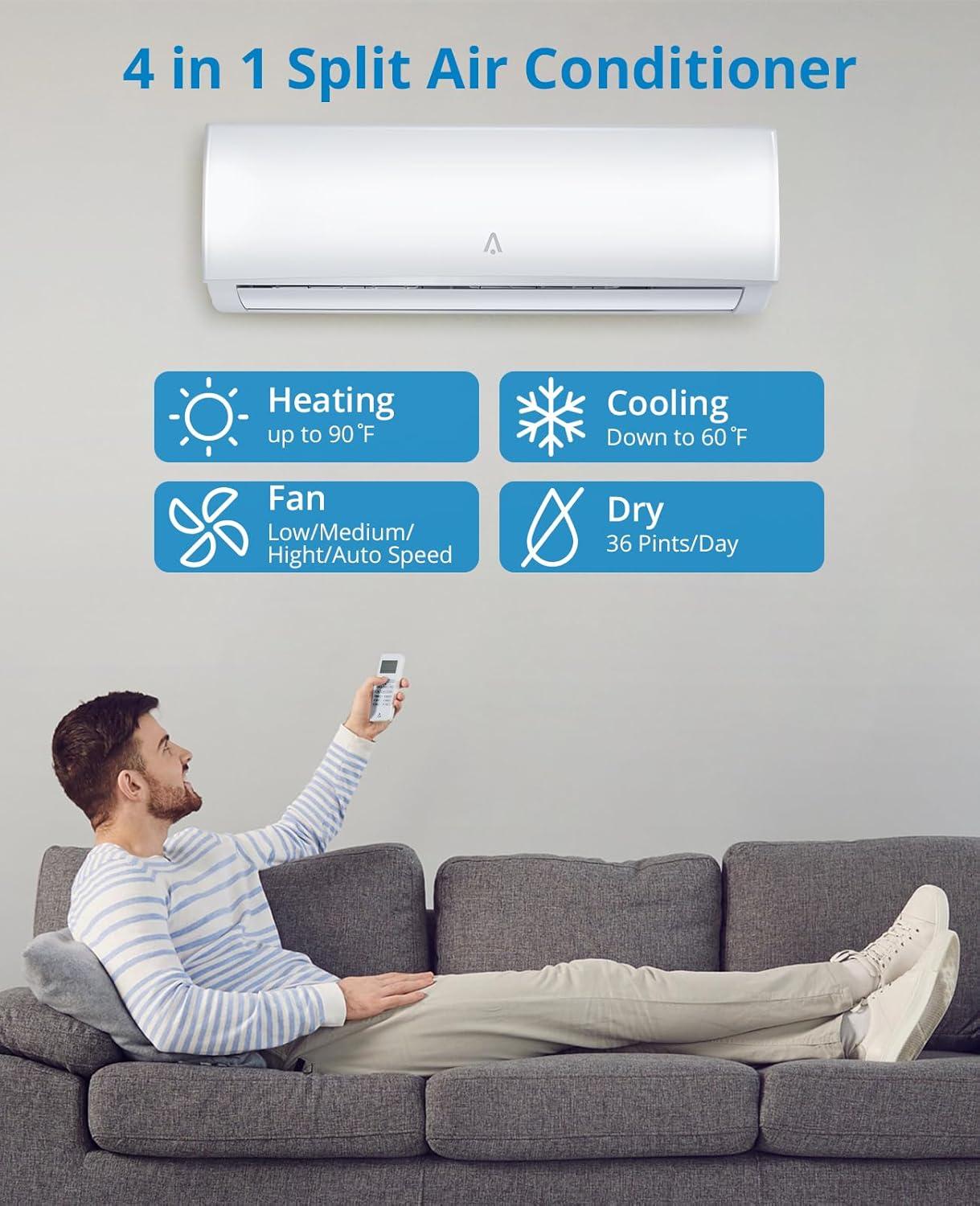
The Zstar 9,000 BTU mini split is a compact, ductless inverter system rated at 19 SEER2, designed to cool spaces up to about 450 sq.ft. It also includes a heat pump, Wi‑Fi/app control, and a remote—features that make it appealing for single-room comfort without ductwork. Review feedback is generally positive on performance (heating and cooling working as was to be expected), while quality impressions are mixed, and a few users note noises like creaks or pops during temperature changes.
Best for: bedrooms, offices, guest rooms, and additions where a 9,000 BTU capacity and 115V power makes sense, especially if you want app + remote control and a single-zone setup.
Consider alternatives if: you need to condition larger or open-concept areas,want a quieter indoor unit under all conditions,or prefer a widely proven brand/support network. Also note the listing indicates professional installation,and some reviewers found proper tools/technique critically important.
it’s a practical option for small zones—just verify what’s included and whether it fits your install plan.
Ready to learn more? View Full specifications & Latest Reviews on Amazon →