
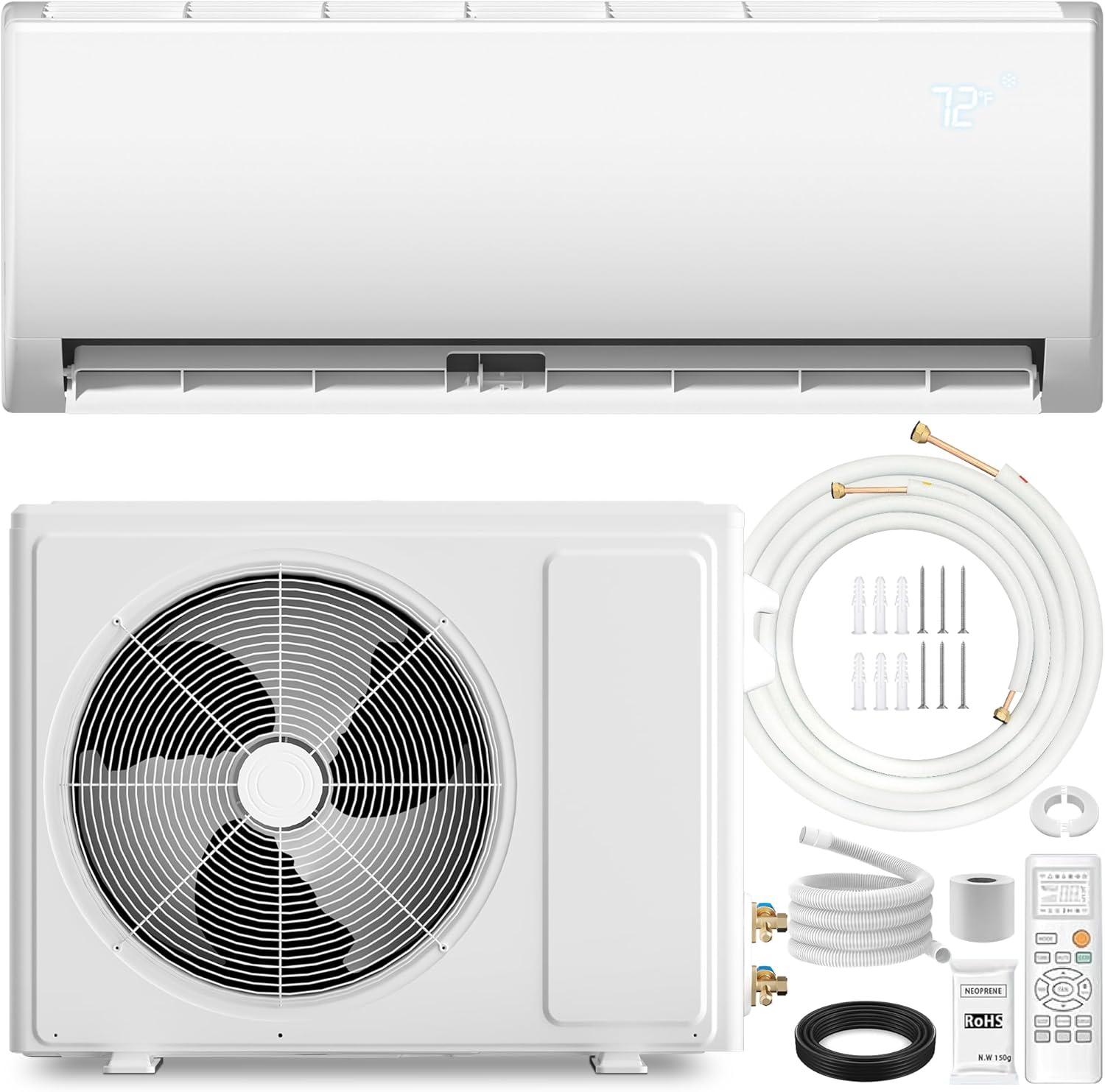
Struggling to keep a bedroom or home office comfortable without the hassle of ductwork—or the noise of a clunky window unit? We’ve been there, and that’s exactly why ductless mini-splits like this one are so tempting.
The 9000 BTU Mini Split Air Conditioner & Heat Pump is a 110V/120V wall-mount ductless inverter system rated at 19 SEER2, designed to cool spaces up to 500 sq ft (per the product description) while also providing heat for year-round comfort. It’s positioned as a U.S.-amiable option that runs on standard 115V power, uses R32 refrigerant, and is AHRI-certified.
In this review, we’ll break down the features that matter most—noise levels (the manufacturer cites 25–35 dB indoors), controls like the remote and 24-hour timer, self-clean/auto-defrost claims, and what customer feedback suggests about installation and parts. Many reviewers mention quiet, quick cooling, while others flag unclear instructions, lineset flare issues, and remote-related concerns.
We’ve researched and compared mini-splits across different rooms and climates, and we’ll use that perspective to help you decide if this model fits your space and expectations.
Commercial Performance Overview for Small Business Spaces
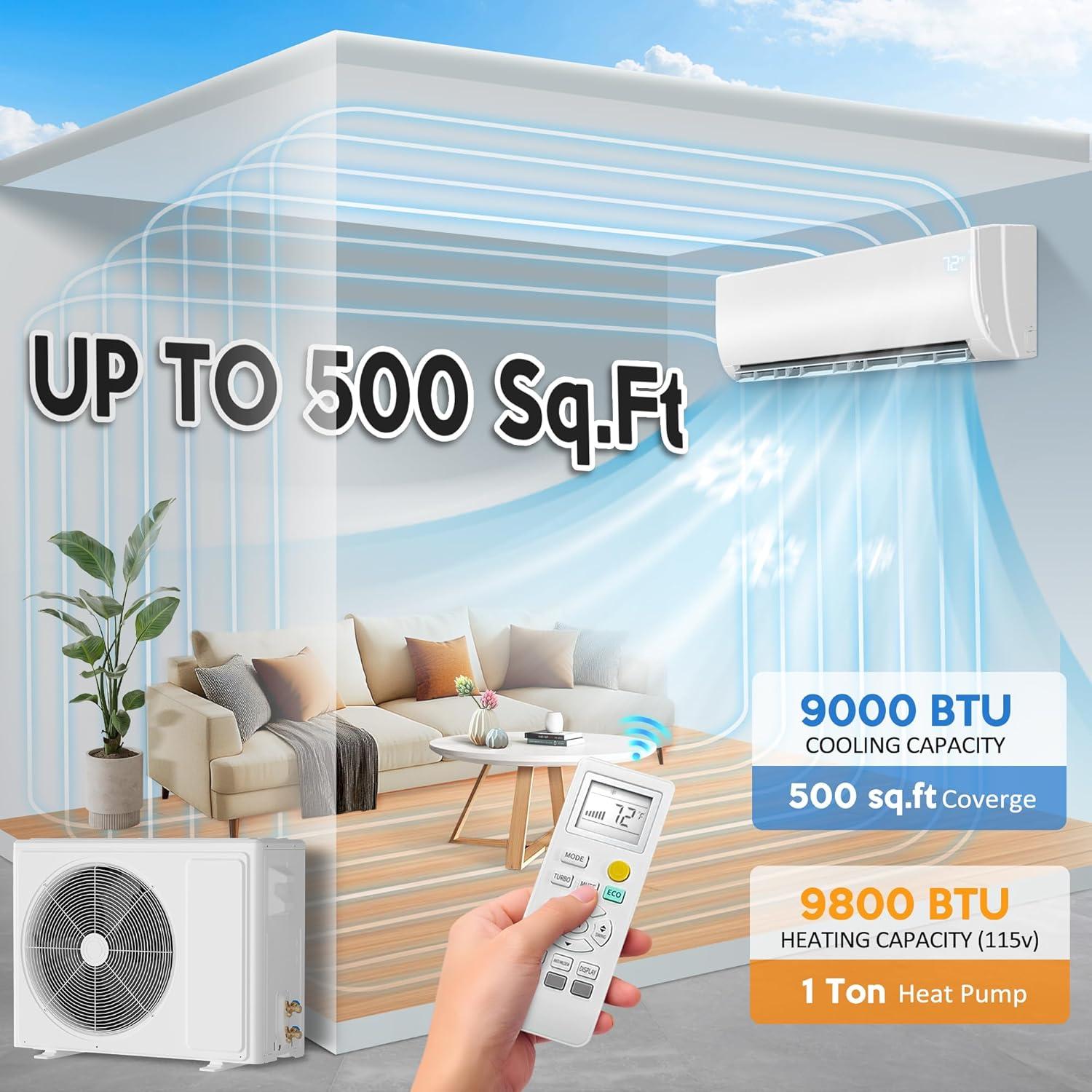
For small business spaces like private offices, treatment rooms, break areas, and compact retail backrooms, this 9000 BTU wall-mounted mini split is positioned as a practical “right-size” option rather than a whole-suite solution. According to the manufacturer, it’s rated to cool spaces up to 500 sq ft, and the 19 SEER2 efficiency plus inverter operation is designed to maintain steadier temperatures without constant on/off cycling—useful in customer-facing rooms where comfort swings are noticeable. The unit is also built around convenience features that can matter in day-to-day operations, including a remote control with 24-hour timer, multiple modes (cool/heat/fan/dry), and stated low indoor noise of 25–35 dB (helpful for quiet services, calls, or focused work).
Customer feedback suggests performance can be strong in real-world small-room use—several reviewers report it cools quickly, heats well, and runs quietly indoors, with one noting more consistent temperatures due to the inverter operation. Having mentioned that,commercial reliability is where the review themes become mixed: there are reports of accessory and quality-control issues (such as,a unit arriving without a remote,dented delivery,and line set flare/leak problems),and at least one reviewer describes the outdoor unit as loud (around ~60 dB) and raises a serious operational concern about remote replacement and smart-remote compatibility. For a business setting—where downtime, quick adjustments, and serviceability matter—those review points are worth weighing alongside the manufacturer claims, and many owners may prefer professional installation and careful commissioning (proper evacuation/vacuum and leak checks) to reduce startup issues.
Check Current Price & Customer Reviews on Amazon →
energy Cost Savings real Numbers for Operating Budgets
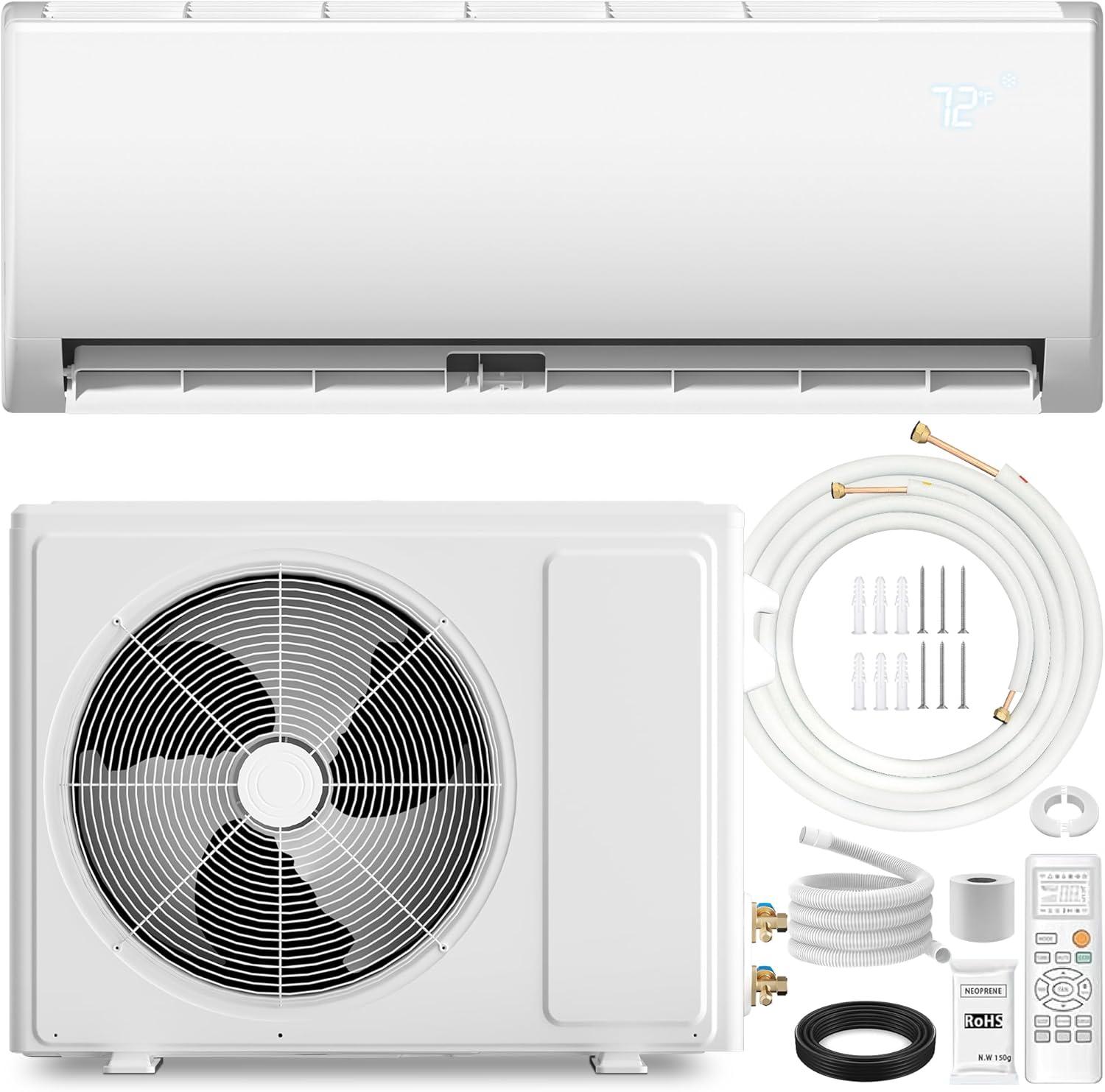
On paper, the efficiency story is compelling. This 9000 BTU ductless mini-split is rated at 19 SEER2, and it uses a precision inverter compressor that (in general) helps cut waste by adjusting output instead of repeatedly starting and stopping like older fixed-speed systems. According to the manufacturer, it meets ENERGY STAR guidelines and can reduce energy bills by up to 36% compared to customary window units—a claim that speaks directly to operating budgets, especially in rooms where a window unit might or else run for long stretches.It also runs on 115V/120V standard voltage, which the brand positions as a cost-friendly setup because it avoids the need for high-voltage wiring in many U.S. homes.
In real-world feedback, several reviewers echo the “lower operating cost” angle, with multiple customers specifically mentioning lower energy usage versus their older system and describing it as “super energy-efficient” or “quiet and efficient.” That said,budget planning should also account for variability: at least one reviewer reported performance issues (not heating/cooling properly),and another flagged parts/compatibility concerns (missing remote; difficulty replacing/using alternatives),which can create indirect costs if they lead to returns,downtime,or extra purchases. The best way to turn the efficiency specs into “real numbers” for your operating budget is to pair the unit’s 19 SEER2 rating and inverter operation with your local electric rate and your expected runtime—but without your usage and utility pricing, it wouldn’t be accurate to estimate a dollar figure here.
Check Current Price & Customer Reviews on Amazon →
Installation Without Business Disruption for Continuous Operations
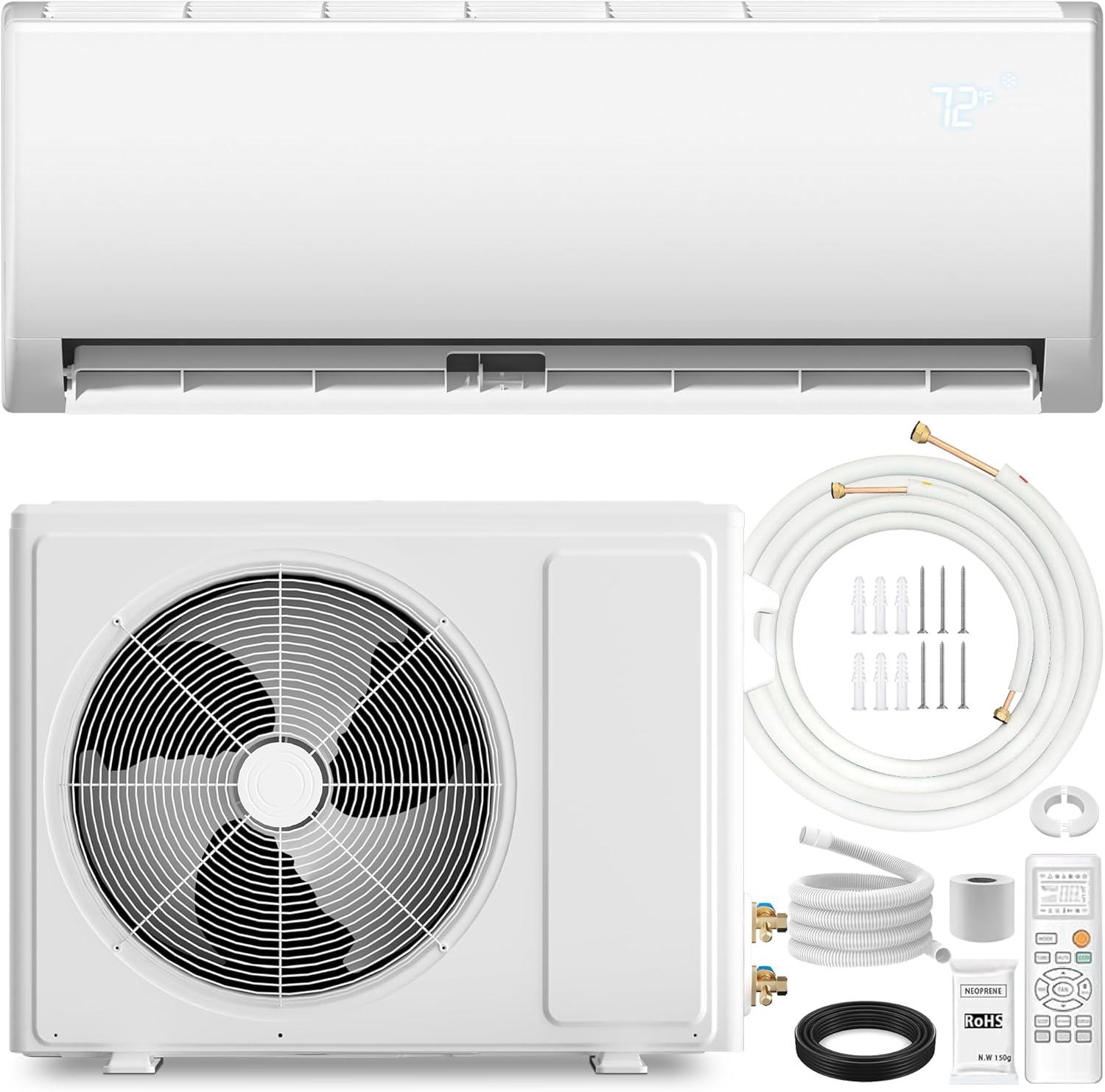
Keeping a shop, office, or back-of-house area comfortable during operating hours often comes down to choosing HVAC that can be installed with minimal downtime—and a ductless mini-split is generally one of the least disruptive options because it doesn’t require tying into existing ductwork.This model is a 9000 BTU wall-mounted system rated at 19 SEER2, and the manufacturer states it runs on 115V/120V standard voltage, which can simplify planning versus higher-voltage equipment (though you still need an appropriately sized dedicated circuit and correct electrical protection per local code). In practice, installation typically focuses on mounting the indoor head, creating a small wall penetration for the line set, and placing the outdoor condenser—work that can frequently enough be sequenced around business hours to keep core operations moving.
That said,“no disruption” depends heavily on install quality,and the reviews are mixed on how smooth that goes out of the box. some customers report it’s easy to install and “barley know it’s on,” while others mention unclear instructions and line-set issues (including bad flares and even a pinhole), which can cause leaks and delays. for continuous operations, consider planning the job as if small hiccups could happen: have a qualified HVAC installer handle brazing/flaring and evacuation (one reviewer specifically cautioned to “always vacuum the line sets”), keep the work area isolated to reduce dust/noise exposure, and verify critical accessories are present (one buyer reported a unit arriving without a remote). Check Current Price & customer Reviews on Amazon →
Customer and Employee Comfort Impact on Service and Productivity
Maintaining consistent comfort can have a direct impact on how customers experience a space—and how employees (or anyone working from home) stay focused. According to the manufacturer, this 9000 BTU mini split is rated to cool spaces up to 500 sq ft and uses an inverter compressor designed to maintain set temperatures within 1°F, which can help reduce the hot/cold swings that distract people and make rooms feel “drafty.” Several customers report that it cools quickly and that the heating function performs well on colder days, making it a practical year-round option for small offices, bedrooms, and similar environments where steady temperature matters for comfort and concentration.
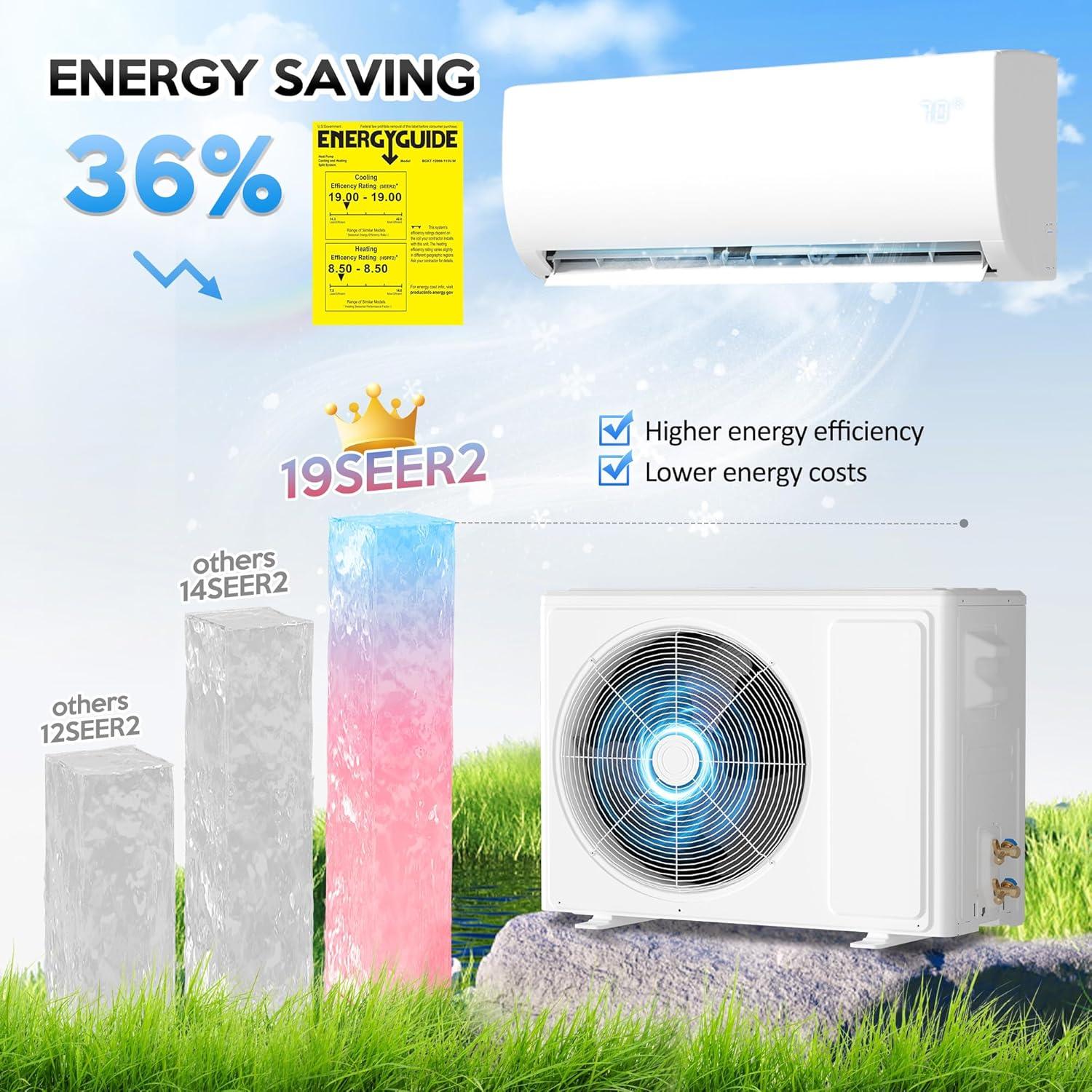
Noise is another major factor in productivity and customer satisfaction, especially in home offices, treatment rooms, studios, or front-of-house areas where background sound affects conversations. The product description states the indoor unit operates at 25–35 dB, and multiple reviewers describe the system as “very quiet” indoors—an advantage for calls, sleep, and focused work. Having mentioned that, at least one customer reports the outdoor unit is “quite loud” (they estimated ~60 dB), which could matter if the condenser will sit near a patio, walkway, or neighboring unit. In addition, a few reviews mention issues like missing remotes, unclear instructions, or line-set flare problems; any of thes can delay getting the space comfortable, so it’s worth factoring setup reliability into plans where downtime impacts service.Check Current Price & Customer Reviews on Amazon →
Maintenance and Warranty Fit for Commercial Use
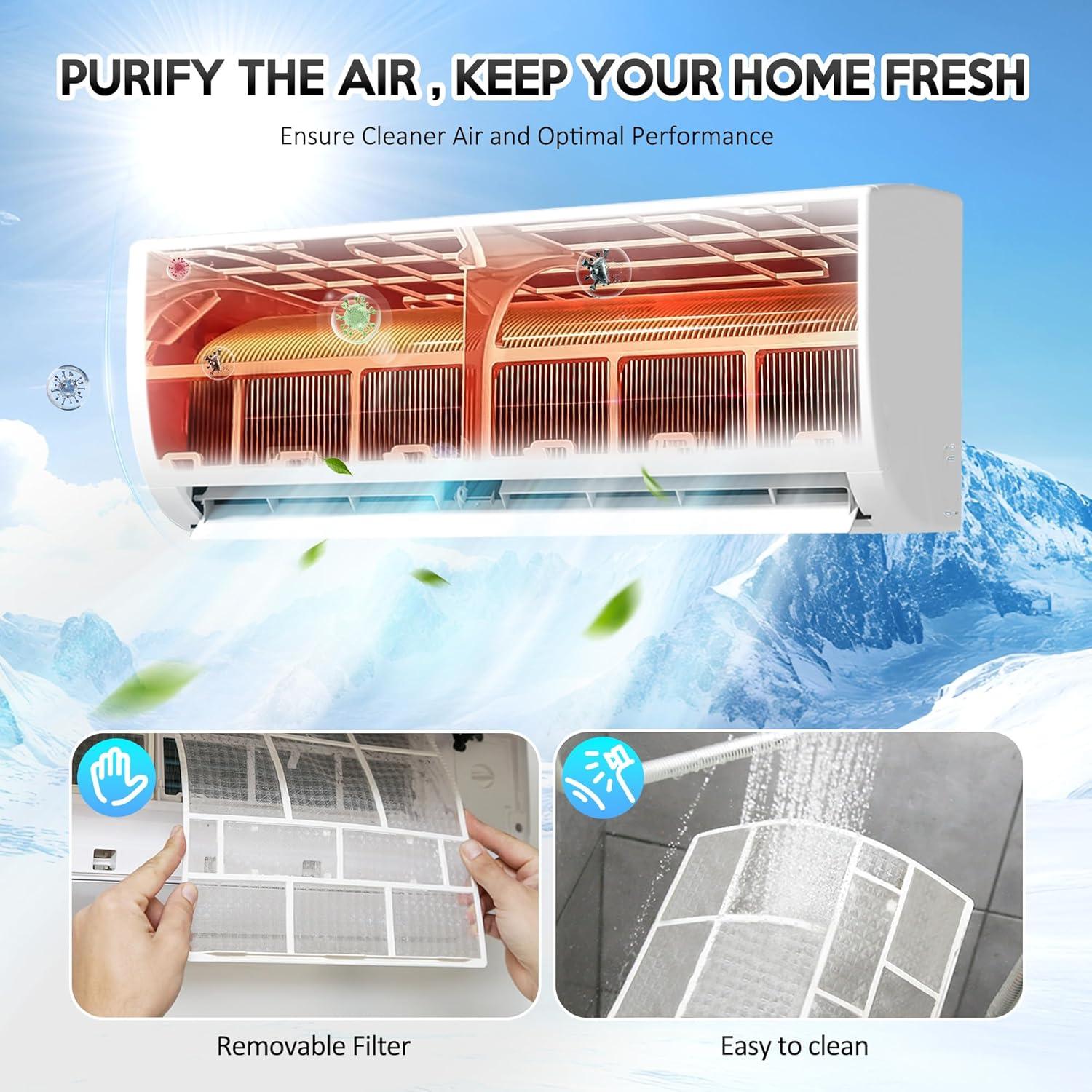
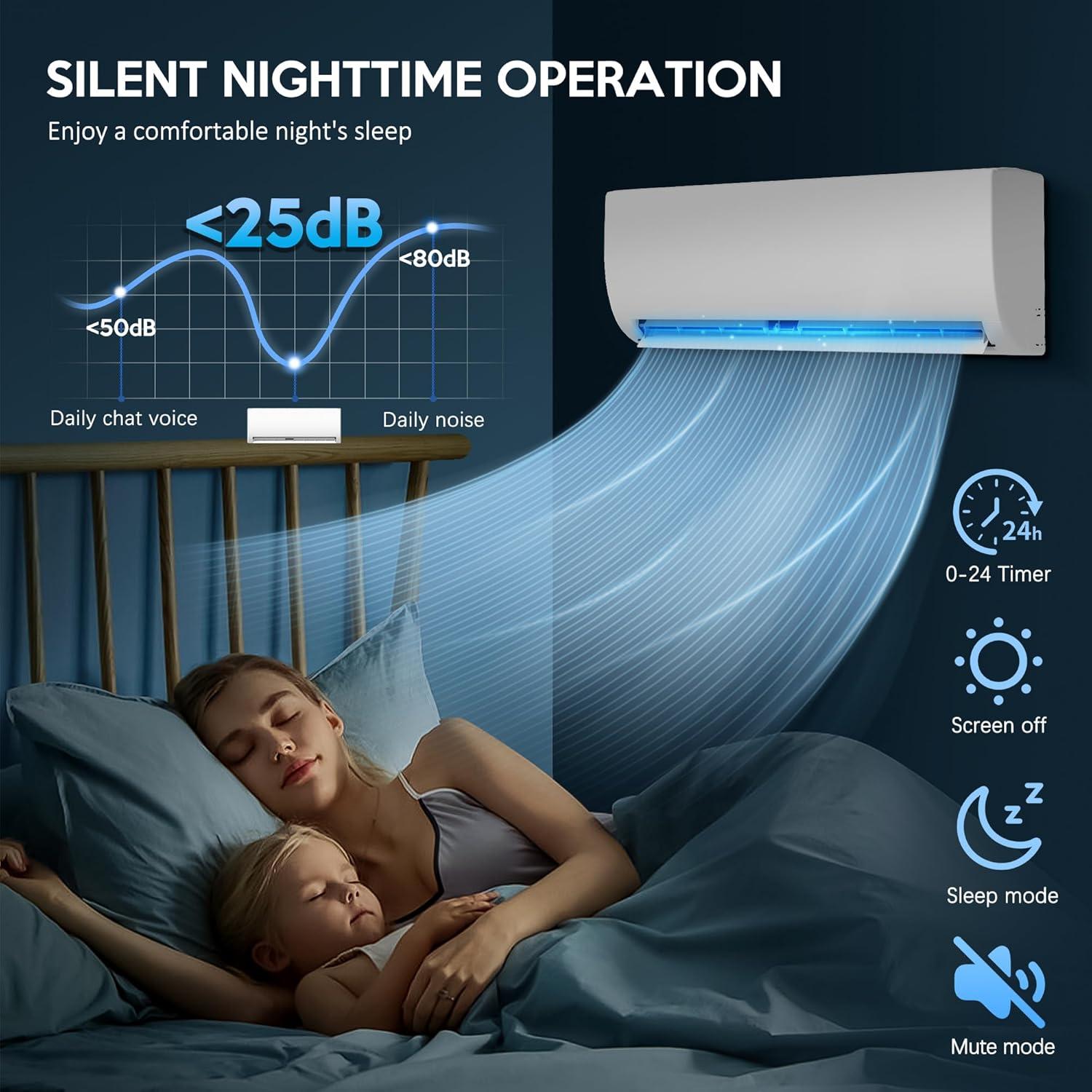
For ongoing upkeep, the manufacturer leans heavily on convenience features: Auto Self-Clean (positioned as odor prevention), a washable filter you can rinse, and Auto Defrost to help keep heating reliable in cold conditions (stated down to -4°F / -20°C). In a commercial or light-commercial setting—think offices, salons, or small service rooms—those features can reduce day-to-day hassle, but they don’t eliminate routine maintenance. Even with “self-clean” functions, mini-splits generally still need regular filter cleaning, keeping the indoor coil and condensate drain clear, and periodic professional checkups to maintain performance over time.
Warranty/service support is where “commercial fit” gets less clear from the available info: the provided product description doesn’t list specific warranty terms (length,parts vs. labor, or commercial-use coverage), so you’ll want to confirm that directly with the seller/manufacturer before banking on it for a business. Customer reviews also raise a couple of practical concerns that matter more in commercial spaces—one buyer reported a unit arriving without a remote, and another said replacement remotes/IR codes weren’t available, which could be a real operational risk if staff misplace the controller. Separately, a few reviewers mentioned line-set flare/leak issues and advised proper evacuation (“always vacuum the line sets”), which is normal best practice for reliability—but it also suggests that professional-quality installation materials and process matter if you’re trying to minimize downtime in a commercial environment.
Check Current Price & Customer Reviews on Amazon →
How It Compares to Commercial Alternatives for Total Cost and capability

Compared with many big-name mini-splits, this 9000 BTU wall-mount system competes more on value-per-feature than on brand ecosystem. According to the manufacturer, it’s a 19 SEER2, AHRI-certified inverter mini-split using R32 refrigerant, with heating operation supported down to -4°F (-20°C) and indoor sound rated at 25–35 dB. Those are specs you’ll commonly see highlighted on higher-priced commercial alternatives,and the unit’s 110V/120V design can be a practical cost advantage in some homes as it’s intended to work with standard household voltage (though mini-splits still typically require proper circuit sizing and best-practice installation). Customers also report strong day-to-day cooling and heating performance for small spaces (one reviewer mentioned quickly cooling a 150 sq ft room), with multiple mentions of quiet indoor operation and steadier temperatures thanks to inverter-style modulation.
Where commercial alternatives can still justify their higher total cost is consistency and support—areas where the reviews here raise real caution flags. A few customers describe QC and install-related pain points (missing remote,unclear instructions,and line-set flare/line issues leading to leaks or replacement parts),and one detailed review flags an significant usability risk: difficulty replacing the remote or integrating with a universal “smart” IR controller due to unavailable IR codes,plus their observation that the outdoor unit wasn’t as quiet as expected. Simply put, if you’re comparing “total cost,” it’s not just the purchase price: potential add-ons (like a replacement line set), troubleshooting time, and parts availability can erode the initial savings versus more established commercial options with broader parts channels and accessory ecosystems. If you’re comfortable addressing common install/commissioning pitfalls—or hiring a pro and verifying you’ll have a backup control plan—this can still be a compelling capability-per-dollar pick on paper.
Check Current Price & Customer Reviews on Amazon →
customer Reviews Analysis
Customer Experience Summary (from provided reviews)
1. Overall Sentiment
Overall sentiment was mixed. Several reviewers described being “very satisfied” and praised fast cooling/heating and quiet operation, while others reported quality/control issues, missing or unavailable remotes, unclear instructions, and shipping damage/late delivery—with one reviewer saying they plan to return it.
2.Common Praise (grouped themes)
Performance (cooling/heating)
- Many customers mentioned quick cooling and effective heating, especially for small spaces.
- One reviewer said it “does an excellent job cooling my space quickly and efficiently” and that heating “works just as well during colder days.”
- another wrote it “cools my 150 sqft room down in ten minutes and heater works awesome.”
- Multiple reviews praised that it “cools and heats quickly” and has “great performance for the price.”
Noise (indoor quietness)
- A common theme in reviews was quiet operation, especially indoors.
- One reviewer called it “very quiet… “especially for home offices.”
- another said it was “super quite inside and out barley know it’s on.”
- Another described it as “runs quietly.”
Energy efficiency / inverter behavior
- several reviewers noted lower energy usage and steadier operation.
- One reviewer reported “lower energy usage compared to my old system” and said the inverter “keeps the temperature consistent without constant on-and-off cycling.”
- Another called it “super energy-efficient.”
Installation (for some)
- Some customers found installation manageable.
- One wrote “Easy to install,” and another said the install was “pretty normal” (though that same review raised lineset problems—see concerns).
3. Common Concerns (grouped themes)
Lineset / flare quality and leaks
- Multiple reviews reported bad flares and line issues leading to leaks or replacements.
- One reviewer said: “Tubing Flares not correct ( leaks).Not heating or cooling properly.”
- Another reported “bad flares on both lines, and a pinhole on the suction line,” adding the lines were “very soft” and they “decided it was best to buy a different lineset.”
- Another reviewer advised: “always vacuum the line sets.”
Instructions / documentation
- A few customers reported the instructions were hard to use.
- One reviewer stated: “Instructions not very clear.”
Remote control issues / parts availability
- Some customers experienced serious issues related to the remote.
- One reviewer said they “bought 2 units,one came with out remote.”
- Another described difficulty integrating with a smart IR remote: “impractical to find the IR mapping,” and said the seller claimed it was “proprietary.” the same reviewer also wrote: “where I could buy a new remote… not available,” concluding it was “Really frustrating. I’ll be returning it.”
Noise (outdoor unit)
- While several reviews praised quiet operation, one reviewer specifically complained about the outdoor unit:
- “the outdoor unit is quite loud ~60db. It is not quiet.”
Shipping/vendor experience
- A few customers reported delivery/product condition problems.
- One reviewer said it was “super cheap and will arrive very late with a dent” and added, “Would not order from this vendor again.”
4. Notable Use Cases (from reviewer descriptions)
- Home office: One reviewer highlighted quiet operation as “a big plus, especially for home offices.”
- Small room cooling/heating: Reviewers described it as “Perfect for small rooms,” including one specifically citing a “150 sqft room” cooling quickly.
- Users wanting smart-remote control: One reviewer attempted to use an “electronic smart remote” for remote adjustments but said they couldn’t due to unavailable IR mapping and limited replacement remote options.
Pros & Cons
Strengths
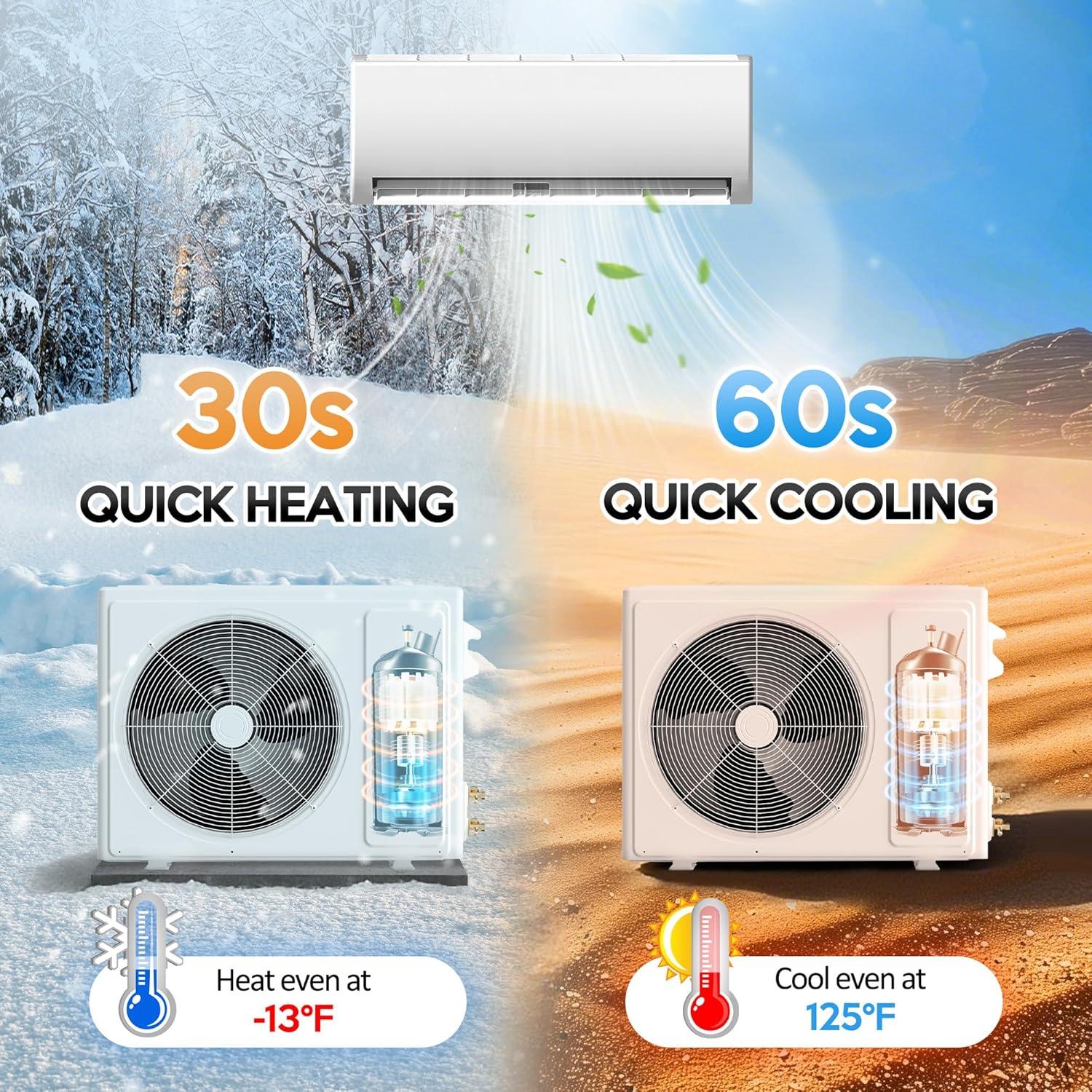
- 9000 BTU cooling + built-in heat pump: the description states 9000 BTU cooling and heating for year-round use, with an estimated coverage of up to 500 sq ft.
- Runs on standard 115V power: Marketed for U.S. homes using 115V outlets,with “no need for high-voltage wiring” per the product description.
- ENERGY STAR guideline claim + 19 SEER2 positioning: The listing emphasizes efficiency (meets ENERGY STAR guidelines) and the model is presented as 19 SEER2, aligning with an efficiency-focused ductless inverter system.
- Quiet indoor operation (claimed) and often reported as quiet: Manufacturer claims 25–35 dB indoor sound, and multiple reviewers describe the unit as “very quiet,” “super quiet,” and “barley know it’s on.”
- Convenient controls and modes: Includes a remote control; the description notes adjustable temperature/fan/modes (cool/heat/fan/dry) plus a 24-hour timer.
- Cold-weather support features: The description includes Auto Defrost and states heating operation down to -4°F (-20°C).
- AHRI-certified and uses R32 refrigerant: The product description explicitly claims AHRI certification and eco-friendlier R32 refrigerant.
Considerations
- Accessory/remote issues reported: One customer reported “one came without remote,” and another review indicates replacement remotes were “not available,” creating a risk if the remote is lost or fails.
- Some customers report installation quality problems with the included lineset: Multiple reviews mention “tubing flares not correct (leaks),” “bad flares,” and even a “pinhole on the suction line,” with one reviewer buying a different lineset.
- outdoor unit noise may be higher than expected: A reviewer measured the outdoor unit at about “~60db” and stated “It is not quiet,” despite the listing emphasizing quiet operation (for the indoor unit).
- Instructions might potentially be hard to follow for DIY installs: One reviewer said “Instructions not very clear,” which could add time/cost if you need professional help.
- Shipping/condition complaints exist: one review claims late arrival and a dent (“arrive very late with a dent”), suggesting potential fulfillment/handling risk depending on seller/shipping.
Q&A
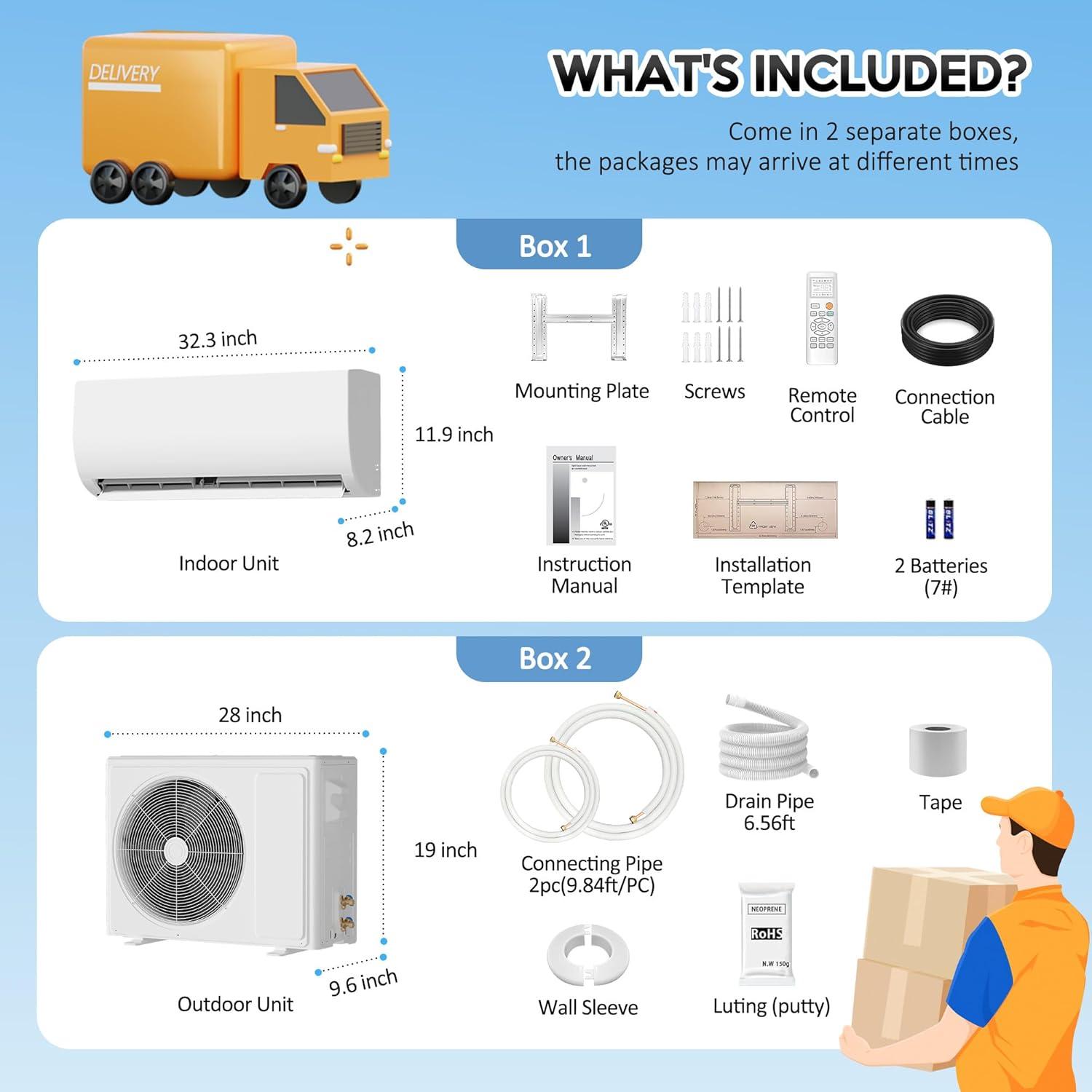
What size room will a 9,000 BTU mini split cool (and heat)?
The product description states a 9,000 BTU cooling capacity and rates the system for spaces up to 500 sq ft. Real-world results can vary with insulation, sun exposure, ceiling height, and local climate. One reviewer reported cooling a ~150 sq ft room quickly, while larger or poorly insulated spaces may need more capacity.
Does this unit provide both air conditioning and heat?
Yes. This model is described as a mini split air conditioner & heat pump with operating modes including cool, heat, fan, and dry (via the included remote). The listing also mentions Auto Defrost for heating operation in winter conditions.
What voltage does it require—do I need 220V?
The product description indicates it is designed for U.S. households using standard 115V power (often called 110V/120V in listings) and says “no need for high-voltage wiring.” Always confirm your circuit/breaker requirements and plug/disconnect needs in the manufacturer’s installation instructions and the Amazon listing details for the exact model you’re buying.
How loud is it?
The listing states the indoor unit operates around 25–35 dB. Multiple reviewers describe the system as very quiet indoors, though at least one reviewer reported the outdoor unit being “quite loud” (they estimated ~60 dB). Noise can vary by installation (mounting surface, vibration isolation, and placement).
How efficient is it,and what does 19 SEER2 mean?
The title advertises 19 SEER2,and the description states it meets ENERGY STAR guidelines. SEER2 is an efficiency rating for cooling performance; higher numbers generally indicate better efficiency under the SEER2 test method. Actual energy savings depend on usage and conditions. The listing claims “up to 36%” lower energy bills versus traditional window units—treat “up to” as a best-case claim and compare to your specific window unit and runtime.
What refrigerant does it use, and is it certified?
The description states the system uses R32 refrigerant and is AHRI-certified. For the most accurate match to the exact model/variant you’re purchasing, verify the AHRI reference and refrigerant listing on the Amazon product page and/or the manufacturer documentation that comes with the unit.
Can I install it myself, and what maintenance does it need?
Mini-split installation typically involves mounting the indoor/outdoor units, running and flaring line sets, evacuating (vacuuming) the lines, and following local electrical/refrigerant regulations. Reviews mention DIY installs, and one reviewer specifically cautioned to vacuum the line set; other reviews mention problems like leaking flares/line-set issues and unclear instructions. Maintenance noted in the description includes a washable filter (rinsable) and an Auto Self-Clean feature; standard HVAC practice is to clean filters regularly and keep the outdoor coil free of debris. For warranty and safety, check the manufacturer’s requirements and local code (some locations require licensed professionals for refrigerant work).
Experience innovation
The 9000 BTU Kol Air mini split pairs ductless cooling and heat-pump heating with a 19 SEER2 rating, 110V/120V operation, and wall-mount design aimed at single-zone comfort. It’s generally a strong fit for smaller spaces—up to about 500 sq ft—where buyers want inverter-style temperature stability and low indoor noise (frequently enough reported as very quiet in use). Reviews frequently mention fast cooling/heating and a straightforward install for experienced DIYers, though some recommend professional help for best results.
Best for: bedrooms, home offices, studios, and additions where 115V power is preferred and quiet indoor operation matters.
Consider alternatives if: you need guaranteed smart-remote compatibility, worry about replacement remotes, or want consistently high build quality—some reviews cite unclear instructions, line-set flare/leak issues, shipping damage, and a louder outdoor unit than expected.
it looks like good value on paper, but quality and support can be the deciding factors—verify current listings and recent buyer feedback before committing.
Ready to learn more? View Full Specifications & Latest Reviews on Amazon →