
Ever tried to sleep in a van or RV when the roof feels like a frying pan—and shore power isn’t an option? For a lot of off-grid travelers, the real challenge isn’t finding an air conditioner; it’s finding one that can cool reliably without turning yoru battery setup into a constant worry.
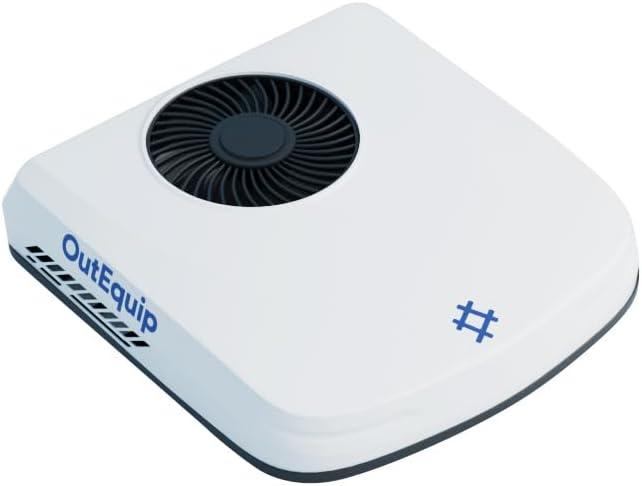
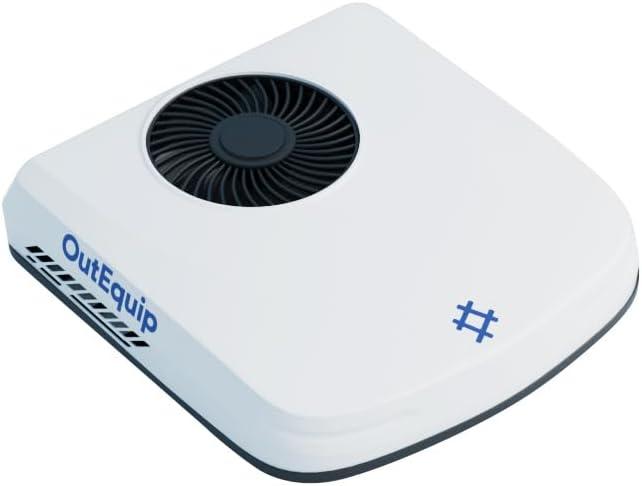
That’s where the OutEquipPro 12V 10,000 BTU rooftop Air Conditioner (12V, no heater) comes in. It’s a low-profile, battery-powered rooftop AC designed for RVs, trucks, vans, campers, and even tractors, with features like multiple modes (eco/sleep/turbo) and remote control. According to the manufacturer, it’s built for quiet operation using brushless fans and vibration-reducing mounts, and it’s positioned for off-grid use.
In this review, we’ll break down what buyers consistently highlight—easy installation with clear instructions, strong cooling, and quiet performance—plus practical considerations like weight, battery demands, and real-world fitment notes.
We’ve spent years evaluating different AC approaches (from rooftop units to inverter-driven systems), so we know what matters when space, noise, and power are limited.
Commercial Performance Overview for Fleet and Mobile Operations
For fleet and mobile operations, the OutEquipPro rooftop unit is positioned as a practical 12V, 10,000 BTU option for vehicles that can’t always rely on shore power. According to the manufacturer, it’s battery-powered for off-grid use and can deliver extended run time when parked (stated examples include 8 hours with a 12V 480Ah battery and 10 hours with a 12V 600Ah battery). OutEquipPro also highlights operator-friendly controls—remote control, temperature monitoring, and multiple operating modes like eco, sleep, and turbo—which can matter in commercial contexts where drivers or technicians need speedy adjustments without fiddly interfaces.
From customer review themes, commercial-style users (van builders, full-time travelers, and installers) commonly report strong real-world cooling, including in higher-heat conditions (one reviewer specifically notes it working well in Texas heat). Reviews also repeatedly mention quiet operation—important for sleeper vans, on-call vehicles, and overnight parking—along with straightforward installation aided by clear instructions. On power,multiple customers describe it as efficient and workable on lithium/solar setups,with one review citing a running draw “about 50 amps” and others discussing reduced draw in Eco/Sleep modes; however,as with any 12V rooftop AC,fleet buyers should plan electrical capacity carefully (battery bank,charging/alternator,wiring,and fusing),because long runtimes depend heavily on the specific vehicle power system and duty cycle.
Check Current Price & Customer Reviews on Amazon →
Energy Cost Savings Real Numbers for Battery Powered Cooling Efficiency
OutEquipPro positions this rooftop unit as a practical way to *avoid (or greatly reduce) generator and shore-power dependence*—which is where the most meaningful “real-number” savings can show up for RVers. According to the manufacturer, you can expect about 8 hours of cooling with a 12V 480Ah battery or 10 hours with a 12V 600Ah battery when parked, and you can fine-tune consumption using the included modes like eco, sleep, and turbo. In customer reviews, the most concrete usage numbers come from off-grid setups: one reviewer reports the unit draws about 50 amps while running (typical for a 12V DC rooftop AC), while another lists ~58A (Turbo), ~29A (Eco), ~21A (Sleep), and ~4.5A (Fan Only). Translating that into energy budgeting (not a promised savings claim), those draws are essentially the “real numbers” you use to plan runtime and decide how much battery/solar capacity you need to stay comfortable.
Where this can become an energy-cost win—without inventing dollar figures—is in *how efficiently it uses the power you already have*. Several customers explicitly mention low power draw, minimal power use, and being able to run all night on battery power, and one reviewer says it’s “way more efficient than running a traditional 110V unit through an inverter.” That last point is critically important in general HVAC terms: whenever you can run a system directly on DC (rather of converting battery DC to AC through an inverter),you can reduce conversion losses and wasted energy,which can mean fewer amp-hours consumed for the same cooling comfort. Add in the repeated reviewer feedback about a variable-speed (inverter) compressor being helpful for conserving battery, and the “real-number” takeaway is straightforward: if your goal is to stretch battery runtime and cut generator hours, the reported amp draws and the unit’s eco/sleep modes are the measurable levers that can translate into tangible operating-cost reductions—depending on your battery bank, solar input, and typical camping conditions.
Check Current Price & Customer Reviews on Amazon →
Installation Without Business Disruption for Active Job Sites and Service Vehicles
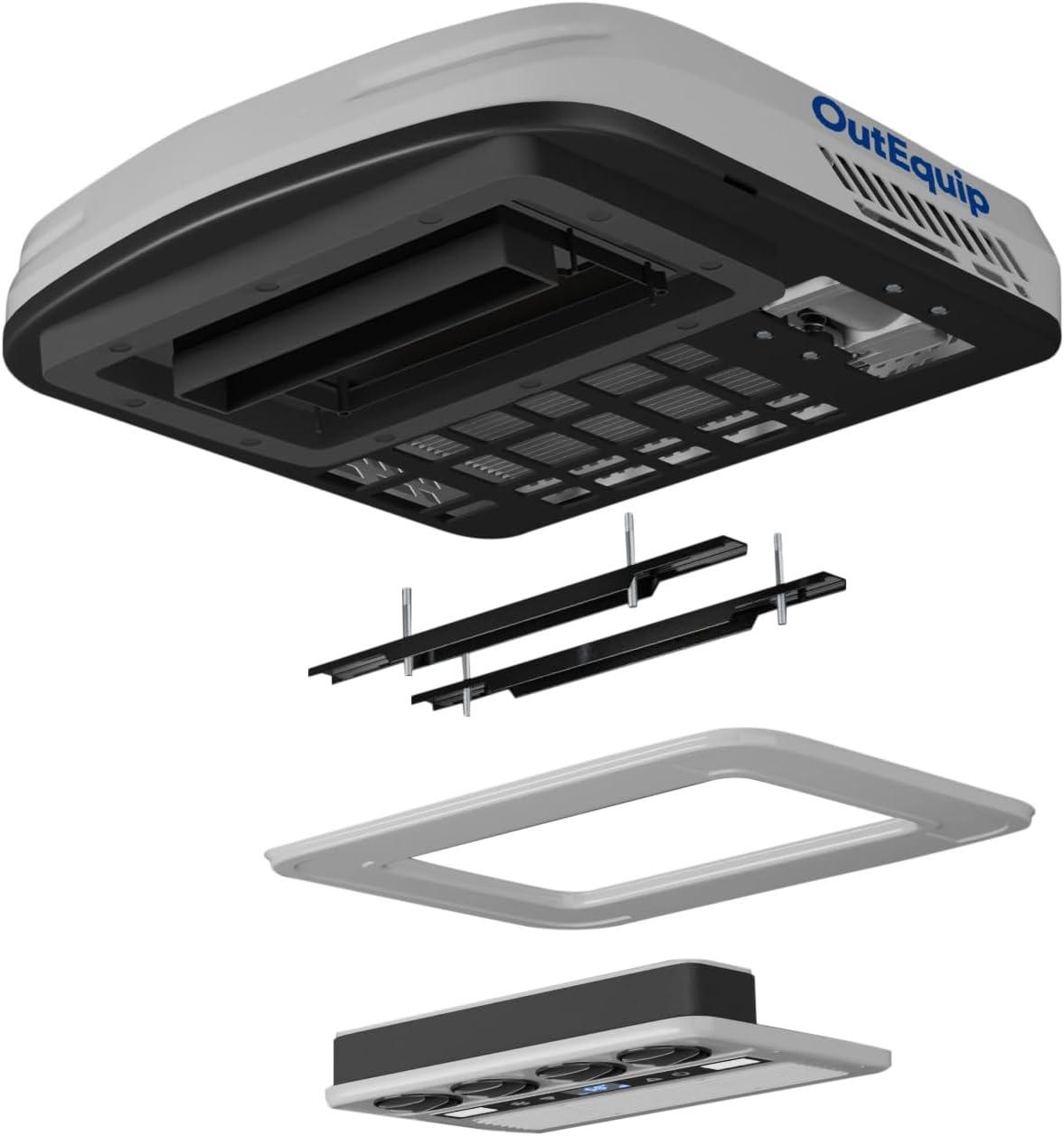
For active job sites and service vehicles,the OutEquipPro rooftop unit is positioned as a practical “swap-in” style upgrade because it’s a 12V,10,000 BTU rooftop air conditioner designed to run directly from the vehicle’s battery (according to the manufacturer). In reviews, manny customers describe the install as straightforward with clear, illustrated instructions—one even notes the mounting process uses through-bolts from inside—so it’s the kind of project that can ofen be completed without taking a rig out of rotation for days. Several reviewers also highlight the unit’s lighter weight (commonly cited at ~45 lbs in review text), which can make handling on a ladder or on top of a van less time-consuming than older, heavier rooftop units.
Once installed, minimizing disruption is also about day-to-day usability, and customers repeatedly mention quiet operation—including using it over a sleeping area so a team member can rest without being woken up. For crews that need cooling while parked between calls or during breaks, reviewers also report it’s efficient enough to run on battery power for extended periods (one specifically mentions running all night), and the unit includes multiple modes like eco, sleep, and turbo plus a remote control (per the product description), which can help tailor comfort without constant fiddling. As with any 12V rooftop AC, real-world “no-disruption” installs still depend on the vehicle’s roof opening and electrical capacity—some reviewers mention needing minor fitment tweaks or different hardware for thicker roofs—so planning those details ahead of time is key.
Maintenance and Warranty coverage for Commercial Use plus Comparison to Alternative Cooling Options
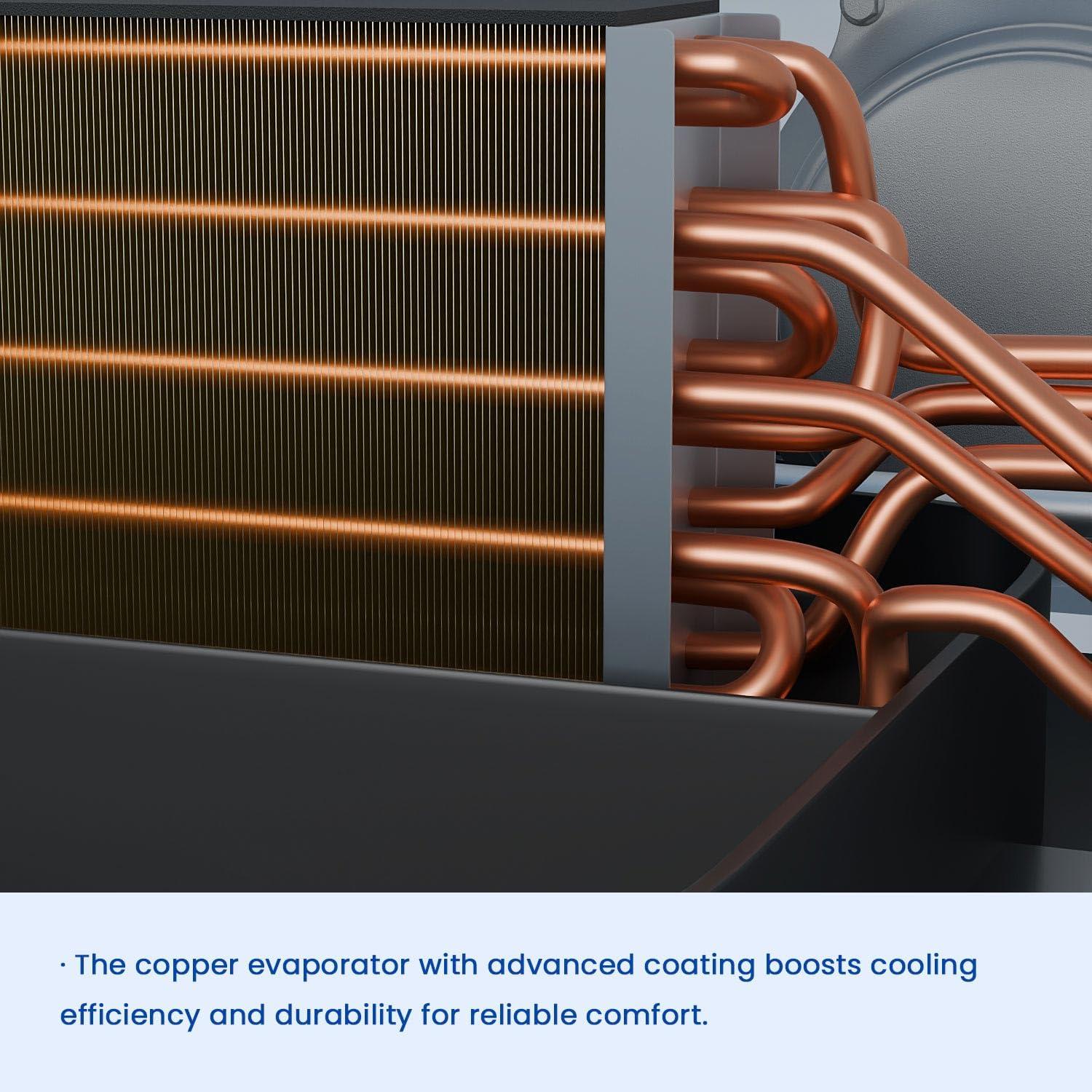
Maintenance for this OutEquipPro rooftop unit is broadly the same routine you’d plan for in commercial-duty rigs (work trucks, service vans, tractors): keep airflow clean and unobstructed, and periodically inspect the roof seal.According to OutEquipPro,the housing is built with UV-stabilized ABS and uses an EPDM foam gasket with a zinc-coated condenser—materials that are intended to handle harsh weather,but they still benefit from regular checks for debris buildup,gasket compression,and signs of water intrusion around the cutout. In reviews, customers frequently describe the unit as easy to install with clear instructions, which is helpful for fleet or commercial users who want consistent installs across multiple vehicles; one reviewer also noted customer service responded within a day when questions came up. The listing content provided here doesn’t include specific warranty terms (length, exclusions, or whether commercial use changes coverage), so it’s worth confirming the warranty details directly on the Amazon listing and keeping documentation of installation and electrical setup—especially important if the unit is being used daily as part of a business.
Compared with alternative cooling options, the big differentiator is that this is a 12V, 10,000 BTU rooftop system designed to run from a vehicle battery, rather than a traditional 110/120V rooftop AC that typically expects shore power or a generator. Several reviewers specifically compare it to older 110V units (like a Coleman Mach 3),reporting that this 12V setup is quieter and easier to live with overnight—plus it avoids the extra complexity of running a high-load AC through an inverter. If your “commercial use” means frequent jobsite parking without hookups,a battery-powered rooftop unit can be simpler than hauling a generator (and often more practical than small portable ACs that need ducting and floor space). The tradeoff is that battery-based cooling is only as good as your electrical system: reviews mention current draw figures by mode and highlight that adequate battery/charging capacity is key, so fleets should plan sizing around real duty cycles (idle time, solar/alternator charging, and how many hours of runtime are required).
Check Current Price & Customer Reviews on Amazon →
Customer Reviews Analysis
Customer Experience Summary
1. Overall Sentiment
Overall sentiment in the provided reviews was strongly positive. Reviewers repeatedly described the unit as “easy to install,” “quiet,” and effective for off-grid cooling, with several calling it a “game changer” for battery-powered setups.
2. Common Praise (grouped by theme)
Installation & fit
- Many customers mentioned the installation was simple and straightforward, using phrases like “super easy,” “everything fit perfectly,” and “straight forward and un-intricate.”
- Multiple reviews praised the instructions, noting they were “printed in large font with detailed illustrations.”
- Several reviewers emphasized that the lighter weight made installation easier, especially solo installs (e.g., replacing an older Coleman Mach 3). One reviewer said the lighter weight “made it much easier to complete a solo install,” and another said they had it “running with no help in just under 2 hours.”
noise level
- A common theme in reviews was quiet operation. Reviewers described it as “incredibly…quiet,” “much quieter” than older units, and “impressively low” noise due to “inverter compressor technology.”
- One reviewer noted the “loudest moment is when it first kicks on,” but said “even then it’s minimal.”
Cooling performance
- Several reviewers noted it cooled their rigs effectively in warm conditions:
- One wrote that in “85–90°F weather,” it cooled down to “around 72–73°F within 20–30 minutes.”
- Another said it cooled their van in “92 degree PNW heat” down to “76 degrees in under an hour.”
- Reviewers appreciated not needing max power all the time; one shared “Most days, I don’t even need Turbo; Eco mode…keeps the temperature very comfortable.”
Power efficiency / battery use (off-grid)
- Multiple reviews praised the low power draw and compatibility with solar + lithium setups, repeatedly highlighting Eco mode and the “variable speed compressor.”
- Examples customers gave:
- “Eco mode draws around 16amps,” described as enabling overnight use and recharging by day (in two separate reviews).
- One reviewer quantified use: running AC “3–4 hours at peak heat only consumes about 10%” of their battery, calling it “phenomenal,” and said OutEquip Pro’s “run-time estimates were very accurate.”
- Several reviewers explicitly framed it as ideal for “off grid,” “boondock,” and “run off battery power.”
Design / low profile
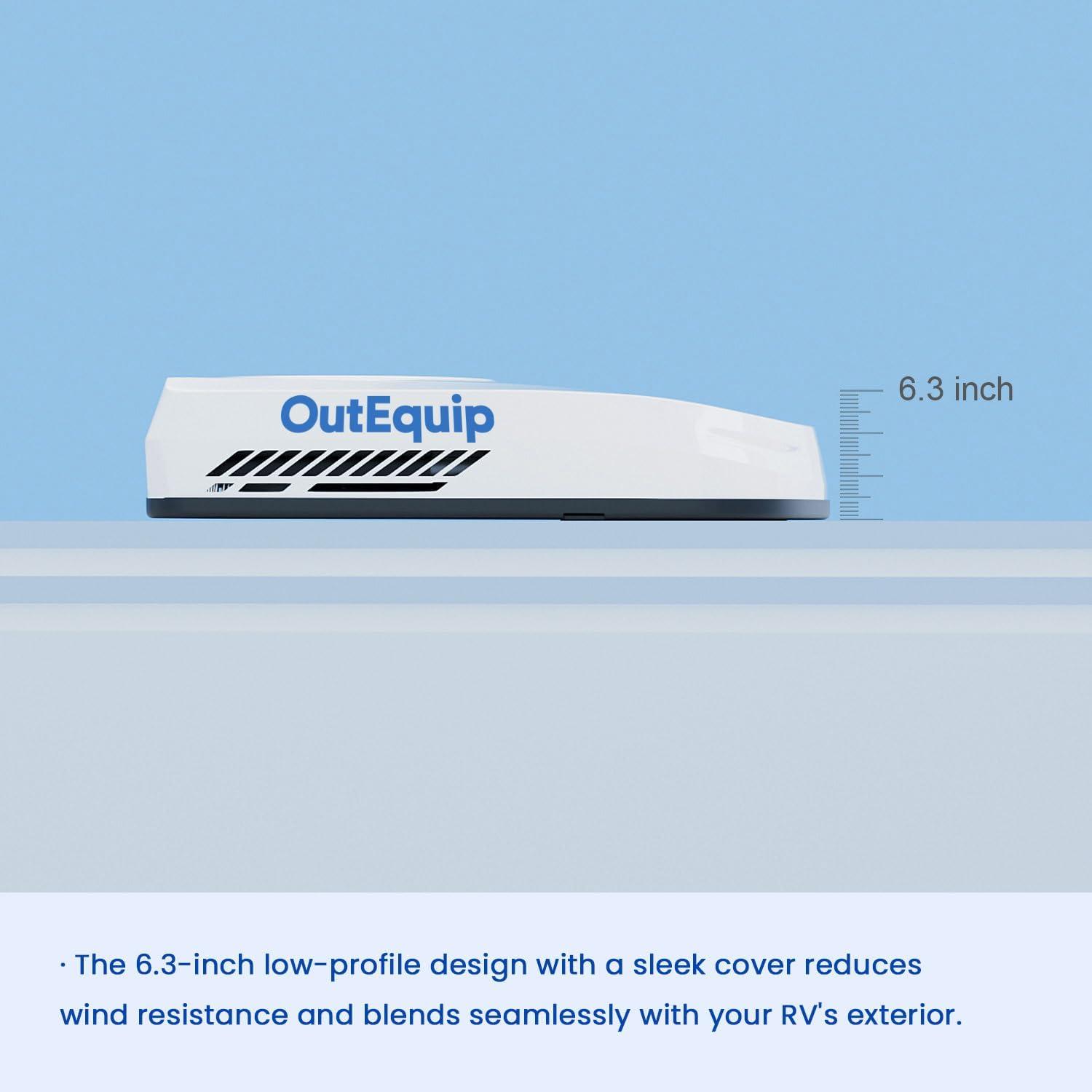
- Multiple reviews praised the “sleek design” and “low profile.”
- one reviewer specifically liked that the low-profile roof footprint helped with solar layout: “The low profile size made it possible for an abundance of solar on the roof.”
Customer service
- One reviewer shared that after install questions, “customer service responded within a day.”
Value
- Several reviewers commented positively on price/value, e.g., “Amazing product for the price,” and “the combined value and quality…is definitely a win.”
3. Common Concerns (grouped by theme)
Included hardware compatibility
- A few customers reported limitations with installation hardware. One reviewer said, “I wish they offered a bigger variety of hardware for those roofs that are a little bit thicker then others.”
Professional installation needs (for some setups)
- while many found installation easy, one reviewer chose professional installation due to electrical work: they had it installed professionally “due to rewiring and adding a second battery.” (This wasn’t framed as a product defect, but it was presented as a practical consideration.)
Note: The provided reviews did not include complaints about failures, poor cooling, excessive noise, or shipping/packaging problems.
4. Notable Use cases (scenarios reviewers described)
- Year-round camping in varied climates: One reviewer said it kept them comfortable “out in the desert heat” and “up in the mountains during winter.”
- Full-time off-grid living / boondocking: One reviewer living full-time in a “24-foot converted school bus” said it “entirely transformed my life on the road,” enabling travel to hotter southern/southwestern regions.
- Battery + solar powered operation: Multiple reviewers described lithium + solar systems (e.g., “600ah lifepo4…2200 watts of solar,” “920 amp hours…1,200W of solar,” “302ah lifepo4…200w of solar”) and running the AC efficiently overnight or for hours during peak heat.
- Replacing heavier, louder rooftop AC units: Multiple reviews compared it to an older “Coleman Mach 3,” emphasizing the new unit’s lighter weight and being “much quieter,” improving comfort “while sleeping.”
Pros & cons
Strengths
- 12V battery-powered rooftop cooling (off-grid friendly): Manufacturer states it runs from the vehicle’s battery and estimates ~8 hours on a 12V 480Ah battery and ~10 hours on a 12V 600Ah battery when parked.
- 10,000 BTU cooling capacity: Listed as a 10,000 BTU unit (and repeatedly referenced in reviews), aimed at delivering quick, consistent cooling.
- Multiple operating modes + remote control: Product description lists Eco,Sleep,and Turbo modes plus temperature monitoring; reviews also mention the included remote control.
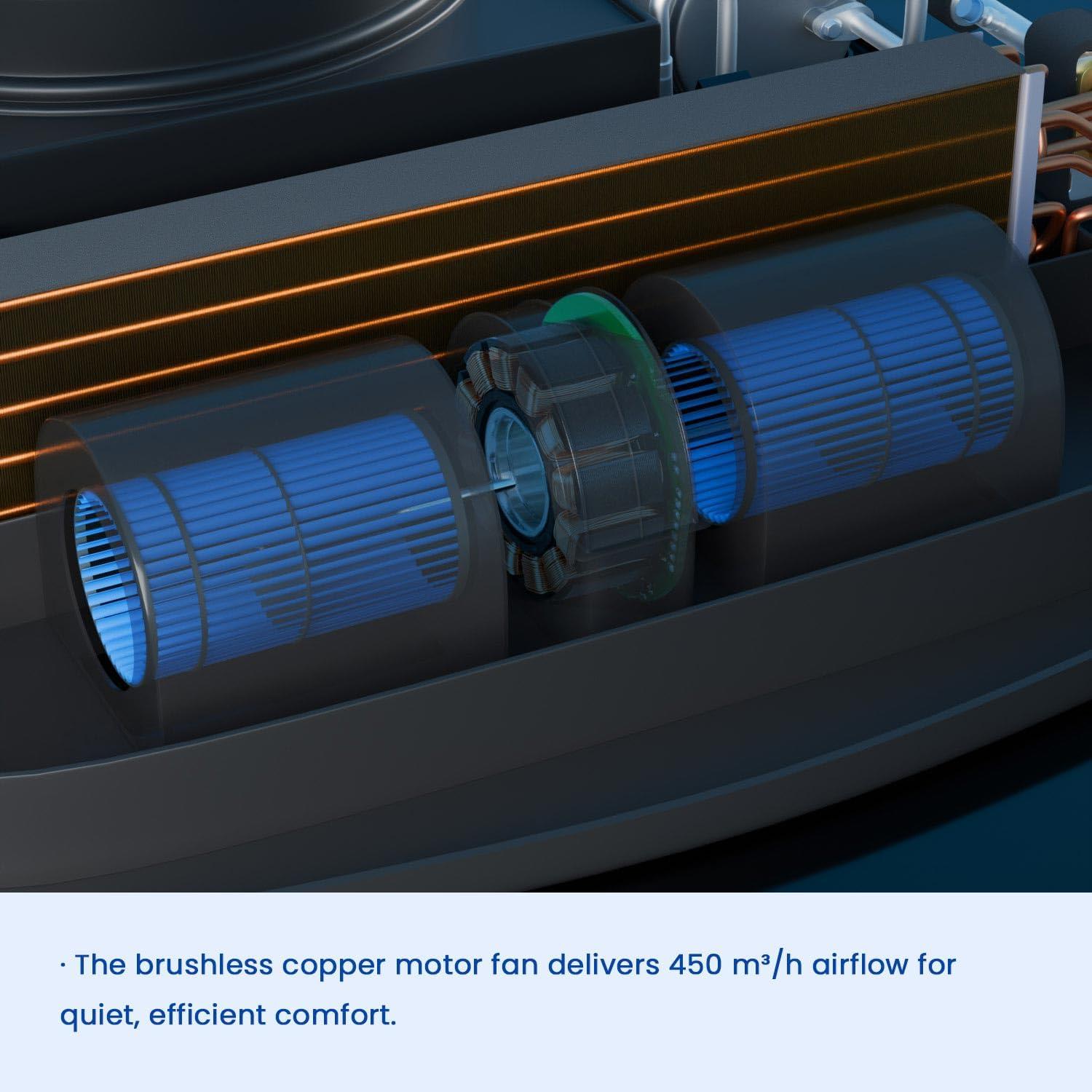
- Quiet-operation design (manufacturer claim) and commonly reported as quiet: The listing attributes noise reduction to brushless copper motor fans, spring-supported mounts, and a directional duct; many reviewers describe it as “super quiet”/quiet enough for sleeping.
- Lightweight/low-profile design (frequent review theme): Multiple reviewers highlight that it’s much lighter than older rooftop units and cite an approximate weight around 45 lb, making solo installation easier.
- Installation is frequently enough described as straightforward with clear instructions: Review summaries and several detailed reviews mention easy/straightforward install and good printed instructions with illustrations.
Considerations
- No heater in this specific version: The product variant is explicitly “12V … w/o heater,” so it won’t provide heat (some reviews discussing heating refer to the separate “w/ heater” version).
- High current draw means you need adequate battery/charging capacity: reviews cite draws such as ~50–58A on higher settings and note it’s “not ‘low power’ per se,” meaning smaller battery/solar setups may struggle to run it for long.
- Hardware/fitment may not suit every roof thickness out of the box: At least one reviewer wished for a bigger variety of mounting hardware for thicker roofs, suggesting some installs may require sourcing different/extra fasteners.
- Cutout/mounting details can be finicky: One detailed review notes the minimum roof opening guidance is “bare minimum” and recommends slightly enlarging the cutout for bolt/stud clearance, implying careful measuring (or adjustments) might potentially be needed.
- Performance can vary in extreme heat: A reviewer mentioned it “has an issue on really hot days,” so expectations should be set for very high-temperature conditions.
Q&A
Is this air conditioner 12V DC only, and does this “w/o heater” version heat?
Yes—this model is marketed as a 12V, battery-powered rooftop air conditioner. The listing title specifies “12V … (12 voltage w/o heater),” which indicates this version does not include a heater function. If you need heating, check the “w/ heater” variant on the Amazon listing and confirm the exact model before ordering.
How much cooling does it provide, and how fast will it cool my RV/van?
The unit is listed as 10,000 BTU. The product description also claims it can “cool your RV in just 15 minutes,” but real-world performance depends on insulation, sun load, window coverings, vehicle size, and outdoor temperature. Review themes report strong cooling performance in hot conditions (including Texas heat), with several users describing it as “nice and cold.”
How much battery power does it use, and how long can it run off batteries?
Battery runtime varies with mode and your electrical setup. The product description states you can get about 8 hours of cooling with a 12V 480Ah battery and about 10 hours with a 12V 600Ah battery when parked. Review content commonly mentions low power draw; one detailed review reported approximately 58A (Turbo), 29A (Eco), 21A (Sleep), and about 4.5A (Fan Only). Your actual draw will vary with conditions and installation—verify current requirements with the manufacturer and match wire/fuse sizing accordingly.
Is it actually quiet enough to sleep with?
Multiple customers describe the unit as “super quiet” and say it’s suitable over a sleeping area. The product description attributes reduced noise to brushless fan motors,spring-supported mounts,and a directional duct. Noise perception depends on fan speed/mode and how the unit is mounted and sealed.
Can I install it myself, and what roof opening does it require?
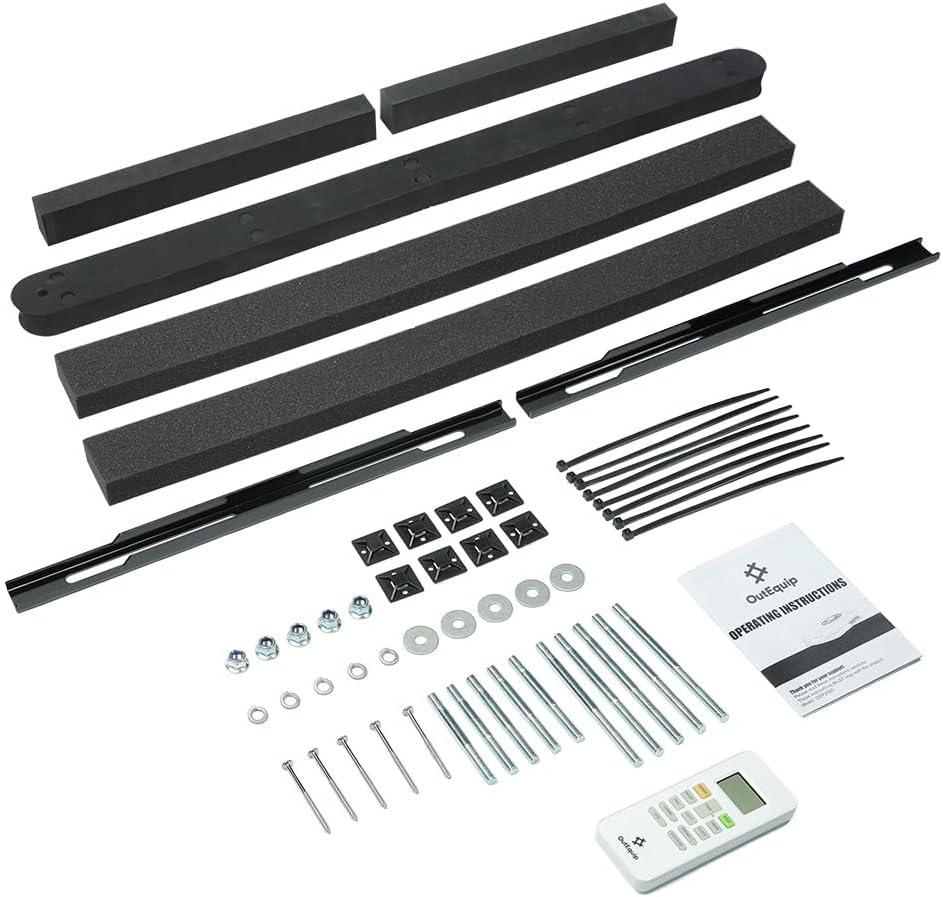
Many reviewers report DIY installation as straightforward and mention clear instructions; at least one notes the mounting uses through-bolts from the inside. One review specifically cites the instructions calling for a minimum roof opening of 14″ x 9″ (and suggested slightly increasing one dimension for clearance). Because roof thickness, reinforcement, wiring, and sealing details vary by RV/van, confirm the cutout and hardware requirements in the manufacturer’s installation manual and on the Amazon listing before cutting.
What controls and operating modes does it include?
The product description states it includes a remote control, temperature monitoring, and multiple modes such as Eco, Sleep, and Turbo. Exact behavior (fan speeds, compressor modulation, and temperature control logic) can vary by model revision—check the manual or the Amazon product page for the most current details.
What maintenance does a rooftop RV air conditioner like this typically need?
Like most rooftop AC units, routine care generally includes keeping the air intake/filter area clean (if your model has a user-serviceable filter), checking that rooftop coils are free of debris, and periodically inspecting the roof seal/gasket for leaks.The listing mentions an EPDM foam gasket and weather-resistant construction (UV-stabilized ABS and a zinc-coated condenser). For specific intervals and what’s user-serviceable on this model,follow the manufacturer documentation and the Amazon listing details.
Elevate your Lifestyle
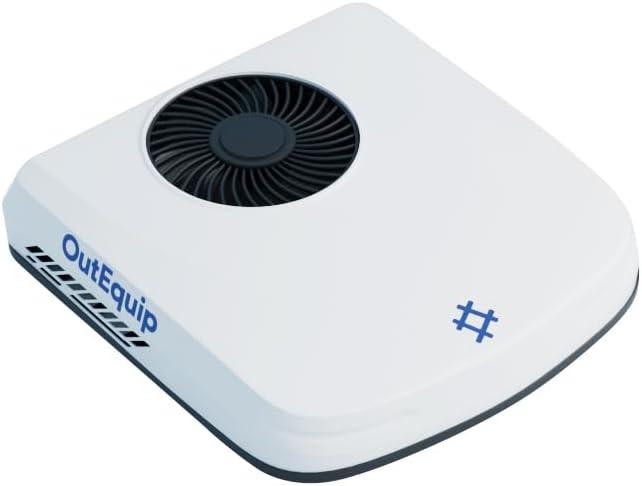
The OutEquipPro 12V rooftop AC is a low-profile,battery-powered unit rated at 10,000 BTU,designed for RVs,vans,trucks,campers,and similar rigs where 12V DC operation matters. Review themes commonly highlight straightforward installation (clear instructions), notably quiet operation, and strong cooling performance for small-to-mid-size spaces, with several users pairing it with lithium batteries and solar.
Best for: off-grid or boondocking setups that already have considerable 12V battery capacity, van builds that need a lighter rooftop unit, and sleeper-area cooling where lower noise is a priority.
Consider alternatives if: you need higher BTU capacity for larger rigs, you’re in extreme heat and want more overhead, or you’re not prepared for the wiring/current demands of a 12V rooftop system. This “w/o heater” version also won’t add heat.
Final thought: A compelling option for battery-based cooling, as long as your electrical system and expectations match the 10,000 BTU class.
Ready to learn more? View Full Specifications & Latest Reviews on Amazon →