

Ever finish a mini-split install and then realize the hardest part is hiding and protecting the line set—especially when the run isn’t perfectly straight? When refrigerant lines have to jog around corners or follow a slightly curvy path, rigid covers can look awkward (or simply won’t fit).
That’s where the Mini-split Line Set Cover Accessories: 4″ 1.9 ft Flexible duct (White) comes in. It’s a flexible, 4-inch line-hide accessory designed to work with all brands of 4″ mini-split line set cover systems, helping you route and conceal HVAC lines more cleanly. The manufacturer states it’s made from rust-proof PE and is rated for -40 to 140℃, aiming to resist fading, cracking, or deforming over time. They also note responsive after-sales support with a 24-hour reply window.
in this review, we’ll cover sizing considerations, where a flexible section actually helps, installation practicality, and how it affects overall curb appeal. We’ve worked around enough mini-split line-set routing challenges to know that the right accessory can make the difference between “good enough” and truly finished. Customer feedback often highlights “fit just right,” usefulness on tricky curves, and occasional concerns about price.
Commercial Performance Overview for Professional Line Set Protection and Appearance
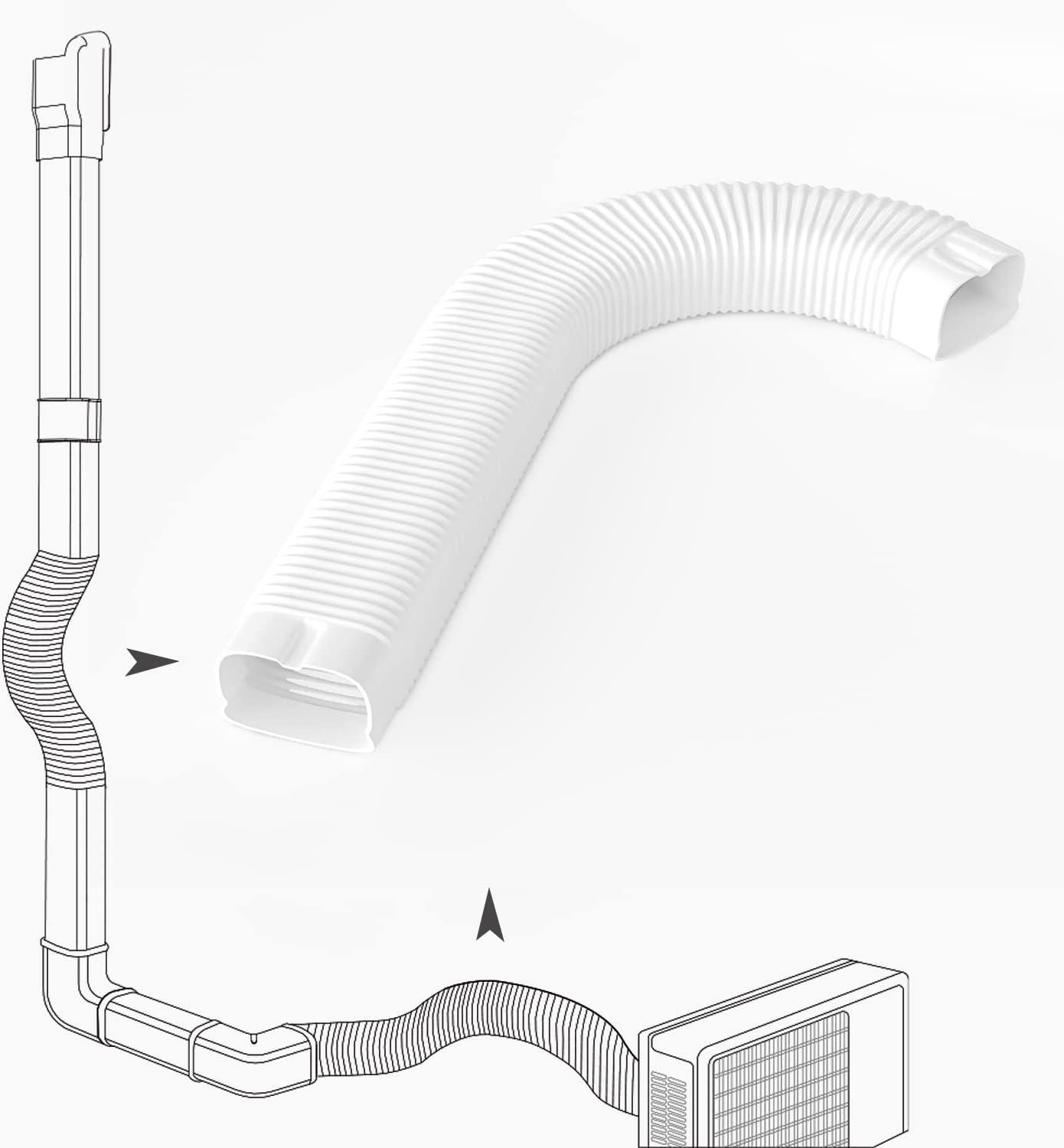
From a commercial performance standpoint, this accessory is positioned as a practical finishing component for routing and protecting exterior mini-split line sets—especially when a straight trunk line isn’t enough. according to the product description, the 4″ 1.9 ft flexible duct is made from non-rust PE and is rated for -40–140℃, with the manufacturer stating it’s intended to protect AC lines “for years” without fading, cracking, or deforming. It’s also described as compatible with ALL BRAND 4″ line hide systems, which matters commercially because it can be used as an add-on piece for common 4″ line-set cover installs rather than locking you into a single equipment brand.
In terms of real-world outcomes, customer feedback aligns with the intended “problem-solver” role: reviewers report it fits and works for covering lines from the wall to the outdoor unit, including a user who installed it with a Daikin mini-split and said the cover was “near perfect.” several customers also point out that it’s particularly useful for curvy/jogged runs,and one review notes you can cut/split it with a saw to fit it onto lines after they’re already in place—helpful for challenging retrofit situations. The main commercial drawback mentioned is value: at least one reviewer said the product works as it should but feels expensive, and another highlights that if your line set runs straight down, you may not need a flexible piece—suggesting this part performs best when purchased specifically to solve a bend/offset routing need rather than as a default add-on.
Check Current Price & Customer Reviews on Amazon →
Energy Cost Savings real Numbers for Reduced Heat Gain and Operational Efficiency
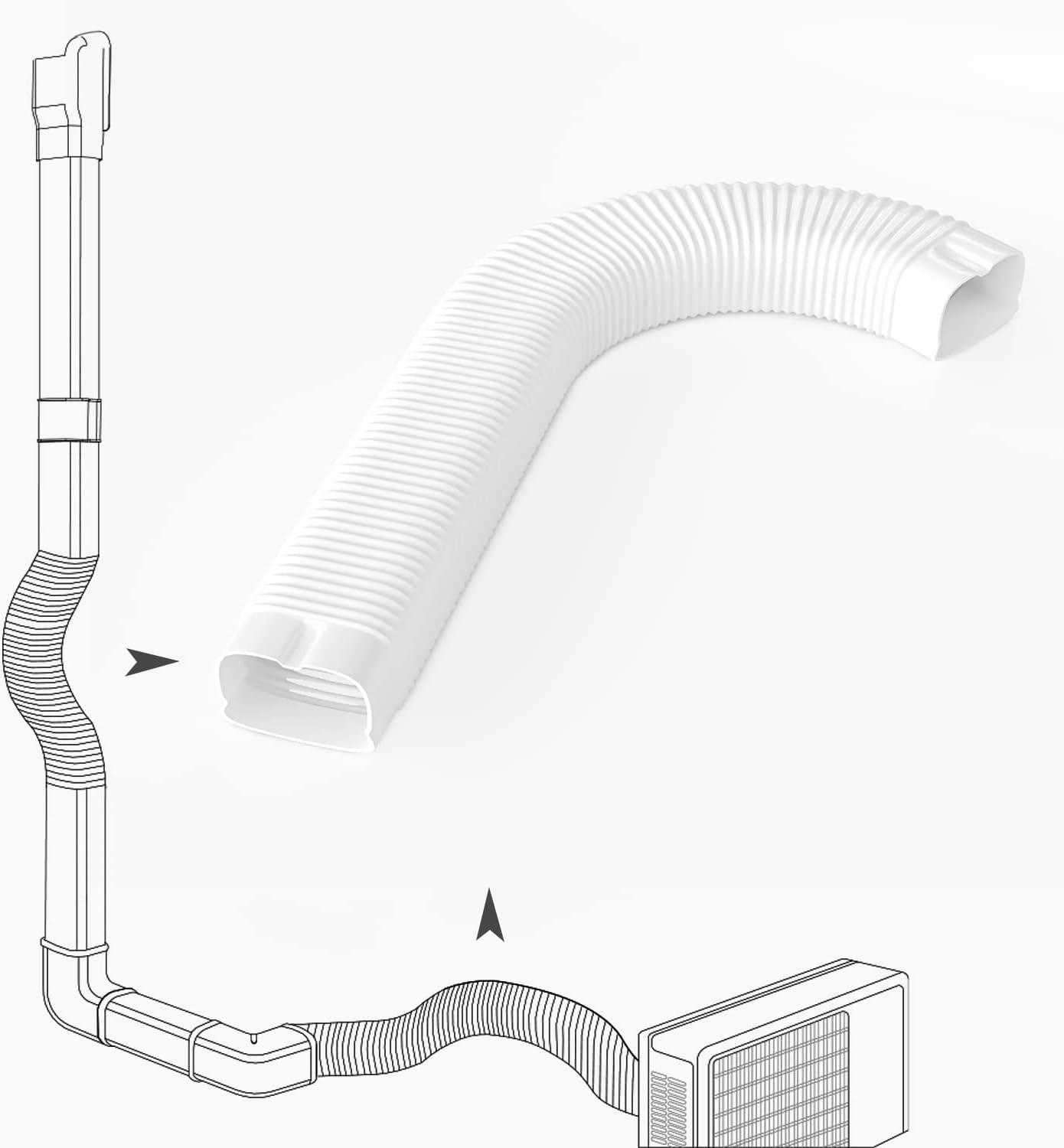
When it comes to energy costs, it’s critically important to separate what a line-set cover can realistically influence from what it can’t. This 4″ 1.9 ft flexible duct/line-set cover accessory is primarily an exterior protective and finishing component—not an efficiency upgrade like a higher SEER mini-split. According to the product description, it’s made from rust-proof PE material and rated for -40 to 140℃, and it’s intended to protect the refrigerant lines for years without fading, cracking, or deforming. While the listing doesn’t claim specific energy savings, better physical protection can definitely help support operational consistency by shielding line insulation and preventing premature wear that could lead to service issues (and the higher operating cost that can come with a system that isn’t running as designed).
In “real numbers” terms, there aren’t verified wattage reductions or bill savings provided by the manufacturer—and the customer reviews don’t report measurable drops in electric bills—so it wouldn’t be accurate to promise a dollar amount. What reviewers do confirm is practical fit and coverage: one customer said it “fit just right” on an roughly 15 ft line run and called it “near perfect” for covering the HVAC lines from the wall to the compressor, and another noted it’s useful for “difficult curvy spots” (including the option to split it with a saw to install after the lines are already in place). That kind of easier, more complete coverage matters operationally because exposed line sets are more vulnerable to UV, weather, and physical damage—problems that can escalate into maintenance calls or compromised insulation over time. If your goal is cutting heat gain directly, you’ll still want properly sized and intact line insulation under the cover; think of this accessory as a durability/maintenance helper rather than a guaranteed energy-saver.
Check Current Price & Customer Reviews on Amazon →
Installation Without Business Disruption in Active Commercial spaces
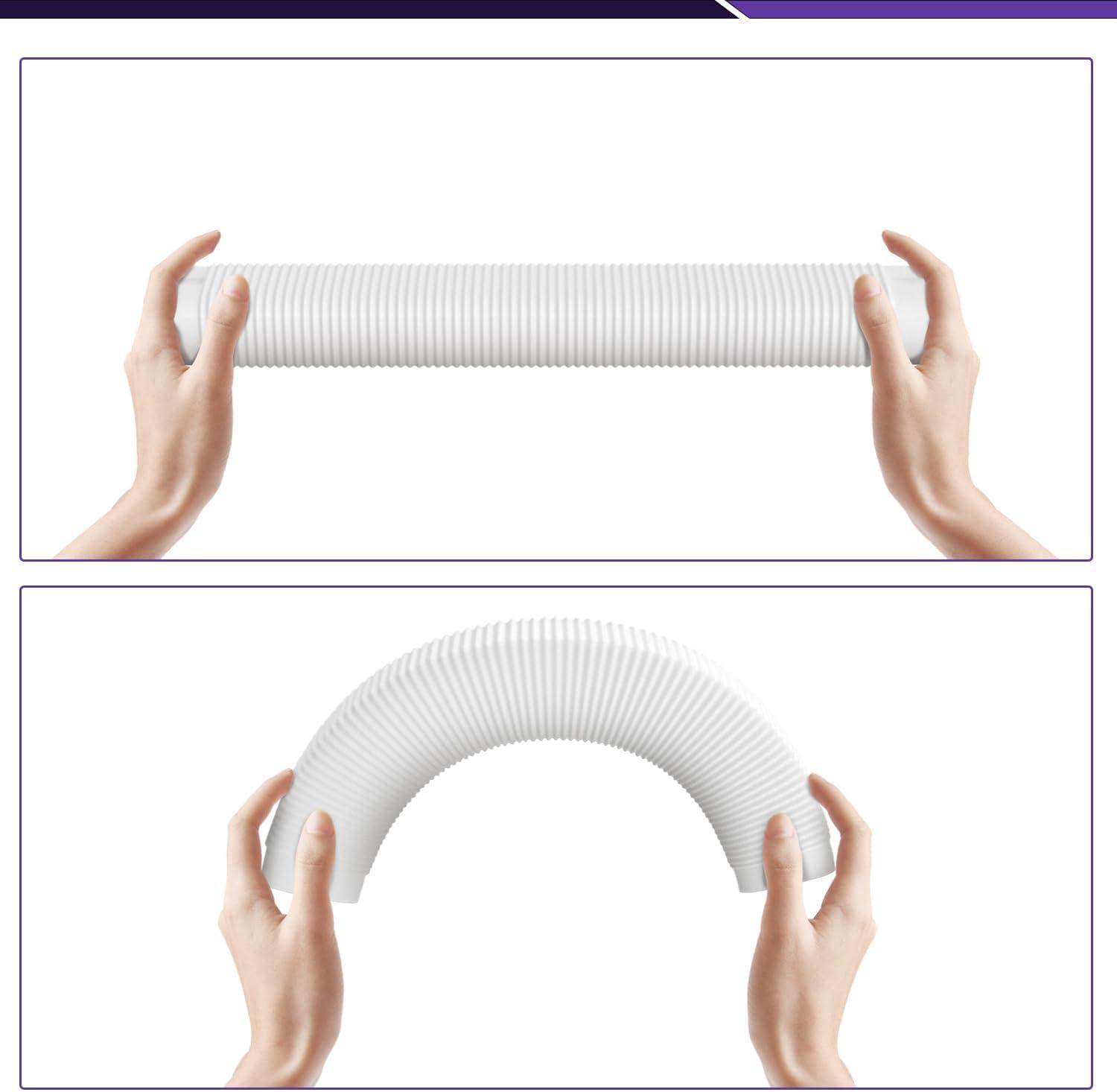
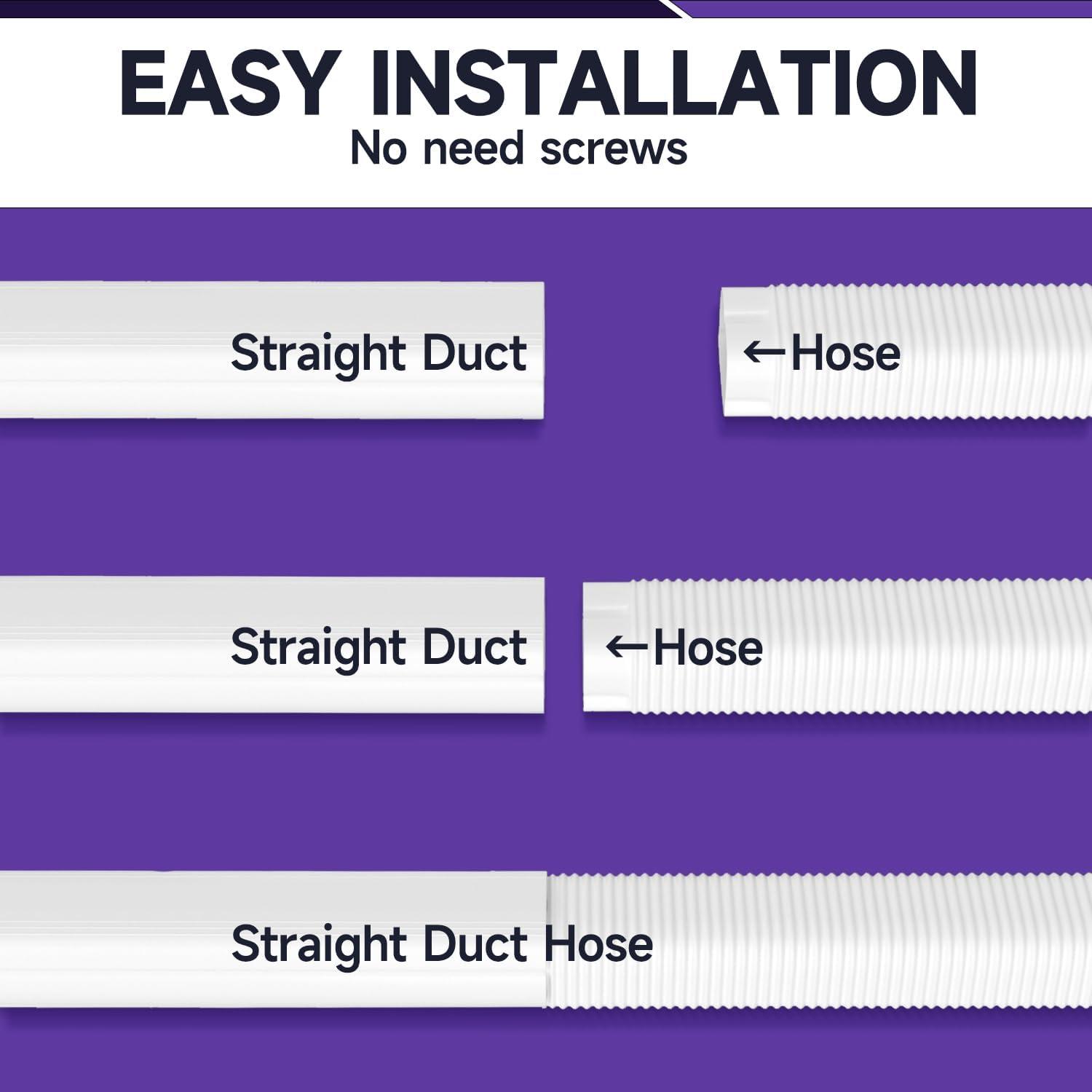
In active commercial environments—like retail storefronts, clinics, or offices—line-set finishing work often has to happen around customers and staff, so minimizing dust, noise, and time-on-ladders matters. According to the product description, this 4″ x 1.9 ft flexible duct is designed for easy installation and a “good appearance,” which can definitely help installers route line sets cleanly along exterior walls without extensive on-site fabrication. The manufacturer also states it’s made from rust-proof PE and is rated for -40 to 140℃,which is relevant for outdoor runs where temperature swings and weather exposure are common—useful when you want an install that won’t require frequent touch-ups that could interrupt business later.
Customer feedback supports the “workable in the real world” angle, especially when the job site isn’t perfectly straight. Several reviewers said it “fit just right” and was “near perfect” for covering HVAC lines from wall to compressor, and one noted it’s “very useful” for demanding installs because you can split it with a saw to fit it on after the lines are already in place—handy when you’re trying not to disturb occupied spaces or redo completed work. Another reviewer points out that if your line set runs straight down, you may not need a curving section, but if the run “jogs over,” the flexible piece becomes important—planning that up front can reduce back-and-forth trips and keep the installation moving without disrupting normal operations.
Maintenance and Warranty Readiness Plus Comparison to Commercial Grade Alternatives
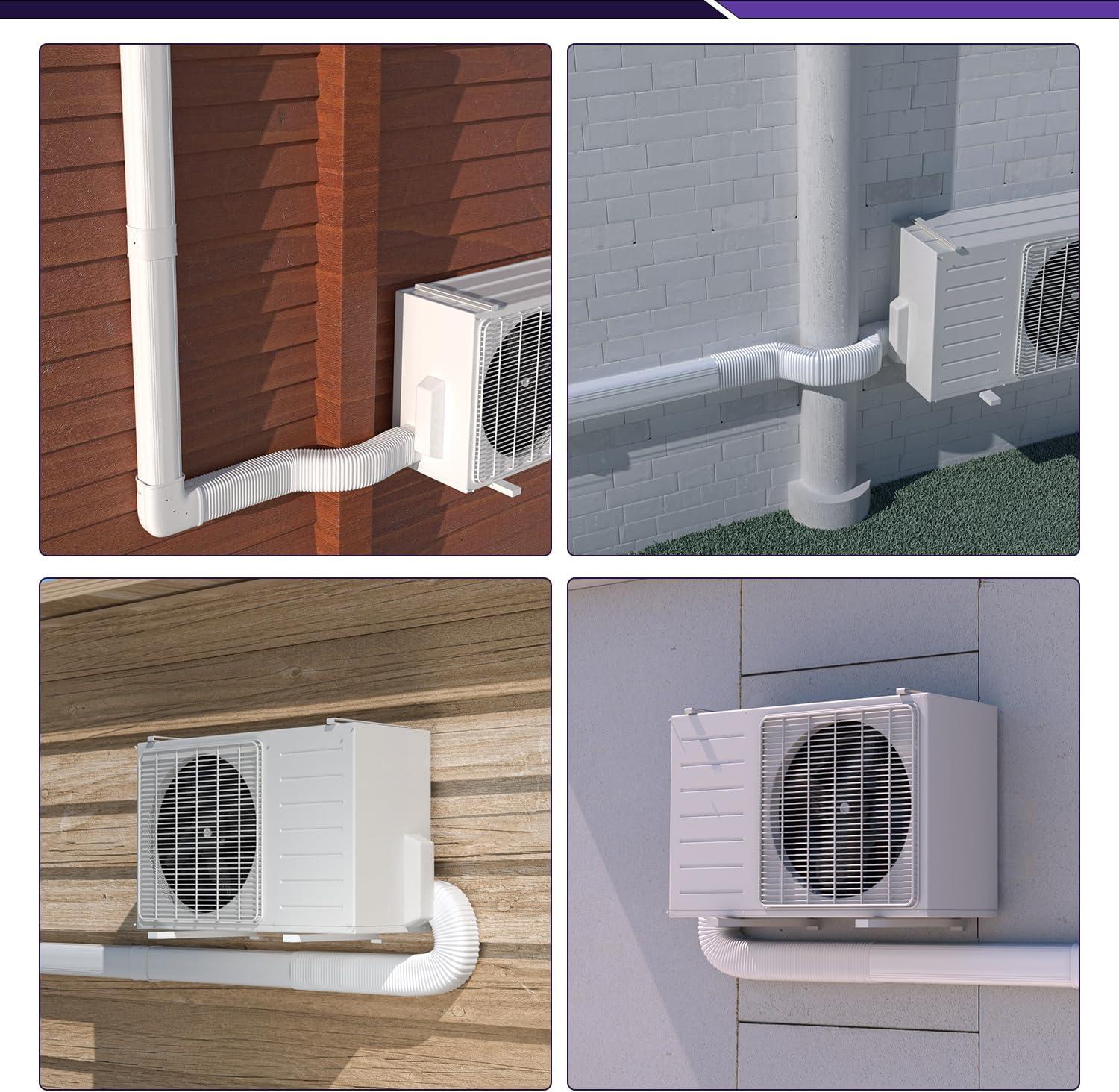
For upkeep, this accessory is largely “set it and forget it,” since it’s a cover rather than an active HVAC component. According to the product description, the flexible duct is made from rust-proof PE material and is rated as safe for temperatures from -40 to 140℃, and the manufacturer claims it’s designed to protect AC lines “for years” without fading, cracking, or deforming. In practical maintenance terms, that means your main routine is just periodic visual checks—making sure the cover is still seated, isn’t rubbing against sharp edges, and hasn’t been knocked loose by wind or yard work—plus an occasional exterior wipe-down if it collects dirt. On warranty readiness,the listing doesn’t specify a formal warranty term,but it dose state an after-sales service commitment: if you’re not satisfied or have questions,you can email and they’ll reply within 24 hours—so keep your order details handy in case you ever need support.
Compared with commercial-grade line-hide alternatives, this 1.9 ft flexible section is positioned more as a convenience “problem-solver” for bends and offsets than a full, heavy-duty raceway system.Reviewers report it “fit just right” on a Daikin install, looks “near perfect,” and is “very useful” for demanding mini-split runs—one customer also notes you can split it with a saw to retrofit after the lines are already in place in tricky, curvy spots. The main tradeoff mentioned in reviews is value: one user says the product works as it should but feels “expensive,” and another points out that if your line set is straight down, you may not need a curved piece at all. If you’re deciding between this and more commercial-grade options, the honest comparison is that commercial systems may offer broader part ecosystems and more standardized fittings, while this accessory focuses on easy installation and compatibility (the manufacturer states it’s for ALL BRAND 4″ line hide)—especially when your routing isn’t perfectly straight.
Check Current Price & Customer reviews on Amazon →
Customer Reviews Analysis
Customer Experience Summary
1. Overall Sentiment
Overall sentiment in the provided reviews was generally positive, with customers describing the part as “just what I needed,” saying it “fit and works,” and that the “actual product is fine, and works as it should.” The main negative note was price, with one reviewer calling it “expensive.”
2. Common Praise
Fit / Compatibility
- Multiple reviews praised the fit, especially for mini-split line coverage. One customer said it “fit just right” and that the cover was “near perfect” for their setup after installing a Daikin mini split.
- Another summed it up simply as “fit and works.”
Covers HVAC lines effectively (functionality)
- A common theme in reviews was that it did exactly what buyers wanted: “Just what I needed to cover the HVAC lines from the wall to the compressor.”
- Several reviewers noted it “covers the lines set on the outside of the building.”
Useful for tricky installs / ability to modify
- Multiple reviews praised its usefulness for more complex routing. One reviewer called it a “Very useful part for demanding mini-split installs” and added: “You can even split them with a saw and fit them on after the lines are in in difficult curvy spots.”
3. Common Concerns
Cost / Value
- Some customers experienced sticker shock. One reviewer said: “The actual product is fine, and works as it should, but I do think it’s expensive.”
May be unnecessary depending on installation path
- A few customers pointed out that you may not need this specific flexible/curving piece in all installs. One reviewer noted: “If you are running the line set straight down,you do not need the curving piece.” They also advised: “If your line set jogs over, be sure to get the flexible curving piece.”
4. Notable Use Cases
- Mini-split install line coverage from wall to compressor: One reviewer bought it specifically to “cover the HVAC lines from the wall to the compressor.”
- Daikin mini split installation with ~15 ft line set: One customer mentioned installing a “Daikin mini split AC” with a “4.5m/15ft” line set and said this cover “fit just right.”
- Curved/jogged line routing and retrofit installs: One reviewer highlighted using it for “difficult curvy spots,” including the ability to split it “with a saw” to install after lines are already in place.
Pros & Cons
strengths
- Rust-proof PE construction: The product description states it’s made from non-rust PE material designed to resist fading, cracking, or deforming over time.
- Wide temperature tolerance (-40 to 140℃): Manufacturer specs note operation in a broad temperature range,helping it suit varied outdoor conditions.
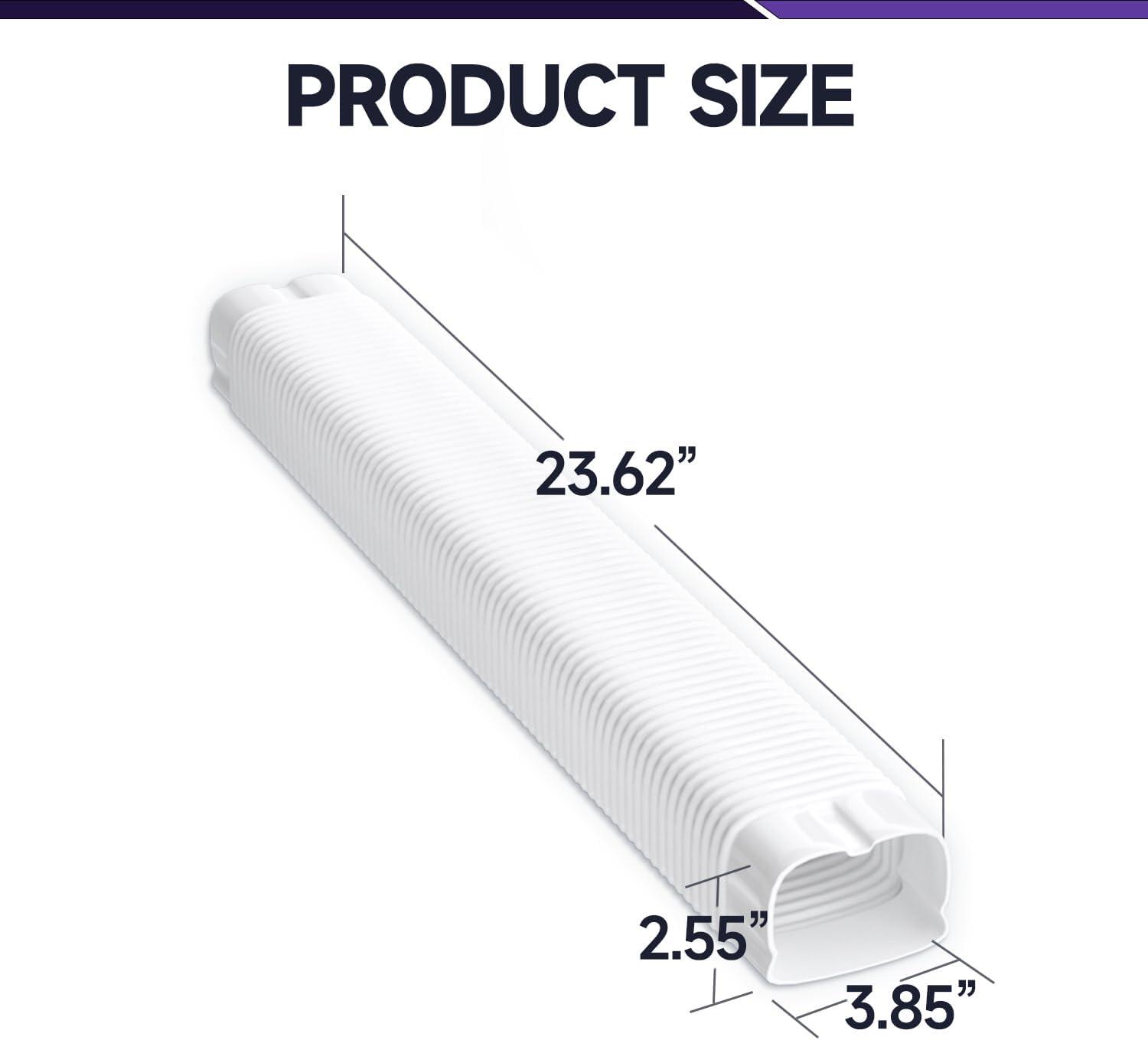
- Designed for 4″ line-hide systems: Listed as a 4″ / 1.9 ft flexible duct accessory intended to pair with 4″ mini-split line set covers.
- Compatibility claim across brands: The description says it’s an accessory for “ALL BRAND 4″ line hide for mini split,” supporting use with different mini-split brands (when sizing matches).
- Easy installation / improved appearance: The manufacturer highlights “easy installation” and “good appearance,” and reviewers describe it as “fit and works” and “near perfect” for their line set cover needs.
- Useful for curved or tricky runs: A reviewer notes it’s helpful for “difficult curvy spots,” and that it can be cut/split with a saw to fit after lines are already in place.
Considerations
- May feel expensive to some buyers: One reviewer explicitly says the product “is expensive,” even though it works as intended.
- Not necessary for straight line routing: Customer feedback notes that if the line set runs straight down, “you do not need the curving piece,” so it may be an unnecessary add-on for simple installs.
- Size matching is critical: The listing instructs buyers to choose 3″, 4″ or 5″ widths and confirm compatibility with their full line cover system before purchasing—wrong sizing could lead to fit issues.
- Short length may require multiple pieces: This is a 1.9 ft section; longer runs (e.g., a reviewer’s ~15 ft line set) would typically need additional cover components to complete the full route.
Q&A
What is this part used for?
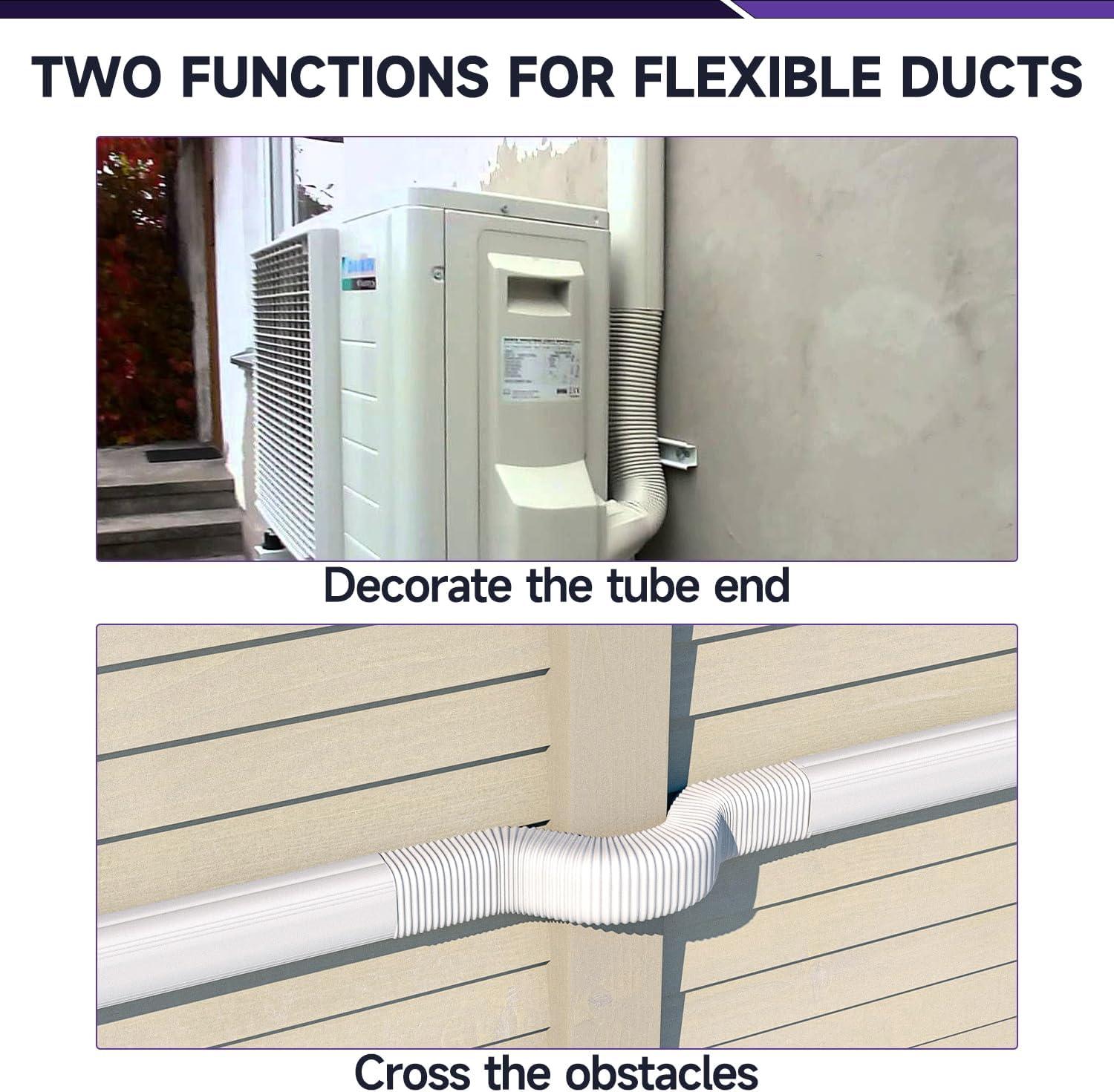
This is a 4-inch wide, 1.9 ft flexible duct/cover piece designed to help hide and protect mini-split (and other HVAC/central AC) line sets. It’s intended for situations where the line set needs a bend or “jog,” rather than running straight.
Will this work with my mini-split brand (Daikin, Mitsubishi, etc.)?
The product description states it is an accessory for “ALL BRAND 4″ line hide for mini split.” Compatibility still depends on weather your existing line set cover system is the 4-inch size, so confirm the width matches your current cover components before purchasing.
what are the dimensions and what does “4 inch” refer to?
The listing describes a 4″ flexible duct that is 1.9 ft long. “4 inch” refers to the cover size category (width) used in line set cover systems; the seller also notes there are 3″, 4″, and 5″ width options and you should choose the size consistent with your full line cover setup.
What temperature range can this flexible duct handle?
Per the product description, it’s made of rust-proof PE material and is stated to be safe for temperatures from -40 to 140℃. For official confirmation for your application,verify details on the Amazon product page and/or with the manufacturer.
Is it weather-resistant and will it rust?
The cover is described as being made of “non-rust PE.” The listing also claims it will protect AC lines for years “without fading, cracking, or deforming,” though real-world longevity can vary by sun exposure, climate, and installation.
Do I need this flexible piece,or can I use straight line set cover sections?
Customer feedback notes that if you run the line set straight down,you may not need a curving/flexible piece. If the line set needs to curve around obstacles or jog sideways, this flexible section can help cover those curved spots more neatly.
How is it installed, and can it be added after the refrigerant lines are already in place?
The seller describes it as “easy to install.” A reviewer also mentioned you can split it with a saw to fit it on after the lines are already in place in difficult curvy spots. Installation details can vary by the specific line set cover system, so check the Amazon listing and manufacturer guidance for the recommended method.
Embody Excellence
SUMMARY: The Mini-Split Line Set Cover Accessory (4″, 1.9 ft flexible duct, white) is a short, curved section designed to help route and protect mini-split line sets where straight channel pieces won’t work. It’s made from rust-proof PE rated for roughly -40 to 140°C, and it’s intended to fit all brands that use a 4-inch line-hide system.Reviews commonly mention that it “fits and works” as expected, improves the finished look, and can help in tricky, curvy spots.
BEST FOR: Installations where your exterior line set needs a bend or offset (jogs around corners, uneven walls, or compressor placement), especially if you’re already using a 4″ cover system.
CONSIDER ALTERNATIVES IF: Your run is straight (you may not need a flexible piece), you need a longer section than 1.9 ft, or you’re sensitive to price—some reviewers consider it costly.
FINAL THOUGHT: A practical finishing accessory when you truly need versatility, but size and value depend on your specific layout.
Ready to learn more? View Full Specifications & Latest Reviews on Amazon →