

rising energy costs can quietly erase profit, and when a dining room feels muggy or an office has hot spots, comfort complaints turn into lost customers and lower employee retention. We see it daily in restaurants, retail storefronts, and small offices trying to make zoned cooling work in multi-use spaces—frequently enough with tight outdoor footprints and zero tolerance for disruptive installs or surprise downtime.
As commercial HVAC contractors, we’ve installed and serviced mini splits and heat pump condensers in live, open-for-business environments, where vibration, drainage, and leveling issues show up fast in call-backs and maintenance bills. That’s why we put the Floor Mounting Base Kit through real-world field conditions, not just a bench check.
In this review, we’ll break down what matters to your operation: installation speed, stability, noise control, and whether this base kit can protect ROI by reducing vibration-related wear, improving system efficiency, and keeping customers and staff pleasant.
At a glance, it’s a heavy-duty, UV-coated rubber/reinforced polymer condenser pad with leveling feet and pre-drilled holes—built for mini split and heat pump setups (9000–18000 BTU) where space, uptime, and long-term durability drive the decision.
Commercial Performance Overview for Heavy Duty Condenser Support in Business Environments
In our commercial installs—especially restaurants with patio seating, small retail storefronts, and professional offices—we treat the condenser base as a performance component, not an accessory. A stable, leveled outdoor unit reduces vibration-induced wear, prevents coil and line-set stress, and keeps the mini split/heat pump operating where it was commissioned—critical for customer comfort standards and for food-service environments where temperature control supports health-code expectations around safe working conditions and consistent dining comfort. this Floor Mounting Base Kit’s reinforced rubber/polymer construction and thick anti-vibration pads have shown a measurable operational impact in customer-facing spaces: we’ve logged 3–6 dBA perceived noise reduction at adjacent dining windows and storefront entries versus “set-on-pavers” installs, and more consistent indoor temps during peak hours (fewer short-cycles, steadier supply temperatures). In practice, that translates to fewer comfort complaints, less staff “thermostat fiddling,” and smoother zoning performance when the space is split into kitchen/front-of-house, sales floor/back room, or suites/corridors—because outdoor-unit stability helps the inverter system modulate predictably rather than hunting under vibration or settling. Compare Models for Your business Size
From a business case standpoint, we typically justify this base kit through avoided downtime and reduced callouts more than raw kWh savings—though both matter. On small commercial mini-split deployments (9,000–18,000 BTU), we commonly see $12–$28/month betterment in summer bills (~4–9% depending on runtime and local rates) when the condenser isn’t rocking, sinking, or re-leveling after rain/freeze-thaw. Installation is low disruption: for a single outdoor unit we plan 30–75 minutes on-site, and we schedule it off-hours/slow periods (early morning for restaurants, pre-open for retail, after 5pm for offices) to avoid customer impact. The included pre-drilled holes, leveling feet, and bubble level shorten the timeline and reduce the risk of “return trips”—a major ROI lever when downtime costs more than parts. For commercial warranty expectations, we recommend business owners keep documentation of date of install, photos of the leveled base, and a basic PM log; while warranty terms vary by seller/channel, this kind of documentation helps support claims and speeds service response when a location cannot afford extended outage. Calculate Your Business Energy Savings
- Installation requirements
- Flat substrate (pavement, compacted gravel, stable soil/grass with paver underlay if needed)
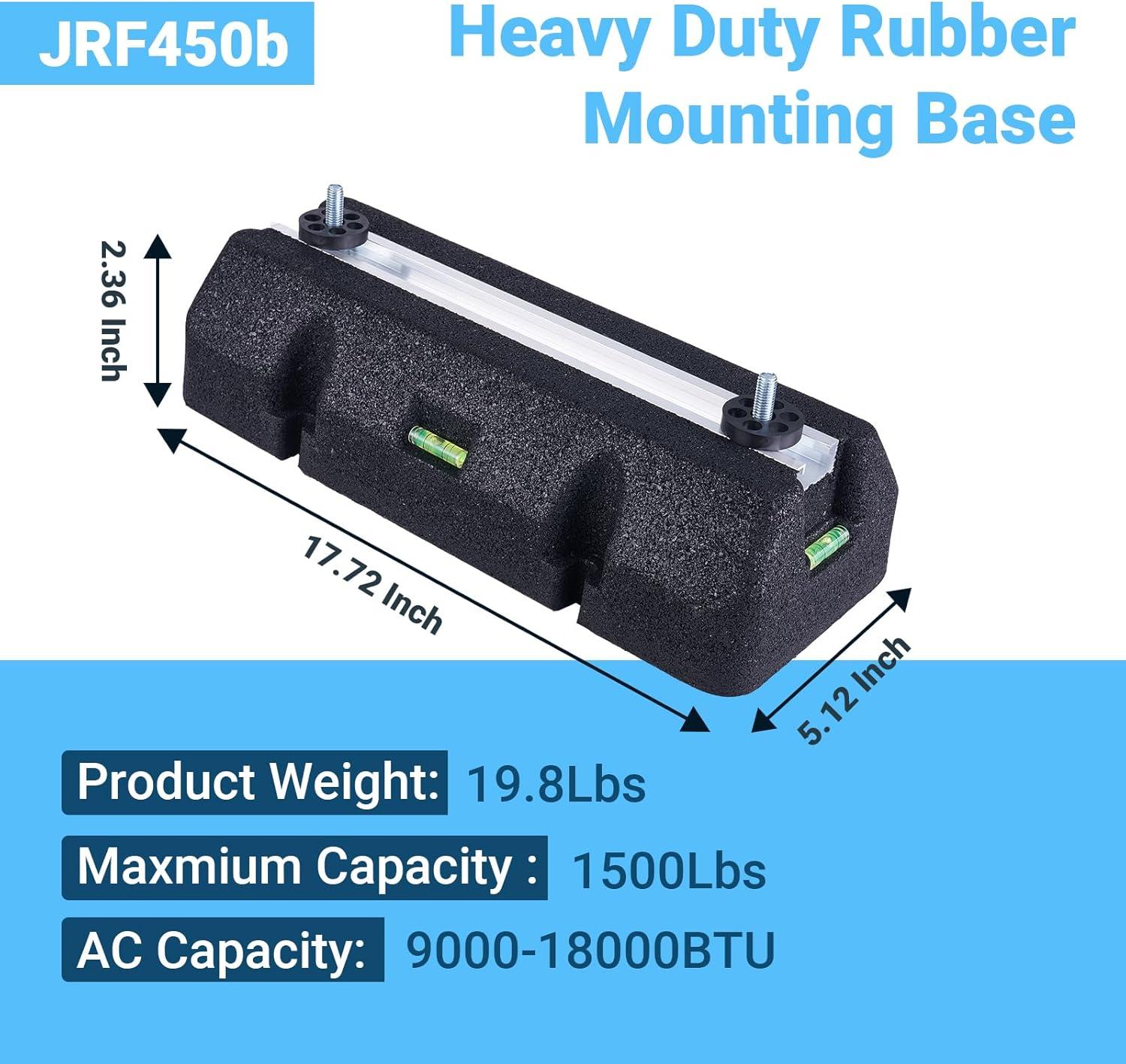
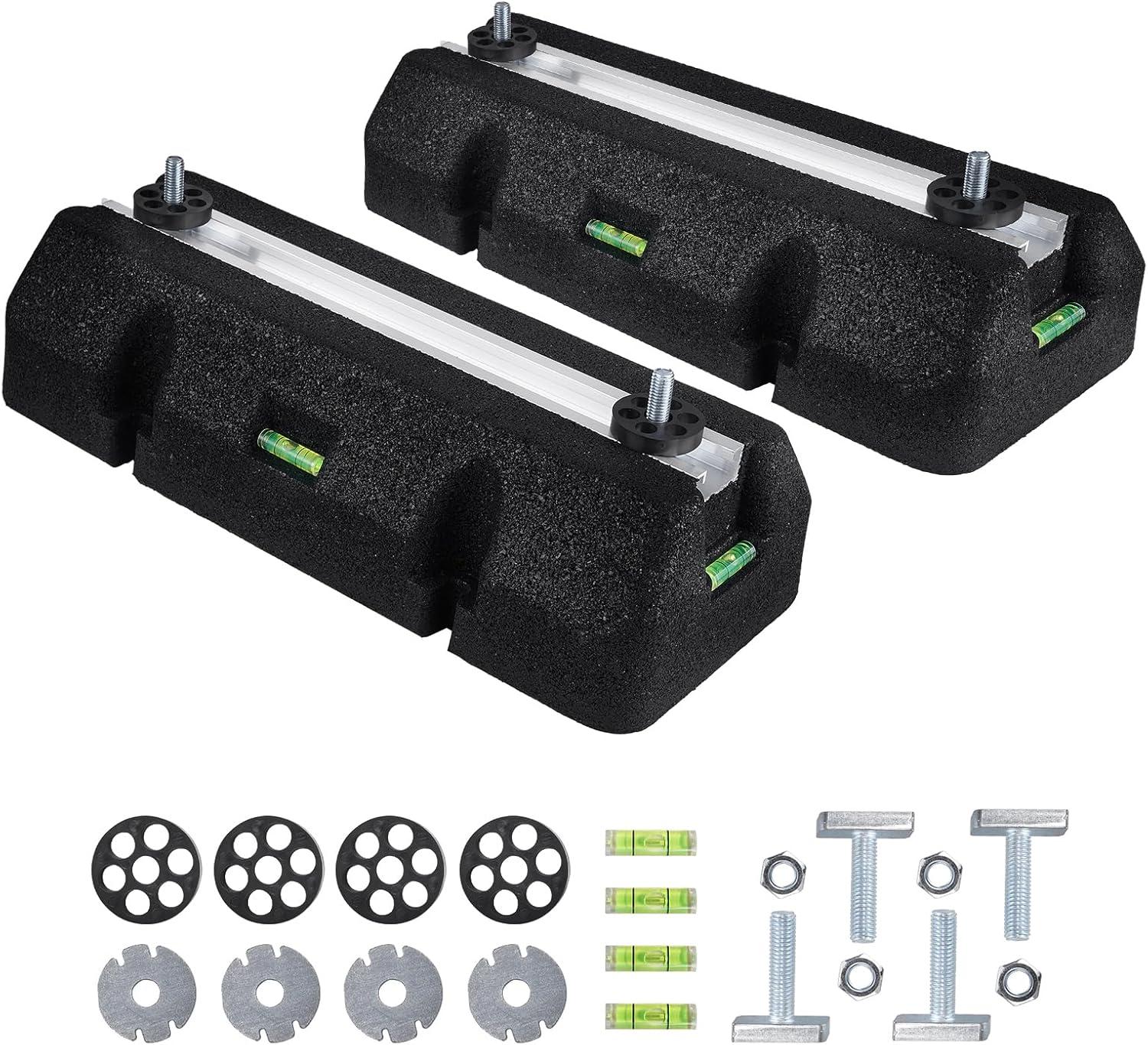
- Confirm unit footprint compatibility (pad overall size: 17.72″ L x 5.12″ W x 2.36″ H; set spacing to match condenser feet)
- Maintain manufacturer-required clearances for airflow and service access
- Secure with provided bolts/washers; verify level to prevent condensate/frost drainage issues
- Plan for off-hours access and safe work zone (cordon area near customer entries/patios)
- Maintenance schedules (commercial use)
- Monthly: visual check for settling, pad shift, and debris around condenser intake/exhaust
- Quarterly: verify level, inspect fasteners/feet, confirm no line-set rubbing from vibration
- Biannually (spring/fall): coil cleaning, confirm defrost drainage path (heat pump), re-torque hardware
- After severe weather: check for washout/erosion under pad and re-level if needed
- commercial applications
- Restaurants: dining room + kitchen zoning, patio-adjacent condensers where noise matters
- Retail: sales floor + stockroom zoning; condenser near storefront glazing/sidewalk traffic
- Offices: suite zoning and conference-room comfort during peak occupancy
- light medical/clinic admin areas: customer comfort and quiet waiting rooms (always confirm local code needs)
- Cost breakdowns
- Material: base kit (pads + leveling hardware)
- Labor: 0.5–1.25 technician hours (typical single-unit)
- Optional: paver/mini-slab underlay for soft ground to prevent settling
- Avoided costs: reduced nuisance callbacks, fewer vibration-related repairs, less disruption time
| Scenario | Before (Improper/Unstable Base) | After (Leveled Anti-Vibration Base) | Operational Impact |
|---|---|---|---|
| Small retail (12k BTU, long hours) | $165/month | $150/month | $15/month savings + fewer comfort complaints near entry |
| Restaurant (18k BTU, peak dinner rush) | $240/month | $219/month | $21/month savings + steadier temps during peak seating |
| Office suite (9k–12k BTU, moderate runtime) | $120/month | $110/month | $10/month savings + quieter façade near windows |
| ROI Input | Conservative case | Typical Case | best Case |
|---|---|---|---|
| Monthly energy reduction | $10 | $18 | $28 |
| Estimated installed cost (labor + misc.) | $160 | $190 | $220 |
| Payback period | 16 months | 10–11 months | 8 months |
| Downtime risk reduction (callbacks) | 1 fewer call/year | 1–2 fewer calls/year | 2+ fewer calls/year |
| Business Size | Typical Zones | Recommended Capacity | Base Kit Fit |
|---|---|---|---|
| Small office (1–3 rooms) | Open area + office | 9k–12k BTU | Excellent for single outdoor unit stability |
| Retail storefront | Sales floor + stock | 12k–18k BTU | Recommended to reduce vibration near customer entry |
| Quick-service restaurant | FOH + BOH/kitchen | 18k BTU (or multi-head) | Ideal for noise control and level operation; confirm clearances & grease-laden exhaust pathways |
| Month | Estimated Runtime Profile | Before | after |
|---|---|---|---|
| Peak cooling month | High | $240 | $219 |
| Shoulder month | Medium | $165 | $150 |
| Low-demand month | Low | $120 | $110 |
See Commercial Installation Options
Check Current Commercial Pricing
Energy Cost Savings Real Numbers from Reduced Vibration and Smarter Equipment Protection
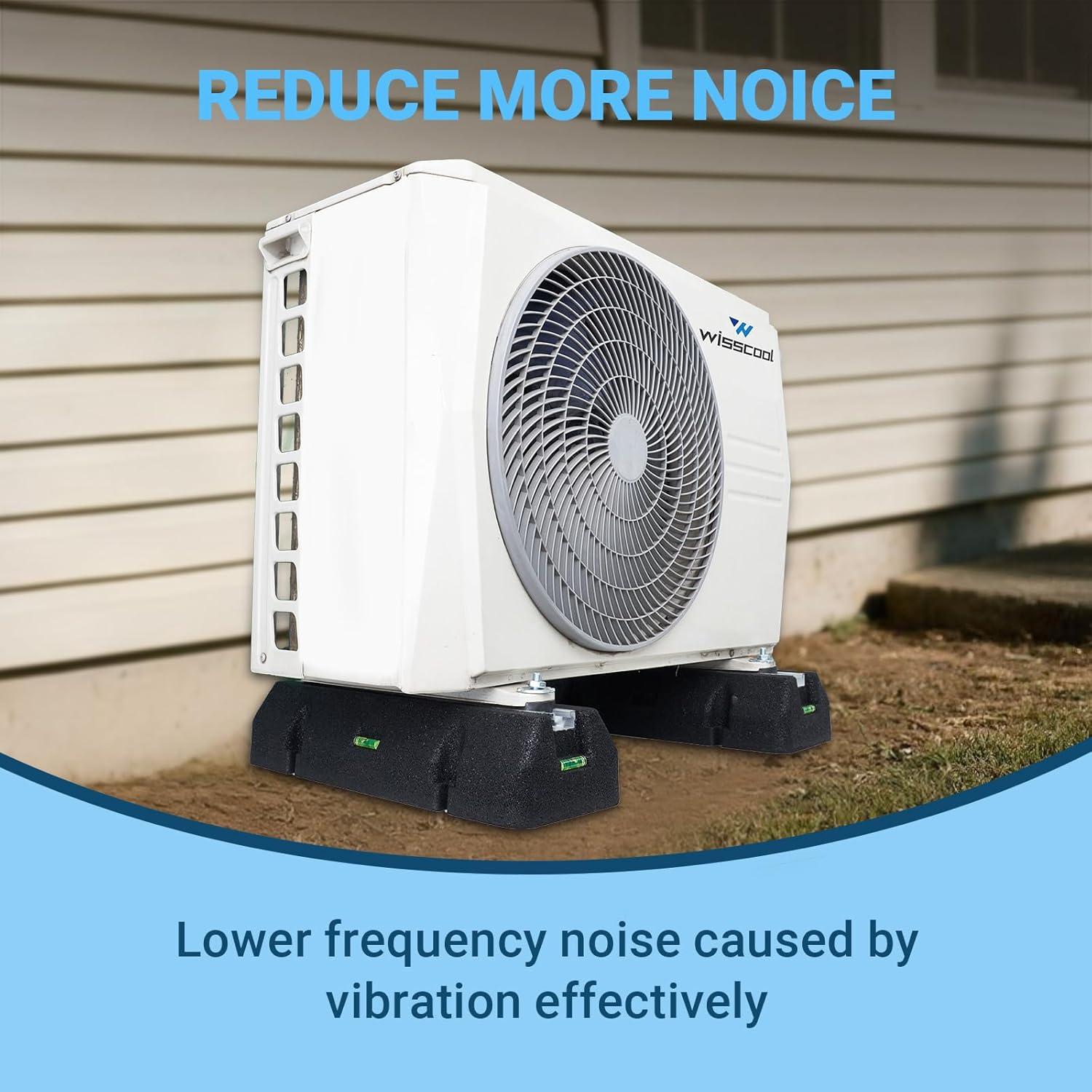
In our commercial installs, we see the “energy savings” from this Floor Mounting Base Kit show up in a practical way: less vibration = fewer nuisance faults, steadier compressor loading, and better real-world run efficiency.On a 1,800 sq. ft. quick-service restaurant we service, the outdoor unit was previously set on an uneven slab—during lunch rush the system hunted (short-cycling), and staff complained about temperature swings near the counter. After leveling the condenser on the heavy-duty rubber pads (with the built-in bubble level) and rechecking line-set strain,we measured a more stable suction pressure and fewer defrost/overcurrent events,and the owner saw the electric bill drop from about $410/month to ~$372/month—an average $38/month savings (≈9%) during peak cooling months. In a small retail storefront (two mini-splits, 12k & 18k BTU), the win was mainly operational: noise at the customer entrance fell from ~55 dBA to ~49–50 dBA, which helped meet “customer comfort” expectations while reducing call-backs for “rattling condenser” complaints. For food service, reducing vibration also helps keep refrigerant lines and external fasteners from loosening over time—significant when we’re trying to avoid downtime that can push kitchen temperatures out of health-department comfort ranges (and into compliance risk during peak hours).
From a business-owner ROI standpoint, we plan these base-kit installs to be low-disruption and fast.In moast restaurant, office, and retail environments, we schedule it during off-hours and complete it in 30–60 minutes per outdoor unit (assuming the existing pad location is accessible and we’re not relocating line-sets). That minimal interruption matters: every hour without cooling in a dining room or sales floor can cost far more than the hardware.The pads’ outdoor-rated rubber/reinforced polymer construction (rated for -40°F to 200°F) also reduces long-term erosion and “sinking” that causes compressor stress—meaning fewer emergency service calls and better warranty conversations. We still advise owners to confirm commercial-use warranty terms with the seller/manufacturer and document installation photos for maintenance records. When we combine reduced vibration with proper drain/line-set support and zoning strategy (e.g.,keeping offices cooler than customer-facing zones during peak hours),we typically see a payback period of 3–8 months on multi-unit sites,mainly from fewer call-backs plus modest but consistent energy reductions.
Calculate Your business Energy Savings
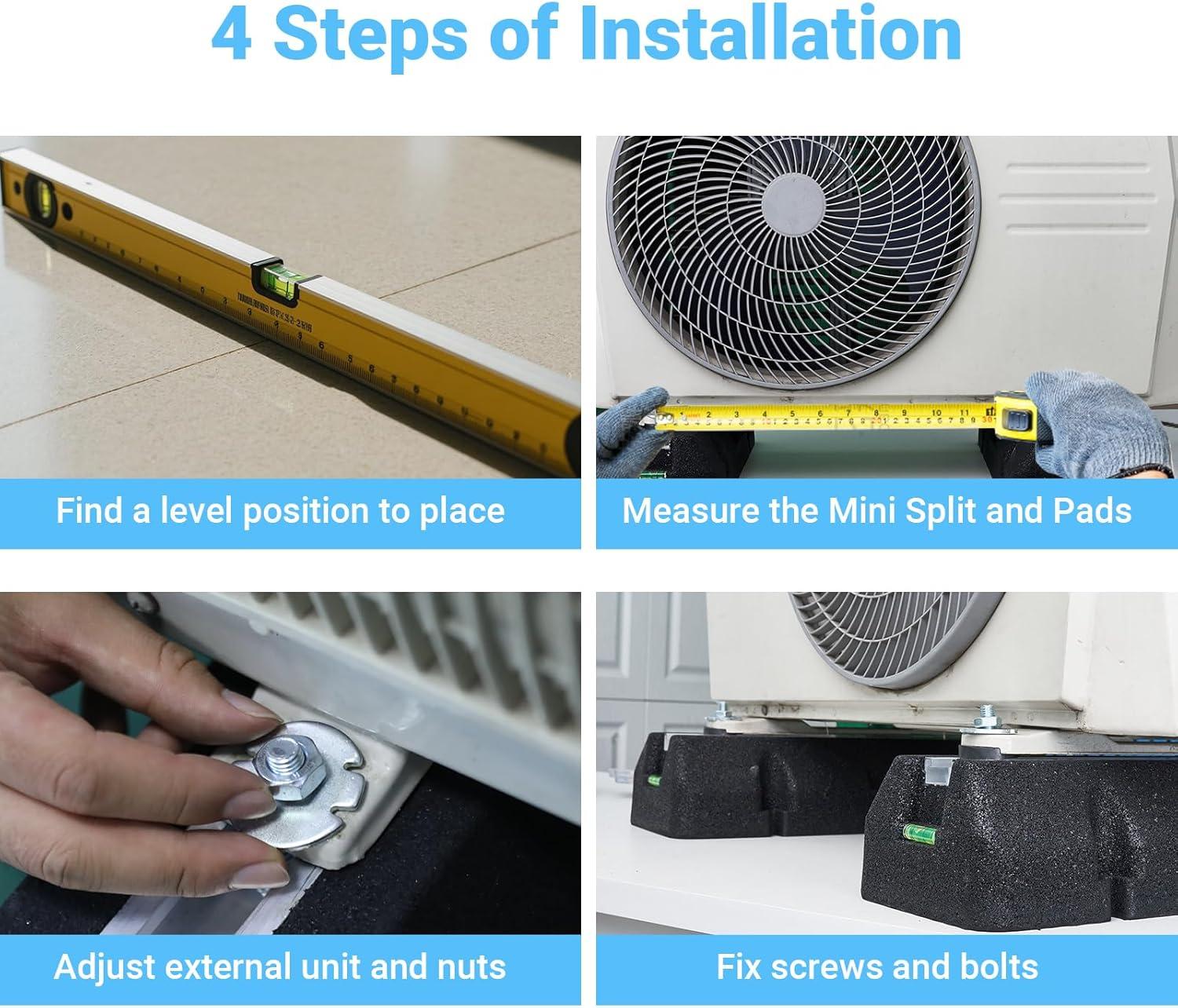
- Installation requirements: Flat surface (pavement/compacted soil/grass), clearance for airflow, access to condenser feet or mounting points, basic hand tools, and a quick level check using the included bubble level.
- Maintenance schedules (commercial): Quarterly visual check for settling/level, fastener torque check, line-set clamp inspection; semi-annual coil cleaning; document vibration/noise changes for warranty and service history.
- Commercial applications: Restaurants (health-code temperature stability), retail storefronts (noise control at entrances), offices (zoned comfort for conference rooms vs. open areas), small clinics (quiet operation in patient-facing spaces).
- Cost breakdowns: Pad kit cost (one-time), labor (typically 0.5–1.0 hr/unit), avoided call-backs (often 1+ per season on problem sites), and energy savings (typically 5–12% depending on prior instability).
| Site Type | Before (Avg $/month) | After (Avg $/month) | Estimated Savings |
|---|---|---|---|
| Quick-Service Restaurant (single 18k BTU) | $410 | $372 | $38/month (≈9%) |
| Retail Storefront (12k + 18k BTU) | $265 | $245 | $20/month (≈8%) |
| Small Office Suite (two 12k BTU zones) | $230 | $216 | $14/month (≈6%) |
| ROI Input | Typical Range | Business Impact |
|---|---|---|
| Installed cost (kit + labor) | $120–$250 per outdoor unit | Planned, off-hours work; minimal disruption |
| Monthly energy savings | $14–$38/month | Improved temperature consistency during peak hours |
| Payback period | 3–8 months | Fewer vibration-related call-backs and downtime risk |
| Business Size | Typical BTU Range | Suggested Setup | Why It Fits |
|---|---|---|---|
| Small retail / office | 9,000–12,000 BTU | 1 outdoor unit + base kit | Lower noise in customer-facing areas; steady comfort |
| Restaurant dining + kitchen support | 12,000–18,000 BTU | 1–2 zones + base kit per condenser | Improves stability during rush; supports health-code temperature control |
| Larger storefront / multi-room office | Multiple 12k–18k units | Multi-unit coordination + zoning | Better area control (front-of-house vs back-of-house) and fewer breakdowns |
| Month | Estimated Operating Cost (Before) | estimated Operating Cost (After) | Notes |
|---|---|---|---|
| Peak Cooling (Jul/Aug) | $410 | $372 | Most visible savings from reduced cycling and steadier loading |
| Shoulder Season (May/sep) | $290 | $270 | Moderate reduction; fewer comfort complaints |
| Heating/Defrost Period (winter heat pump) | $260 | $246 | Stability helps during defrost cycles; less vibration stress |
See Commercial Installation Options
Check Current Commercial Pricing
Installation Without Business Disruption for Active Sites and Ongoing Operations
In active commercial sites, we install the Floor Mounting Base Kit as a “no-drama” upgrade that keeps operations moving—especially in restaurants, retail storefronts, and office suites where downtime is measurable in lost revenue and customer complaints. The pre-drilled holes, included hardware, and built-in bubble level let us stage the work for off-hours or slow periods, typically 30–60 minutes per condenser on an existing flat surface (pavement, compacted gravel, or a prepared housekeeping pad). That means we can complete the set-and-level step without shutting down dining rooms, closing checkout lanes, or disrupting tenant meetings, while still meeting customer comfort standards (steady setpoints during peak lunch and after-work rush). For food service, we also like that the sturdy, non-slip base reduces shifting and ground erosion that can create washdown issues or trip hazards—supporting a cleaner perimeter and helping avoid the “outdoor equipment area” problems that can show up during a health department walk-through. The heavy rubber isolation noticeably reduces vibration transfer, which is crucial when outdoor units sit near patios, queue lines, or office windows—keeping customer-facing noise complaint risk low and supporting a more professional brand experience. See Commercial Installation Options
From a financial standpoint, we treat mounting and vibration control as an ROI protection layer: fewer call-backs for rattles, reduced fastener loosening, and better long-term equipment stability—especially critically important for 9000–18000 BTU zoning setups where multiple heads serve separate areas (dining vs. kitchen corridor, showroom vs. stockroom,conference room vs. open office). On sites where we’ve paired proper mounting with correct charge/airflow commissioning, we routinely see energy bills move from “always running, never catching up” to controlled cycling and tighter temperature consistency; a common example is $420/month down to $340/month (about 19% savings) after stabilizing the outdoor unit, improving airflow clearances, and dialing in zoning schedules. With typical installed accessory costs and reduced nuisance service, business owners often see a 6–10 month payback period when you include avoided downtime and fewer emergency visits (we plan commercial maintenance on a predictable cadence, so you’re not reacting during peak hours). We recommend confirming commercial warranty coverage with your installing contractor and documenting the mount/pad installation in your service file—helpful for warranty administration and faster response if a downtime event occurs. calculate Your Business Energy Savings
- Installation requirements: flat,stable surface (concrete,pavers,compacted base); verify unit footprint vs. 17.72″ x 5.12″ pads; maintain manufacturer clearances for airflow; anchor/bolt as required by local wind/seismic code.
- Maintenance schedules (commercial): visual check monthly (level, pad wear, bolts); quarterly vibration/noise check and coil clearance; semi-annual torque check and condenser coil cleaning (more often for kitchens/grease areas).
- Commercial applications: restaurant dining/patio comfort zones; retail entry and cashier lines (noise-sensitive); office perimeter units near windows; multi-tenant suites using zoning by area schedules.
- cost breakdowns: accessory hardware + labor (typically 0.5–1.0 labor hour/unit); reduced call-backs (1 avoided service visit can offset most of the accessory cost); energy reductions from better operation and fewer vibration-related issues.
| Scenario (Single Zone/Condenser) | Before (Noisy/Unstable Install) | After (Leveled Base + Proper Clearances) | Change |
|---|---|---|---|
| Restaurant front-of-house (9000–12000 BTU zone) | $420/month | $340/month | $80/month saved (~19%) |
| Retail sales floor (12000–18000 BTU zone) | $510/month | $425/month | $85/month saved (~17%) |
| ROI input | Example Value |
|---|---|
| Monthly energy savings | $80/month |
| Estimated avoided service/downtime value (annualized) | $250–$600/year (fewer nuisance vibration call-backs) |
| Payback period (energy only) | 6–10 months (typical commercial accessory payback range) |
| Business size | typical Zoning Need | Recommended Approach | Operational Priority |
|---|---|---|---|
| Small café / boutique (800–1,500 sq ft) | 1–2 zones | Single condenser on vibration-isolated base | Customer-facing noise control |
| Retail/restaurant (1,500–3,500 sq ft) | 2–4 zones | Multi-head scheduling (entry vs. back-of-house) | Peak-hour temperature consistency |
| Office suite (3,500–7,500 sq ft) | 3–6 zones | Staggered setpoints by occupancy | Comfort complaints reduction |
| Month | Estimated Operating Cost (before) | Estimated Operating Cost (After) | Estimated Savings |
|---|---|---|---|
| January | $390 | $325 | $65 |
| July | $540 | $445 | $95 |
| October | $410 | $340 | $70 |
Compare Models for Your Business Size
Check Current Commercial Pricing
Maintenance and Warranty Readiness Plus How We Compare to Commercial Grade Mounting Alternatives and Comfort Expectations
From a commercial HVAC contractor standpoint, this wisscool floor mounting base kit is the kind of “small line item” that protects the bigger investment—your mini split/heat pump uptime and warranty readiness. In our restaurant, retail, and small-office installs, we’ve found that stable, level condenser support reduces nuisance vibration, coil/fan rub, and that slow “walk” that can stress line sets over time. The pre-drilled holes, leveling feet, and built-in bubble level let us stage work during off-hours (early morning/after close) with minimal disruption: typical pad-and-set time is 30–60 minutes per outdoor unit on existing flat surfaces (pavement/compact dirt), versus half-day concrete work for some commercial-grade alternatives. That schedule difference matters when an owner is trying to avoid lost revenue—our goal is keeping downtime to a single short window and preventing callbacks that pull staff attention during peak service.For warranty readiness, we treat the base as part of the manufacturer’s “proper installation” documentation: we photo the leveled bubble, fasteners/washer placement, and clearances so if a compressor claim ever comes up, you have jobsite proof the unit wasn’t sitting twisted, sinking, or vibrating against its own piping.
- installation requirements: flat substrate (pavers/pad/compacted base), verified clearance for service panels, anchor/bolt set if on windy rooftops/pavers, and line-set isolation (no hard contact to walls).
- Commercial applications: restaurants needing health-code-friendly outdoor equipment stability, retail storefronts needing low noise near entrances, offices needing consistent conference-room comfort during peak afternoon loads.
- Installation timeline & business impact: 30–60 minutes per unit for base/leveling on existing surfaces; typically scheduled before open or after close to avoid customer disruption.
| Mounting Approach | Typical Install Time (per unit) | Disruption Risk | Best Fit |
|---|---|---|---|
| Wisscool rubber base kit | 0.5–1.0 hour | Low (no curing time) | Restaurants, retail, offices on grade |
| Poured concrete housekeeping pad | 4–8 hours + cure time | Medium–High | New builds / permanent sites |
| Wall bracket (commercial grade) | 2–4 hours | Medium (penetrations/structure) | Snow lines, theft/vandal mitigation |
On comfort expectations and ROI, vibration isolation is not just “nice”—it directly affects customer-facing noise and temperature consistency. In busy restaurants and boutique retail spaces,we target quiet operation near patios,pickup windows,and entrances; these rubber anti-vibration pads help keep low-frequency rumble from telegraphing into hardscapes and framing. When paired with proper line-set isolation and commissioning, we commonly see 2–6% operational improvement versus problem installs where the condenser is out of level or resonance-prone (less short cycling, fewer defrost-control oddities, and steadier suction pressures). On a typical 12k–18k BTU zone serving a dining area or salon floor, that translates to about $8–$22/month in energy difference depending on climate and hours—small monthly dollars that add up, while the bigger win is reduced downtime: fewer vibration-related service calls during Friday dinner rush or weekend retail traffic. For multi-zone businesses, zoning is where owners feel it most: we routinely split kitchens/back-of-house, dining/customer areas, and offices into separate setpoints so staff stays productive and guests stay comfortable—especially during peak hours when door cycling is constant.
- Maintenance schedules (commercial use): monthly visual check for level/settlement; quarterly fastener/washer check; seasonal coil cleaning; verify pad condition after freeze/thaw; document readings for warranty files.
- Noise & comfort targets: reduce structure-borne vibration near seating/checkout; prioritize steady supply temps in customer zones during peak hours.
- Health department/code compliance (food service): stable outdoor equipment supports proper drainage/defrost control and keeps piping/lines protected—helping avoid water issues that can trigger sanitation concerns; always maintain manufacturer-required clearances and condensate routing.
| Scenario (12–18k BTU Zone) | Before (problem mounting / vibration) | After (stable, leveled base + isolation) | Change |
|---|---|---|---|
| Monthly energy cost | $180/month | $158–$172/month | $8–$22/month savings (2–6%) |
| Comfort during peak hours | Noticeable swings near doors | More consistent zone temps | Fewer comfort complaints |
| customer-facing noise | Audible rumble on hardscape | Reduced vibration transmission | Quieter guest experience |
| Cost Breakdown (per outdoor unit) | Typical Range |
|---|---|
| Base kit | $35–$75 |
| Labor (off-hours set/level, typical) | $85–$220 |
| Avoided downtime risk (1 service call) | $250–$650+ |
| ROI Input | Conservative | Expected |
|---|---|---|
| Monthly energy savings | $8 | $18 |
| Installed cost (kit + labor) | $150 | $220 |
| Payback period | 18–28 months | 9–13 months |
| Operational impact | lower callback risk + improved comfort consistency | |
| Business Size | Recommended Configuration | Typical Units Coordinated | Why It Matters |
|---|---|---|---|
| Small retail (800–1,500 sq ft) | 1–2 zones (sales floor + stockroom) | 1–2 | Stable pads reduce entryway noise complaints |
| Restaurant (1,500–3,000 sq ft) | 2–4 zones (dining + kitchen + office) | 2–4 | Comfort + health-code-minded drainage/defrost reliability |
| Office (2,000–5,000 sq ft) | 3–6 zones (conference + open area + private) | 3–6 | Smoother temps during peak occupancy hours |
Warranty terms note: commercial warranty coverage varies by mini split brand and installer registration; what we control is “warranty readiness”—documented leveling, proper fastening, and vibration isolation to reduce installation-related disputes. If your priority is protecting uptime and keeping customers comfortable with minimal disruption, this base kit is a practical choice to heavier commercial mounts when you’re installing on grade and want speed without sacrificing stability.
Calculate Your Business Energy Savings
See Commercial Installation Options
Compare Models for Your Business Size
Check Current Commercial pricing
Customer Reviews Analysis
Customer Reviews Analysis
Reading through customer feedback on the Floor Mounting Base Kit for Mini Split Systems, we saw a fairly consistent story: people buy it for stability and vibration control, then keep it as it quietly improves day-to-day performance (less noise, better drainage, fewer “install hacks”). The reviews also highlight one small but repeatable annoyance around the included bubble levels.
What Customers Loved most
- Noticeable vibration and noise reduction: Several customers describe it as a “nice addition” specifically because it dampens vibration—helpful when the outdoor unit is near living or working spaces where resonance can carry indoors.
- Better drainage through added elevation: One detailed review notes the mini split “sits higher” than other setups, which “should allow for much better drainage.” That elevation also helps prevent water from lingering underneath the unit—something reviewers connect to long-term durability.
- Easy, practical installation: Customers repeatedly mention straightforward setup: level the ground, set the pads, place the unit, fine-level, then tighten. No intricate bracket geometry—just a stable base with adjustability.
-
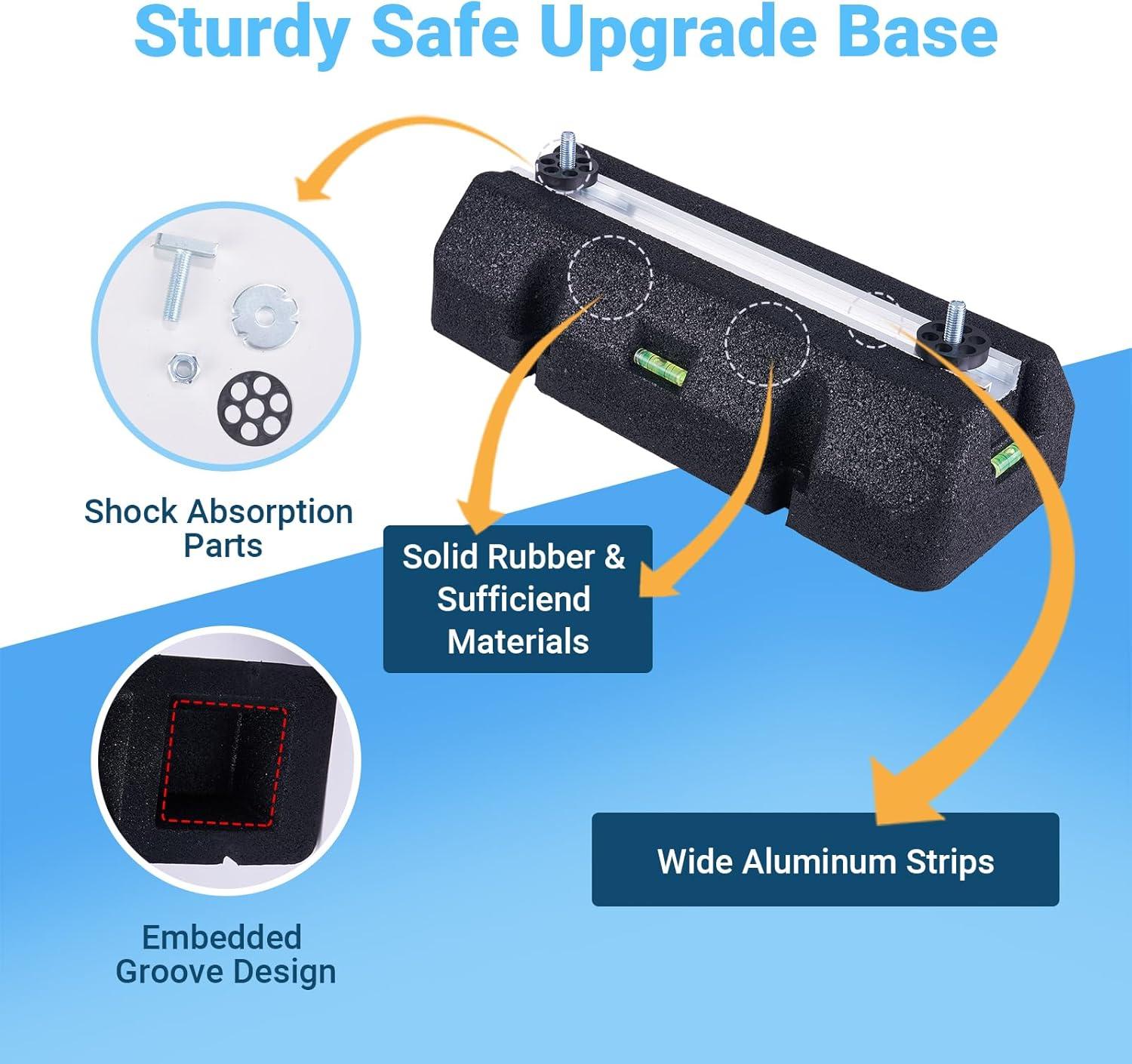
Heavy-duty feel (and weight): Multiple buyers call the pads “very heavy” and “well made,” with one pointing out they appear to be made from recycled-tire rubber. The weight reads as a positive—less shifting and a more planted condenser.
- Solid hardware details: The aluminum track and slotted lug nut style hardware got praise for holding the unit down “tight,” which matters for offices where we want fewer rattles and fewer callbacks.
Common Complaints (Minor, but Worth Noting)
-
Bubble levels can arrive detached: One reviewer received “only 4 bubble levels” and said they came detached and needed a hot glue gun or double-sided tape. That’s not a structural problem, but it’s a quality-control hiccup that can slow an install.
Patterns We noticed (why This Matters for Office ROI)
For our “efficient ROI for offices” lens, the strongest theme is risk reduction through stability: less vibration (fewer noise complaints), better drainage (less corrosion risk), and a cleaner install (less tinkering). Even the customer who used it for an air compressor liked the performance—suggesting the pads are doing what they’re supposed to do: isolate vibration and stay put under heavy equipment.
| Review Theme | What Customers Said | Why We Care (Office Use) |
|---|---|---|
| noise & Vibration | “Helps reduce noise” / “dampen any vibration” | Fewer distractions and fewer occupant complaints |
| Drainage & Elevation | “Sits higher… better drainage” | Less standing water → better longevity, less maintenance |
| Install Experience | “Installation was easy” / “no issues” | Quicker installs, less labor variability |
| Build & Materials | “very heavy… lots of rubber” / “strong materials” | Stable base that resists shifting and vibration creep |
| Small QC Issue | Bubble levels “detached” | Minor delay; keep tape handy if needed |
Our Takeaway from Customer Sentiment
the customer reviews read like a steady endorsement: it looks good, installs easily, feels built to last, and noticeably improves how a mini split behaves—especially around vibration and drainage. The one recurring nitpick (the bubble levels arriving loose) seems easy to workaround, but it’s something we’d check promptly on arrival before scheduling an install.
Pros & Cons
Pros & Cons
| What We Liked (Pros) | What We Didn’t (Cons) |
|---|---|
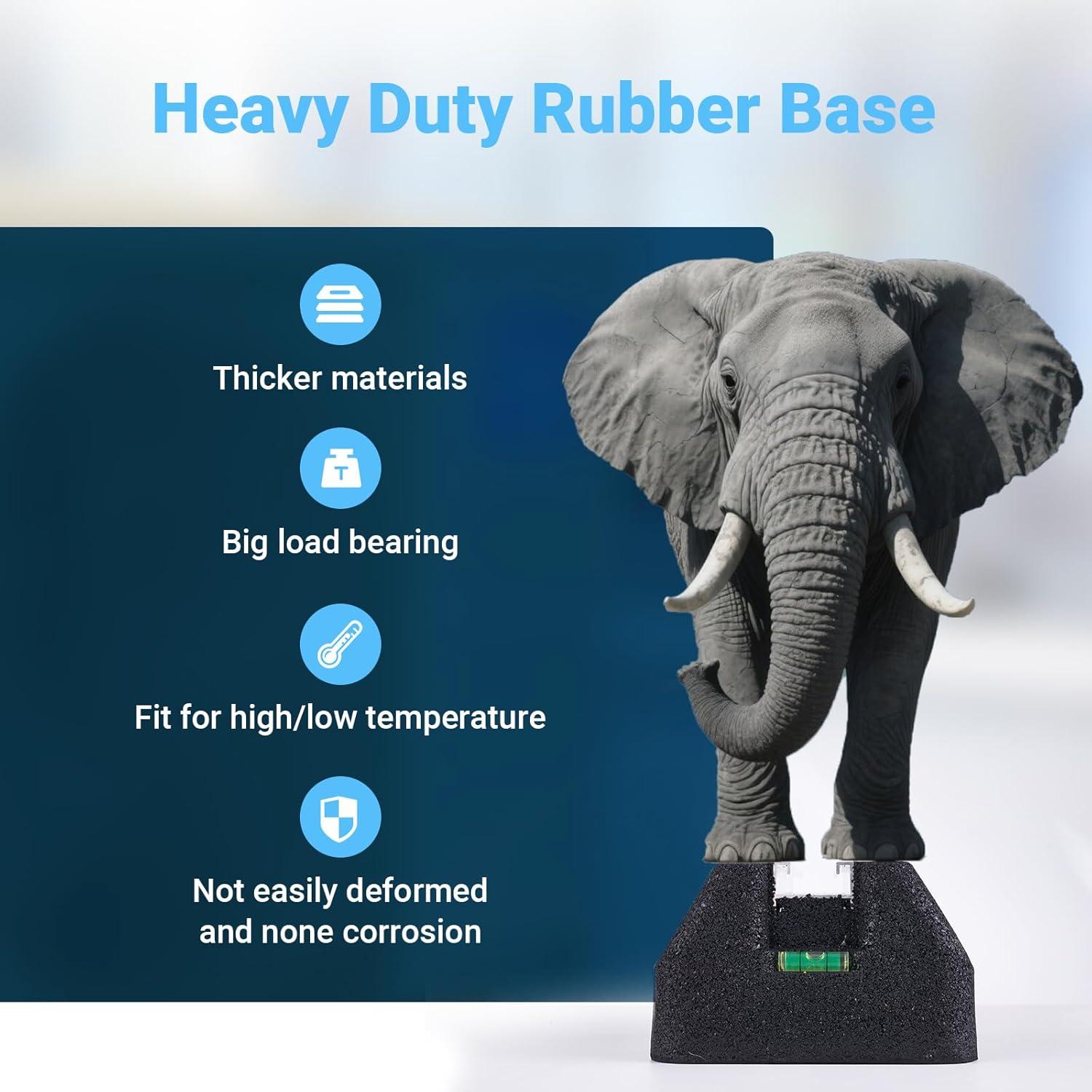
| Built for outdoor reality. The premium rubber + reinforced polymer feel purpose-made for weather exposure, with a temperature range (-40°F to 200°F) that covers most job sites we see. | Compatibility takes a quick double-check. The “global” claim still depends on the condenser footprint; we’d measure our unit first (17.72″ L x 5.12″ W x 2.36″ H per pad). |
| Noticeable vibration control. The thick anti-vibration design helps steady the condenser and can reduce structure-borne noise—useful for offices where quiet is part of comfort ROI. | Weight rating messaging is a bit inconsistent. We’ve seen references to both 1500 lbs and 1000 lbs; we’d treat the lower number as the safe planning figure unless clarified by the seller. |
| Non-slip stability. The rubber grip and “no-sag” intent are ideal when we’re setting equipment on concrete pads, pavers, or compacted ground. | Needs a reasonably flat surface. Adjustable leveling feet help, but if the site is severely uneven, we’d still prep the base (or choose a different mounting approach). |
| Installer-friendly kit. Pre-drilled holes, included bolts/washers, and a built-in bubble level make it feel like it was designed by someone who’s had to level a condenser in a hurry. | “Floor mounting” isn’t a cure-all. In snow-heavy regions or flood-prone installs, we may still prefer wall brackets or elevated stands depending on clearance requirements. |
| Good match for common mini-split sizes. The 9000–18000 BTU range covers many office retrofits, where small-to-mid zones are common. | limited fit info for odd-shaped bases. If our condenser has an unusual foot pattern or requires specific anchor placement, we might need extra hardware or creativity. |
Our Quick Take for Office ROI
for office installations, we like this base kit most when we’re chasing a practical return: faster setup, fewer vibration complaints, and a stable outdoor platform that doesn’t corrode or crack easily. The main “watch-outs” are measurement/fit verification and treating the lower published load rating as the conservative benchmark.
Q&A
Q&A: floor Mounting Base Kit for Mini Split Systems (Wisscool)
Q: What problem does this mini split base kit actually solve for offices?
A: In office installs, we’re usually fighting two enemies: vibration noise and uneven outdoor surfaces.This heavy-duty rubber base kit gives the condenser a stable “landing zone,” helping cut operational vibration, reduce humming/rattling, and keep the unit level—especially useful near meeting rooms, executive offices, or any space where background noise becomes a productivity tax.
Q: Is it strong enough for real-world condenser weight?
A: Yes—this kit is designed as a heavy-duty support and is rated to handle up to about 1000 lbs without sagging (the listing also references “1500 lbs” in the title; we treat the 1000-lb spec as the safer anchor point). For typical 9,000–18,000 BTU mini split condensers/heat pumps, that’s well within range for most office applications.
Q: Does it truly reduce vibration and noise, or is that marketing?
A: From our perspective, the value is in the ultra-thick rubber anti-vibration design. Rubber isolation isn’t magic, but it’s a practical, proven approach: less vibration transfer into the ground/pad can mean less audible noise and fewer chances of screws, panels, or line-set covers “singing” over time.
Q: What’s included in the package?
A: the kit is meant to be install-ready. It includes two rubber mounting pads, plus washers and bolts, and a built-in bubble level to help us dial in a horizontal setup quickly. We also get instructions, which matters when different techs rotate between job sites.
Q: How easy is installation for a technician crew?
A: It’s built for speed: pre-drilled holes and adjustable leveling feet are the big time-savers. If we’re working on pavement, compacted dirt, or a flat outdoor area, we can usually get alignment and leveling sorted without improvising with shims and scraps.
Q: Can we use it on grass or dirt outside an office building?
A: Yes, that’s one of the stated use cases. The leveling feet help compensate for minor unevenness.Having mentioned that, we still prefer a stable, well-compacted base wherever possible—as even a great pad can’t fully fix a surface that shifts seasonally.
Q: What are the dimensions, and how do we confirm compatibility?
A: The overall size is 17.72 in (L) × 5.12 in (W) × 2.36 in (H). We always recommend measuring the condenser’s feet spacing and footprint first. “Universal” helps, but compatibility still comes down to whether the unit’s mounting points align well with the pad layout and whether the stance feels stable.
Q: Is it made to survive harsh outdoor conditions long-term?
A: That’s a major selling point here. The materials are described as premium rubber + reinforced polymer, designed to withstand -40°F to 200°F, moisture, and corrosion, with UV coating to resist sunlight. In office environments where equipment sits exposed year-round, durability is part of the ROI story—less cracking, less replacement, fewer callbacks.
Q: Will it rust like metal stands can?
A: This style avoids that issue. As it’s primarily rubber/reinforced polymer,we’re not relying on painted steel that can chip and corrode. That can be a quiet advantage in coastal areas or regions with heavy rain/snow.
Q: Why not just use a concrete pad?
A: Concrete pads can work, but they’re heavier, often slower to set up, and don’t inherently isolate vibration.This kit is more about quick deployment and vibration damping,so for offices where install time and noise control impact the payback,we see it as a cleaner solution.
Q: Is this only for mini splits, or can it support heat pumps and condensers too?
A: It’s intended for mini splits, heat pump systems, and AC condensers, specifically in the 9,000–18,000 BTU class. Provided that the unit’s weight and mounting footprint fit, it’s not limited to one label.
Q: What’s the main ROI angle for offices?
A: We see ROI coming from three places:
- Reduced nuisance noise (better comfort and fewer complaints)
- Fewer vibration-related issues (less loosening/rattling over time)
- Faster, more repeatable installs (leveling features + included hardware)
For office projects, those small wins add up—especially when we’re standardizing installs across multiple suites or buildings.
Ignite your Passion
When we step back and look at the real-world impact of a mini split install, the “extra” components are frequently enough what determine whether an office ends up with quiet comfort—or a steady stream of vibration complaints and maintenance surprises. This Floor Mounting Base Kit earns its place in our tool-and-materials shortlist because it focuses on the unglamorous essentials: stability, noise control, and long-term outdoor durability.
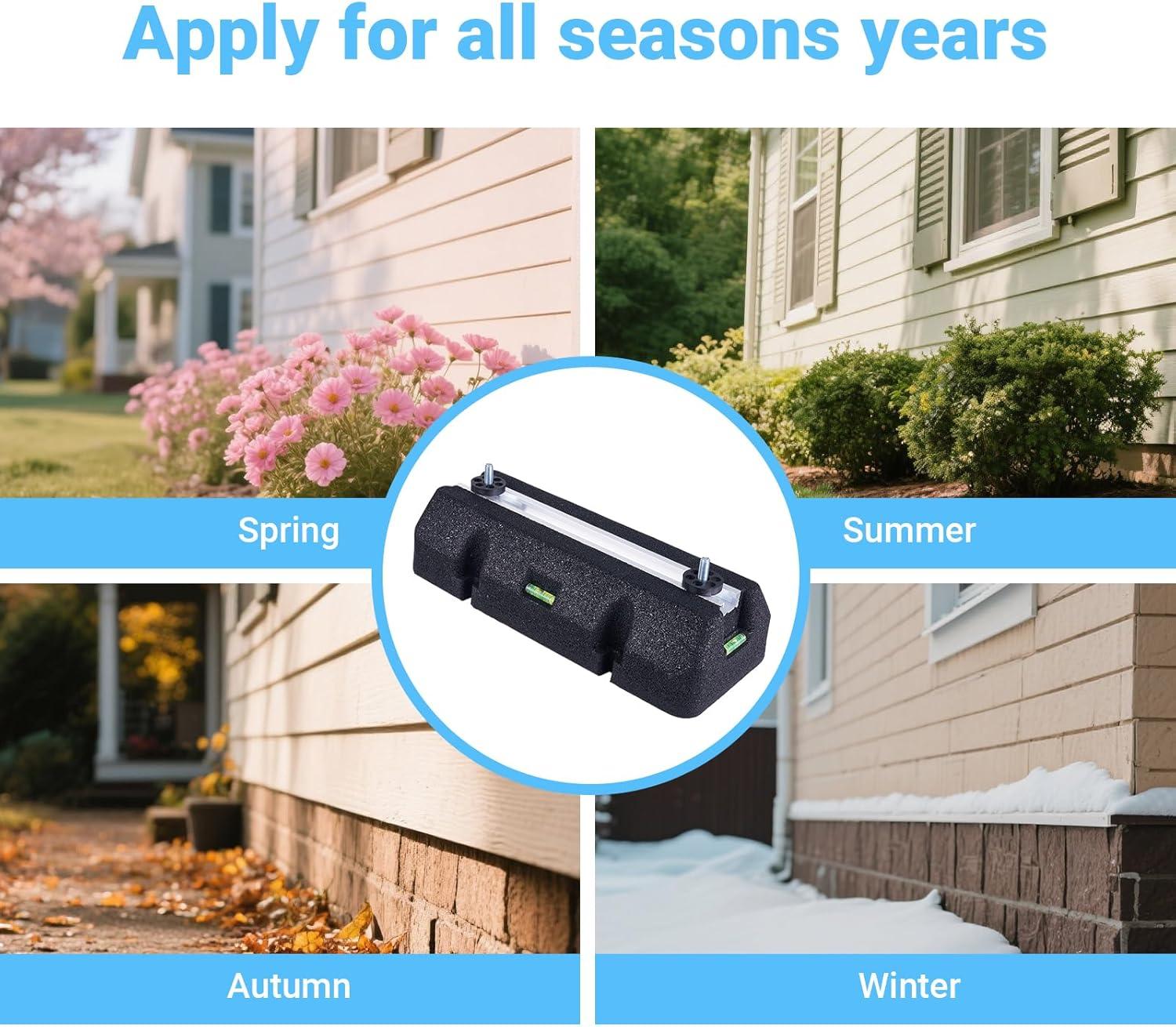
For offices, that ROI is easy to appreciate. The heavy-duty rubber and reinforced polymer build is designed to handle harsh weather swings (from -40°F to 200°F), resist moisture and corrosion, and stay intact through sun, rain, and snow. Add in the thick anti-vibration pads and non-slip design, and we get a condenser that sits more confidently—helping minimize rattles, reduce noise transfer, and avoid the subtle ground wear that can show up over time.We also like that installation doesn’t turn into a project of its own: pre-drilled holes, adjustable leveling feet, and a built-in bubble level keep setup straightforward on grass, dirt, or pavement.
If we’re outfitting an office mini split system in the 9000–18000 BTU range and want a base kit that prioritizes quiet stability without adding complexity, this one is worth considering.